The Past Perfect Tense
Form: The Affirmative - make it with 'had' +
the past participle of the main verb
 I had been (I'd been)
 You had gone (you'd gone)
 She had met (she'd met)
 He had played (he'd played)
 It had rained (it'd rained)
 We had bought (we'd bought)
 They had studied (they'd studied)
Attention!!!!! (The short form for 'had' is
'd. )
Be careful not to confuse it
with 'would'.
 Would is followed by the
infinitive - 'I'd go', whereas
had is followed by the past
participle - 'I'd gone').
For the negative just add 'not':
I had not been (I hadn't been)
You had not gone (you hadn't gone)
She had not met (she hadn't met)
He had not played (he hadn't played)
It had not rained (it hadn't rained)
We had not bought (we hadn't bought)
They had not studied (they hadn't studied)
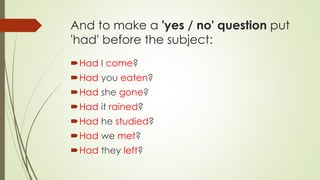
And to make a 'yes / no' question put
'had' before the subject:
Had I come?
Had you eaten?
Had she gone?
Had it rained?
Had he studied?
Had we met?
Had they left?
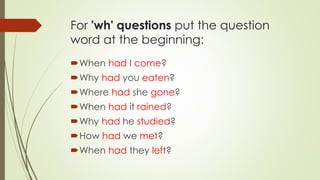
For 'wh' questions put the question
word at the beginning:
When had I come?
Why had you eaten?
Where had she gone?
When had it rained?
Why had he studied?
How had we met?
When had they left?
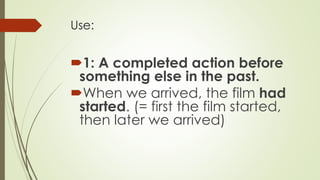
Use:
1: A completed action before
something else in the past.
When we arrived, the film had
started. (= first the film started,
then later we arrived)
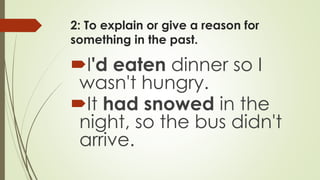
2: To explain or give a reason for
something in the past.
I'd eaten dinner so I
wasn't hungry.
It had snowed in the
night, so the bus didn't
arrive.
3: To indicate something that started in the
past and continued up to another action in
the past.
When he graduated, he had
been in London for six years.
(= he arrived in London six years
before he graduated and lived
there continuously until he
graduated, or even longer)
4: As part of the third conditional.
If I had known
you were ill, I
would have
visited you.
The Past Perfect Continuous
Form
Here's how to make the
past perfect continuous.
It's 'had' + been (the past
participle of 'be')+ main
verb-ing
Affirmative form:
I had been living
You had been going
She had been sleeping
He had been working
It had been raining
We had been studying
They had been cooking
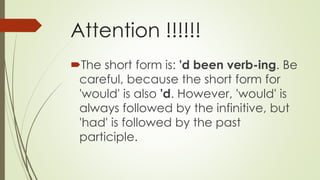
Attention !!!!!!
The short form is: 'd been verb-ing. Be
careful, because the short form for
'would' is also 'd. However, 'would' is
always followed by the infinitive, but
'had' is followed by the past
participle.
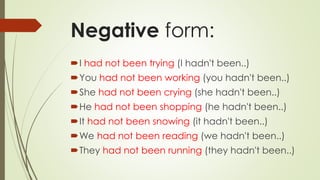
Negative form:
I had not been trying (I hadn't been..)
You had not been working (you hadn't been..)
She had not been crying (she hadn't been..)
He had not been shopping (he hadn't been..)
It had not been snowing (it hadn't been..)
We had not been reading (we hadn't been..)
They had not been running (they hadn't been..)
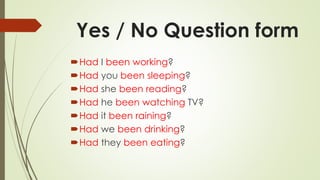
Yes / No Question form
Had I been working?
Had you been sleeping?
Had she been reading?
Had he been watching TV?
Had it been raining?
Had we been drinking?
Had they been eating?
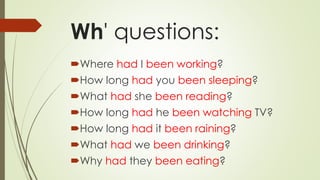
Wh' questions:
Where had I been working?
How long had you been sleeping?
What had she been reading?
How long had he been watching TV?
How long had it been raining?
What had we been drinking?
Why had they been eating?
Use:
1: Something that started in the past and
continued up to another action or event
(tells us 'how long')
She had been working at that company
for a year when she met James. (This tells
us how long something had continued
before another event in the past.
2. Cause of something in the past
The pavement was wet, it
had been raining. (It was
raining before the time I'm
describing in the past. We
could see the result of the
rain.
By teacher Adelaide Aparecida

Past perfect tense x past perfect continuous

  • 1.
  • 2.
    Form: The Affirmative- make it with 'had' + the past participle of the main verb  I had been (I'd been)  You had gone (you'd gone)  She had met (she'd met)  He had played (he'd played)  It had rained (it'd rained)  We had bought (we'd bought)  They had studied (they'd studied)
  • 3.
    Attention!!!!! (The shortform for 'had' is 'd. ) Be careful not to confuse it with 'would'.  Would is followed by the infinitive - 'I'd go', whereas had is followed by the past participle - 'I'd gone').
  • 4.
    For the negativejust add 'not': I had not been (I hadn't been) You had not gone (you hadn't gone) She had not met (she hadn't met) He had not played (he hadn't played) It had not rained (it hadn't rained) We had not bought (we hadn't bought) They had not studied (they hadn't studied)
  • 5.
    And to makea 'yes / no' question put 'had' before the subject: Had I come? Had you eaten? Had she gone? Had it rained? Had he studied? Had we met? Had they left?
  • 6.
    For 'wh' questionsput the question word at the beginning: When had I come? Why had you eaten? Where had she gone? When had it rained? Why had he studied? How had we met? When had they left?
  • 7.
    Use: 1: A completedaction before something else in the past. When we arrived, the film had started. (= first the film started, then later we arrived)
  • 8.
    2: To explainor give a reason for something in the past. I'd eaten dinner so I wasn't hungry. It had snowed in the night, so the bus didn't arrive.
  • 9.
    3: To indicatesomething that started in the past and continued up to another action in the past. When he graduated, he had been in London for six years. (= he arrived in London six years before he graduated and lived there continuously until he graduated, or even longer)
  • 10.
    4: As partof the third conditional. If I had known you were ill, I would have visited you.
  • 11.
    The Past PerfectContinuous
  • 12.
    Form Here's how tomake the past perfect continuous. It's 'had' + been (the past participle of 'be')+ main verb-ing
  • 13.
    Affirmative form: I hadbeen living You had been going She had been sleeping He had been working It had been raining We had been studying They had been cooking
  • 14.
    Attention !!!!!! The shortform is: 'd been verb-ing. Be careful, because the short form for 'would' is also 'd. However, 'would' is always followed by the infinitive, but 'had' is followed by the past participle.
  • 15.
    Negative form: I hadnot been trying (I hadn't been..) You had not been working (you hadn't been..) She had not been crying (she hadn't been..) He had not been shopping (he hadn't been..) It had not been snowing (it hadn't been..) We had not been reading (we hadn't been..) They had not been running (they hadn't been..)
  • 16.
    Yes / NoQuestion form Had I been working? Had you been sleeping? Had she been reading? Had he been watching TV? Had it been raining? Had we been drinking? Had they been eating?
  • 17.
    Wh' questions: Where hadI been working? How long had you been sleeping? What had she been reading? How long had he been watching TV? How long had it been raining? What had we been drinking? Why had they been eating?
  • 18.
    Use: 1: Something thatstarted in the past and continued up to another action or event (tells us 'how long') She had been working at that company for a year when she met James. (This tells us how long something had continued before another event in the past.
  • 19.
    2. Cause ofsomething in the past The pavement was wet, it had been raining. (It was raining before the time I'm describing in the past. We could see the result of the rain.
  • 20.