State and Action Verbs
in the English Language
Action verbs are verbs which denote some
 actions: to read, to walk, to wash etc.

e. g. I read books every day and I'm reading a
  book at the moment.
State Verbs are verbs which
 describe a state rather than an
   action and therefore do not
normally have continuous tenses.

            These include:
1) verbs which express likes and
            dislikes:

➲   Like
➲   Love
➲   Hate
➲   Enjoy
➲   Prefer
➲   Adore
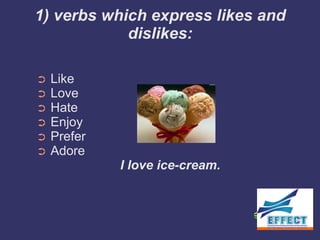
             I love ice-cream.
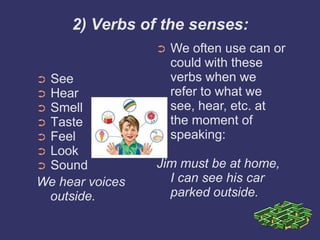
2) Verbs of the senses:
                 ➲   We often use can or
                     could with these
➲See                 verbs when we
➲Hear                refer to what we
➲Smell               see, hear, etc. at
➲Taste               the moment of
➲Feel                speaking:
➲Look
➲Sound           Jim must be at home,
We hear voices     I can see his car
 outside.          parked outside.
3) Verbs of perception:

➲   Know
➲   Believe             I expect they will be
➲   Understand             late.
➲   Realize
➲   Remember            I think they will come
➲   Forget                 soon.
➲   Notice
➲   Recognize
➲   Think
➲   Seem
➲   See (=understand)
4) Some other verbs such as:
➲ Be
➲ Contain
➲ Include          My uncle owns a
➲ Belong            hotel.
➲ Fit
➲ Need             The bag costs two
➲ Matter             dollars.
➲ Cost
➲ Mean
➲ Own
➲ Want
➲ Owe
➲ wish
etc.
Some of the above verbs are used
 in continuous tenses when they
 describe actions and not states!
➲   I think he's lying.

➲   I'm thinking about the plan.
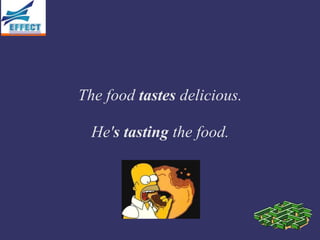
The food tastes delicious.

  He's tasting the food.
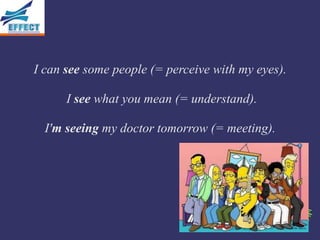
I can see some people (= perceive with my eyes).

      I see what you mean (= understand).

  I'm seeing my doctor tomorrow (= meeting).
It looks as if they've finished the job (= appears).

Mike is looking out of the window (=is directing his
                       eyes).
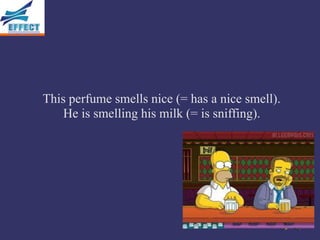
This perfume smells nice (= has a nice smell).
    He is smelling his milk (= is sniffing).
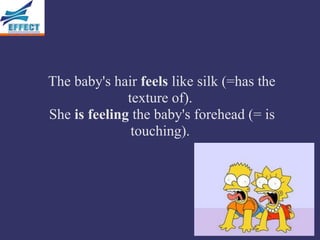
The baby's hair feels like silk (=has the
              texture of).
She is feeling the baby's forehead (= is
               touching).
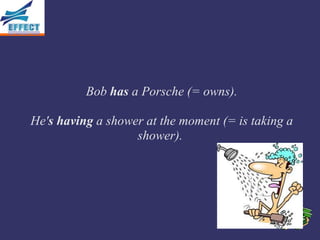
Bob has a Porsche (= owns).

He's having a shower at the moment (= is taking a
                   shower).
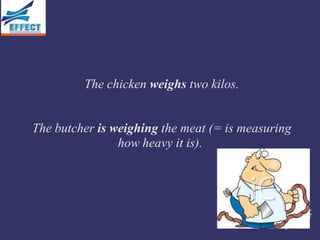
The chicken weighs two kilos.


The butcher is weighing the meat (= is measuring
                how heavy it is).
This dress fits you perfectly (=is your size).

We are fitting new lock (= are putting in).
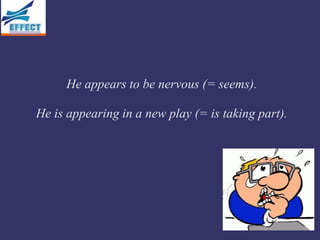
He appears to be nervous (= seems).

He is appearing in a new play (= is taking part).
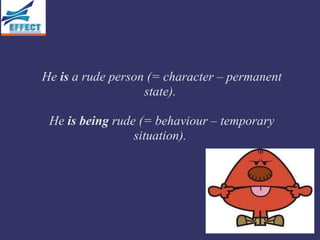
He is a rude person (= character – permanent
                   state).

 He is being rude (= behaviour – temporary
                 situation).

State and action verbs

  • 1.
    State and ActionVerbs in the English Language
  • 2.
    Action verbs areverbs which denote some actions: to read, to walk, to wash etc. e. g. I read books every day and I'm reading a book at the moment.
  • 3.
    State Verbs areverbs which describe a state rather than an action and therefore do not normally have continuous tenses. These include:
  • 4.
    1) verbs whichexpress likes and dislikes: ➲ Like ➲ Love ➲ Hate ➲ Enjoy ➲ Prefer ➲ Adore I love ice-cream.
  • 5.
    2) Verbs ofthe senses: ➲ We often use can or could with these ➲See verbs when we ➲Hear refer to what we ➲Smell see, hear, etc. at ➲Taste the moment of ➲Feel speaking: ➲Look ➲Sound Jim must be at home, We hear voices I can see his car outside. parked outside.
  • 6.
    3) Verbs ofperception: ➲ Know ➲ Believe I expect they will be ➲ Understand late. ➲ Realize ➲ Remember I think they will come ➲ Forget soon. ➲ Notice ➲ Recognize ➲ Think ➲ Seem ➲ See (=understand)
  • 7.
    4) Some otherverbs such as: ➲ Be ➲ Contain ➲ Include My uncle owns a ➲ Belong hotel. ➲ Fit ➲ Need The bag costs two ➲ Matter dollars. ➲ Cost ➲ Mean ➲ Own ➲ Want ➲ Owe ➲ wish etc.
  • 8.
    Some of theabove verbs are used in continuous tenses when they describe actions and not states!
  • 9.
    I think he's lying. ➲ I'm thinking about the plan.
  • 10.
    The food tastesdelicious. He's tasting the food.
  • 11.
    I can seesome people (= perceive with my eyes). I see what you mean (= understand). I'm seeing my doctor tomorrow (= meeting).
  • 12.
    It looks asif they've finished the job (= appears). Mike is looking out of the window (=is directing his eyes).
  • 13.
    This perfume smellsnice (= has a nice smell). He is smelling his milk (= is sniffing).
  • 14.
    The baby's hairfeels like silk (=has the texture of). She is feeling the baby's forehead (= is touching).
  • 15.
    Bob has aPorsche (= owns). He's having a shower at the moment (= is taking a shower).
  • 16.
    The chicken weighstwo kilos. The butcher is weighing the meat (= is measuring how heavy it is).
  • 17.
    This dress fitsyou perfectly (=is your size). We are fitting new lock (= are putting in).
  • 18.
    He appears tobe nervous (= seems). He is appearing in a new play (= is taking part).
  • 19.
    He is arude person (= character – permanent state). He is being rude (= behaviour – temporary situation).