By: Hussain Al-ghawi
Definition
 A future tense is a verb form that generally marks the
event described by the verb as not having happened
yet, but expected to happen in the future.
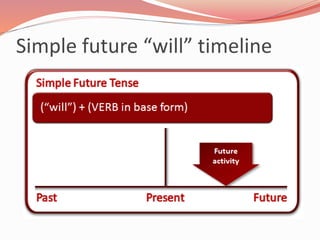
Simple future “will” timeline
What is the future tense of is?
 There are no inflected forms for the future in English
(nothing like those -ed or -s endings in the
other tenses). Instead, the future tenseemploys the
helping verbs will or shall with the base form of
the verb: She will leave soon. We shall overcome.
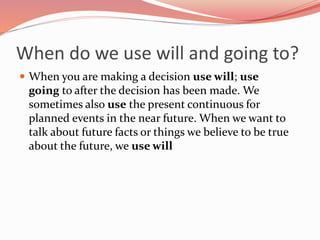
When do we use will and going to?
 When you are making a decision use will; use
going to after the decision has been made. We
sometimes also use the present continuous for
planned events in the near future. When we want to
talk about future facts or things we believe to be true
about the future, we use will
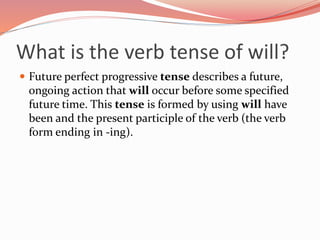
What is the verb tense of will?
 Future perfect progressive tense describes a future,
ongoing action that will occur before some specified
future time. This tense is formed by using will have
been and the present participle of the verb (the verb
form ending in -ing).
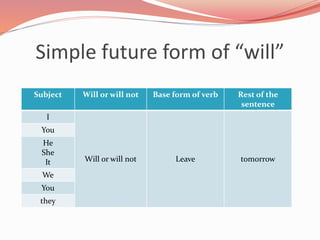
Simple future form of “will”
Subject Will or will not Base form of verb Rest of the
sentence
I
Will or will not Leave tomorrow
You
He
She
It
We
You
they
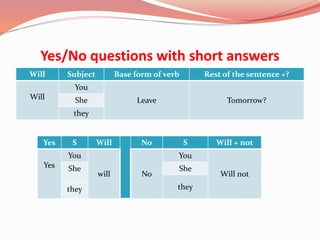
Yes/No questions with short answers
Will Subject Base form of verb Rest of the sentence +?
Will
You
Leave Tomorrow?She
they
Yes S Will No S Will + not
Yes
You
will No
You
Will not
She She
theythey
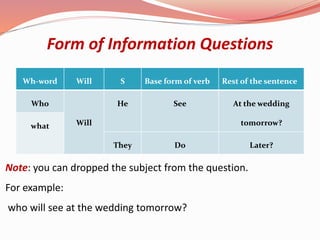
Form of Information Questions
Wh-word Will S Base form of verb Rest of the sentence
Who
Will
He See At the wedding
tomorrow?what
They Do Later?
Note: you can dropped the subject from the question.
For example:
who will see at the wedding tomorrow?
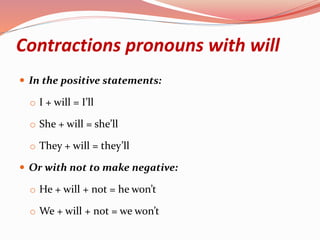
Contractions pronouns with will
 In the positive statements:
o I + will = I’ll
o She + will = she’ll
o They + will = they’ll
 Or with not to make negative:
o He + will + not = he won’t
o We + will + not = we won’t
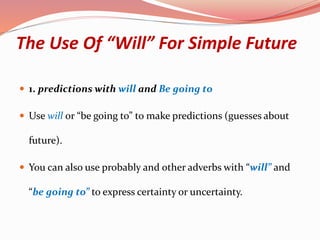
The Use Of “Will” For Simple Future
 1. predictions with will and Be going to
 Use will or “be going to” to make predictions (guesses about
future).
 You can also use probably and other adverbs with “will” and
“be going to” to express certainty or uncertainty.
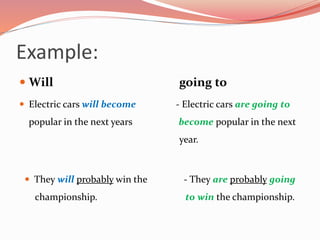
Example:
 Will going to
 Electric cars will become - Electric cars are going to
popular in the next years become popular in the next
year.
 They will probably win the - They are probably going
championship. to win the championship.
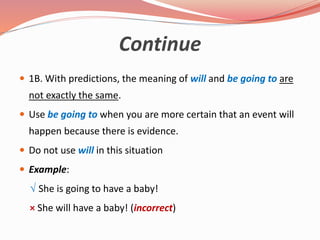
Continue
 1B. With predictions, the meaning of will and be going to are
not exactly the same.
 Use be going to when you are more certain that an event will
happen because there is evidence.
 Do not use will in this situation
 Example:
√ She is going to have a baby!
× She will have a baby! (incorrect)
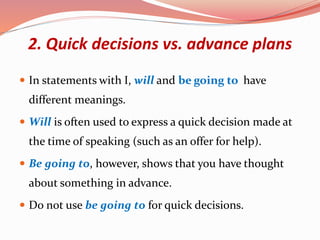
2. Quick decisions vs. advance plans
 In statements with I, will and be going to have
different meanings.
 Will is often used to express a quick decision made at
the time of speaking (such as an offer for help).
 Be going to, however, shows that you have thought
about something in advance.
 Do not use be going to for quick decisions.
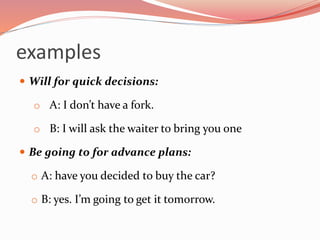
examples
 Will for quick decisions:
o A: I don’t have a fork.
o B: I will ask the waiter to bring you one
 Be going to for advance plans:
o A: have you decided to buy the car?
o B: yes. I’m going to get it tomorrow.
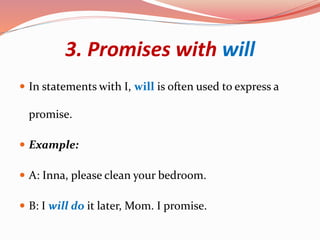
3. Promises with will
 In statements with I, will is often used to express a
promise.
 Example:
 A: Inna, please clean your bedroom.
 B: I will do it later, Mom. I promise.
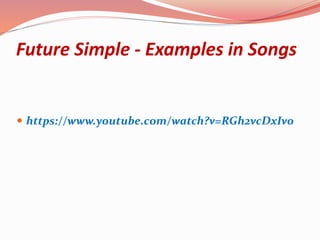
Future Simple - Examples in Songs
 https://www.youtube.com/watch?v=RGh2vcDxIvo
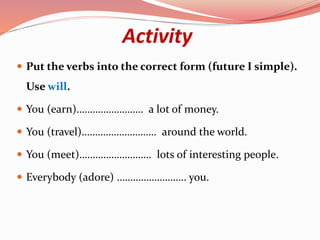
Activity
 Put the verbs into the correct form (future I simple).
Use will.
 You (earn)……………………. a lot of money.
 You (travel)………………………. around the world.
 You (meet)……………………… lots of interesting people.
 Everybody (adore) …………………….. you.
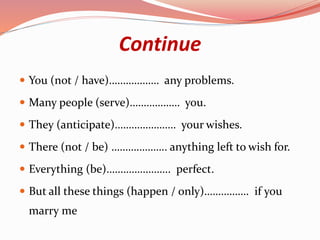
Continue
 You (not / have)……………… any problems.
 Many people (serve)……………… you.
 They (anticipate)…………………. your wishes.
 There (not / be) ……………….. anything left to wish for.
 Everything (be)………………….. perfect.
 But all these things (happen / only)……………. if you
marry me

The Simple Future: will

  • 1.
  • 2.
    Definition  A futuretense is a verb form that generally marks the event described by the verb as not having happened yet, but expected to happen in the future.
  • 3.
  • 4.
    What is thefuture tense of is?  There are no inflected forms for the future in English (nothing like those -ed or -s endings in the other tenses). Instead, the future tenseemploys the helping verbs will or shall with the base form of the verb: She will leave soon. We shall overcome.
  • 5.
    When do weuse will and going to?  When you are making a decision use will; use going to after the decision has been made. We sometimes also use the present continuous for planned events in the near future. When we want to talk about future facts or things we believe to be true about the future, we use will
  • 6.
    What is theverb tense of will?  Future perfect progressive tense describes a future, ongoing action that will occur before some specified future time. This tense is formed by using will have been and the present participle of the verb (the verb form ending in -ing).
  • 7.
    Simple future formof “will” Subject Will or will not Base form of verb Rest of the sentence I Will or will not Leave tomorrow You He She It We You they
  • 8.
    Yes/No questions withshort answers Will Subject Base form of verb Rest of the sentence +? Will You Leave Tomorrow?She they Yes S Will No S Will + not Yes You will No You Will not She She theythey
  • 9.
    Form of InformationQuestions Wh-word Will S Base form of verb Rest of the sentence Who Will He See At the wedding tomorrow?what They Do Later? Note: you can dropped the subject from the question. For example: who will see at the wedding tomorrow?
  • 10.
    Contractions pronouns withwill  In the positive statements: o I + will = I’ll o She + will = she’ll o They + will = they’ll  Or with not to make negative: o He + will + not = he won’t o We + will + not = we won’t
  • 11.
    The Use Of“Will” For Simple Future  1. predictions with will and Be going to  Use will or “be going to” to make predictions (guesses about future).  You can also use probably and other adverbs with “will” and “be going to” to express certainty or uncertainty.
  • 12.
    Example:  Will goingto  Electric cars will become - Electric cars are going to popular in the next years become popular in the next year.  They will probably win the - They are probably going championship. to win the championship.
  • 13.
    Continue  1B. Withpredictions, the meaning of will and be going to are not exactly the same.  Use be going to when you are more certain that an event will happen because there is evidence.  Do not use will in this situation  Example: √ She is going to have a baby! × She will have a baby! (incorrect)
  • 14.
    2. Quick decisionsvs. advance plans  In statements with I, will and be going to have different meanings.  Will is often used to express a quick decision made at the time of speaking (such as an offer for help).  Be going to, however, shows that you have thought about something in advance.  Do not use be going to for quick decisions.
  • 15.
    examples  Will forquick decisions: o A: I don’t have a fork. o B: I will ask the waiter to bring you one  Be going to for advance plans: o A: have you decided to buy the car? o B: yes. I’m going to get it tomorrow.
  • 16.
    3. Promises withwill  In statements with I, will is often used to express a promise.  Example:  A: Inna, please clean your bedroom.  B: I will do it later, Mom. I promise.
  • 17.
    Future Simple -Examples in Songs  https://www.youtube.com/watch?v=RGh2vcDxIvo
  • 18.
    Activity  Put theverbs into the correct form (future I simple). Use will.  You (earn)……………………. a lot of money.  You (travel)………………………. around the world.  You (meet)……………………… lots of interesting people.  Everybody (adore) …………………….. you.
  • 19.
    Continue  You (not/ have)……………… any problems.  Many people (serve)……………… you.  They (anticipate)…………………. your wishes.  There (not / be) ……………….. anything left to wish for.  Everything (be)………………….. perfect.  But all these things (happen / only)……………. if you marry me