Chemical
Digestion
The main nutrients the body needs are:
Carbohydrates for energy;
 proteins for growth and repair;
 fats to store energy;
 vitamins and minerals to keep the
body healthy.
Enzymes
-are globular proteins that
control biological reactions.
Digestive enzymes speed up the
breakdown (hydrolysis) of food
molecules into their ‘building
block’ components.
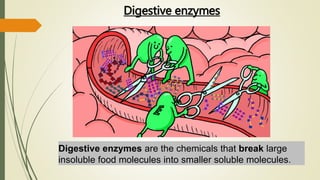
Digestive enzymes
Digestive enzymes are the chemicals that break large
insoluble food molecules into smaller soluble molecules.
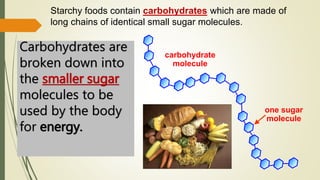
Starchy foods contain carbohydrates which are made of
long chains of identical small sugar molecules.
carbohydrate
molecule
one sugar
molecule
Carbohydrates are
broken down into
the smaller sugar
molecules to be
used by the body
for energy.
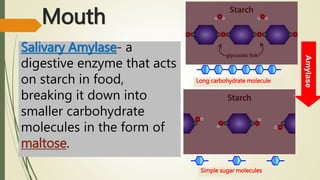
Mouth
Salivary Amylase- a
digestive enzyme that acts
on starch in food,
breaking it down into
smaller carbohydrate
molecules in the form of
maltose.
Long carbohydrate molecule
Simple sugar molecules
Amylase
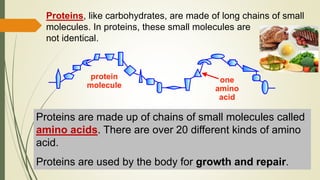
Proteins, like carbohydrates, are made of long chains of small
molecules. In proteins, these small molecules are
not identical.
protein
molecule
one
amino
acid
Proteins are made up of chains of small molecules called
amino acids. There are over 20 different kinds of amino
acid.
Proteins are used by the body for growth and repair.
Stomach
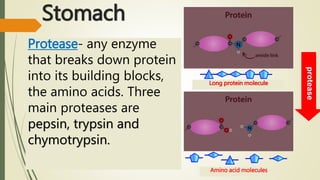
Protease- any enzyme
that breaks down protein
into its building blocks,
the amino acids. Three
main proteases are
pepsin, trypsin and
chymotrypsin.
Long protein molecule
Amino acid molecules
protease
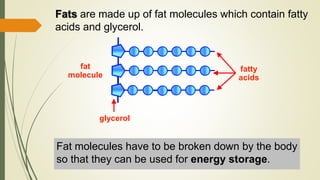
Fats are made up of fat molecules which contain fatty
acids and glycerol.
fat
molecule
glycerol
Fat molecules have to be broken down by the body
so that they can be used for energy storage.
fatty
acids
Small Intestine
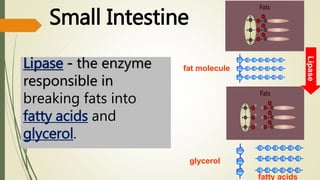
Lipase - the enzyme
responsible in
breaking fats into
fatty acids and
glycerol.
Lipase
fat molecule
glycerol
fatty acids
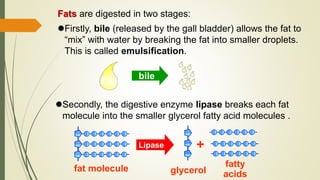
Fats are digested in two stages:
Firstly, bile (released by the gall bladder) allows the fat to
“mix” with water by breaking the fat into smaller droplets.
This is called emulsification.
Secondly, the digestive enzyme lipase breaks each fat
molecule into the smaller glycerol fatty acid molecules .
bile
Lipase +
fat molecule glycerol
fatty
acids
Small Intestine
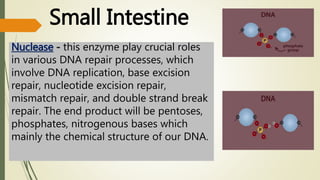
Nuclease - this enzyme play crucial roles
in various DNA repair processes, which
involve DNA replication, base excision
repair, nucleotide excision repair,
mismatch repair, and double strand break
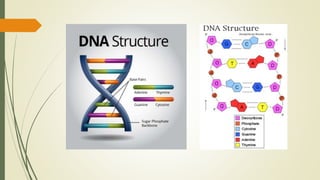
repair. The end product will be pentoses,
phosphates, nitrogenous bases which
mainly the chemical structure of our DNA.
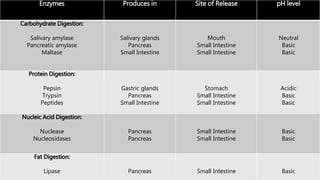
Enzymes Produces in Site of Release pH level
Carbohydrate Digestion:
Salivary amylase
Pancreatic amylase
Maltase
Salivary glands
Pancreas
Small Intestine
Mouth
Small Intestine
Small Intestine
Neutral
Basic
Basic
Protein Digestion:
Pepsin
Trypsin
Peptides
Gastric glands
Pancreas
Small Intestine
Stomach
Small Intestine
Small Intestine
Acidic
Basic
Basic
Nucleic Acid Digestion:
Nuclease
Nucleosidases
Pancreas
Pancreas
Small Intestine
Small Intestine
Basic
Basic
Fat Digestion:
Lipase Pancreas Small Intestine Basic

The Digestive System (Chemical Digestion)

  • 1.
  • 2.
    The main nutrientsthe body needs are: Carbohydrates for energy;  proteins for growth and repair;  fats to store energy;  vitamins and minerals to keep the body healthy.
  • 3.
    Enzymes -are globular proteinsthat control biological reactions. Digestive enzymes speed up the breakdown (hydrolysis) of food molecules into their ‘building block’ components.
  • 4.
    Digestive enzymes Digestive enzymesare the chemicals that break large insoluble food molecules into smaller soluble molecules.
  • 5.
    Starchy foods containcarbohydrates which are made of long chains of identical small sugar molecules. carbohydrate molecule one sugar molecule Carbohydrates are broken down into the smaller sugar molecules to be used by the body for energy.
  • 6.
    Mouth Salivary Amylase- a digestiveenzyme that acts on starch in food, breaking it down into smaller carbohydrate molecules in the form of maltose. Long carbohydrate molecule Simple sugar molecules Amylase
  • 7.
    Proteins, like carbohydrates,are made of long chains of small molecules. In proteins, these small molecules are not identical. protein molecule one amino acid Proteins are made up of chains of small molecules called amino acids. There are over 20 different kinds of amino acid. Proteins are used by the body for growth and repair.
  • 8.
    Stomach Protease- any enzyme thatbreaks down protein into its building blocks, the amino acids. Three main proteases are pepsin, trypsin and chymotrypsin. Long protein molecule Amino acid molecules protease
  • 9.
    Fats are madeup of fat molecules which contain fatty acids and glycerol. fat molecule glycerol Fat molecules have to be broken down by the body so that they can be used for energy storage. fatty acids
  • 10.
    Small Intestine Lipase -the enzyme responsible in breaking fats into fatty acids and glycerol. Lipase fat molecule glycerol fatty acids
  • 11.
    Fats are digestedin two stages: Firstly, bile (released by the gall bladder) allows the fat to “mix” with water by breaking the fat into smaller droplets. This is called emulsification. Secondly, the digestive enzyme lipase breaks each fat molecule into the smaller glycerol fatty acid molecules . bile Lipase + fat molecule glycerol fatty acids
  • 12.
    Small Intestine Nuclease -this enzyme play crucial roles in various DNA repair processes, which involve DNA replication, base excision repair, nucleotide excision repair, mismatch repair, and double strand break repair. The end product will be pentoses, phosphates, nitrogenous bases which mainly the chemical structure of our DNA.
  • 14.
    Enzymes Produces inSite of Release pH level Carbohydrate Digestion: Salivary amylase Pancreatic amylase Maltase Salivary glands Pancreas Small Intestine Mouth Small Intestine Small Intestine Neutral Basic Basic Protein Digestion: Pepsin Trypsin Peptides Gastric glands Pancreas Small Intestine Stomach Small Intestine Small Intestine Acidic Basic Basic Nucleic Acid Digestion: Nuclease Nucleosidases Pancreas Pancreas Small Intestine Small Intestine Basic Basic Fat Digestion: Lipase Pancreas Small Intestine Basic