1
© Prentice Hall, 2002
Chapter 15:Chapter 15:
Object-Oriented DatabaseObject-Oriented Database
DevelopmentDevelopment
Modern Database Management
6th
Edition
Jeffrey A. Hoffer, Mary B. Prescott, Fred R.
McFadden
2Chapter 15 © Prentice Hall,
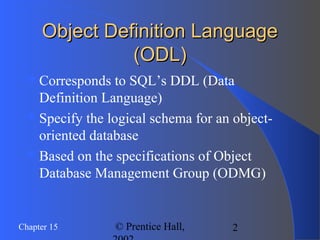
Object Definition LanguageObject Definition Language
(ODL)(ODL)
Corresponds to SQL’s DDL (Data
Definition Language)
Specify the logical schema for an object-
oriented database
Based on the specifications of Object
Database Management Group (ODMG)
3Chapter 15 © Prentice Hall,
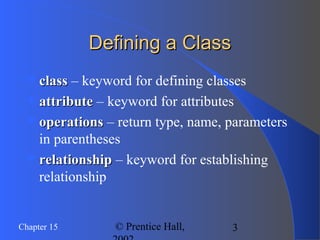
Defining a ClassDefining a Class
classclass – keyword for defining classes
attributeattribute – keyword for attributes
operationsoperations – return type, name, parameters
in parentheses
relationshiprelationship – keyword for establishing
relationship
4Chapter 15 © Prentice Hall,
Defining an AttributeDefining an Attribute
 Value can be either:
– Object identifier OR Literal
 Types of literals
– Atomic – a constant that cannot be decomposed into components
– Collection – multiple literals or object types
– Structure – a fixed number of named elements, each of which could be a
literal or object type
 Attribute ranges
– Allowable values for an attribute
– enum – for enumerating the allowable values
5Chapter 15 © Prentice Hall,
Kinds of CollectionsKinds of Collections
 Set – unordered collection without duplicates
 Bag – unordered collection that may contain
duplicates
 List – ordered collection, all the same type
 Array – dynamically sized ordered collection,
locatable by position
 Dictionary – unordered sequence of key-value
pairs without duplicates
6Chapter 15 © Prentice Hall,
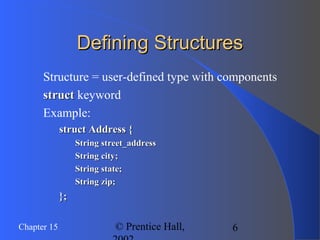
Defining StructuresDefining Structures
Structure = user-defined type with components
structstruct keyword
Example:
struct Address {struct Address {
String street_addressString street_address
String city;String city;
String state;String state;
String zip;String zip;
};};
7Chapter 15 © Prentice Hall,
Defining OperationsDefining Operations
Return type
Name
Parentheses following the name
Arguments within the
parentheses
8Chapter 15 © Prentice Hall,
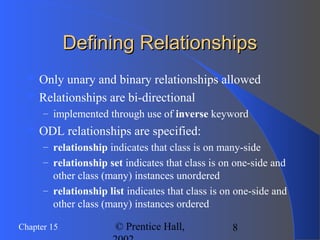
Defining RelationshipsDefining Relationships
 Only unary and binary relationships allowed
 Relationships are bi-directional
– implemented through use of inverse keyword
 ODL relationships are specified:
– relationship indicates that class is on many-side
– relationship set indicates that class is on one-side and
other class (many) instances unordered
– relationship list indicates that class is on one-side and
other class (many) instances ordered
9Chapter 15 © Prentice Hall,
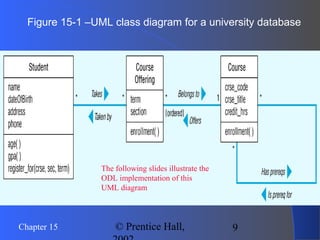
Figure 15-1 –UML class diagram for a university database
The following slides illustrate the
ODL implementation of this
UML diagram
10Chapter 15 © Prentice Hall,
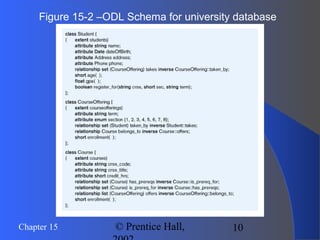
Figure 15-2 –ODL Schema for university database
11Chapter 15 © Prentice Hall,
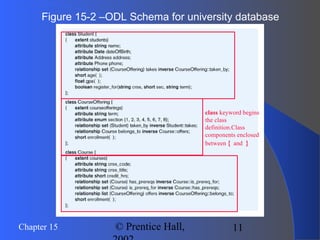
Figure 15-2 –ODL Schema for university database
class keyword begins
the class
definition.Class
components enclosed
between { and }
12Chapter 15 © Prentice Hall,
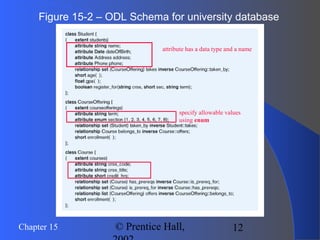
Figure 15-2 – ODL Schema for university database
attribute has a data type and a name
specify allowable values
using enum
13Chapter 15 © Prentice Hall,
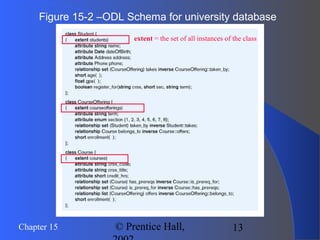
Figure 15-2 –ODL Schema for university database
extent = the set of all instances of the class
14Chapter 15 © Prentice Hall,
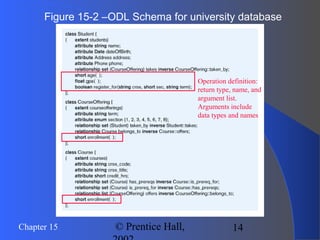
Figure 15-2 –ODL Schema for university database
Operation definition:
return type, name, and
argument list.
Arguments include
data types and names
15Chapter 15 © Prentice Hall,
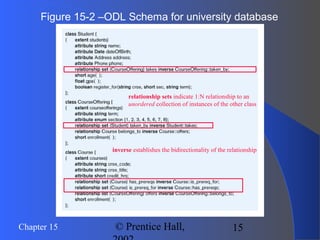
Figure 15-2 –ODL Schema for university database
relationship sets indicate 1:N relationship to an
unordered collection of instances of the other class
inverse establishes the bidirectionality of the relationship
16Chapter 15 © Prentice Hall,
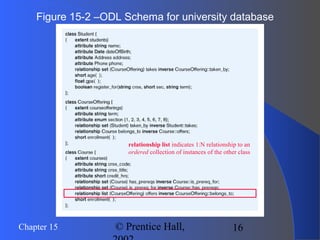
Figure 15-2 –ODL Schema for university database
relationship list indicates 1:N relationship to an
ordered collection of instances of the other class
17Chapter 15 © Prentice Hall,
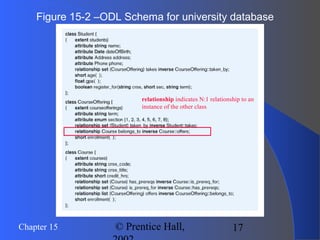
Figure 15-2 –ODL Schema for university database
relationship indicates N:1 relationship to an
instance of the other class
18Chapter 15 © Prentice Hall,
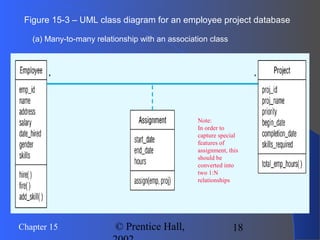
Figure 15-3 – UML class diagram for an employee project database
(a) Many-to-many relationship with an association class
Note:
In order to
capture special
features of
assignment, this
should be
converted into
two 1:N
relationships
19Chapter 15 © Prentice Hall,
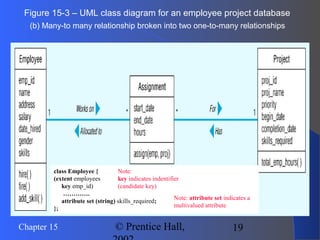
Figure 15-3 – UML class diagram for an employee project database
(b) Many-to many relationship broken into two one-to-many relationships
class Employee {
(extent employees
key emp_id)
………….
attribute set (string) skills_required;
};
Note:
key indicates indentifier
(candidate key)
Note: attribute set indicates a
multivalued attribute
20Chapter 15 © Prentice Hall,
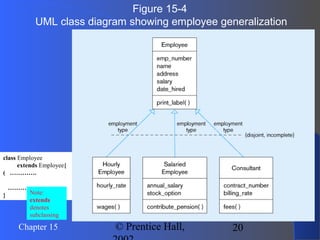
Figure 15-4
UML class diagram showing employee generalization
class Employee
extends Employee{
( ………….
………….
} Note:
extends
denotes
subclassing
21Chapter 15 © Prentice Hall,
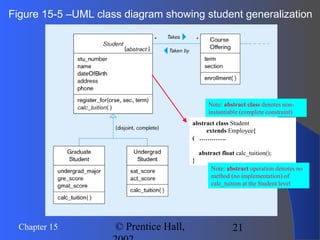
Figure 15-5 –UML class diagram showing student generalization
abstract class Student
extends Employee{
( ………….
abstract float calc_tuition();
}
Note: abstract operation denotes no
method (no implementation) of
calc_tuition at the Student level
Note: abstract class denotes non-
instantiable (complete constraint)
22Chapter 15 © Prentice Hall,
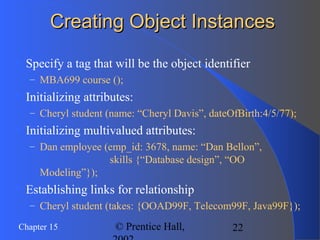
Creating Object InstancesCreating Object Instances
 Specify a tag that will be the object identifier
– MBA699 course ();
 Initializing attributes:
– Cheryl student (name: “Cheryl Davis”, dateOfBirth:4/5/77);
 Initializing multivalued attributes:
– Dan employee (emp_id: 3678, name: “Dan Bellon”,
skills {“Database design”, “OO
Modeling”});
 Establishing links for relationship
– Cheryl student (takes: {OOAD99F, Telecom99F, Java99F});
23Chapter 15 © Prentice Hall,
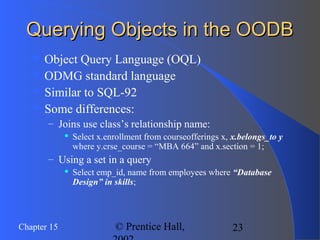
Querying Objects in the OODBQuerying Objects in the OODB
 Object Query Language (OQL)
 ODMG standard language
 Similar to SQL-92
 Some differences:
– Joins use class’s relationship name:
 Select x.enrollment from courseofferings x, x.belongs_to y
where y.crse_course = “MBA 664” and x.section = 1;
– Using a set in a query
 Select emp_id, name from employees where “Database
Design” in skills;
24Chapter 15 © Prentice Hall,
Current ODBMS ProductsCurrent ODBMS Products
 Rising popularity due to:
– CAD/CAM applications
– Geographic information systems
– Multimedia
– Web-based applications
– Increasingly complex data types
 Applications of ODBMS
– Bill-of-material
– Telecommunications navigation
– Health care
– Engineering design
– Finance and trading
25Chapter 15 © Prentice Hall,
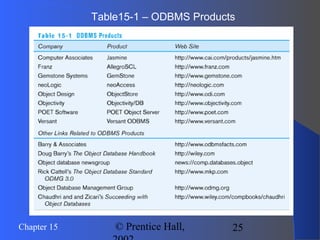
Table15-1 – ODBMS Products

The Database Environment Chapter 15

  • 1.
    1 © Prentice Hall,2002 Chapter 15:Chapter 15: Object-Oriented DatabaseObject-Oriented Database DevelopmentDevelopment Modern Database Management 6th Edition Jeffrey A. Hoffer, Mary B. Prescott, Fred R. McFadden
  • 2.
    2Chapter 15 ©Prentice Hall, Object Definition LanguageObject Definition Language (ODL)(ODL) Corresponds to SQL’s DDL (Data Definition Language) Specify the logical schema for an object- oriented database Based on the specifications of Object Database Management Group (ODMG)
  • 3.
    3Chapter 15 ©Prentice Hall, Defining a ClassDefining a Class classclass – keyword for defining classes attributeattribute – keyword for attributes operationsoperations – return type, name, parameters in parentheses relationshiprelationship – keyword for establishing relationship
  • 4.
    4Chapter 15 ©Prentice Hall, Defining an AttributeDefining an Attribute  Value can be either: – Object identifier OR Literal  Types of literals – Atomic – a constant that cannot be decomposed into components – Collection – multiple literals or object types – Structure – a fixed number of named elements, each of which could be a literal or object type  Attribute ranges – Allowable values for an attribute – enum – for enumerating the allowable values
  • 5.
    5Chapter 15 ©Prentice Hall, Kinds of CollectionsKinds of Collections  Set – unordered collection without duplicates  Bag – unordered collection that may contain duplicates  List – ordered collection, all the same type  Array – dynamically sized ordered collection, locatable by position  Dictionary – unordered sequence of key-value pairs without duplicates
  • 6.
    6Chapter 15 ©Prentice Hall, Defining StructuresDefining Structures Structure = user-defined type with components structstruct keyword Example: struct Address {struct Address { String street_addressString street_address String city;String city; String state;String state; String zip;String zip; };};
  • 7.
    7Chapter 15 ©Prentice Hall, Defining OperationsDefining Operations Return type Name Parentheses following the name Arguments within the parentheses
  • 8.
    8Chapter 15 ©Prentice Hall, Defining RelationshipsDefining Relationships  Only unary and binary relationships allowed  Relationships are bi-directional – implemented through use of inverse keyword  ODL relationships are specified: – relationship indicates that class is on many-side – relationship set indicates that class is on one-side and other class (many) instances unordered – relationship list indicates that class is on one-side and other class (many) instances ordered
  • 9.
    9Chapter 15 ©Prentice Hall, Figure 15-1 –UML class diagram for a university database The following slides illustrate the ODL implementation of this UML diagram
  • 10.
    10Chapter 15 ©Prentice Hall, Figure 15-2 –ODL Schema for university database
  • 11.
    11Chapter 15 ©Prentice Hall, Figure 15-2 –ODL Schema for university database class keyword begins the class definition.Class components enclosed between { and }
  • 12.
    12Chapter 15 ©Prentice Hall, Figure 15-2 – ODL Schema for university database attribute has a data type and a name specify allowable values using enum
  • 13.
    13Chapter 15 ©Prentice Hall, Figure 15-2 –ODL Schema for university database extent = the set of all instances of the class
  • 14.
    14Chapter 15 ©Prentice Hall, Figure 15-2 –ODL Schema for university database Operation definition: return type, name, and argument list. Arguments include data types and names
  • 15.
    15Chapter 15 ©Prentice Hall, Figure 15-2 –ODL Schema for university database relationship sets indicate 1:N relationship to an unordered collection of instances of the other class inverse establishes the bidirectionality of the relationship
  • 16.
    16Chapter 15 ©Prentice Hall, Figure 15-2 –ODL Schema for university database relationship list indicates 1:N relationship to an ordered collection of instances of the other class
  • 17.
    17Chapter 15 ©Prentice Hall, Figure 15-2 –ODL Schema for university database relationship indicates N:1 relationship to an instance of the other class
  • 18.
    18Chapter 15 ©Prentice Hall, Figure 15-3 – UML class diagram for an employee project database (a) Many-to-many relationship with an association class Note: In order to capture special features of assignment, this should be converted into two 1:N relationships
  • 19.
    19Chapter 15 ©Prentice Hall, Figure 15-3 – UML class diagram for an employee project database (b) Many-to many relationship broken into two one-to-many relationships class Employee { (extent employees key emp_id) …………. attribute set (string) skills_required; }; Note: key indicates indentifier (candidate key) Note: attribute set indicates a multivalued attribute
  • 20.
    20Chapter 15 ©Prentice Hall, Figure 15-4 UML class diagram showing employee generalization class Employee extends Employee{ ( …………. …………. } Note: extends denotes subclassing
  • 21.
    21Chapter 15 ©Prentice Hall, Figure 15-5 –UML class diagram showing student generalization abstract class Student extends Employee{ ( …………. abstract float calc_tuition(); } Note: abstract operation denotes no method (no implementation) of calc_tuition at the Student level Note: abstract class denotes non- instantiable (complete constraint)
  • 22.
    22Chapter 15 ©Prentice Hall, Creating Object InstancesCreating Object Instances  Specify a tag that will be the object identifier – MBA699 course ();  Initializing attributes: – Cheryl student (name: “Cheryl Davis”, dateOfBirth:4/5/77);  Initializing multivalued attributes: – Dan employee (emp_id: 3678, name: “Dan Bellon”, skills {“Database design”, “OO Modeling”});  Establishing links for relationship – Cheryl student (takes: {OOAD99F, Telecom99F, Java99F});
  • 23.
    23Chapter 15 ©Prentice Hall, Querying Objects in the OODBQuerying Objects in the OODB  Object Query Language (OQL)  ODMG standard language  Similar to SQL-92  Some differences: – Joins use class’s relationship name:  Select x.enrollment from courseofferings x, x.belongs_to y where y.crse_course = “MBA 664” and x.section = 1; – Using a set in a query  Select emp_id, name from employees where “Database Design” in skills;
  • 24.
    24Chapter 15 ©Prentice Hall, Current ODBMS ProductsCurrent ODBMS Products  Rising popularity due to: – CAD/CAM applications – Geographic information systems – Multimedia – Web-based applications – Increasingly complex data types  Applications of ODBMS – Bill-of-material – Telecommunications navigation – Health care – Engineering design – Finance and trading
  • 25.
    25Chapter 15 ©Prentice Hall, Table15-1 – ODBMS Products