THE COMMUNICATION PROCESS
INTRODUCTION
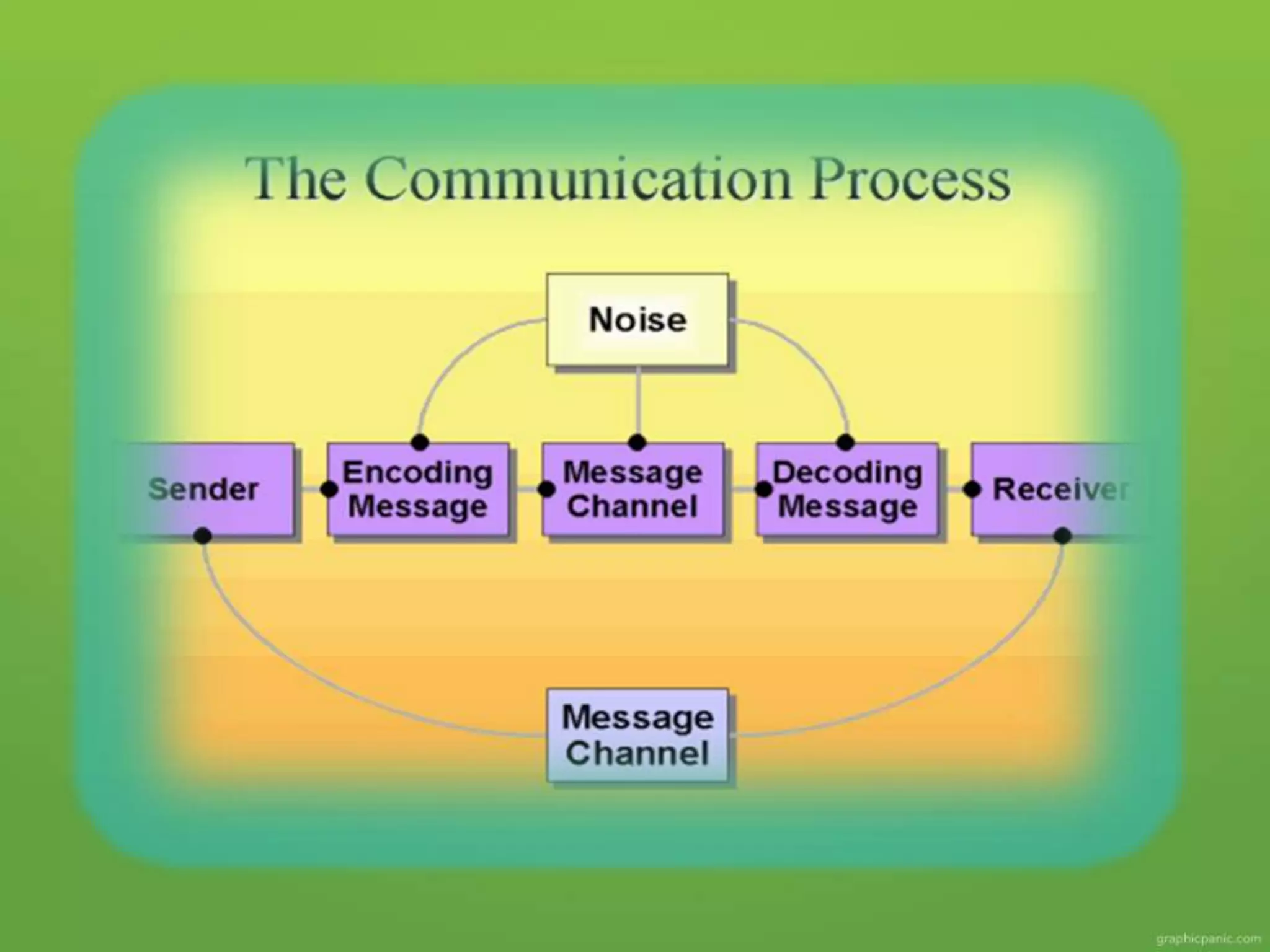
Communication process is the
exchange of information between two or
more people. It can best be summarized
as the transmission of a message from a
sender to a receiver in an understandable
manner. It’s goal is to convey
information—the understanding of that
information—from one person or group to
another person or group .
ELEMENTS OF COMMUNICATION
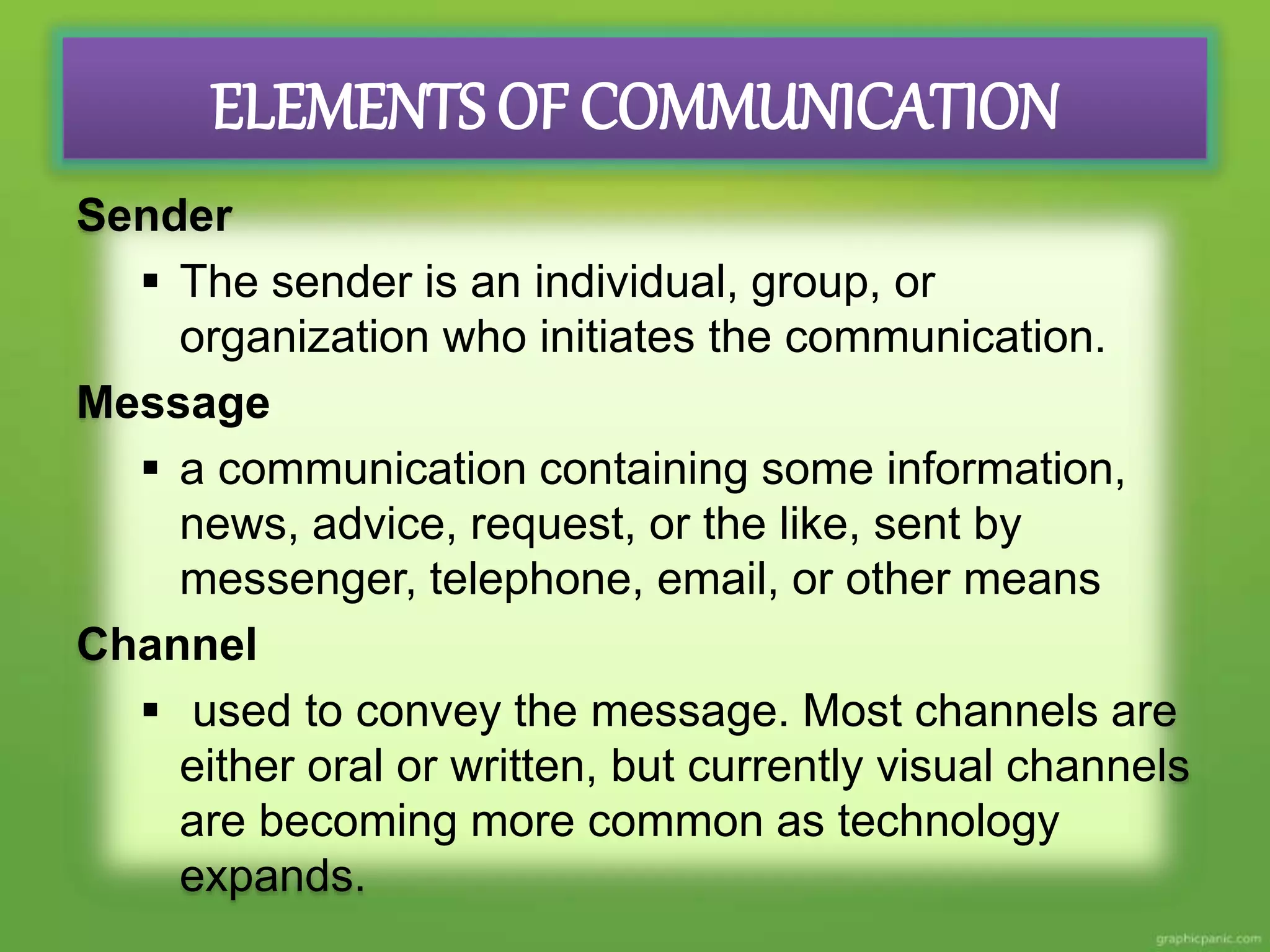
Sender
 The sender is an individual, group, or
organization who initiates the communication.
Message
 a communication containing some information,
news, advice, request, or the like, sent by
messenger, telephone, email, or other means
Channel
 used to convey the message. Most channels are
either oral or written, but currently visual channels
are becoming more common as technology
expands.
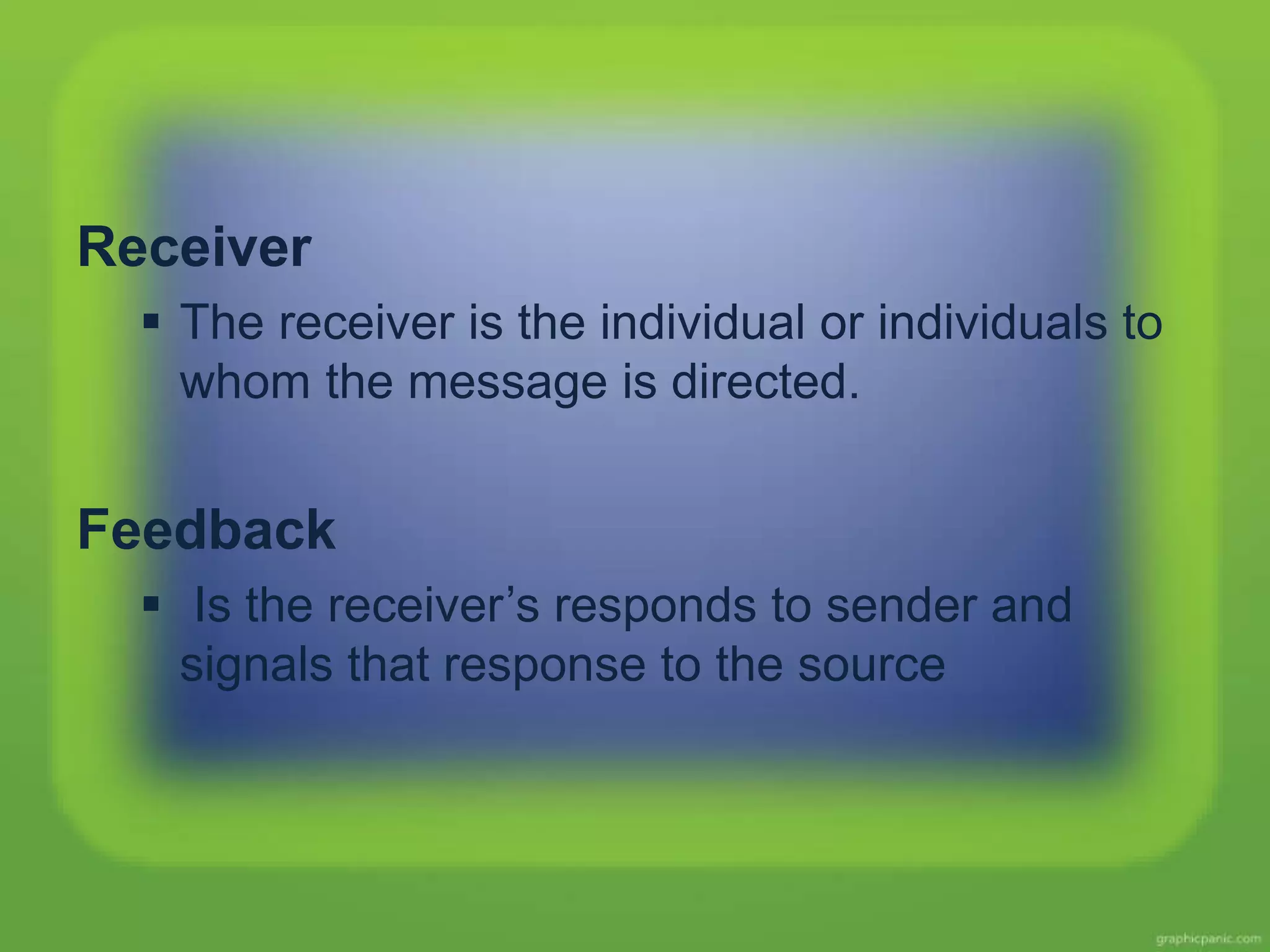
Receiver
 The receiver is the individual or individuals to
whom the message is directed.
Feedback
 Is the receiver’s responds to sender and
signals that response to the source
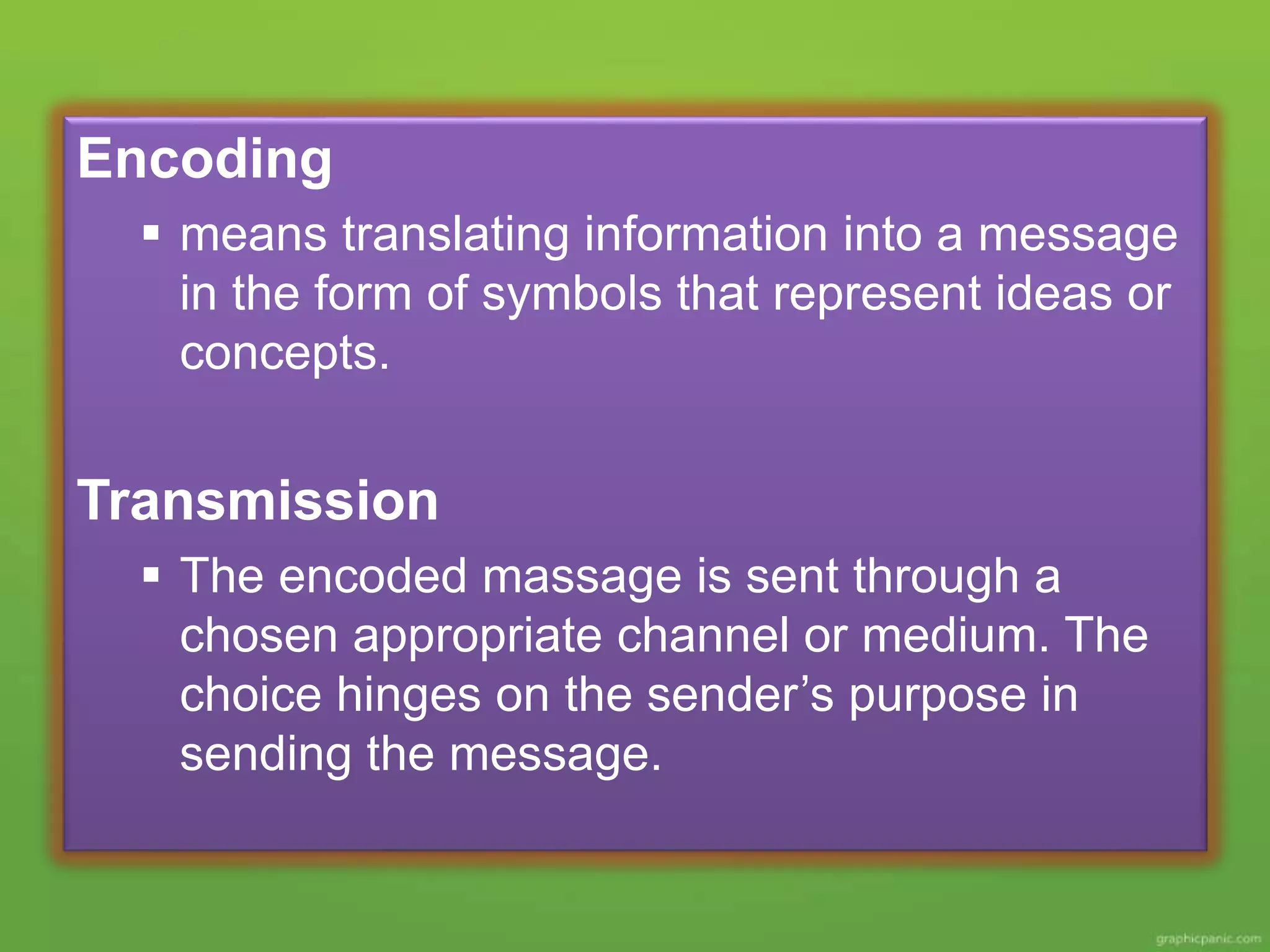
Encoding
 means translating information into a message
in the form of symbols that represent ideas or
concepts.
Transmission
 The encoded massage is sent through a
chosen appropriate channel or medium. The
choice hinges on the sender’s purpose in
sending the message.
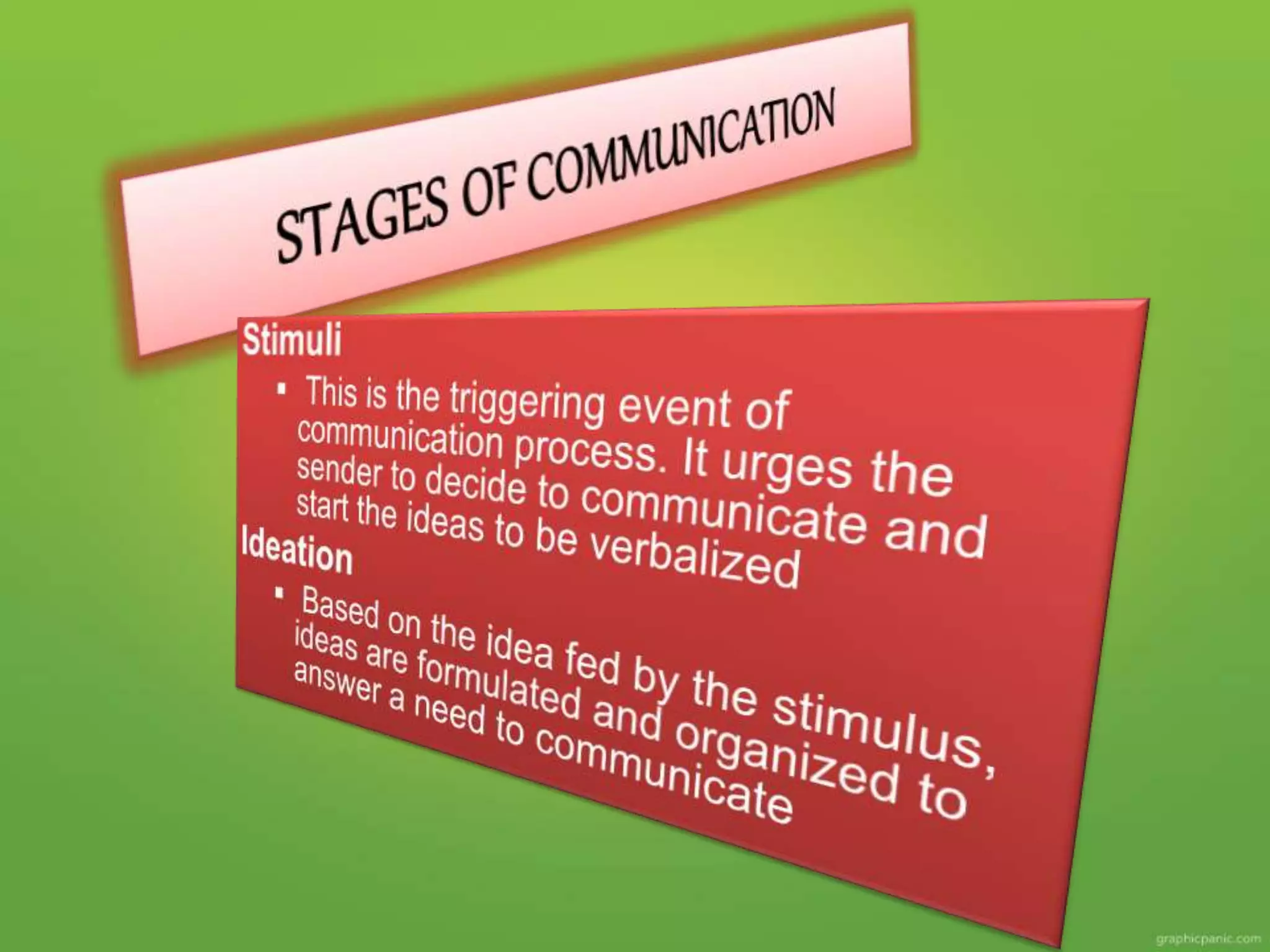
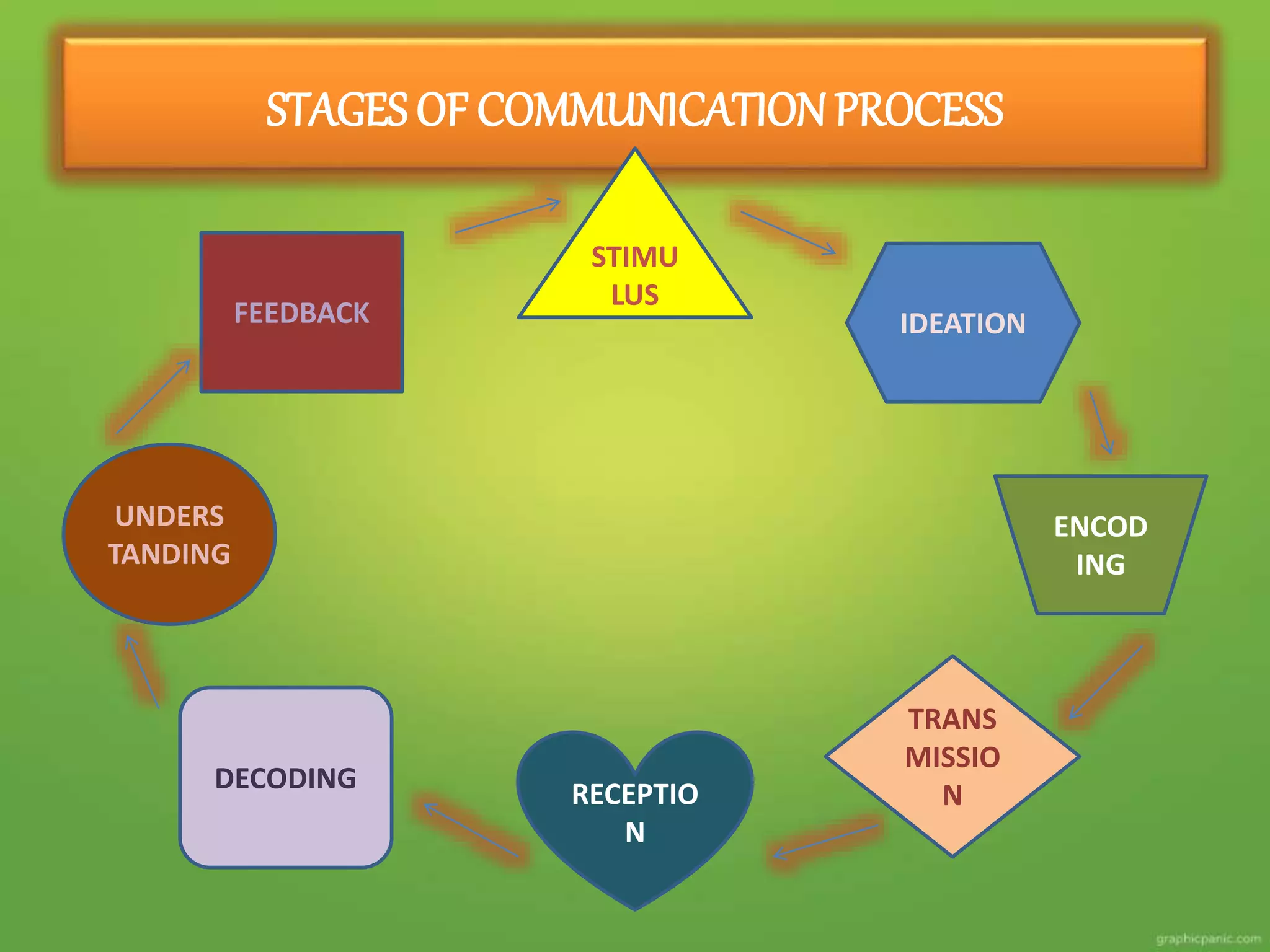
STAGES OF COMMUNICATIONPROCESS
STIMU
LUS
UNDERS
TANDING
FEEDBACK
DECODING
IDEATION
TRANS
MISSIO
NRECEPTIO
N
ENCOD
ING
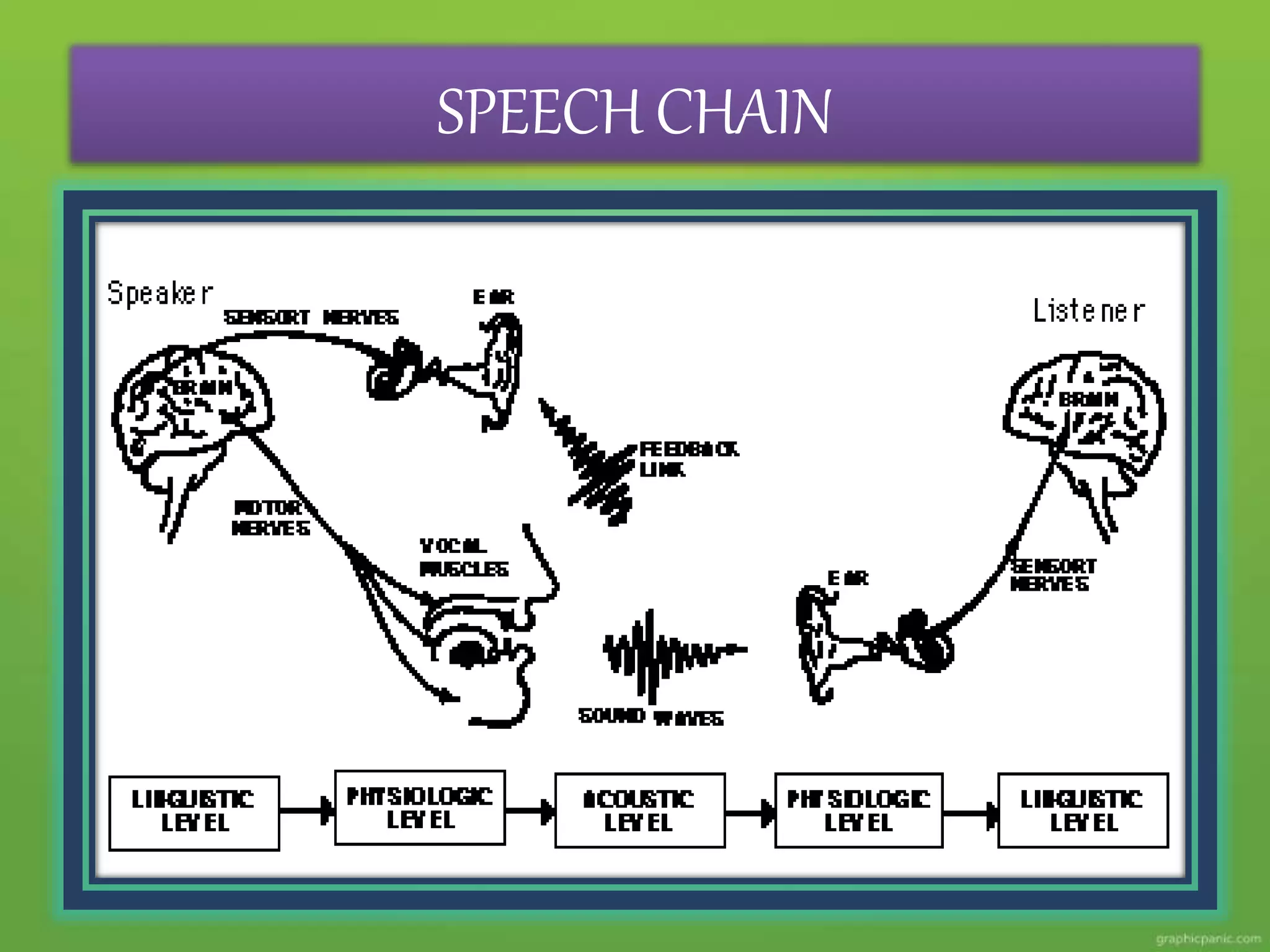
SPEECH CHAIN
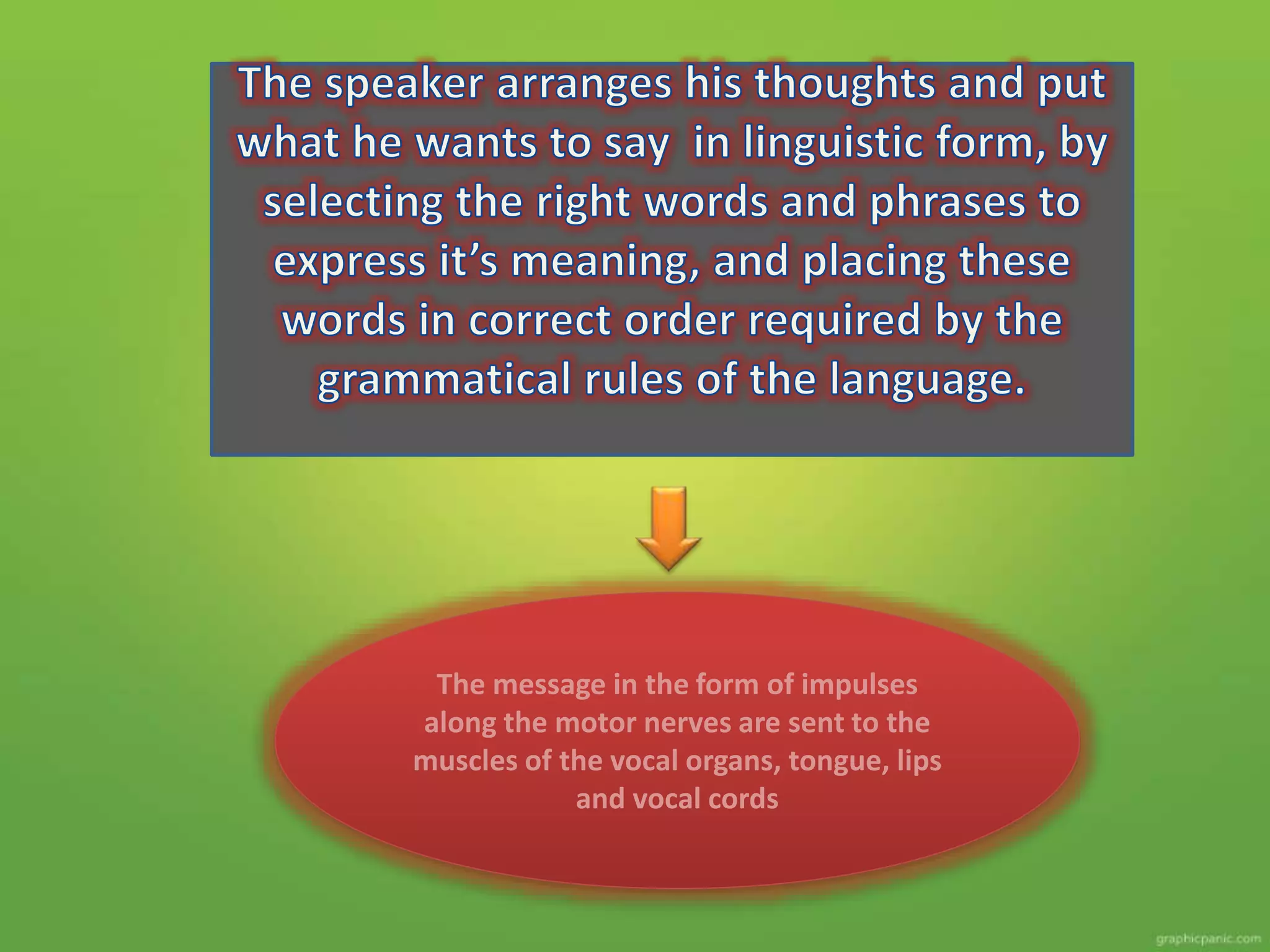
The message in the form of impulses
along the motor nerves are sent to the
muscles of the vocal organs, tongue, lips
and vocal cords
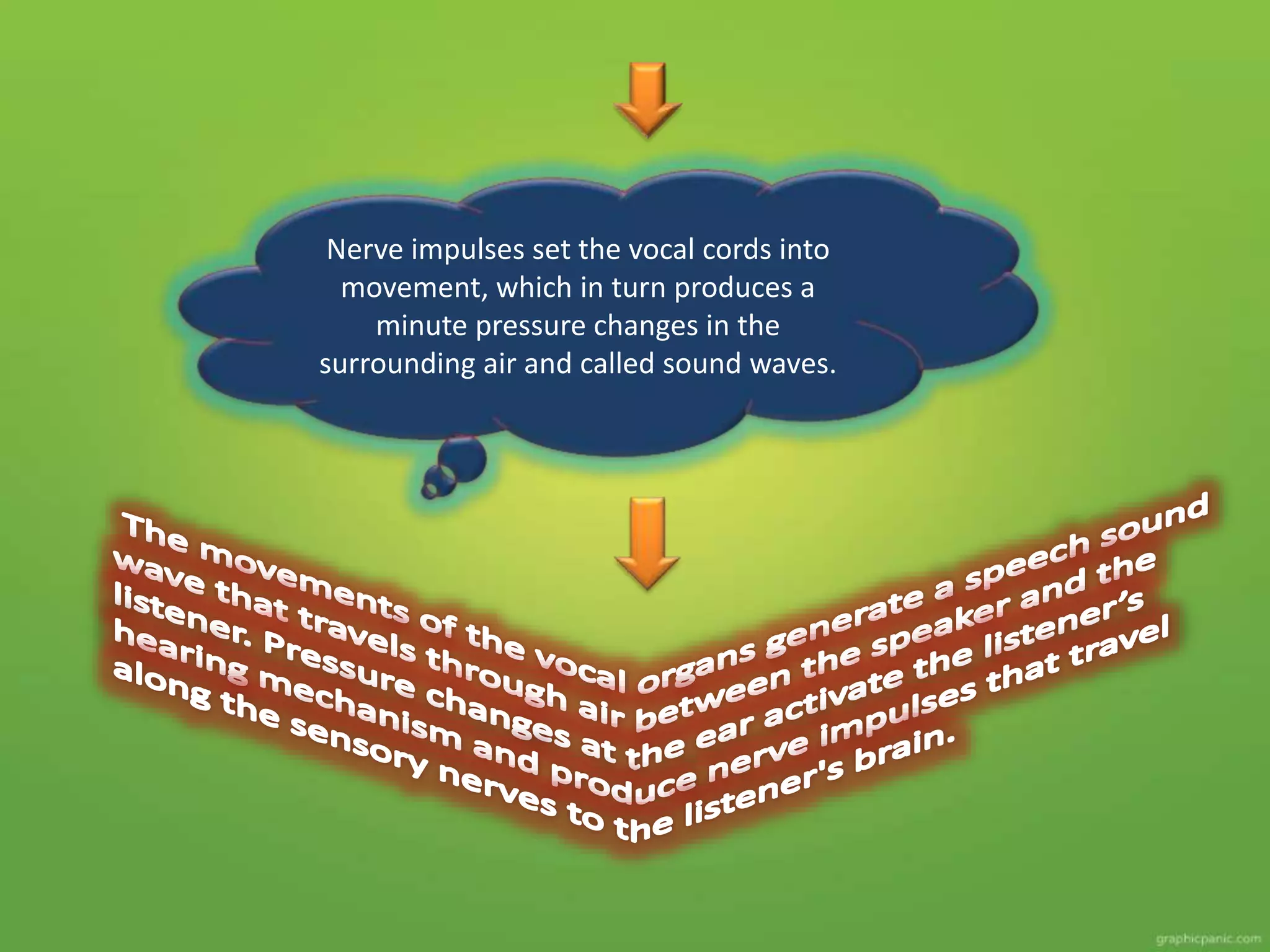
Nerve impulses set the vocal cords into
movement, which in turn produces a
minute pressure changes in the
surrounding air and called sound waves.
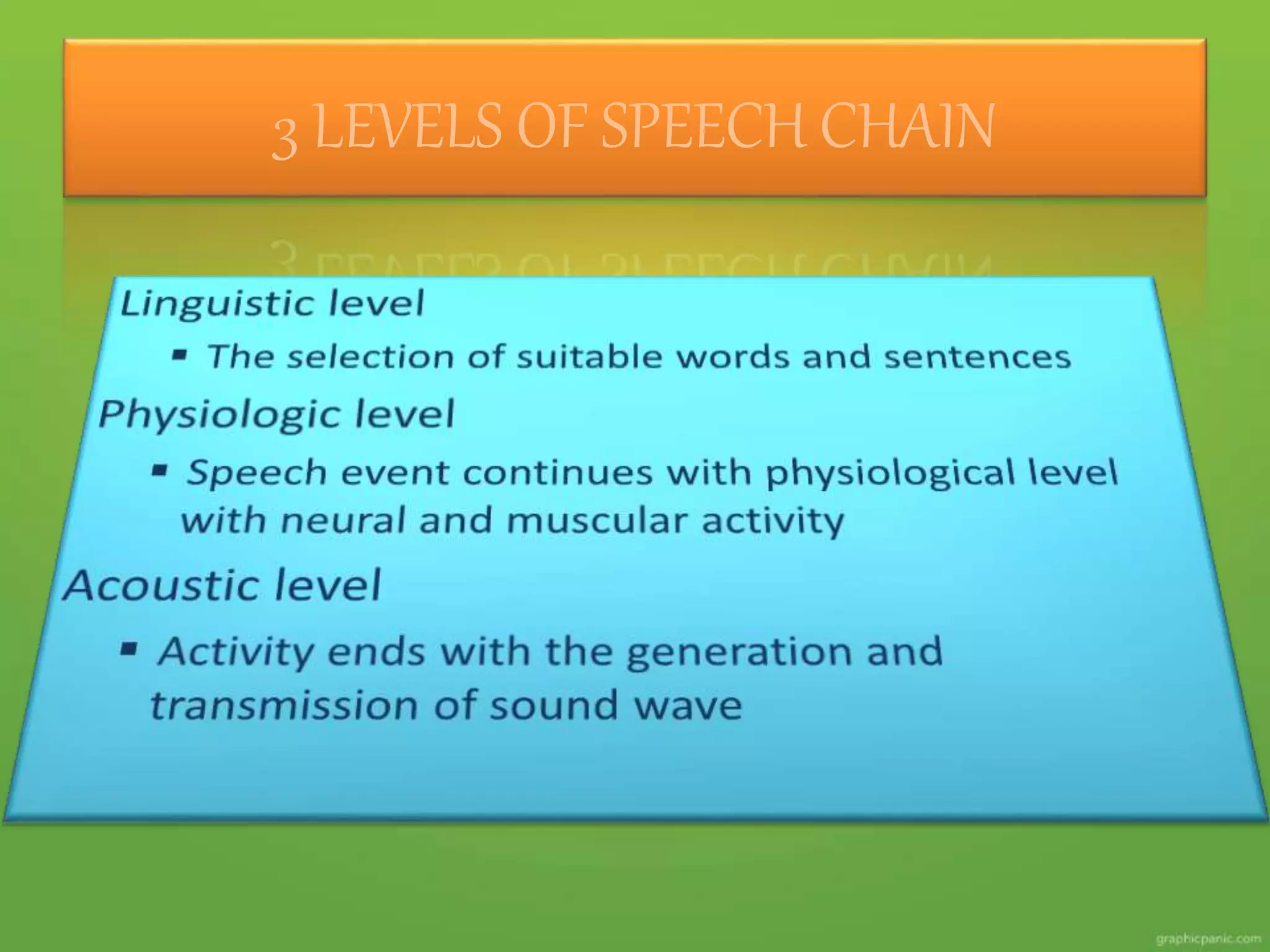
3 LEVELS OF SPEECH CHAIN
The communication-process-ppt  5

The communication-process-ppt 5

  • 1.
  • 2.
    INTRODUCTION Communication process isthe exchange of information between two or more people. It can best be summarized as the transmission of a message from a sender to a receiver in an understandable manner. It’s goal is to convey information—the understanding of that information—from one person or group to another person or group .
  • 4.
    ELEMENTS OF COMMUNICATION Sender The sender is an individual, group, or organization who initiates the communication. Message  a communication containing some information, news, advice, request, or the like, sent by messenger, telephone, email, or other means Channel  used to convey the message. Most channels are either oral or written, but currently visual channels are becoming more common as technology expands.
  • 6.
    Receiver  The receiveris the individual or individuals to whom the message is directed. Feedback  Is the receiver’s responds to sender and signals that response to the source
  • 8.
    Encoding  means translatinginformation into a message in the form of symbols that represent ideas or concepts. Transmission  The encoded massage is sent through a chosen appropriate channel or medium. The choice hinges on the sender’s purpose in sending the message.
  • 9.
  • 12.
  • 13.
    The message inthe form of impulses along the motor nerves are sent to the muscles of the vocal organs, tongue, lips and vocal cords
  • 14.
    Nerve impulses setthe vocal cords into movement, which in turn produces a minute pressure changes in the surrounding air and called sound waves.
  • 15.
    3 LEVELS OFSPEECH CHAIN