 Communication is the sum of all things one person does when 
he wants to create understanding in the mind of another. It 
involves systematic and continuous process of telling, listening 
and understanding. 
: Louis Allen 
 Communication is transfer of information from the sender to the 
receiver with the information being understood by the receiver. 
: Harold Koontz and Heniz Weihrich 
 Communication is a process by which people create and 
share information with one another in order to reach common 
understanding. 
: Rogers
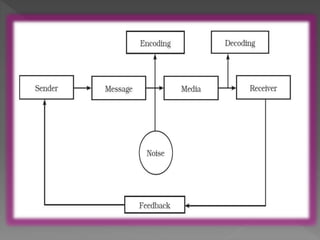
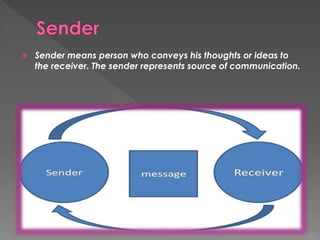
 Sender means person who conveys his thoughts or ideas to 
the receiver. The sender represents source of communication.
 It is the content of ideas, feelings, suggestions, 
order etc., intended to be communicated.
 It is the process of converting the message into 
communication symbols such as words, pictures, 
gestures etc.
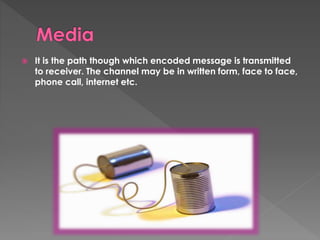
 It is the path though which encoded message is transmitted 
to receiver. The channel may be in written form, face to face, 
phone call, internet etc.
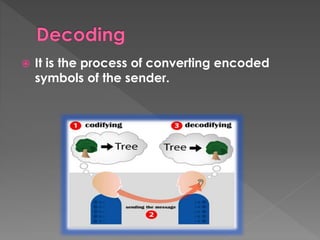
 It is the process of converting encoded 
symbols of the sender.
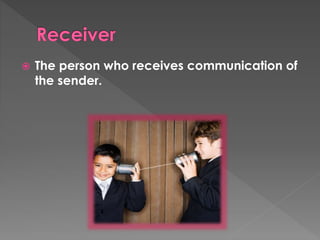
 The person who receives communication of 
the sender.
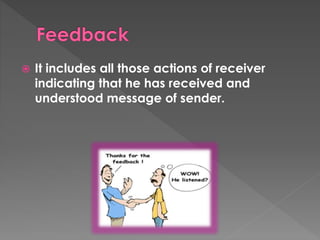
 It includes all those actions of receiver 
indicating that he has received and 
understood message of sender.
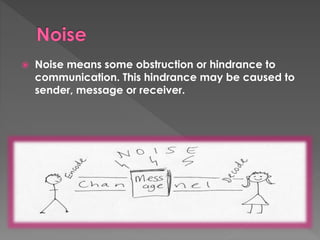
 Noise means some obstruction or hindrance to 
communication. This hindrance may be caused to 
sender, message or receiver.
 Ambiguous symbols that lead to faulty encoding. 
 A poor telephone connection. 
 An inattentive receiver. 
 Faulty decoding 
 poor understanding of message. 
 Gestures and postures that may distort the 
message.
 Clarify the ideas before communication 
 Communicate according to the needs of receiver 
 Consult others before communicating 
 Be aware of languages, tone and content of message 
 Convey things of help and value to listeners 
 Ensure proper feedback 
 Be a good listener
 “We have two ears and one mouth so that we can listen 
twice as much as we speak.” – Epictetus 
Any Questions Or 
Feedback

Process of Communication

  • 2.
     Communication isthe sum of all things one person does when he wants to create understanding in the mind of another. It involves systematic and continuous process of telling, listening and understanding. : Louis Allen  Communication is transfer of information from the sender to the receiver with the information being understood by the receiver. : Harold Koontz and Heniz Weihrich  Communication is a process by which people create and share information with one another in order to reach common understanding. : Rogers
  • 4.
     Sender meansperson who conveys his thoughts or ideas to the receiver. The sender represents source of communication.
  • 5.
     It isthe content of ideas, feelings, suggestions, order etc., intended to be communicated.
  • 6.
     It isthe process of converting the message into communication symbols such as words, pictures, gestures etc.
  • 7.
     It isthe path though which encoded message is transmitted to receiver. The channel may be in written form, face to face, phone call, internet etc.
  • 8.
     It isthe process of converting encoded symbols of the sender.
  • 9.
     The personwho receives communication of the sender.
  • 10.
     It includesall those actions of receiver indicating that he has received and understood message of sender.
  • 11.
     Noise meanssome obstruction or hindrance to communication. This hindrance may be caused to sender, message or receiver.
  • 12.
     Ambiguous symbolsthat lead to faulty encoding.  A poor telephone connection.  An inattentive receiver.  Faulty decoding  poor understanding of message.  Gestures and postures that may distort the message.
  • 13.
     Clarify theideas before communication  Communicate according to the needs of receiver  Consult others before communicating  Be aware of languages, tone and content of message  Convey things of help and value to listeners  Ensure proper feedback  Be a good listener
  • 14.
     “We havetwo ears and one mouth so that we can listen twice as much as we speak.” – Epictetus Any Questions Or Feedback