The Communication
Process
Presented by: Daryl Casiano
- Michel de Montaigne
“Speech belongs half on the
speaker, half to the listener. The
latter must prepare to receive it
according to the motion it takes.:
Pair up and exchange ideas about the
following terms:
•Communication
•Sender
•Message
•Medium
•Channel
•Feedback
•Noise
•Destination
What is communication?
• The term communication is derived from the
latin word communis, meaning common.
• In general, communication refers to the
reciprocal exchange of information, ideas,
facts, opinions, beliefs, feelings & attitudes
through verbal or nonverbal means between
two people or within a group of people.
Meaning of Communication
Communication as:
• A process through which individuals mutually exchange their
ideas, values, thoughts, feeling & actions with one or more
people.
• The transfer of information from the sender to the receiver so
that it is understood in the right context.
• The process of initiating, transmitting & receiving information.
• The means of making the transfer of information productive &
goal oriented.
• The process of sharing information, ideas & attitudes between
individual.
Definition of communication
• Communication is a process by which information
is exchanged between individuals through a
common system of symbols & signs of behaviour.
- Webster’s Dictionary
• Communication is interchange of thoughts,
opinions or information by speech, writing or signs.
- Robert Andersion
• Language is an essential tool in expressing human thoughts
and feelings.
• You use language to interact, build relationship and
understand other people’s idea.
• As you wake up each day to accomplish your work and
routine, you meet and talk to different people along the way.
• You communicate with them – your parents, friends, and
teachers.
• What you say and how you say it are far more revealing of
your intelligence, personality, and character than the way you
dress and walk.
• Communications necessitates the use of
language, be it verbal, which refers to the
message you sent through your phone or
nonverbal which refers to any of your gesture.
• Unless you intentionally isolate yourself,
communication is an inevitable activity.
• Language is a natural gift you possess to
survive in a society.
Important Points in
Understanding the
Communication Process
Communication, basically, is the process of sending a message,
oral or written. Technically, it is defined as the process by which
one seeks to share meaning via the transmission of symbolic
message.
Remember these three important points in understanding
communication process:
1. Communication involves people and their relationship with
others.
2. Communication involves shared meaning or presuppositions,
which suggests that people must agree on the definition of
the idea talked about.
3. Communication involves symbols – gestures, sounds, letters,
numbers and words can only represent or approximate the
idea that they are meant to communicate.
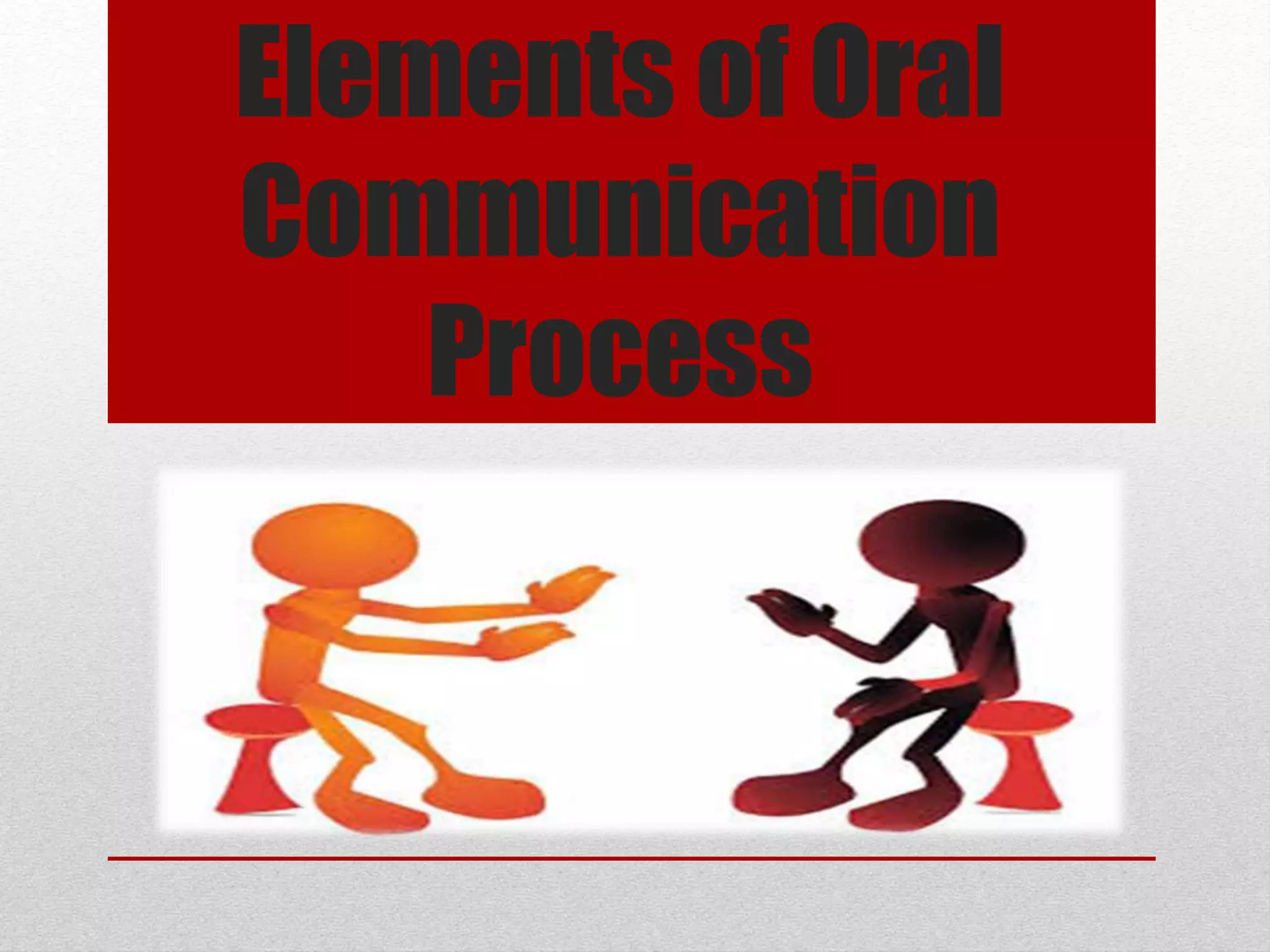
Elements of Oral
Communication
Process
1. Source or Encoder
The source of the
message is someone who
decides to communicate;
therefore, he is considered
the speaker or encoder. He
usually starts the
communication.
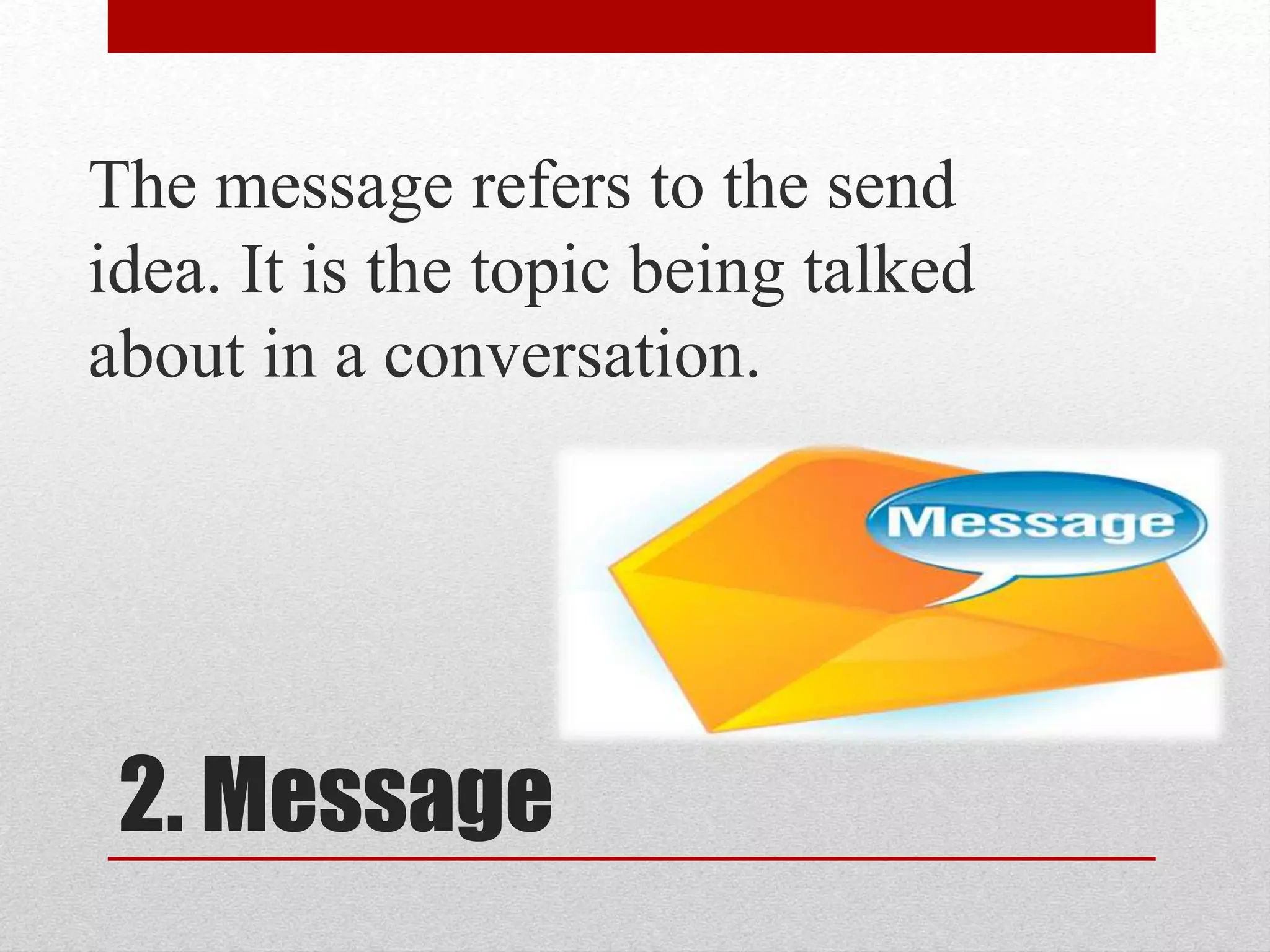
2. Message
The message refers to the send
idea. It is the topic being talked
about in a conversation.
3. Channel
Message is sent through a medium.
There can be several kinds of
mediums; however, in simple
conversation, our voice travelled
through the airwaves.
4. Feedback
To make communication a complete
exchange process, response is necessary.
Usually this element can come from the
decoder.
5. Listener or Decoder
This is someone who has receive the
message and give his own thoughts about
it. This person is called the intended
listener or decoder.
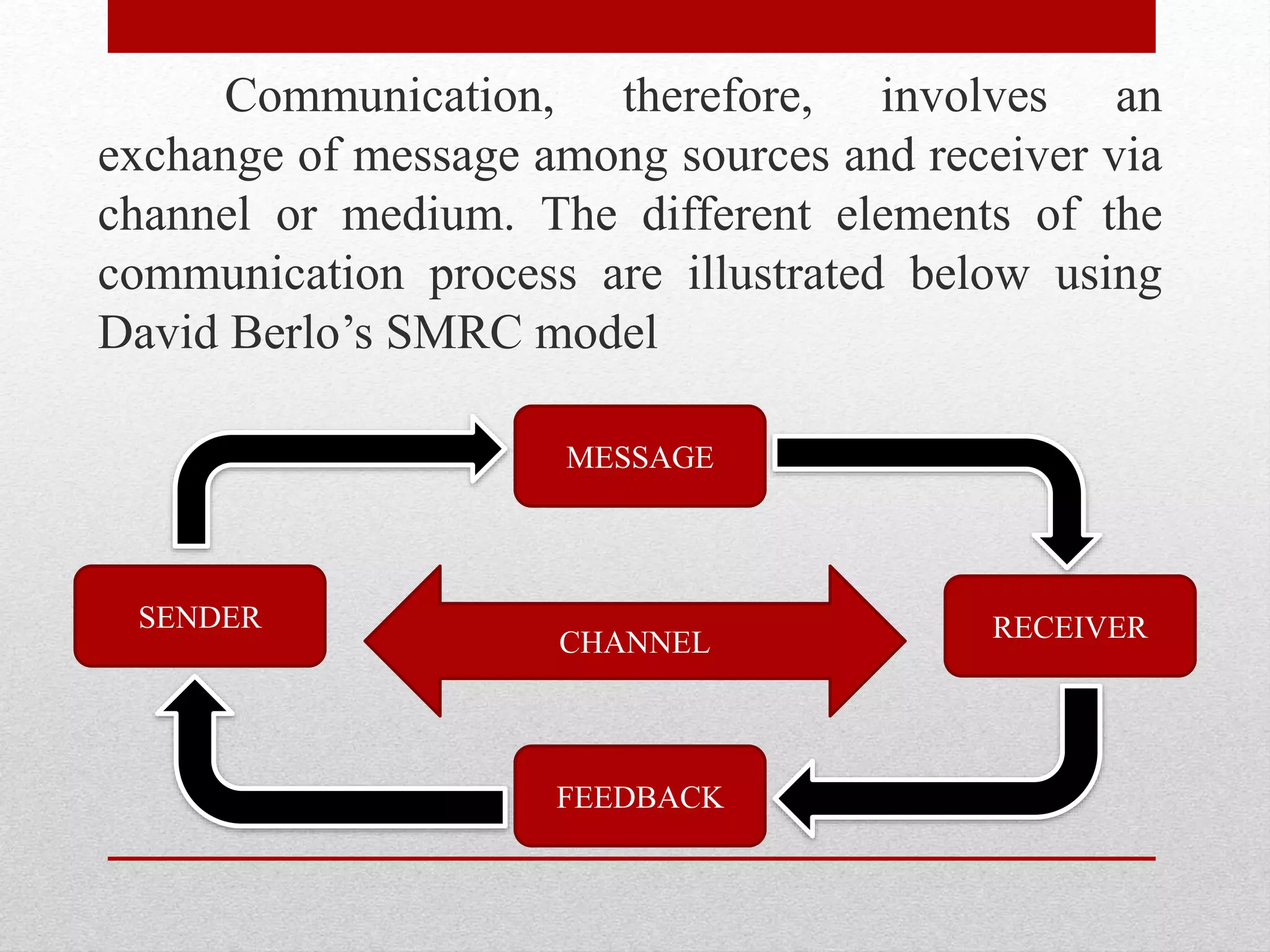
Communication, therefore, involves an
exchange of message among sources and receiver via
channel or medium. The different elements of the
communication process are illustrated below using
David Berlo’s SMRC model
MESSAGE
RECEIVERSENDER
FEEDBACK
CHANNEL
WARM UP
• Form groups of four to five members.
• Create a two-minute group presentation that
reflects your understanding of “communication”
is about.
• Be creative.
• You have five minute to prepare.

The Communication Process

  • 1.
  • 2.
    - Michel deMontaigne “Speech belongs half on the speaker, half to the listener. The latter must prepare to receive it according to the motion it takes.:
  • 3.
    Pair up andexchange ideas about the following terms: •Communication •Sender •Message •Medium •Channel •Feedback •Noise •Destination
  • 4.
    What is communication? •The term communication is derived from the latin word communis, meaning common. • In general, communication refers to the reciprocal exchange of information, ideas, facts, opinions, beliefs, feelings & attitudes through verbal or nonverbal means between two people or within a group of people.
  • 5.
    Meaning of Communication Communicationas: • A process through which individuals mutually exchange their ideas, values, thoughts, feeling & actions with one or more people. • The transfer of information from the sender to the receiver so that it is understood in the right context. • The process of initiating, transmitting & receiving information. • The means of making the transfer of information productive & goal oriented. • The process of sharing information, ideas & attitudes between individual.
  • 6.
    Definition of communication •Communication is a process by which information is exchanged between individuals through a common system of symbols & signs of behaviour. - Webster’s Dictionary • Communication is interchange of thoughts, opinions or information by speech, writing or signs. - Robert Andersion
  • 7.
    • Language isan essential tool in expressing human thoughts and feelings. • You use language to interact, build relationship and understand other people’s idea. • As you wake up each day to accomplish your work and routine, you meet and talk to different people along the way. • You communicate with them – your parents, friends, and teachers. • What you say and how you say it are far more revealing of your intelligence, personality, and character than the way you dress and walk.
  • 8.
    • Communications necessitatesthe use of language, be it verbal, which refers to the message you sent through your phone or nonverbal which refers to any of your gesture. • Unless you intentionally isolate yourself, communication is an inevitable activity. • Language is a natural gift you possess to survive in a society.
  • 9.
    Important Points in Understandingthe Communication Process
  • 10.
    Communication, basically, isthe process of sending a message, oral or written. Technically, it is defined as the process by which one seeks to share meaning via the transmission of symbolic message. Remember these three important points in understanding communication process: 1. Communication involves people and their relationship with others. 2. Communication involves shared meaning or presuppositions, which suggests that people must agree on the definition of the idea talked about. 3. Communication involves symbols – gestures, sounds, letters, numbers and words can only represent or approximate the idea that they are meant to communicate.
  • 11.
  • 12.
    1. Source orEncoder The source of the message is someone who decides to communicate; therefore, he is considered the speaker or encoder. He usually starts the communication.
  • 13.
    2. Message The messagerefers to the send idea. It is the topic being talked about in a conversation.
  • 14.
    3. Channel Message issent through a medium. There can be several kinds of mediums; however, in simple conversation, our voice travelled through the airwaves.
  • 15.
    4. Feedback To makecommunication a complete exchange process, response is necessary. Usually this element can come from the decoder.
  • 16.
    5. Listener orDecoder This is someone who has receive the message and give his own thoughts about it. This person is called the intended listener or decoder.
  • 17.
    Communication, therefore, involvesan exchange of message among sources and receiver via channel or medium. The different elements of the communication process are illustrated below using David Berlo’s SMRC model MESSAGE RECEIVERSENDER FEEDBACK CHANNEL
  • 18.
    WARM UP • Formgroups of four to five members. • Create a two-minute group presentation that reflects your understanding of “communication” is about. • Be creative. • You have five minute to prepare.