IMPLEMENTING A
MECHANICAL MODEL
FOR PLYOMETRIC
PROGRESSIONS
Mike Young, PhD
mikeyoungphd
mikeyoung
What if I told you
that everything
you’ve ever learned
about plyometric
progressions is
wrong
I didn’t have a
force platform
and did just fine
thank you
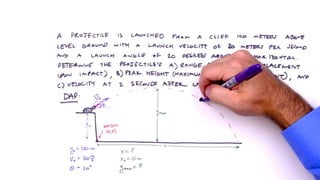
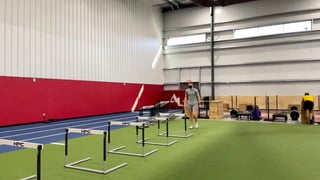
What was the vertical velocity?
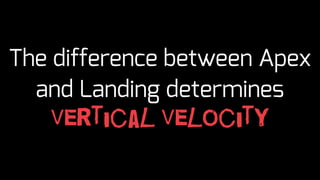
The difference between Apex
and Landing determines
Vertical Velocity
NOT NECESSARILY
TAKEOFF POINT
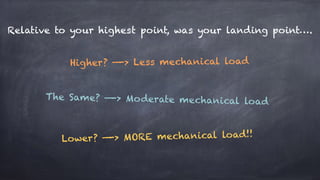
Relative to your highest point, was your landing point….
Lower? —-> MORE mechanical load!!
Higher? —-> Less mechanical load
The Same? —-> Moderate mechanical load
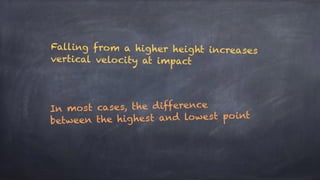
Falling from a higher height increases
vertical velocity at impact
In most cases, the difference
between the highest and lowest point
Improvements
in Jumping
Ability will
Naturally
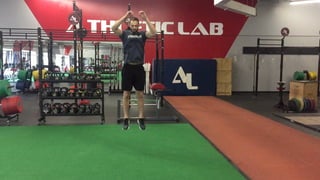
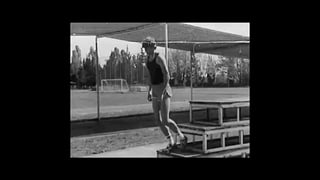
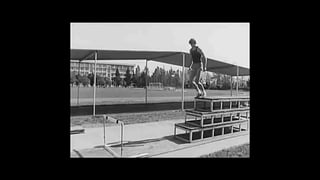
Did they fall a great distance?
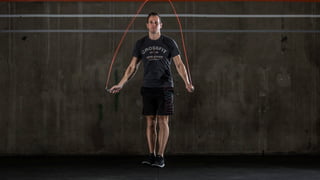
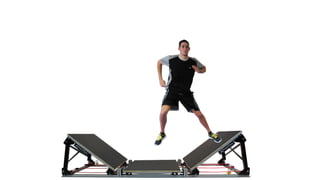
What was the horizontal velocity?
Any Forward, Backward
or Lateral Movement?
Did they fall a great distance?
What was there horizontal velocity?
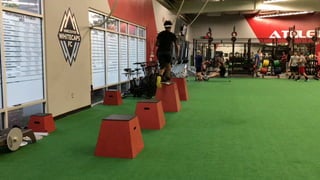
Did they fall a great distance?
How fast were they moving?
Did they fall a great distance?
How fast were they moving?
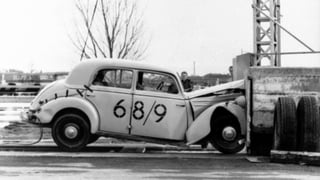
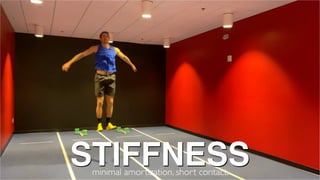
How was the collision?
STIFFNESS
minimal amortization. short contact.
Did they fall a great distance?
How fast were they moving?
Compliant or jarring?
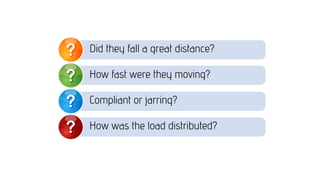
Did they fall a great distance?
How fast were they moving?
Compliant or jarring?
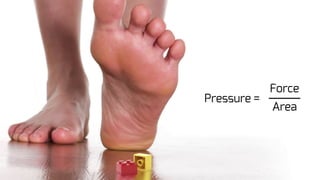
How was the load distributed?
Pressure =
Force
Area
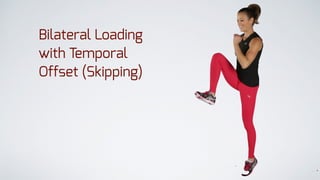
Bilateral Loading
with Temporal
Offset (Skipping)
Bilateral Asymmetric Loading
(Split / Lunge Jumps)
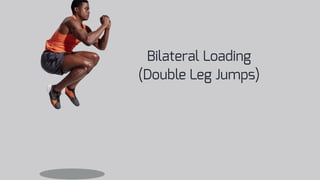
Bilateral Loading
(Double Leg Jumps)
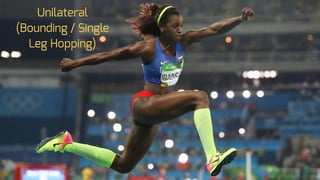
Unilateral
(Bounding / Single
Leg Hopping)
Anatomy,
Contact &
Loading
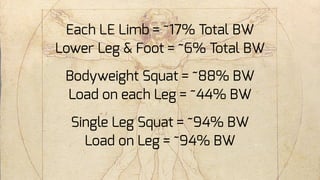
Each LE Limb = ~17% Total BW
Lower Leg & Foot = ~6% Total BW
Bodyweight Squat = ~88% BW
Load on each Leg = ~44% BW
Single Leg Squat = ~94% BW
Load on Leg = ~94% BW
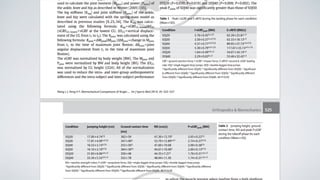
Impact Force is approximately double and eccentric
GRF is approximately 30-50% higher
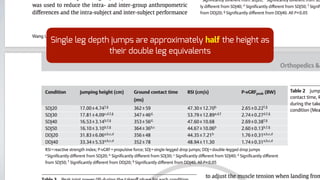
Single leg depth jumps are approximately half the height as
their double leg equivalents
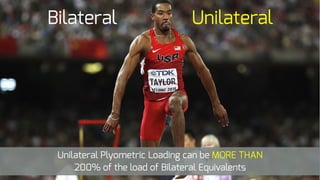
Bilateral Unilateral
Unilateral Plyometric Loading can be MORE THAN
200% of the load of Bilateral Equivalents
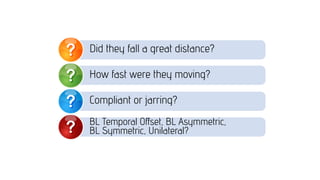
Did they fall a great distance?
How fast were they moving?
Compliant or jarring?
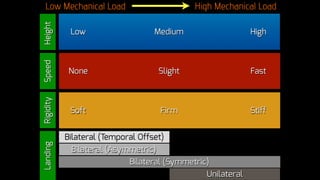
BL Temporal Offset, BL Asymmetric,
BL Symmetric, Unilateral?
Low Mechanical Load High Mechanical Load
Low Medium High
Heigh
t
None Slight Fast
Speed
Soft Firm Stiff
Rigidi
ty
Bilateral (Temporal Offset)
Bilateral (Asymmetric)
Bilateral (Symmetric)
Unilateral
Landi
ng
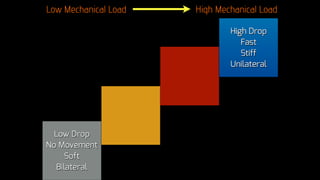
Low Drop
No Movement
Soft
Bilateral
High Drop
Fast
Stiff
Unilateral
Low Mechanical Load High Mechanical Load
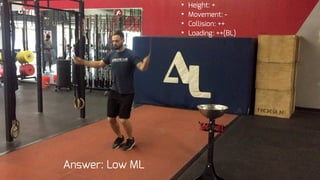
• Height: +
• Movement: -
• Collision: ++
• Loading: ++(BL)
Answer: Low ML
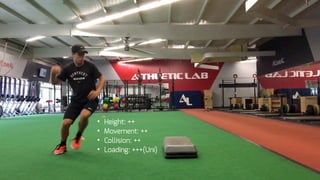
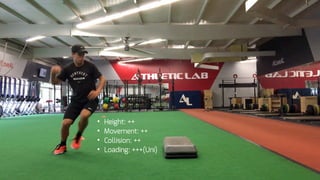
• Height: ++
• Movement: ++
• Collision: ++
• Loading: +++(Uni)
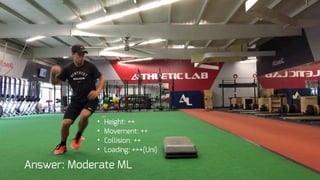
• Height: ++
• Movement: ++
• Collision: ++
• Loading: +++(Uni)
• Height: ++
• Movement: ++
• Collision: ++
• Loading: +++(Uni)
Answer: Moderate ML
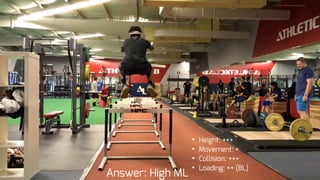
• Height: +++
• Movement: +
• Collision: +++
• Loading: ++ (BL)
Answer: High ML
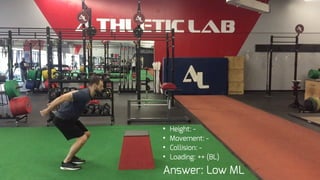
• Height: -
• Movement: -
• Collision: -
• Loading: ++ (BL)
Answer: Low ML
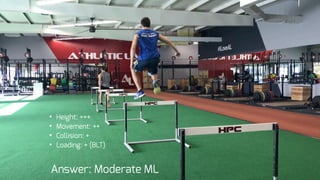
• Height: +++
• Movement: ++
• Collision: +
• Loading: + (BLT)
Answer: Moderate ML
• Height: +
• Movement: +
• Collision: +
• Loading: ++ (BL)
Answer: Low ML
• Height: ++
• Movement: +
• Collision: +++
• Loading: ++ (BL)
Answer: Moderate ML
• Height: +++
• Movement: +++
• Collision: +++
• Loading: +++ (UL)
• Height: +++
• Movement: +++
• Collision: +++
• Loading: +++ (UL)
Answer: High ML
Other Factors to
Consider
Anyone can fall….
but can you land?
Considerations for Surface
>Mass = >Load
What about external loading?
What about assistance?
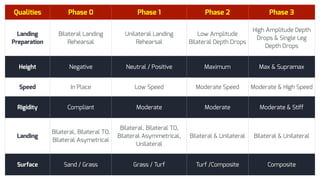
Qualities Phase 0 Phase 1 Phase 2 Phase 3
Landing
Preparation
Bilateral Landing
Rehearsal
Unilateral Landing
Rehearsal
Low Amplitude
Bilateral Depth Drops
High Amplitude Depth
Drops & Single Leg
Depth Drops
Height Negative Neutral / Positive Maximum Max & Supramax
Speed In Place Low Speed Moderate Speed Moderate & High Speed
Rigidity Compliant Moderate Moderate Moderate & Stiff
Landing
Bilateral, Bilateral TO,
Bilateral Asymetrical
Bilateral, Bilateral TO,
Bilateral Asymmetrical,
Unilateral
Bilateral & Unilateral Bilateral & Unilateral
Surface Sand / Grass Grass / Turf Turf /Composite Composite
KNOW THE 4 QUESTIONS
UNDERSTAND THE BASICS OF PROJECTILE
MOTION & IMPACT
CREATE A HIERARCHY BASED ON THE 4
QUESTIONS
USE PLYOMETRIC HIERARCHY TO ESTABLISH
YOUR ANNUAL, RTP AND LTAD PROGRESSIONS
THANKS
TWITTER.COM/MIKEYOUNG
ATHLETICLAB.COM
PROFORMANCE.PRO
FITFORFUTBOL.COM
ELITETRACK.COM

Implementing a Mechanical Model for Plyometric Progressions