Speed Development
By: Robbie Torsell
Overview
 What is speed development
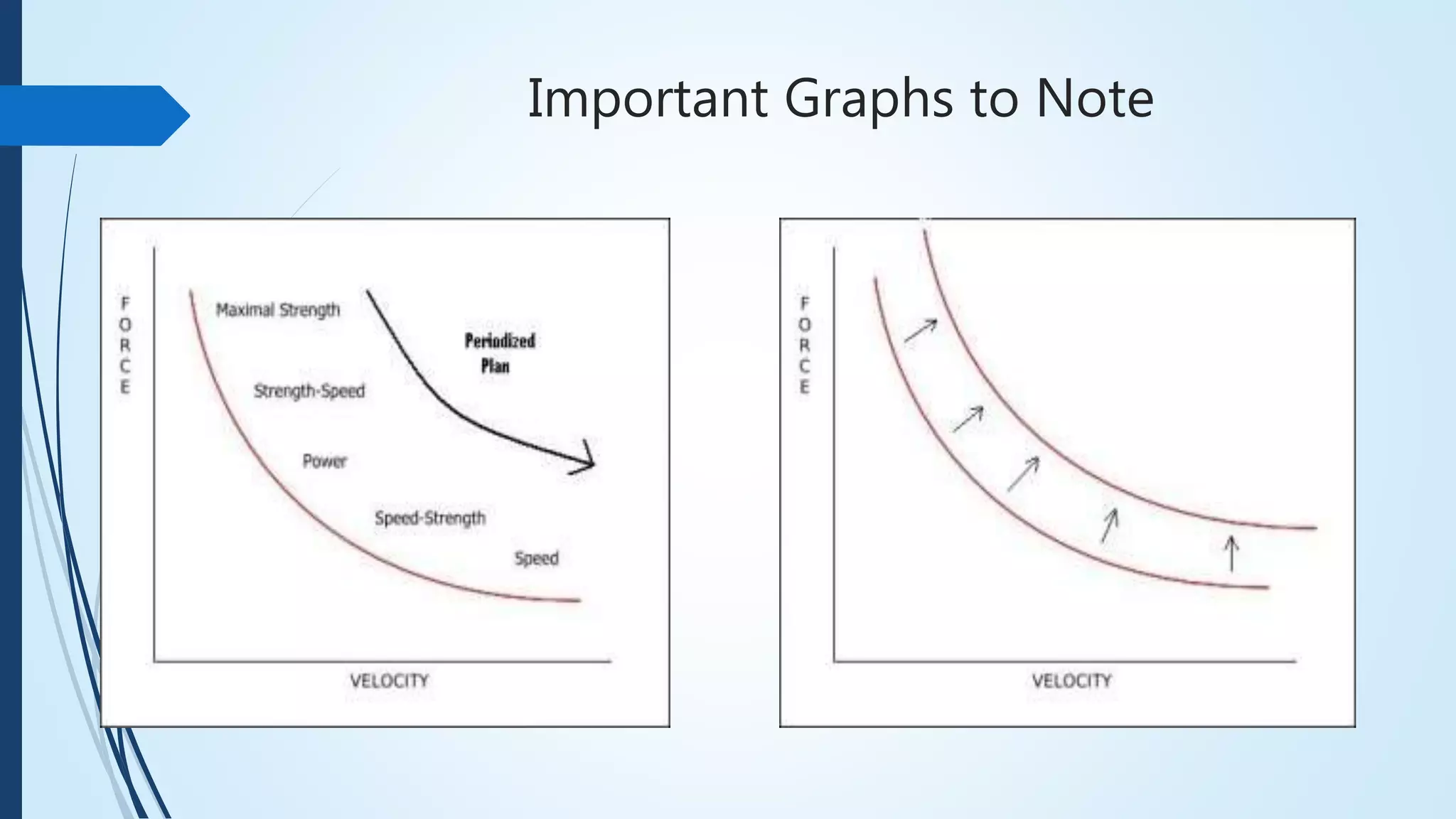
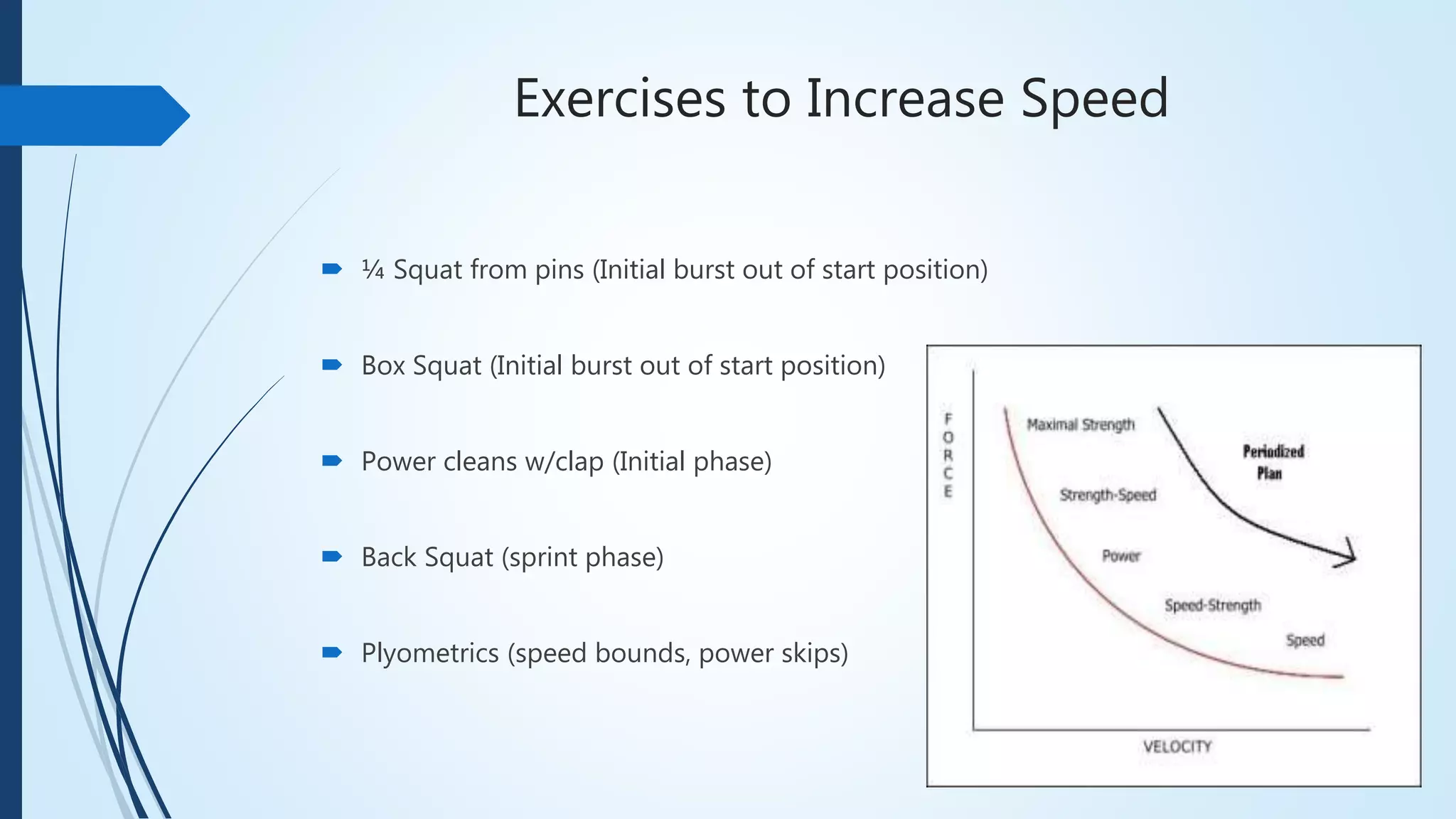
 Force vs. Velocity (Dr. John Challis)
 Starting position and phases (Coach Erin Tucker)
 Unilateral Exercises (Bilateral Deficit)
 Exercises to enhance speed
What is Speed Development?
 Efforts that are performed under seven seconds of duration
(Charlie Francis)
 Performed when the athlete is completely fresh and fully recovered
 Less is more
Important Graphs to Note
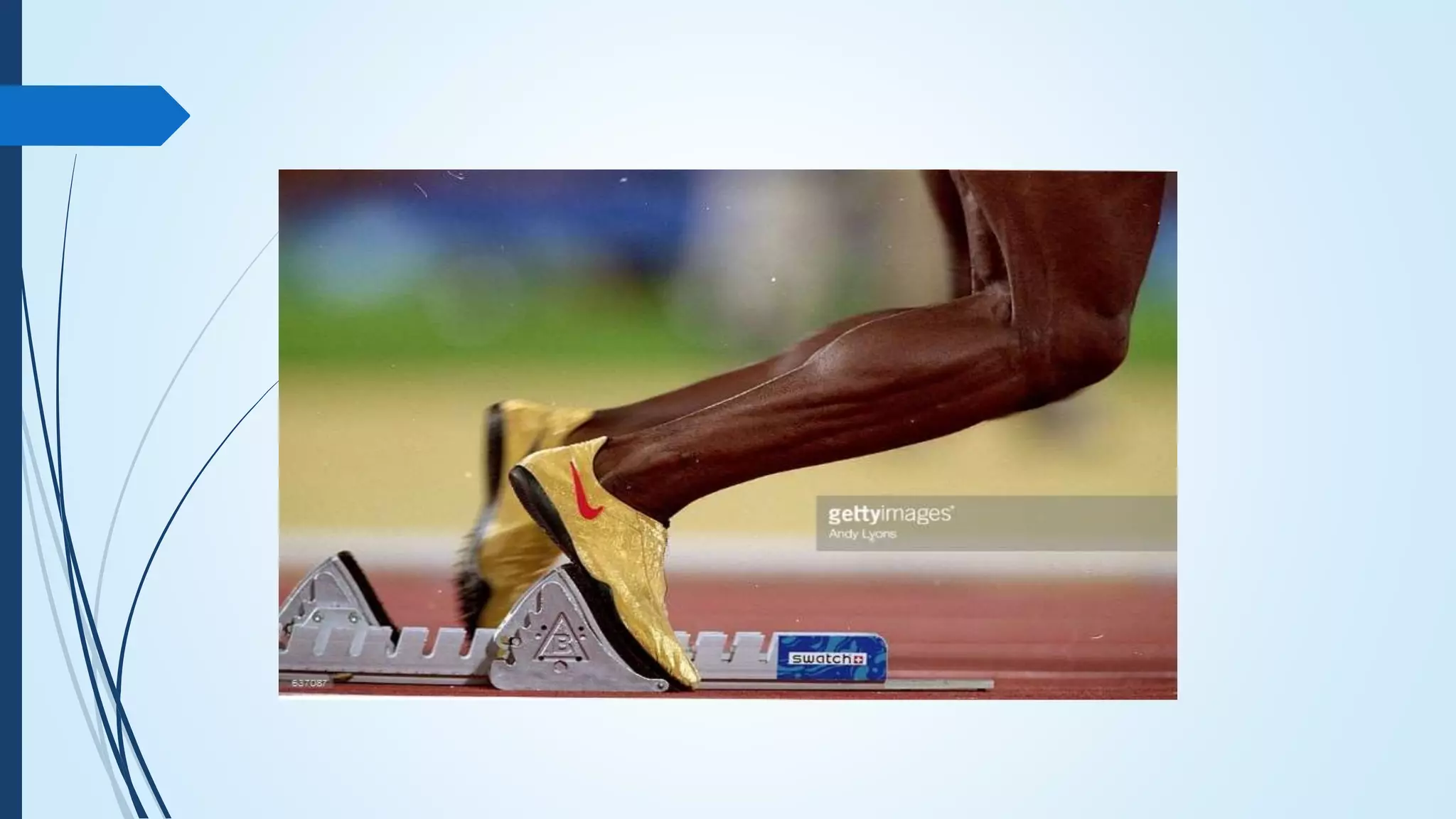
Starting position of a Sprint
 Misconception is to crowd the start line (Want to be back off the start line)
-Based on Projectile motion optimal angle is 45 degrees
 Thumbs directly in line with shoulders
 Front knee on start line, back knee in line with front foot
 Hips inch or two above shoulders
 Shoulders never go in front of the white line
3pt Start continued
 Out of block, Hand on ground goes straight back aggressively, Back hand fires
forward
Pushing out
 Initial push is off the back foot
 Controlled fall
 Go to your arms if you feel as if you’re falling
(Everything applied in the weight room, is to apply force to the ground out of the
blocks)
Application of forces among different
Athletes
Football players:
 Can apply force for 25-30m till they need to transition to opening up
 Lineman can apply forces so great in the first 5-10yds
(Faster than some sprinters)
Other Sports:
 10-15m drive
 5-10m transition
 5-10yd have opened up fully
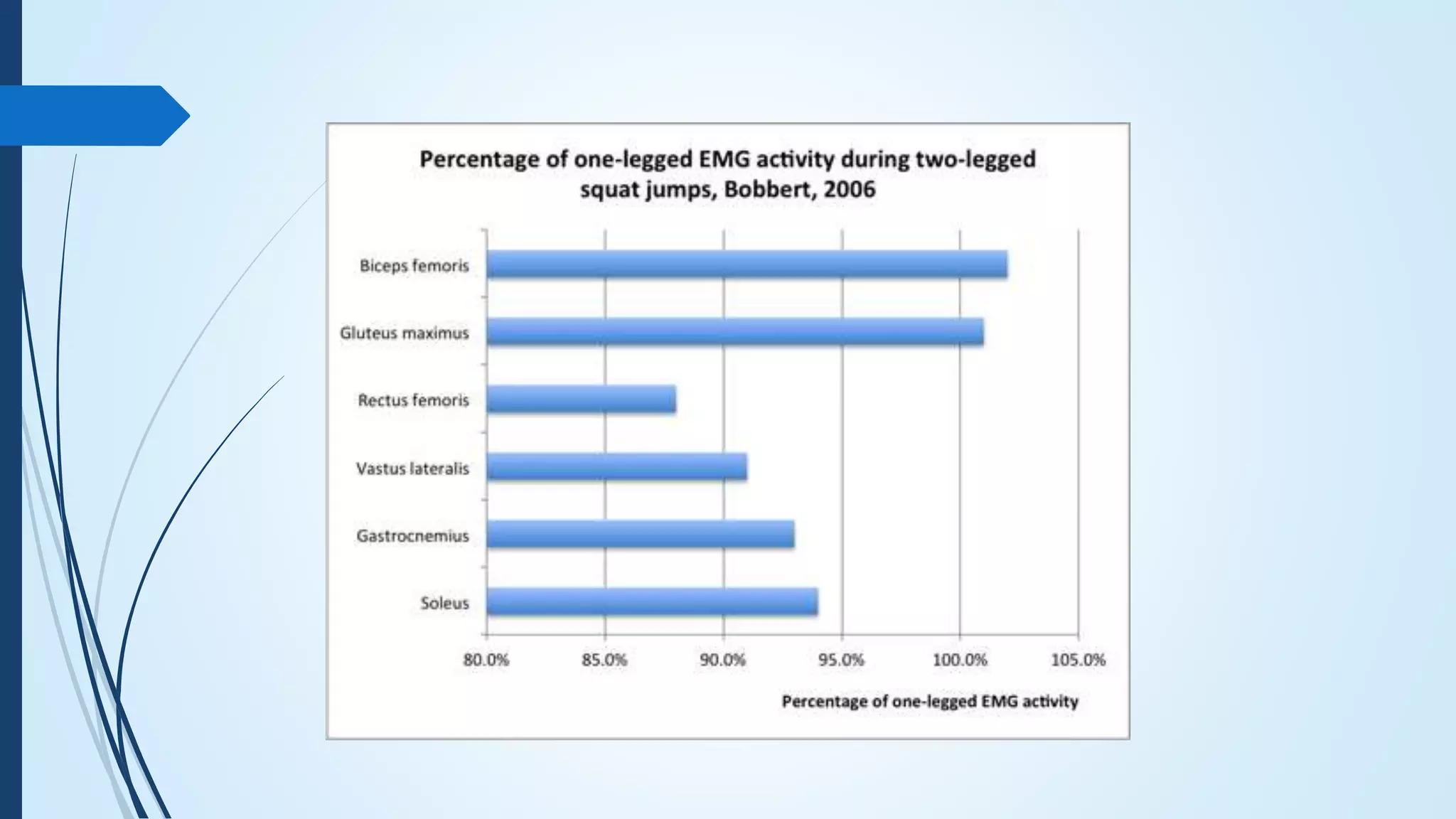
Why Unilateral Leg Exercises?
Bilateral Deficit
The bilateral limb deficit (BLD) phenomenon is the difference in maximal or near
maximal force generating capacity of muscles when they are contracted alone or in
combination with the contralateral muscles. A deficit occurs when the summed
unilateral force is greater than the bilateral force.
(PubMed.gov)
Exercises to Increase Speed
 ¼ Squat from pins (Initial burst out of start position)
 Box Squat (Initial burst out of start position)
 Power cleans w/clap (Initial phase)
 Back Squat (sprint phase)
 Plyometrics (speed bounds, power skips)
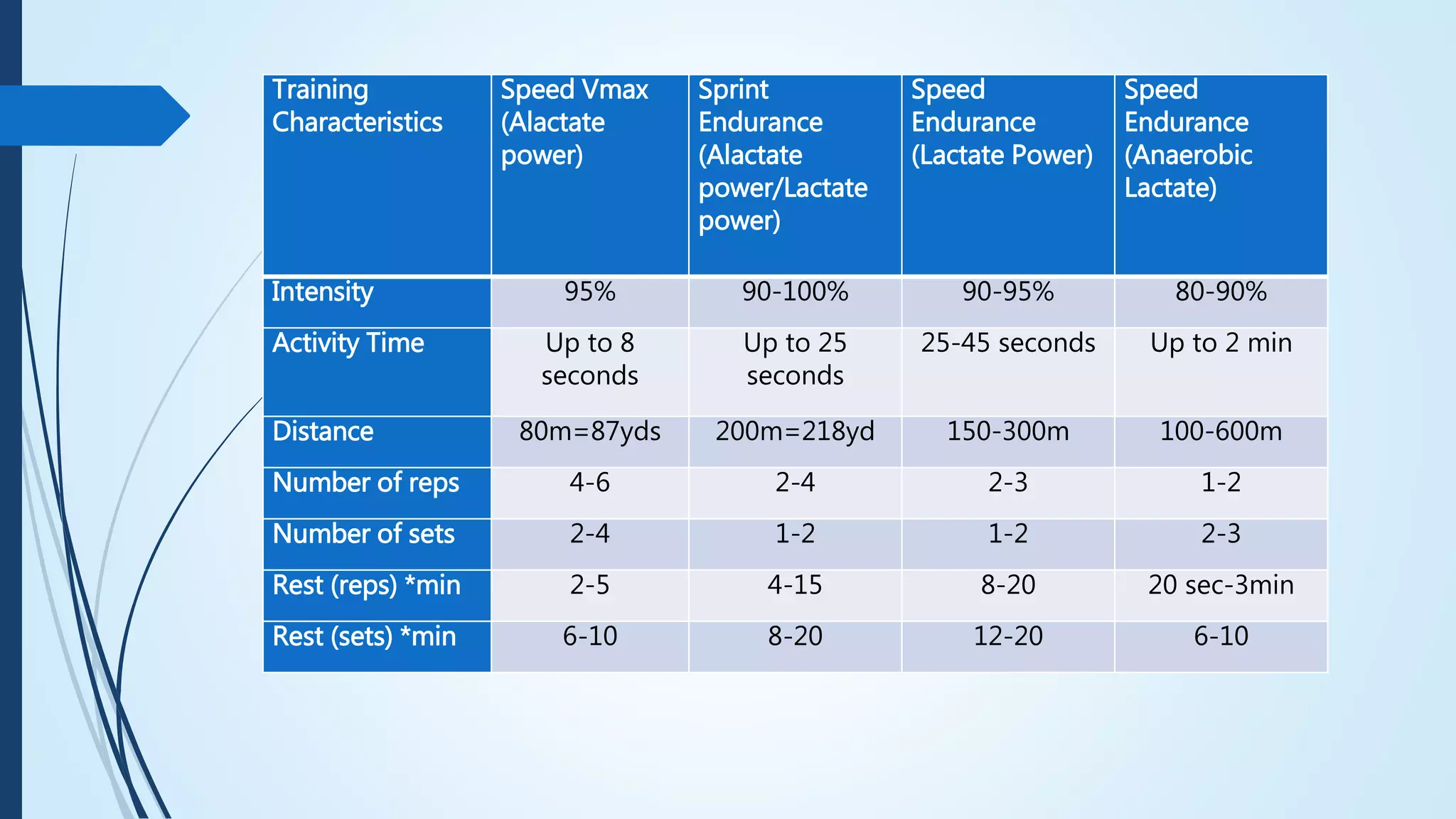
Training
Characteristics
Speed Vmax
(Alactate
power)
Sprint
Endurance
(Alactate
power/Lactate
power)
Speed
Endurance
(Lactate Power)
Speed
Endurance
(Anaerobic
Lactate)
Intensity 95% 90-100% 90-95% 80-90%
Activity Time Up to 8
seconds
Up to 25
seconds
25-45 seconds Up to 2 min
Distance 80m=87yds 200m=218yd 150-300m 100-600m
Number of reps 4-6 2-4 2-3 1-2
Number of sets 2-4 1-2 1-2 2-3
Rest (reps) *min 2-5 4-15 8-20 20 sec-3min
Rest (sets) *min 6-10 8-20 12-20 6-10
Elastic power
 Being accelerated through a sprint
(The accelerator)
 Being resisted and then performing normal reps
 Goal to increase amount of foot strikes
Examples:
Parachutes, banded resistance
References
Bain, Jamie. "The Force-Velocity Curve." Elite FTS The ForceVelocity Curve Comments. N.p., 26
Mar. 2012. Web. 29 Apr. 2016.
"What Causes the Bilateral Deficit?" Strength Conditioning Research. N.p., 11 Sept. 2012. Web. 29
Apr. 2016.
"Result Filters." National Center for Biotechnology Information. U.S. National Library of Medicine,
July 2011. Web. 29 Apr. 2016.
Tucker, Erin. "Speed Development." Personal interview. 6 Apr. 2016.
Challis, John, Dr. "Speed Development." Personal interview. 11 Apr. 2016.
References
 Francis, Charlie. "The Charlie Francis Training System." N.p., n.d. Web. 1 May 2016.
<http://mediaa.smart-movement.com/2014/04/Charlie-Francis-Training-System.pdf>.

Speed Dev. presentation

  • 1.
  • 2.
    Overview  What isspeed development  Force vs. Velocity (Dr. John Challis)  Starting position and phases (Coach Erin Tucker)  Unilateral Exercises (Bilateral Deficit)  Exercises to enhance speed
  • 3.
    What is SpeedDevelopment?  Efforts that are performed under seven seconds of duration (Charlie Francis)  Performed when the athlete is completely fresh and fully recovered  Less is more
  • 4.
  • 5.
    Starting position ofa Sprint  Misconception is to crowd the start line (Want to be back off the start line) -Based on Projectile motion optimal angle is 45 degrees  Thumbs directly in line with shoulders  Front knee on start line, back knee in line with front foot  Hips inch or two above shoulders  Shoulders never go in front of the white line
  • 6.
    3pt Start continued Out of block, Hand on ground goes straight back aggressively, Back hand fires forward Pushing out  Initial push is off the back foot  Controlled fall  Go to your arms if you feel as if you’re falling (Everything applied in the weight room, is to apply force to the ground out of the blocks)
  • 8.
    Application of forcesamong different Athletes Football players:  Can apply force for 25-30m till they need to transition to opening up  Lineman can apply forces so great in the first 5-10yds (Faster than some sprinters) Other Sports:  10-15m drive  5-10m transition  5-10yd have opened up fully
  • 9.
    Why Unilateral LegExercises? Bilateral Deficit The bilateral limb deficit (BLD) phenomenon is the difference in maximal or near maximal force generating capacity of muscles when they are contracted alone or in combination with the contralateral muscles. A deficit occurs when the summed unilateral force is greater than the bilateral force. (PubMed.gov)
  • 11.
    Exercises to IncreaseSpeed  ¼ Squat from pins (Initial burst out of start position)  Box Squat (Initial burst out of start position)  Power cleans w/clap (Initial phase)  Back Squat (sprint phase)  Plyometrics (speed bounds, power skips)
  • 12.
    Training Characteristics Speed Vmax (Alactate power) Sprint Endurance (Alactate power/Lactate power) Speed Endurance (Lactate Power) Speed Endurance (Anaerobic Lactate) Intensity95% 90-100% 90-95% 80-90% Activity Time Up to 8 seconds Up to 25 seconds 25-45 seconds Up to 2 min Distance 80m=87yds 200m=218yd 150-300m 100-600m Number of reps 4-6 2-4 2-3 1-2 Number of sets 2-4 1-2 1-2 2-3 Rest (reps) *min 2-5 4-15 8-20 20 sec-3min Rest (sets) *min 6-10 8-20 12-20 6-10
  • 13.
    Elastic power  Beingaccelerated through a sprint (The accelerator)  Being resisted and then performing normal reps  Goal to increase amount of foot strikes Examples: Parachutes, banded resistance
  • 14.
    References Bain, Jamie. "TheForce-Velocity Curve." Elite FTS The ForceVelocity Curve Comments. N.p., 26 Mar. 2012. Web. 29 Apr. 2016. "What Causes the Bilateral Deficit?" Strength Conditioning Research. N.p., 11 Sept. 2012. Web. 29 Apr. 2016. "Result Filters." National Center for Biotechnology Information. U.S. National Library of Medicine, July 2011. Web. 29 Apr. 2016. Tucker, Erin. "Speed Development." Personal interview. 6 Apr. 2016. Challis, John, Dr. "Speed Development." Personal interview. 11 Apr. 2016.
  • 15.
    References  Francis, Charlie."The Charlie Francis Training System." N.p., n.d. Web. 1 May 2016. <http://mediaa.smart-movement.com/2014/04/Charlie-Francis-Training-System.pdf>.