





Workshop Two
Developing Skill
Using Games and Activities
            &
 Assessing Skills Through
       Athletics 365
Session Outcomes
The Story So Far
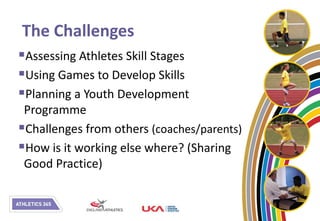
The Challenges
What Next?

Practical Session
 Delivering Athletics 365 – The Coaching Environment,
 Learning Styles and Coaching Styles
 Developing Skill Using Games/Activities
 How to Assess Skill in Athletics 365
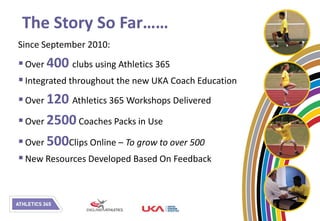
The Story So Far……
Since September 2010:
 Over 400 clubs using Athletics 365
 Integrated throughout the new UKA Coach Education
 Over 120 Athletics 365 Workshops Delivered
 Over 2500 Coaches Packs in Use
 Over 500Clips Online – To grow to over 500
 New Resources Developed Based On Feedback
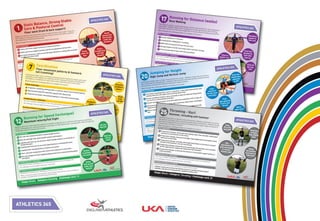
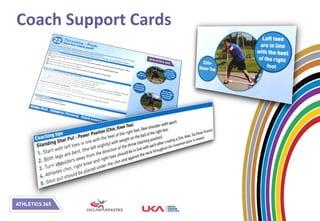
Coach Support Cards
Game Cards
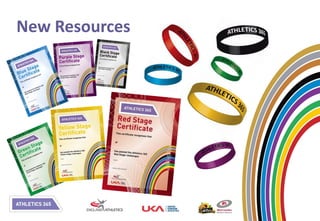
New Resources
www.athletics365.org
The Challenges
Assessing Athletes Skill Stages
Using Games to Develop Skills
Planning a Youth Development
 Programme
Challenges from others (coaches/parents)
How is it working else where? (Sharing
 Good Practice)
Planning Support Resources
Delivering
Athletics 365
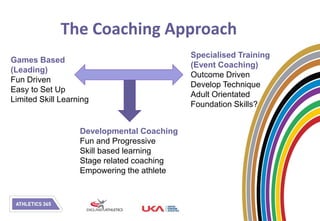
The Coaching Approach
                                            Specialised Training
Games Based
                                            (Event Coaching)
(Leading)
                                            Outcome Driven
Fun Driven
                                            Develop Technique
Easy to Set Up
                                            Adult Orientated
Limited Skill Learning
                                            Foundation Skills?


                   Developmental Coaching
                   Fun and Progressive
                   Skill based learning
                   Stage related coaching
                   Empowering the athlete
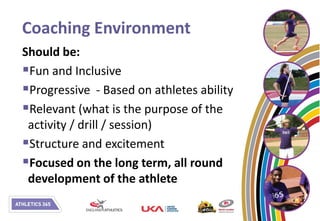
Coaching Environment
Should be:
Fun and Inclusive
Progressive - Based on athletes ability
Relevant (what is the purpose of the
 activity / drill / session)
Structure and excitement
Focused on the long term, all round
 development of the athlete
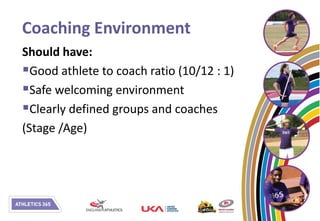
Coaching Environment
Should have:
Good athlete to coach ratio (10/12 : 1)
Safe welcoming environment
Clearly defined groups and coaches
(Stage /Age)
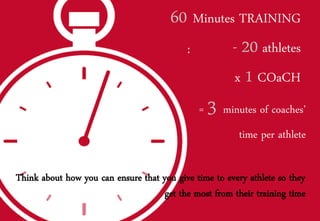
60 Minutes TRAINING
                                         :       - 20 athletes
                                                 x 1 COaCH
                                              =   3 minutes of coaches’
                                                         time per athlete

Think about how you can ensure that you give time to every athlete so they
                                     get the most from their training time
UKA Level 2
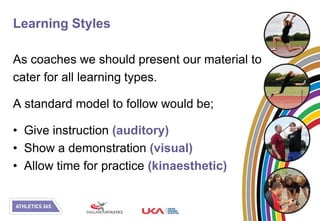
Learning Styles

As coaches we should present our material to
cater for all learning types.

A standard model to follow would be;

• Give instruction (auditory)
• Show a demonstration (visual)
• Allow time for practice (kinaesthetic)
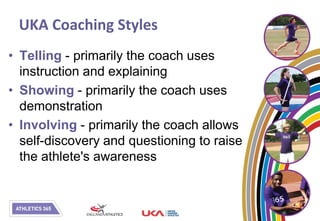
UKA Coaching Styles
• Telling - primarily the coach uses
  instruction and explaining
• Showing - primarily the coach uses
  demonstration
• Involving - primarily the coach allows
  self-discovery and questioning to raise
  the athlete's awareness
Learning Styles

“
Tell me and I’ll forget,
Show me and I’ll remember,

                             ”
involve me and I’ll understand
Retention Levels
        Impact                of Involving Style
 10% of what they read
 20% of what they hear
 30% of what they see
 50% of what they hear and see
 70% of what they say and write
 90% of what they say and do
  ‘The Learning Pyramid’ NTL Institute for Applied Behavioural Sciences,
  Alexandria, Va
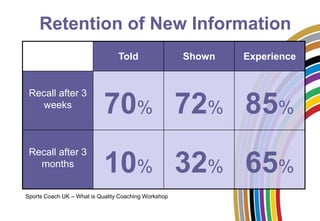
Retention of Learningof
     Retention                                New Information
                                   Told                 Shown   Experience


   Recall after 3
      weeks
                              70% 72% 85%
   Recall after 3
     months
                              10% 32% 65%
  Sports Coach UK – What is Quality Coaching Workshop
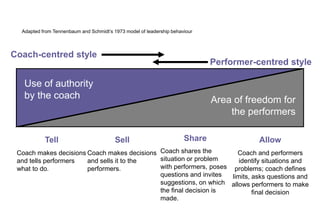
Model of Leadership Behaviour
  Adapted from Tennenbaum and Schmidt’s 1973 model of leadership behaviour


Coach-centred style
                                                                              Performer-centred style

   Use of authority
   by the coach                                                               Area of freedom for
                                                                                  the performers

           Tell                          Sell                         Share              Allow
 Coach makes decisions Coach makes decisions Coach shares the         Coach and performers
 and tells performers  and sells it to the   situation or problem      identify situations and
 what to do.           performers.           with performers, poses problems; coach defines
                                             questions and invites  limits, asks questions and
                                             suggestions, on which allows performers to make
                                             the final decision is          final decision
                                             made.
Athletics 365
Practical Session
Developing Skill
Using Games and Activities
            &
 Assessing Skills Through
       Athletics 365
Athletics 365: Session Plan
 Within a 90 minute session, a recommended practice plan may include
 the following elements:
8 – 11 Years                        12 – 15 Years +
 1. Game / warm-up (10 mins)       1. Game / warm-up (10 mins) –
 relating to session;                relating to session;
 2. Activity one (20 mins) -       2. Activity one (30 mins) –
 technique / skill acquisition;      technique / skill acquisition;
 3. Activity two (20 mins) -       3. Activity two (30 mins) -
 technique / skill acquisition;      technique / skill acquisition;
 4. Activity three (20 mins) -     4. Relays (10 mins)
 technique / skill acquisition;     5. Cool down (10 mins)
 5. Relays (10 mins)
 6. Cool down (10 mins)
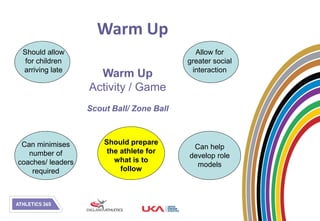
Warm Up
 Should allow                                Allow for
  for children                             greater social
 arriving late                              interaction
                     Warm Up
                   Activity / Game
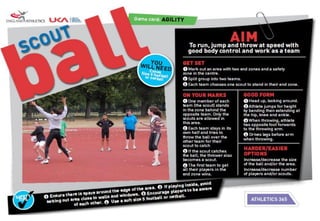
                   Scout Ball/ Zone Ball


 Can minimises         Should prepare
                                            Can help
   number of            the athlete for
                                           develop role
coaches/ leaders          what is to
                                             models
    required                follow
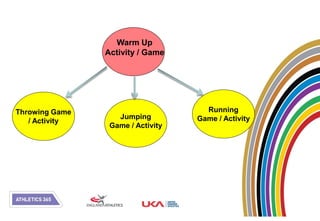
Warm Up
                Activity / Game


Throwing Game                        Running
                   Jumping         Game / Activity
   / Activity
                 Game / Activity
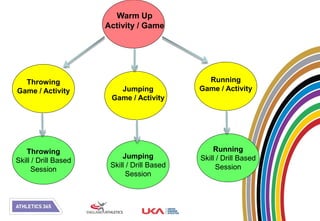
Warm Up
                      Activity / Game


  Throwing                                     Running
Game / Activity          Jumping             Game / Activity
                       Game / Activity


   Throwing                                      Running
                           Jumping           Skill / Drill Based
Skill / Drill Based
                       Skill / Drill Based        Session
     Session
                            Session
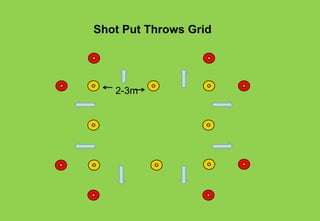
Shot Put Throws Grid


   2-3m
Throws Line Grid


              Tennis Ball      Howler   Turbo Jav   Javelin
                Throw          Throw     Throw      Throw

Throws Line
                               3m
                        3m
Safety Line
Triple Jump Grid


                  1m           1m
           Hop          Step        Jump
                                           Sand
                                            Pit
     1.5                 1.5
     m                   m


2m                2m
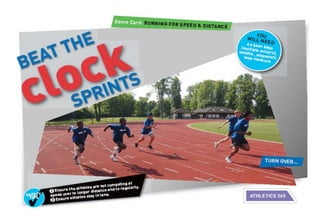
Beat the Clock Sprints
           Or Sprint Start Practice


Standing
  Start    Falling Start Three Point Crouch Start
Kneeling                    Start
  Start
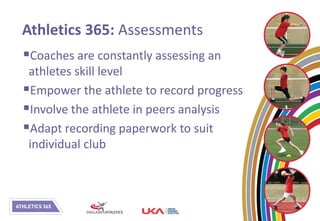
Athletics 365: Assessments
Coaches are constantly assessing an
 athletes skill level
Empower the athlete to record progress
Involve the athlete in peers analysis
Adapt recording paperwork to suit
 individual club
www.athletics365.org
Athletics 365
Q&A
2012: Fundamentals Scott Grace

2012: Fundamentals Scott Grace

  • 1.
  • 2.
    Developing Skill Using Gamesand Activities & Assessing Skills Through Athletics 365
  • 3.
    Session Outcomes The StorySo Far The Challenges What Next? Practical Session  Delivering Athletics 365 – The Coaching Environment, Learning Styles and Coaching Styles  Developing Skill Using Games/Activities  How to Assess Skill in Athletics 365
  • 4.
    The Story SoFar…… Since September 2010:  Over 400 clubs using Athletics 365  Integrated throughout the new UKA Coach Education  Over 120 Athletics 365 Workshops Delivered  Over 2500 Coaches Packs in Use  Over 500Clips Online – To grow to over 500  New Resources Developed Based On Feedback
  • 10.
  • 11.
  • 12.
  • 13.
  • 14.
    The Challenges Assessing AthletesSkill Stages Using Games to Develop Skills Planning a Youth Development Programme Challenges from others (coaches/parents) How is it working else where? (Sharing Good Practice)
  • 15.
  • 16.
  • 17.
    The Coaching Approach Specialised Training Games Based (Event Coaching) (Leading) Outcome Driven Fun Driven Develop Technique Easy to Set Up Adult Orientated Limited Skill Learning Foundation Skills? Developmental Coaching Fun and Progressive Skill based learning Stage related coaching Empowering the athlete
  • 18.
    Coaching Environment Should be: Funand Inclusive Progressive - Based on athletes ability Relevant (what is the purpose of the activity / drill / session) Structure and excitement Focused on the long term, all round development of the athlete
  • 19.
    Coaching Environment Should have: Goodathlete to coach ratio (10/12 : 1) Safe welcoming environment Clearly defined groups and coaches (Stage /Age)
  • 20.
    60 Minutes TRAINING : - 20 athletes x 1 COaCH = 3 minutes of coaches’ time per athlete Think about how you can ensure that you give time to every athlete so they get the most from their training time
  • 21.
    UKA Level 2 LearningStyles As coaches we should present our material to cater for all learning types. A standard model to follow would be; • Give instruction (auditory) • Show a demonstration (visual) • Allow time for practice (kinaesthetic)
  • 22.
    UKA Coaching Styles •Telling - primarily the coach uses instruction and explaining • Showing - primarily the coach uses demonstration • Involving - primarily the coach allows self-discovery and questioning to raise the athlete's awareness
  • 23.
    Learning Styles “ Tell meand I’ll forget, Show me and I’ll remember, ” involve me and I’ll understand
  • 24.
    Retention Levels Impact of Involving Style 10% of what they read 20% of what they hear 30% of what they see 50% of what they hear and see 70% of what they say and write 90% of what they say and do ‘The Learning Pyramid’ NTL Institute for Applied Behavioural Sciences, Alexandria, Va
  • 25.
    Retention of Learningof Retention New Information Told Shown Experience Recall after 3 weeks 70% 72% 85% Recall after 3 months 10% 32% 65% Sports Coach UK – What is Quality Coaching Workshop
  • 26.
    Model of LeadershipBehaviour Adapted from Tennenbaum and Schmidt’s 1973 model of leadership behaviour Coach-centred style Performer-centred style Use of authority by the coach Area of freedom for the performers Tell Sell Share Allow Coach makes decisions Coach makes decisions Coach shares the Coach and performers and tells performers and sells it to the situation or problem identify situations and what to do. performers. with performers, poses problems; coach defines questions and invites limits, asks questions and suggestions, on which allows performers to make the final decision is final decision made.
  • 27.
  • 28.
    Developing Skill Using Gamesand Activities & Assessing Skills Through Athletics 365
  • 29.
    Athletics 365: SessionPlan Within a 90 minute session, a recommended practice plan may include the following elements: 8 – 11 Years 12 – 15 Years +  1. Game / warm-up (10 mins)  1. Game / warm-up (10 mins) – relating to session; relating to session;  2. Activity one (20 mins) -  2. Activity one (30 mins) – technique / skill acquisition; technique / skill acquisition;  3. Activity two (20 mins) -  3. Activity two (30 mins) - technique / skill acquisition; technique / skill acquisition;  4. Activity three (20 mins) -  4. Relays (10 mins) technique / skill acquisition;  5. Cool down (10 mins)  5. Relays (10 mins)  6. Cool down (10 mins)
  • 30.
    Warm Up Shouldallow Allow for for children greater social arriving late interaction Warm Up Activity / Game Scout Ball/ Zone Ball Can minimises Should prepare Can help number of the athlete for develop role coaches/ leaders what is to models required follow
  • 32.
    Warm Up Activity / Game Throwing Game Running Jumping Game / Activity / Activity Game / Activity
  • 34.
    Warm Up Activity / Game Throwing Running Game / Activity Jumping Game / Activity Game / Activity Throwing Running Jumping Skill / Drill Based Skill / Drill Based Skill / Drill Based Session Session Session
  • 35.
    Shot Put ThrowsGrid 2-3m
  • 36.
    Throws Line Grid Tennis Ball Howler Turbo Jav Javelin Throw Throw Throw Throw Throws Line 3m 3m Safety Line
  • 38.
    Triple Jump Grid 1m 1m Hop Step Jump Sand Pit 1.5 1.5 m m 2m 2m
  • 40.
    Beat the ClockSprints Or Sprint Start Practice Standing Start Falling Start Three Point Crouch Start Kneeling Start Start
  • 41.
    Athletics 365: Assessments Coachesare constantly assessing an athletes skill level Empower the athlete to record progress Involve the athlete in peers analysis Adapt recording paperwork to suit individual club
  • 42.
  • 43.