LCDP – Mark Chapman
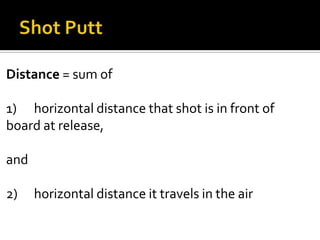
Distance = sum of
1) horizontal distance that shot is in front of
board at release,
and

2)

horizontal distance it travels in the air
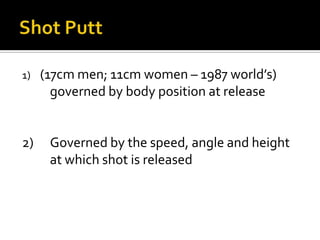
1)

2)

(17cm men; 11cm women – 1987 world’s)
governed by body position at release

Governed by the speed, angle and height
at which shot is released
Most important?
Speed of release
Angle of release
Height of release
Speed of release – determined by magnitude
and forces applied to shot and distances over
which these forces act
Angle of release – fixed by
magnitude, direction and distance of forces.
Optimum angle is always less than 45◦.
Height of release – governed by athlete’s body
position.
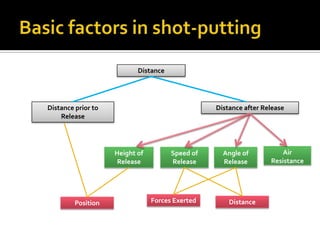
Distance

Distance prior to
Release

Distance after Release

Height of
Release

Position

Speed of
Release

Forces Exerted

Angle of
Release

Distance

Air
Resistance
Techniques used are all about trying to increase
the speed of release
O’Brian (1950’s) – linear or glide technique
Rotational technique
Initial position very different, final position very
similar
Speed of left foot touchdown very important
Time between right foot landing in middle of
circle and left foot touchdown is
0.10-0.15secs for elite
Reverse – why do it?
Length of applied force

Difference between two techniques – rotational
in a better delivery position
Distance determined by speed, height and
angle of release
+
Aerodynamic factors that influence flight
Speed and angle of release determined by
magnitude and direction of forces exerted on
implement, and distance over which these
forces are applied
Height of release governed by athlete’s body
position
Height of release of minor importance
compared to speed and angle of release
Discus in flight subjected to forces exerted by
air
Can have significant effect on distance
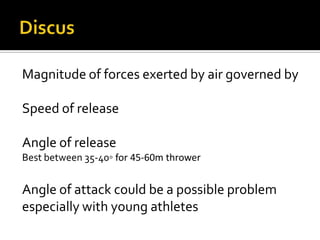
Magnitude of forces exerted by air governed by
Speed of release
Angle of release
Best between 35-40◦ for 45-60m thrower

Angle of attack could be a possible problem
especially with young athletes
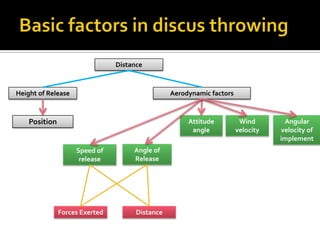
Distance

Height of Release

Aerodynamic factors

Position

Attitude
angle
Speed of
release

Forces Exerted

Angle of
Release

Distance

Wind
velocity

Angular
velocity of
implement
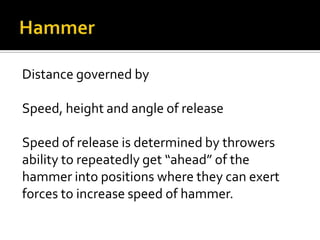
Distance governed by
Speed, height and angle of release
Speed of release is determined by throwers
ability to repeatedly get “ahead” of the
hammer into positions where they can exert
forces to increase speed of hammer.
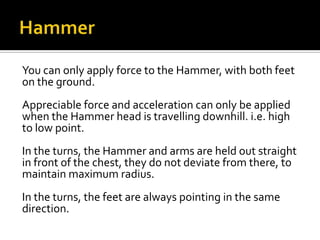
You can only apply force to the Hammer, with both feet
on the ground.
Appreciable force and acceleration can only be applied
when the Hammer head is travelling downhill. i.e. high
to low point.
In the turns, the Hammer and arms are held out straight
in front of the chest, they do not deviate from there, to
maintain maximum radius.
In the turns, the feet are always pointing in the same
direction.

Throws Network 2014

  • 1.
  • 2.
    Distance = sumof 1) horizontal distance that shot is in front of board at release, and 2) horizontal distance it travels in the air
  • 3.
    1) 2) (17cm men; 11cmwomen – 1987 world’s) governed by body position at release Governed by the speed, angle and height at which shot is released
  • 4.
    Most important? Speed ofrelease Angle of release Height of release
  • 5.
    Speed of release– determined by magnitude and forces applied to shot and distances over which these forces act Angle of release – fixed by magnitude, direction and distance of forces. Optimum angle is always less than 45◦. Height of release – governed by athlete’s body position.
  • 6.
    Distance Distance prior to Release Distanceafter Release Height of Release Position Speed of Release Forces Exerted Angle of Release Distance Air Resistance
  • 7.
    Techniques used areall about trying to increase the speed of release O’Brian (1950’s) – linear or glide technique Rotational technique Initial position very different, final position very similar
  • 8.
    Speed of leftfoot touchdown very important Time between right foot landing in middle of circle and left foot touchdown is 0.10-0.15secs for elite
  • 9.
    Reverse – whydo it? Length of applied force Difference between two techniques – rotational in a better delivery position
  • 10.
    Distance determined byspeed, height and angle of release + Aerodynamic factors that influence flight Speed and angle of release determined by magnitude and direction of forces exerted on implement, and distance over which these forces are applied
  • 11.
    Height of releasegoverned by athlete’s body position Height of release of minor importance compared to speed and angle of release Discus in flight subjected to forces exerted by air Can have significant effect on distance
  • 12.
    Magnitude of forcesexerted by air governed by Speed of release Angle of release Best between 35-40◦ for 45-60m thrower Angle of attack could be a possible problem especially with young athletes
  • 13.
    Distance Height of Release Aerodynamicfactors Position Attitude angle Speed of release Forces Exerted Angle of Release Distance Wind velocity Angular velocity of implement
  • 14.
    Distance governed by Speed,height and angle of release Speed of release is determined by throwers ability to repeatedly get “ahead” of the hammer into positions where they can exert forces to increase speed of hammer.
  • 15.
    You can onlyapply force to the Hammer, with both feet on the ground. Appreciable force and acceleration can only be applied when the Hammer head is travelling downhill. i.e. high to low point. In the turns, the Hammer and arms are held out straight in front of the chest, they do not deviate from there, to maintain maximum radius. In the turns, the feet are always pointing in the same direction.