The 13 British Colonies 
POLITICAL 
ECONOMIC 
RELIGIOUS 
SOCIAL 
Colony: settlement created by a 
country in an area far away from 
that country. Each colony must 
have a CHARTER from the King.
POLITICAL 
• People wanted more independence 
• King had total power 
• SELF-GOVERNMENT in the colonies 
• Colonies: 
– Connecticut: Fundamental Orders of 
Connecticut 
– Rhode Island: Separation of religion and 
government 
– Pennsylvania: more democratic
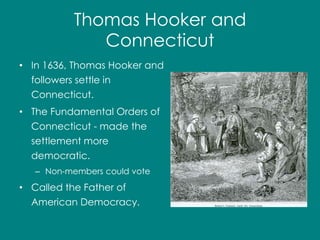
Thomas Hooker and 
Connecticut 
• In 1636, Thomas Hooker and 
followers settle in 
Connecticut. 
• The Fundamental Orders of 
Connecticut - made the 
settlement more 
democratic. 
– Non-members could vote 
• Called the Father of 
American Democracy.
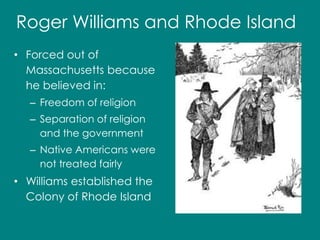
Roger Williams and Rhode Island 
• Forced out of 
Massachusetts because 
he believed in: 
– Freedom of religion 
– Separation of religion 
and the government 
– Native Americans were 
not treated fairly 
• Williams established the 
Colony of Rhode Island
ECONOMIC 
• Natural resources and raw materials for mother 
country 
• Merchants wanted wealth 
• Many in Europe are unemployed 
• Farmers wanted land 
• Relief from debt 
• Colonies 
– Virginia: Jamestown and Tobacco 
– North and South Carolina 
– Georgia: debtors colony
RELIGIOUS 
• Escape from religious persecution 
• Allow religious tolerance 
• Opportunity to worship freely 
• Colonies: 
– Massachusetts: Plymouth and the Pilgrims 
– Rhode Island: Anne Hutchison 
– Connecticut: Separation of Church and Government 
– Maryland: Lord Baltimore and Catholics
SOCIAL 
• Opportunity to change social class 
• More opportunity for large families 
• Indentured Servants 
• Diversity (differences) of the Colonists especially in the Middle 
Colonies. 
• Population growing in other colonies - Expansion 
• Colonies: 
– Pennsylvania: William Penn and the Quakers 
– New York 
– New Hampshire
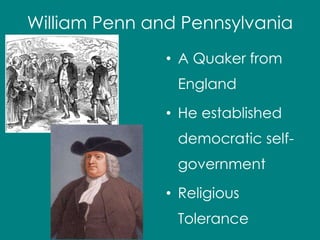
William Penn and Pennsylvania 
• A Quaker from 
England 
• He established 
democratic self-government 
• Religious 
Tolerance

The 13 british colonies persa

  • 1.
    The 13 BritishColonies POLITICAL ECONOMIC RELIGIOUS SOCIAL Colony: settlement created by a country in an area far away from that country. Each colony must have a CHARTER from the King.
  • 2.
    POLITICAL • Peoplewanted more independence • King had total power • SELF-GOVERNMENT in the colonies • Colonies: – Connecticut: Fundamental Orders of Connecticut – Rhode Island: Separation of religion and government – Pennsylvania: more democratic
  • 3.
    Thomas Hooker and Connecticut • In 1636, Thomas Hooker and followers settle in Connecticut. • The Fundamental Orders of Connecticut - made the settlement more democratic. – Non-members could vote • Called the Father of American Democracy.
  • 4.
    Roger Williams andRhode Island • Forced out of Massachusetts because he believed in: – Freedom of religion – Separation of religion and the government – Native Americans were not treated fairly • Williams established the Colony of Rhode Island
  • 5.
    ECONOMIC • Naturalresources and raw materials for mother country • Merchants wanted wealth • Many in Europe are unemployed • Farmers wanted land • Relief from debt • Colonies – Virginia: Jamestown and Tobacco – North and South Carolina – Georgia: debtors colony
  • 6.
    RELIGIOUS • Escapefrom religious persecution • Allow religious tolerance • Opportunity to worship freely • Colonies: – Massachusetts: Plymouth and the Pilgrims – Rhode Island: Anne Hutchison – Connecticut: Separation of Church and Government – Maryland: Lord Baltimore and Catholics
  • 7.
    SOCIAL • Opportunityto change social class • More opportunity for large families • Indentured Servants • Diversity (differences) of the Colonists especially in the Middle Colonies. • Population growing in other colonies - Expansion • Colonies: – Pennsylvania: William Penn and the Quakers – New York – New Hampshire
  • 8.
    William Penn andPennsylvania • A Quaker from England • He established democratic self-government • Religious Tolerance