Comparing English Colony 
Regions 
Environment, Economy, Society, 
Politics, and Conflict 
Textbook Reference: Ch.4
Get Focused 
• Focus Question: 
• How were the English colony settlements unique? 
• I Can… 
• I can describe the economies, politics, societies 
and environments of the colony regions 
• I can describe the different forms of conflict 
within the colonies and explain how it impacted 
them
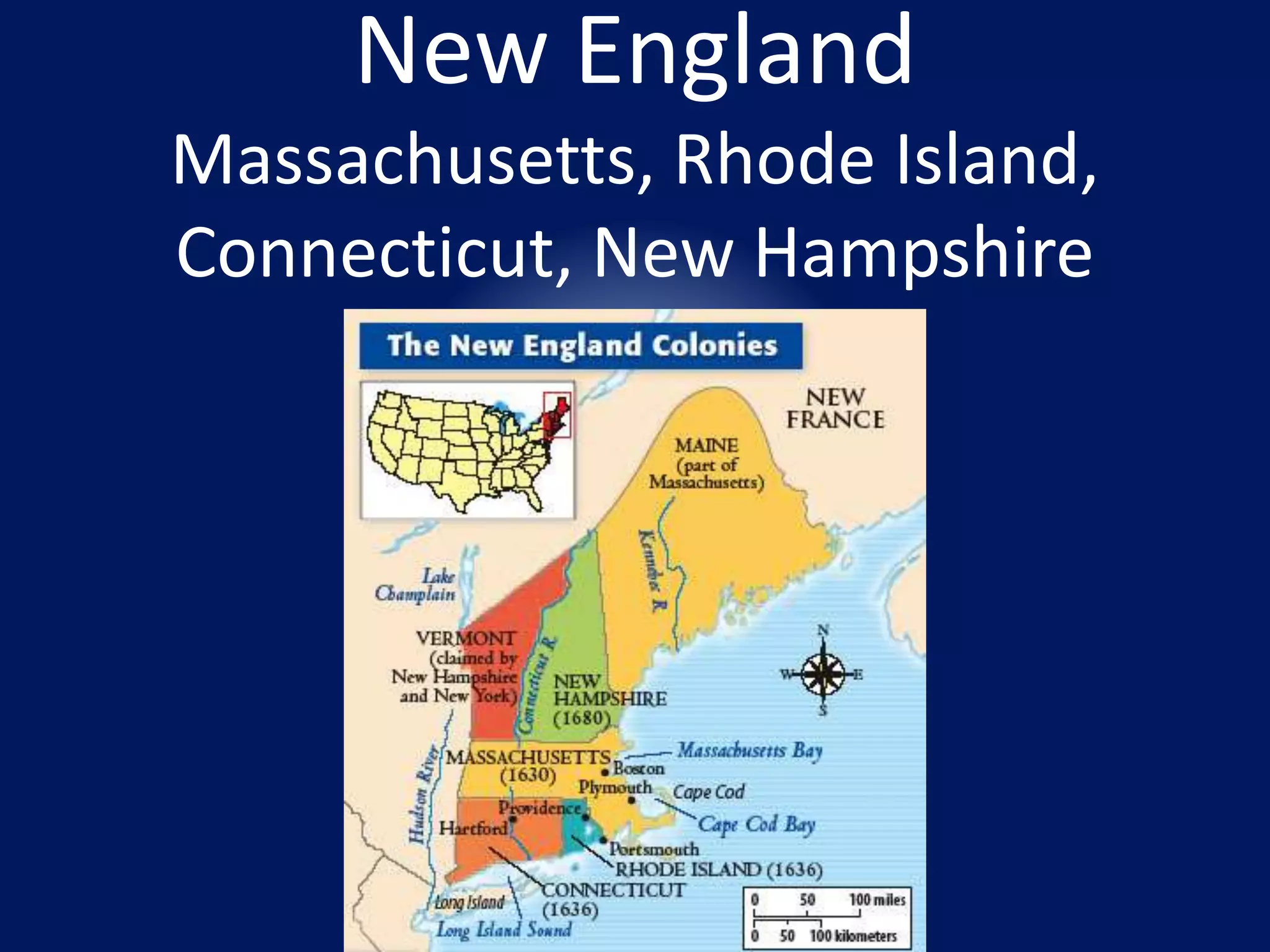
New England 
Massachusetts, Rhode Island, 
Connecticut, New Hampshire
New England 
Environment and Economy 
• The soil was too thin and rocky and the climate 
too harsh for the colonists to grow cash crops. 
• They turned to fishing, whaling, lumbering, fur 
trading, ship building, small scale farming, and 
metal working to nourish their economy. These 
items were sold to other colonies and to England. 
• New England colonies also participated in the 
selling of slaves to the southern colonies. 
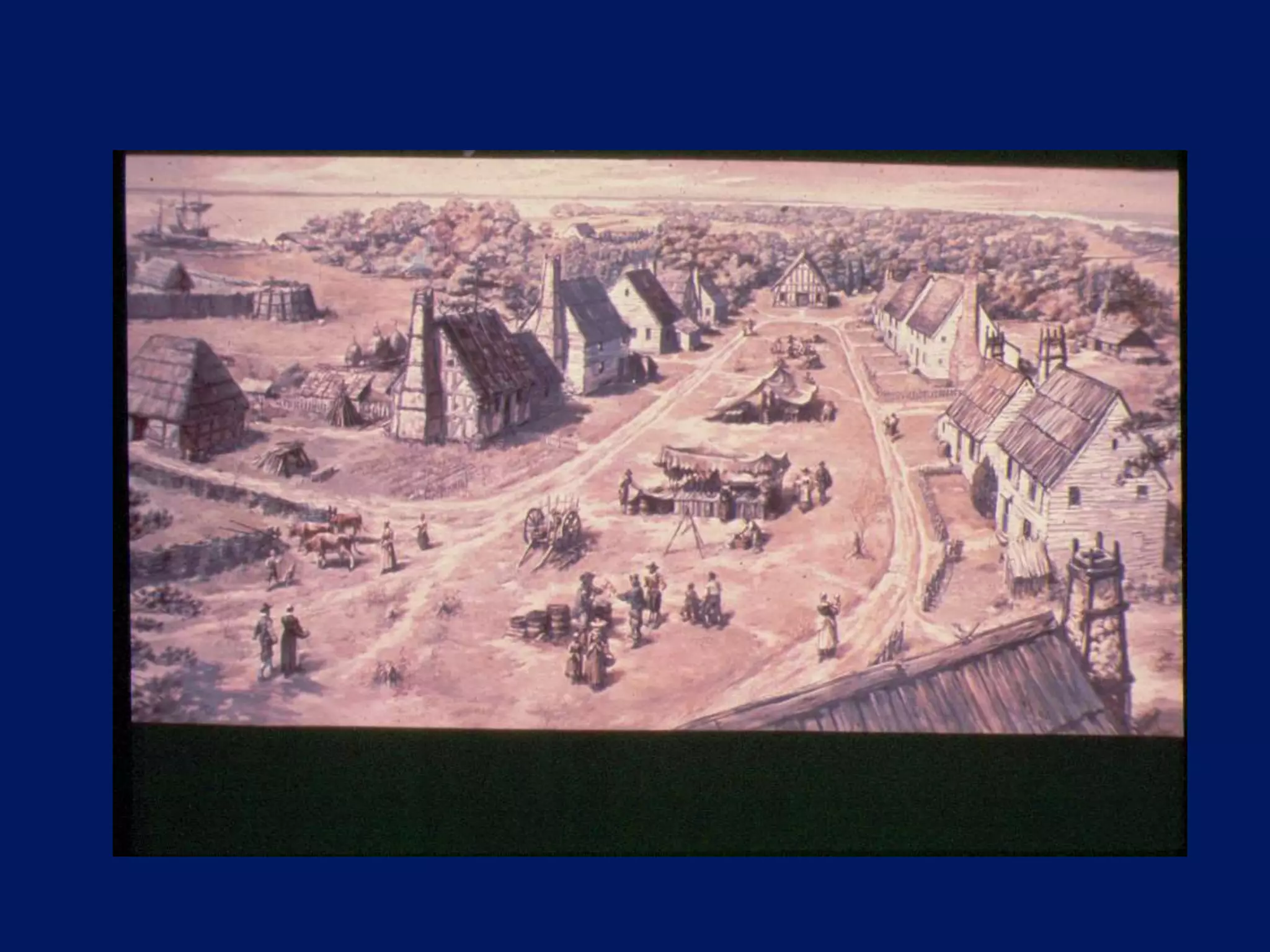
• Many people lived in villages with a common area
New England 
Society 
• The first colonists were Separatist Pilgrims and 
reform-minded Puritans. 
• They settled in New England to gain religious 
freedom. The religious freedom they sought was 
not readily granted to others outside their faith. 
• Religious Tolerance- Connecticut and Rhode 
Island offered freedom that was not available in 
Massachusetts. 
• Yankee- A nickname for New England merchants 
who were known for being excellent traders
New England 
Politics 
• Town Meetings- Colonists discussed important 
decisions, this encouraged the growth of 
democracy 
• Sabbath- Observation of this day was not only 
religious, but it was the law. 
• Legislative bodies- Law passing, elected groups 
• General Court- Elected, church-going 
assemblymen in Massachusetts 
• Fundamental Orders of Connecticut- voting for 
property owners.
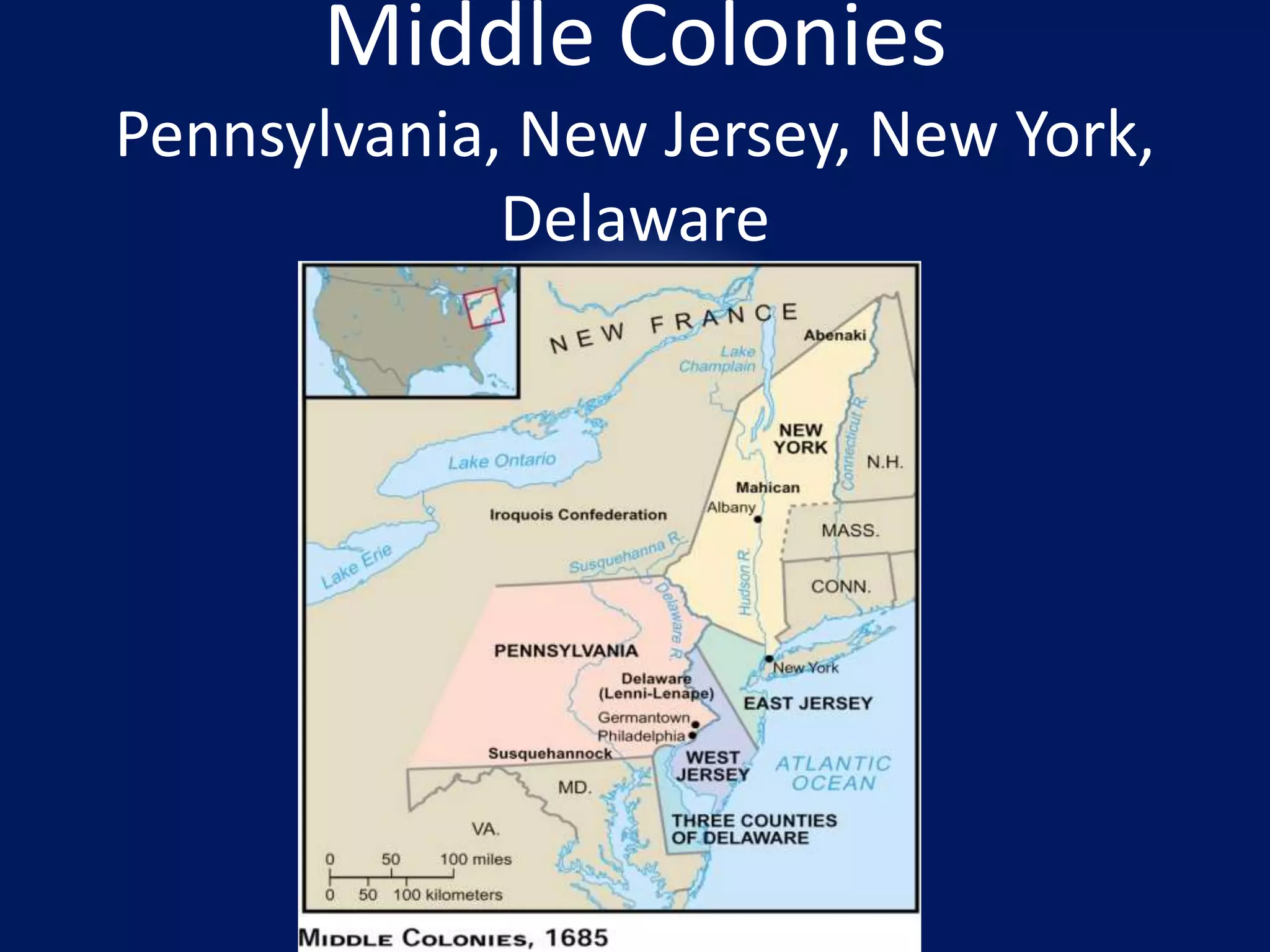
Middle Colonies 
Pennsylvania, New Jersey, New York, 
Delaware
Middle Colonies 
Environment and Economy 
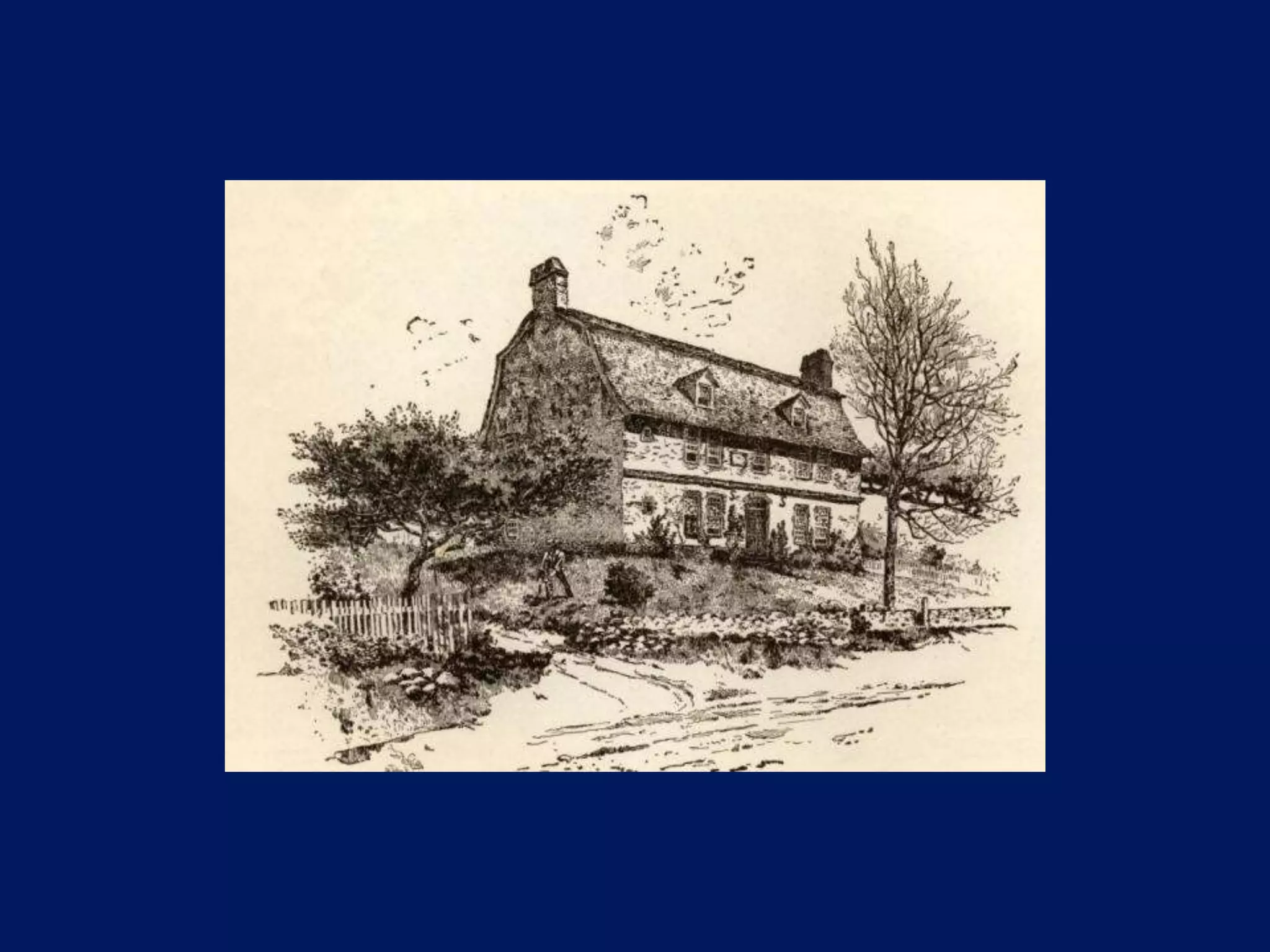
• Land was more fertile than in New England and 
promoted farming of cash crops: a crop that you can 
sell for $$$ at the market- corn/wheat/fruit. 
• An abundance of rivers allowed for transportation of 
goods for trade between the colonies. 
• Mills to grind grains and iron production developed 
and supported local economies. 
• Skilled artisans produced goods 
• The first colonists were Dutch and settled at the mouth 
of the Hudson River. Their goal was to farm in order to 
make money.
Middle Colonies 
Society 
• When the English took "New Amsterdam" from 
the Dutch, they called it New York. 
• Quakers seeking religious freedom settled 
Pennsylvania. 
• Pennsylvania Dutch- German speaking 
Protestants settled central Pennsylvania 
• This area was also the most ethnically diverse. 
• William Penn established a “Policy of Fairness”- 
welcoming all persecuted groups and treating the 
Native Americans fairly. It works for a while…
Middle Colonies 
Politics 
• Proprietary colony- King gave the rights to 
govern to a few trusted people. 
• Royal colony- The King makes the rules 
• Elected Assemblies- Representing the 
colonists 
• Settlers moving into Native American lands 
was a primary concern for local officials 
• Counties were the center of society
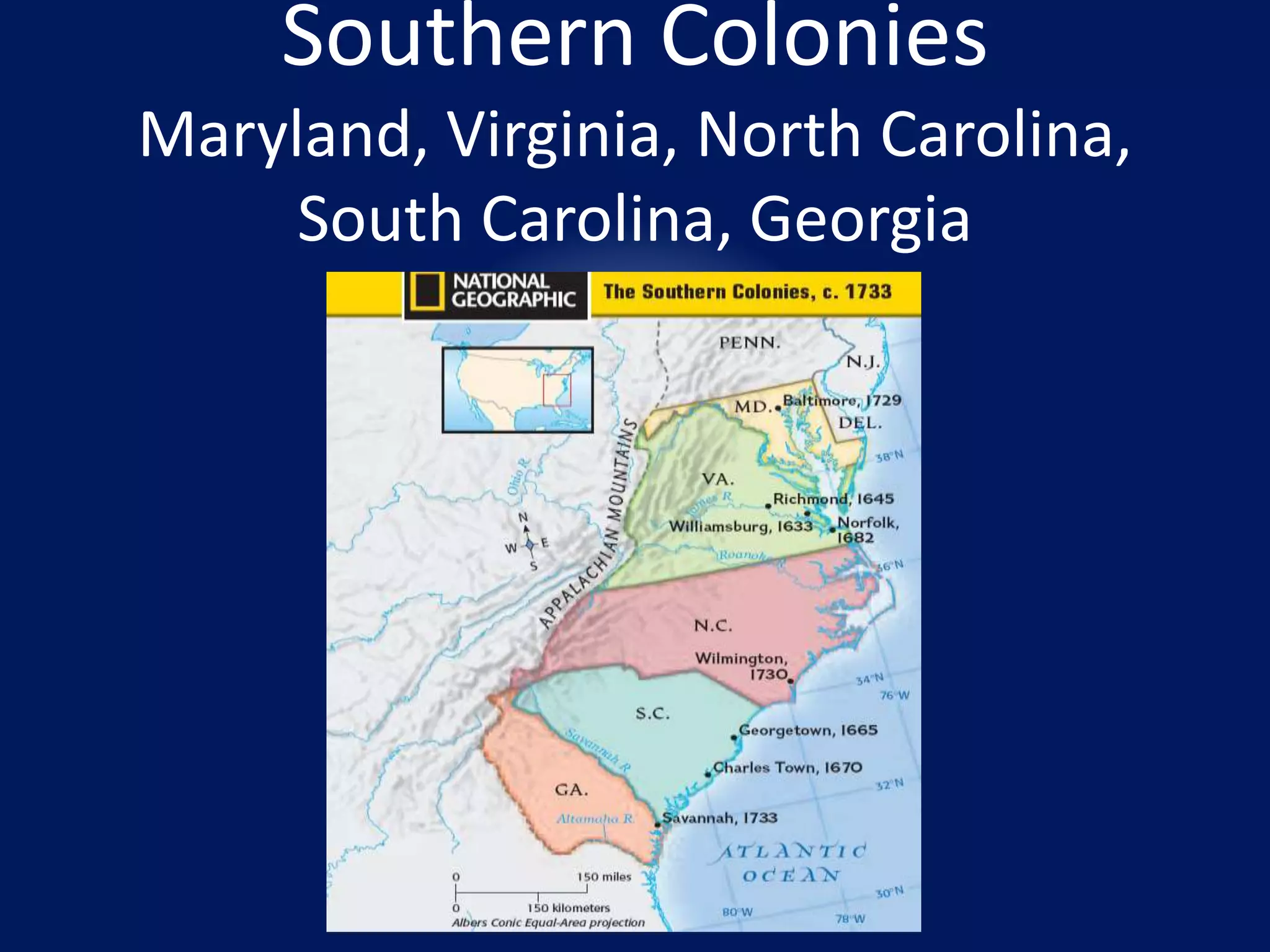
Southern Colonies 
Maryland, Virginia, North Carolina, 
South Carolina, Georgia
Southern Colonies 
Environment and Economy 
• Rich soil, warm weather, long growing season 
• Tobacco, indigo, and rice became the major 
cash crops of the southern colonies. These 
cash crops were grown on large plantations of 
land that needed large numbers of workers. 
Indentured servants were first used. As their 
numbers dwindled, slaves were used. A small 
number of people owned large amounts of 
land that was given to them just for showing 
up.
Southern Colonies 
Society 
• Religious toleration for some Christians 
(Maryland) 
• Settlers from the Caribbean and England 
• Indentured servants and slaves 
• Tidewater Plantations and Backcountry farmers 
• Spread of slavery brings population growth 
• Slave codes- laws developed over time to control 
the lives of slaves 
• Debtor- people who owed money in England 
settled in the colonies for a chance at a new life
Southern Colonies 
Politics 
• Elected assemblies made up of land owning 
colonists 
• Act of Toleration- religious freedom in 
Maryland 
• Conflicts over land and opportunity between 
colonists. 
• Mason-Dixon Line- divided Middle and 
Southern colonies
Conflict 
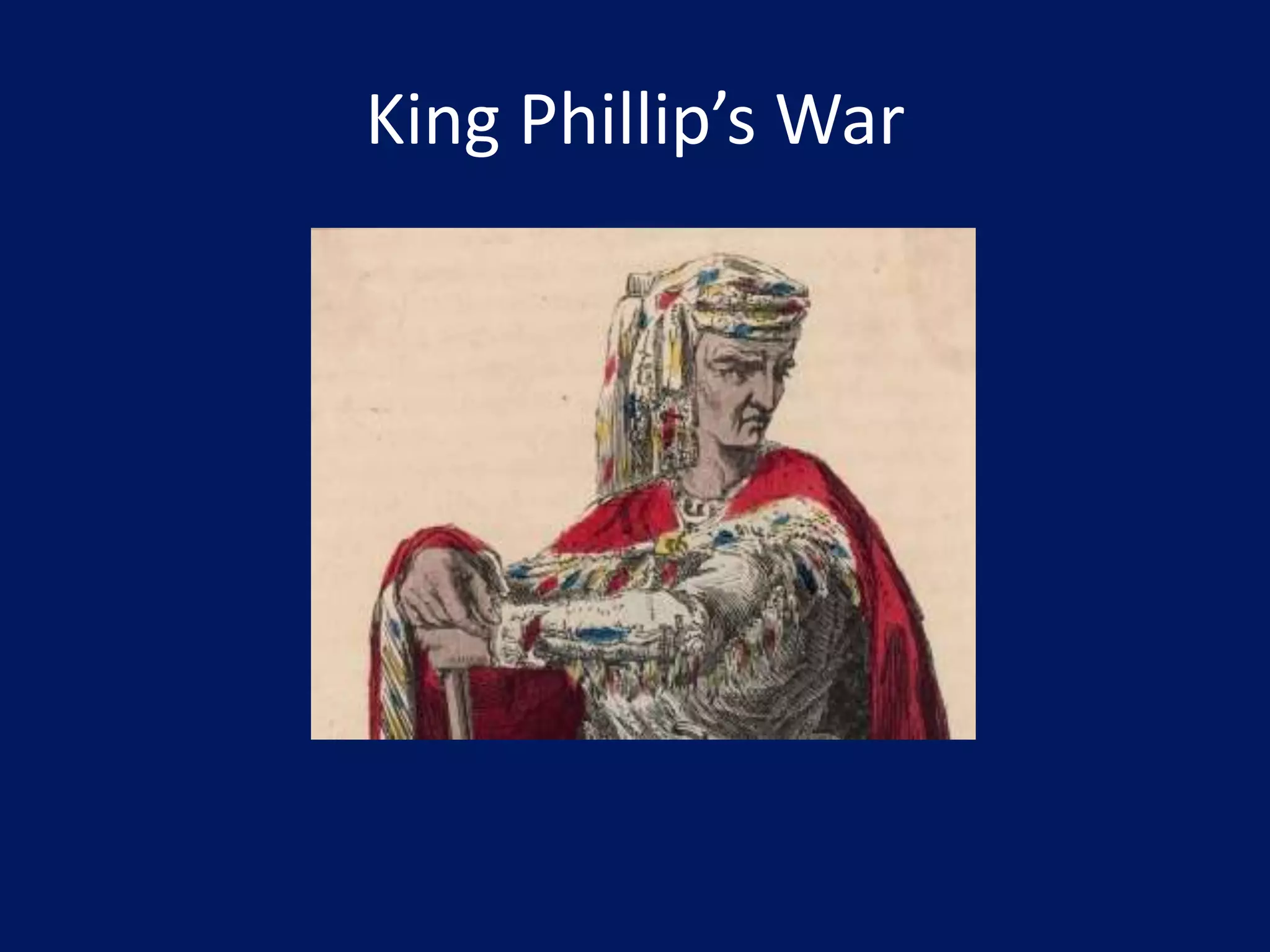
• King Philip’s(Metacom) War 1675-78- War 
between Puritan colonists and Native 
Americans. The result of colonist expansion 
onto Native American land. 
• Bacon’s Rebellion1676- colonists immigrated 
to Virginia, attacked and killed Native 
Americans, and attacked Jamestown in protest 
in order to gain access to Indian lands.
Conflict 
• Powhatan Uprising of 1622- Opechancanough 
leads the Powhatan in an attempt to drive the 
English settlers out of Virginia. The result is 
another decade of bloodshed between the 
two groups. 
• Religious conflict in Massachusetts- Thomas 
Hooker, Roger Williams, Anne Hutchinson
Powhatan Uprising of 1622
Smith and Opechancanough
King Phillip’s War

Comparing english colony regions

  • 1.
    Comparing English Colony Regions Environment, Economy, Society, Politics, and Conflict Textbook Reference: Ch.4
  • 2.
    Get Focused •Focus Question: • How were the English colony settlements unique? • I Can… • I can describe the economies, politics, societies and environments of the colony regions • I can describe the different forms of conflict within the colonies and explain how it impacted them
  • 3.
    New England Massachusetts,Rhode Island, Connecticut, New Hampshire
  • 4.
    New England Environmentand Economy • The soil was too thin and rocky and the climate too harsh for the colonists to grow cash crops. • They turned to fishing, whaling, lumbering, fur trading, ship building, small scale farming, and metal working to nourish their economy. These items were sold to other colonies and to England. • New England colonies also participated in the selling of slaves to the southern colonies. • Many people lived in villages with a common area
  • 6.
    New England Society • The first colonists were Separatist Pilgrims and reform-minded Puritans. • They settled in New England to gain religious freedom. The religious freedom they sought was not readily granted to others outside their faith. • Religious Tolerance- Connecticut and Rhode Island offered freedom that was not available in Massachusetts. • Yankee- A nickname for New England merchants who were known for being excellent traders
  • 7.
    New England Politics • Town Meetings- Colonists discussed important decisions, this encouraged the growth of democracy • Sabbath- Observation of this day was not only religious, but it was the law. • Legislative bodies- Law passing, elected groups • General Court- Elected, church-going assemblymen in Massachusetts • Fundamental Orders of Connecticut- voting for property owners.
  • 8.
    Middle Colonies Pennsylvania,New Jersey, New York, Delaware
  • 9.
    Middle Colonies Environmentand Economy • Land was more fertile than in New England and promoted farming of cash crops: a crop that you can sell for $$$ at the market- corn/wheat/fruit. • An abundance of rivers allowed for transportation of goods for trade between the colonies. • Mills to grind grains and iron production developed and supported local economies. • Skilled artisans produced goods • The first colonists were Dutch and settled at the mouth of the Hudson River. Their goal was to farm in order to make money.
  • 11.
    Middle Colonies Society • When the English took "New Amsterdam" from the Dutch, they called it New York. • Quakers seeking religious freedom settled Pennsylvania. • Pennsylvania Dutch- German speaking Protestants settled central Pennsylvania • This area was also the most ethnically diverse. • William Penn established a “Policy of Fairness”- welcoming all persecuted groups and treating the Native Americans fairly. It works for a while…
  • 12.
    Middle Colonies Politics • Proprietary colony- King gave the rights to govern to a few trusted people. • Royal colony- The King makes the rules • Elected Assemblies- Representing the colonists • Settlers moving into Native American lands was a primary concern for local officials • Counties were the center of society
  • 13.
    Southern Colonies Maryland,Virginia, North Carolina, South Carolina, Georgia
  • 14.
    Southern Colonies Environmentand Economy • Rich soil, warm weather, long growing season • Tobacco, indigo, and rice became the major cash crops of the southern colonies. These cash crops were grown on large plantations of land that needed large numbers of workers. Indentured servants were first used. As their numbers dwindled, slaves were used. A small number of people owned large amounts of land that was given to them just for showing up.
  • 16.
    Southern Colonies Society • Religious toleration for some Christians (Maryland) • Settlers from the Caribbean and England • Indentured servants and slaves • Tidewater Plantations and Backcountry farmers • Spread of slavery brings population growth • Slave codes- laws developed over time to control the lives of slaves • Debtor- people who owed money in England settled in the colonies for a chance at a new life
  • 17.
    Southern Colonies Politics • Elected assemblies made up of land owning colonists • Act of Toleration- religious freedom in Maryland • Conflicts over land and opportunity between colonists. • Mason-Dixon Line- divided Middle and Southern colonies
  • 18.
    Conflict • KingPhilip’s(Metacom) War 1675-78- War between Puritan colonists and Native Americans. The result of colonist expansion onto Native American land. • Bacon’s Rebellion1676- colonists immigrated to Virginia, attacked and killed Native Americans, and attacked Jamestown in protest in order to gain access to Indian lands.
  • 19.
    Conflict • PowhatanUprising of 1622- Opechancanough leads the Powhatan in an attempt to drive the English settlers out of Virginia. The result is another decade of bloodshed between the two groups. • Religious conflict in Massachusetts- Thomas Hooker, Roger Williams, Anne Hutchinson
  • 20.
  • 21.
  • 22.