Abolition Movement
Ideas and Leaders
The daily life of slaves.
•

Living Conditions – large
families in one-room cabins;
unbalanced diets, no running
water or poor sanitation

•

Some slaves became artisans

•

Allowed to marry and have

children
•

Many subjected to Cruel
Punishments and denied basic
human rights

•

Could be sold and separated
from family at anytime.
Nat Turner’s Rebellion
• August 1831 in Southampton
County, Virginia
• Nat Turner, a black religious
leader led 70-75 slaves on attack
• They killed 60 whites, including
men, women, and children
• Spread fear among slave owners
– States passed stricter laws
controlling activities of free and
enslaved blacks
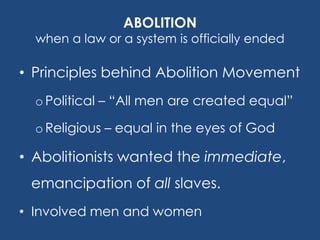
ABOLITION

when a law or a system is officially ended

• Principles behind Abolition Movement
o Political – “All men are created equal”
o Religious – equal in the eyes of God

• Abolitionists wanted the immediate,
emancipation of all slaves.
• Involved men and women
Who Were the
Abolitionists?
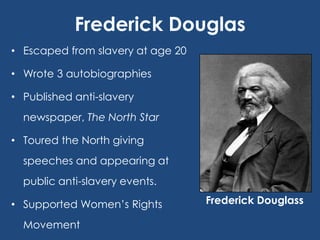
Frederick Douglas
• Escaped from slavery at age 20
• Wrote 3 autobiographies
• Published anti-slavery
newspaper, The North Star

• Toured the North giving
speeches and appearing at
public anti-slavery events.
• Supported Women’s Rights
Movement

Frederick Douglass
William Lloyd Garrison
• From Boston
• Published The Liberator,
1831
• Organized New England
Anti-Slavery Society, 1832
• Went to Europe to gain
support for abolition
• Saw slavery as morally
wrong
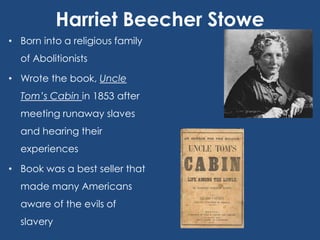
Harriet Beecher Stowe
• Born into a religious family
of Abolitionists
• Wrote the book, Uncle
Tom’s Cabin in 1853 after
meeting runaway slaves
and hearing their
experiences
• Book was a best seller that
made many Americans
aware of the evils of
slavery
John Quincy Adams
• In 1836, Congress passes the
GAG RULE – preventing any

bills restricting or ending
slavery
• Q. Adams fought against the
gag rule calling it
unconstitutional.

• The gag rule was finally
suspended in 1844
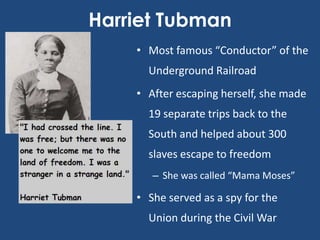
Harriet Tubman
• Most famous “Conductor” of the
Underground Railroad

• After escaping herself, she made
19 separate trips back to the
South and helped about 300
slaves escape to freedom
– She was called “Mama Moses”

• She served as a spy for the
Union during the Civil War
Underground Railroad
• Secret network of abolitionists who worked together
to help runaway slaves reach freedom in the North
or in Canada
• Runaways would travel 10-20 miles before they
reached the next “station” which would be houses,
barns, or cellars of white or free black people who
chose to help them escape.

• They would be helped along the routes by people
like Harriet Tubman, called “conductors”
Abolition Movement

Abolition Movement

  • 1.
  • 2.
    The daily lifeof slaves. • Living Conditions – large families in one-room cabins; unbalanced diets, no running water or poor sanitation • Some slaves became artisans • Allowed to marry and have children • Many subjected to Cruel Punishments and denied basic human rights • Could be sold and separated from family at anytime.
  • 3.
    Nat Turner’s Rebellion •August 1831 in Southampton County, Virginia • Nat Turner, a black religious leader led 70-75 slaves on attack • They killed 60 whites, including men, women, and children • Spread fear among slave owners – States passed stricter laws controlling activities of free and enslaved blacks
  • 4.
    ABOLITION when a lawor a system is officially ended • Principles behind Abolition Movement o Political – “All men are created equal” o Religious – equal in the eyes of God • Abolitionists wanted the immediate, emancipation of all slaves. • Involved men and women
  • 5.
  • 6.
    Frederick Douglas • Escapedfrom slavery at age 20 • Wrote 3 autobiographies • Published anti-slavery newspaper, The North Star • Toured the North giving speeches and appearing at public anti-slavery events. • Supported Women’s Rights Movement Frederick Douglass
  • 7.
    William Lloyd Garrison •From Boston • Published The Liberator, 1831 • Organized New England Anti-Slavery Society, 1832 • Went to Europe to gain support for abolition • Saw slavery as morally wrong
  • 8.
    Harriet Beecher Stowe •Born into a religious family of Abolitionists • Wrote the book, Uncle Tom’s Cabin in 1853 after meeting runaway slaves and hearing their experiences • Book was a best seller that made many Americans aware of the evils of slavery
  • 9.
    John Quincy Adams •In 1836, Congress passes the GAG RULE – preventing any bills restricting or ending slavery • Q. Adams fought against the gag rule calling it unconstitutional. • The gag rule was finally suspended in 1844
  • 10.
    Harriet Tubman • Mostfamous “Conductor” of the Underground Railroad • After escaping herself, she made 19 separate trips back to the South and helped about 300 slaves escape to freedom – She was called “Mama Moses” • She served as a spy for the Union during the Civil War
  • 11.
    Underground Railroad • Secretnetwork of abolitionists who worked together to help runaway slaves reach freedom in the North or in Canada • Runaways would travel 10-20 miles before they reached the next “station” which would be houses, barns, or cellars of white or free black people who chose to help them escape. • They would be helped along the routes by people like Harriet Tubman, called “conductors”