Final Steps to Independence 
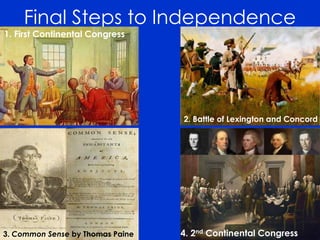
1. First Continental Congress 
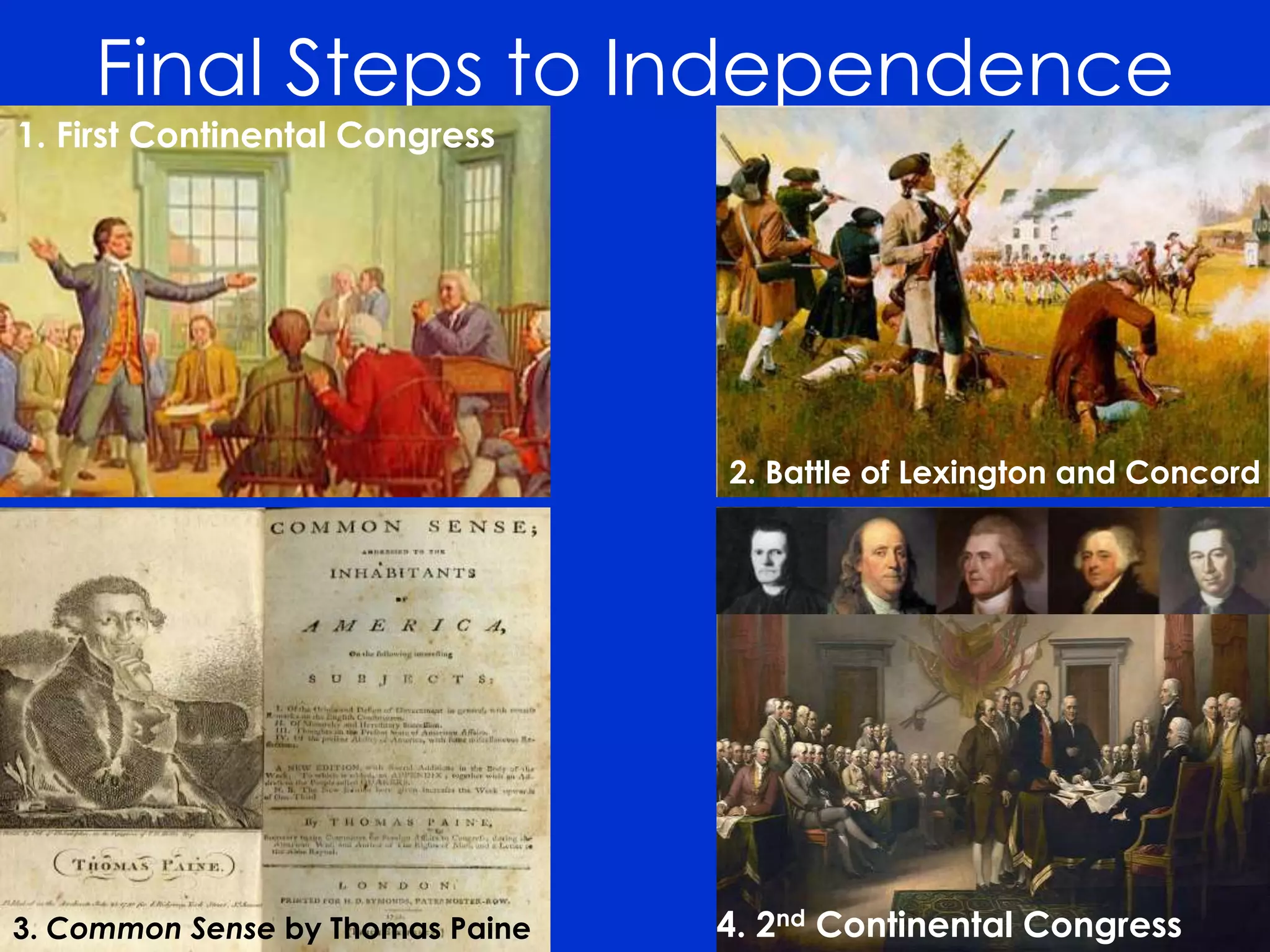
2. Battle of Lexington and Concord 
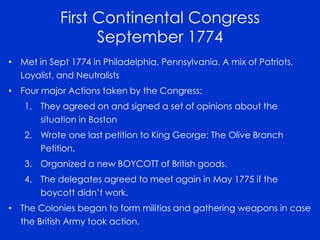
4. 2nd Continental Congress 
3. Common Sense by Thomas Paine
Essential Question 
How did the colonies finally reach 
the point of separation from Great 
Britain?
First Continental Congress 
September 1774 
• Met in Sept 1774 in Philadelphia, Pennsylvania. A mix of Patriots, 
Loyalist, and Neutralists 
• Four major Actions taken by the Congress: 
1. They agreed on and signed a set of opinions about the 
situation in Boston 
2. Wrote one last petition to King George: The Olive Branch 
Petition. 
3. Organized a new BOYCOTT of British goods. 
4. The delegates agreed to meet again in May 1775 if the 
boycott didn’t work. 
• The Colonies began to form militias and gathering weapons in case 
the British Army took action.
Lexington and Concord April 19, 1775 
• British soldiers marched from Boston to retrieve weapons from 
colonial militias at Concord, MA 
• On the way in Lexington, Militia men and British soldiers 
exchange gunfire. 
• At Concord, the militia move all the weapons and wait for 
British soldiers. 
– After some fighting, the British retreat and go back the 
way they came. 
• When they reached Lexington there were 2,000 militia men 
waiting for them! 
• At Lexington and Concord the colonist finally had their 
message heard: They wanted their rights and now they were 
willing to die for them!
2nd Continental Congress 
May 10, 1775 
• Appointed George Washington as the 
commander in chief of the new Continental 
Army 
• King George had rejected Olive Branch Petition 
sent from the 1st Continental Congress, and 
declared the colonies in “open rebellion” 
against the King and Great Britain 
• Congress appointed a committee to write a 
declaration of Independence 
– Committee included: John Adams, Thomas Jefferson, 
Benjamin Franklin, Roger Sherman, and Robert 
Livingston
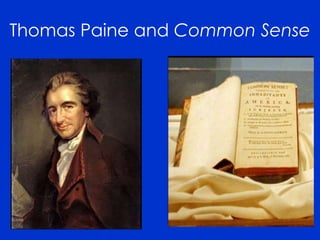
Thomas Paine and Common Sense
Thomas Paine and Common Sense 
January 1776 
• Message of Common Sense: 
– Written for ordinary people in ordinary language 
– The Colonies were capable of independence. 
– The King was a Tyrant. 
– Americans should fight for independence 
• Effects of Common Sense: 
– Convinced many colonists to support fighting for 
independence
Thomas Paine and Common Sense 
January 1776 
• “Why is it that we hesitate? From Britain 
we can expect nothing but ruin. If she 
is admitted to the government of 
America again, this continent will not 
be worth living in.”

Final Steps to Independence

  • 1.
    Final Steps toIndependence 1. First Continental Congress 2. Battle of Lexington and Concord 4. 2nd Continental Congress 3. Common Sense by Thomas Paine
  • 2.
    Essential Question Howdid the colonies finally reach the point of separation from Great Britain?
  • 3.
    First Continental Congress September 1774 • Met in Sept 1774 in Philadelphia, Pennsylvania. A mix of Patriots, Loyalist, and Neutralists • Four major Actions taken by the Congress: 1. They agreed on and signed a set of opinions about the situation in Boston 2. Wrote one last petition to King George: The Olive Branch Petition. 3. Organized a new BOYCOTT of British goods. 4. The delegates agreed to meet again in May 1775 if the boycott didn’t work. • The Colonies began to form militias and gathering weapons in case the British Army took action.
  • 4.
    Lexington and ConcordApril 19, 1775 • British soldiers marched from Boston to retrieve weapons from colonial militias at Concord, MA • On the way in Lexington, Militia men and British soldiers exchange gunfire. • At Concord, the militia move all the weapons and wait for British soldiers. – After some fighting, the British retreat and go back the way they came. • When they reached Lexington there were 2,000 militia men waiting for them! • At Lexington and Concord the colonist finally had their message heard: They wanted their rights and now they were willing to die for them!
  • 5.
    2nd Continental Congress May 10, 1775 • Appointed George Washington as the commander in chief of the new Continental Army • King George had rejected Olive Branch Petition sent from the 1st Continental Congress, and declared the colonies in “open rebellion” against the King and Great Britain • Congress appointed a committee to write a declaration of Independence – Committee included: John Adams, Thomas Jefferson, Benjamin Franklin, Roger Sherman, and Robert Livingston
  • 6.
    Thomas Paine andCommon Sense
  • 7.
    Thomas Paine andCommon Sense January 1776 • Message of Common Sense: – Written for ordinary people in ordinary language – The Colonies were capable of independence. – The King was a Tyrant. – Americans should fight for independence • Effects of Common Sense: – Convinced many colonists to support fighting for independence
  • 8.
    Thomas Paine andCommon Sense January 1776 • “Why is it that we hesitate? From Britain we can expect nothing but ruin. If she is admitted to the government of America again, this continent will not be worth living in.”