The Thirteen Colonies
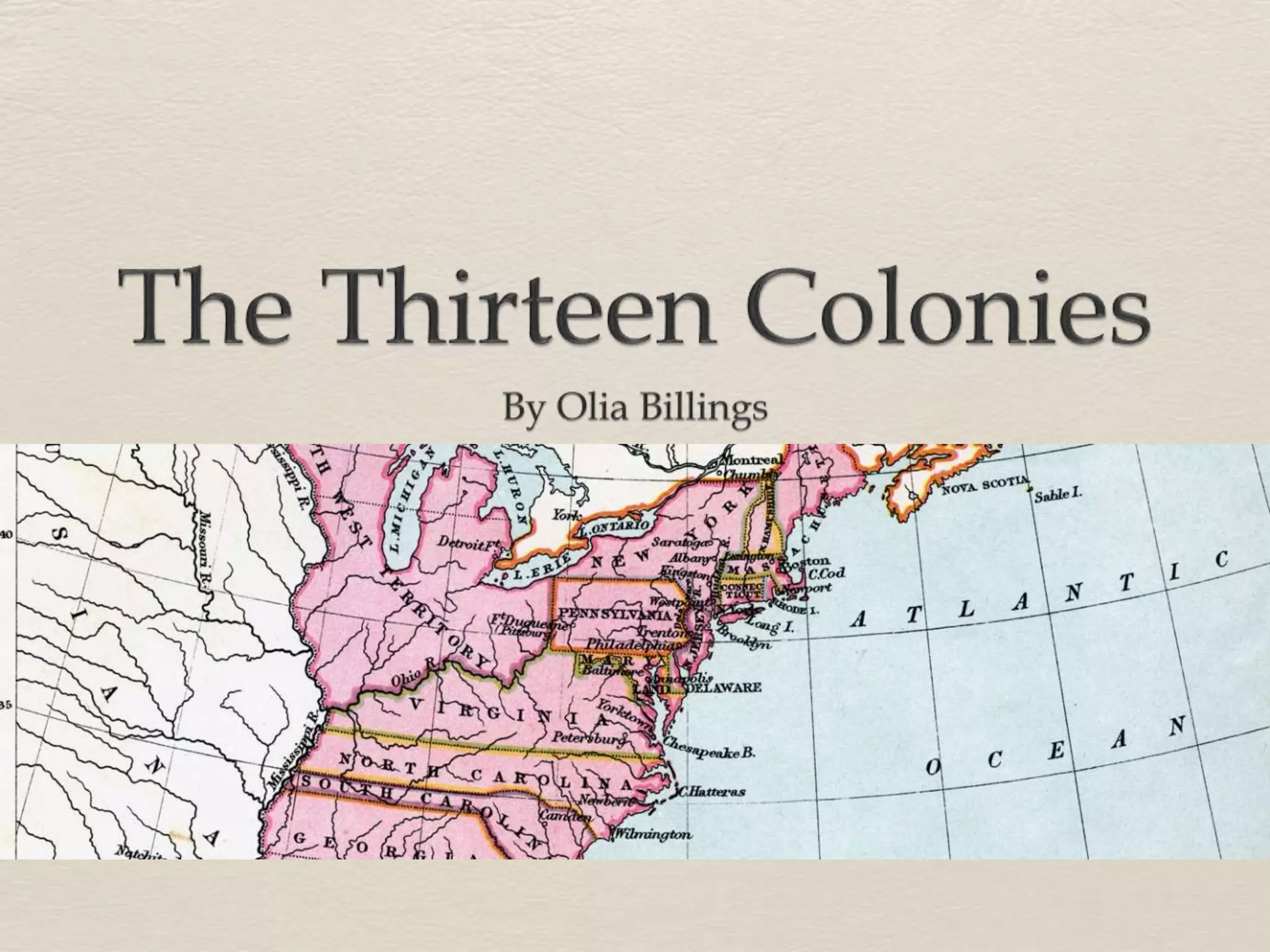
 English colonies along the East Coast
 These colonies later formed the United States
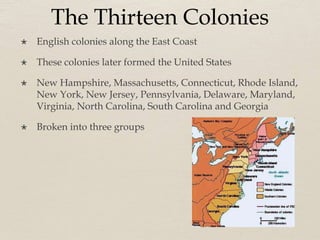
 New Hampshire, Massachusetts, Connecticut, Rhode Island,
New York, New Jersey, Pennsylvania, Delaware, Maryland,
Virginia, North Carolina, South Carolina and Georgia
 Broken into three groups
New England Colonies
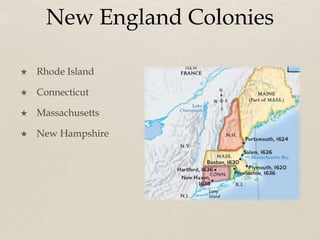
 Rhode Island
 Connecticut
 Massachusetts
 New Hampshire
New England Colonies: Attributes
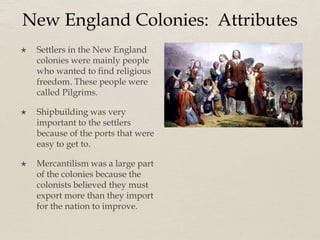
 Settlers in the New England
colonies were mainly people
who wanted to find religious
freedom. These people were
called Pilgrims.
 Shipbuilding was very
important to the settlers
because of the ports that were
easy to get to.
 Mercantilism was a large part
of the colonies because the
colonists believed they must
export more than they import
for the nation to improve.
New England Colonies:
Triangular Trade Effects
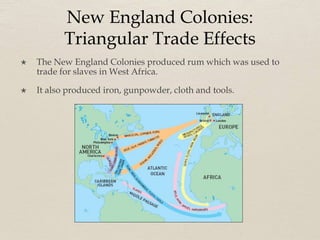
 The New England Colonies produced rum which was used to
trade for slaves in West Africa.
 It also produced iron, gunpowder, cloth and tools.
New England Colonies:
The Great Awakening Effects
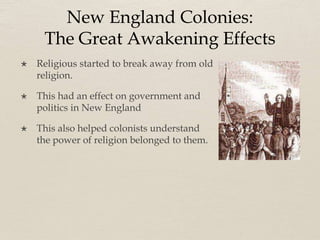
 Religious started to break away from old
religion.
 This had an effect on government and
politics in New England
 This also helped colonists understand
the power of religion belonged to them.
New England Colonies:
Enlightenment Thinking Effects
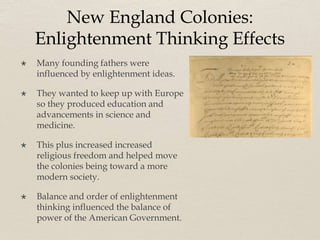
 Many founding fathers were
influenced by enlightenment ideas.
 They wanted to keep up with Europe
so they produced education and
advancements in science and
medicine.
 This plus increased increased
religious freedom and helped move
the colonies being toward a more
modern society.
 Balance and order of enlightenment
thinking influenced the balance of
power of the American Government.
Southern Colonies
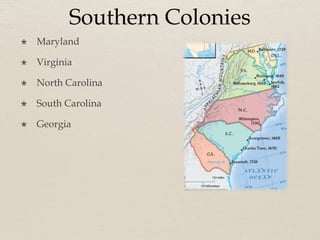
 Maryland
 Virginia
 North Carolina
 South Carolina
 Georgia
Southern Colonies
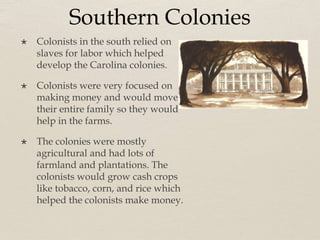
 Colonists in the south relied on
slaves for labor which helped
develop the Carolina colonies.
 Colonists were very focused on
making money and would move
their entire family so they would
help in the farms.
 The colonies were mostly
agricultural and had lots of
farmland and plantations. The
colonists would grow cash crops
like tobacco, corn, and rice which
helped the colonists make money.
Southern Colonies:
Triangular Trade Effects
 Southern colonies settled
for economic reasons
instead of religious
reasons.
 Their farming was very
important.
 They needed slaves
because the farming of
cash crops like tobacco,
and indigo, required so
much labor.
 African slaves were an
important part of the
triangular trade route to
the southern colonies.
Southern Colonies:
The Great Awakening Effects
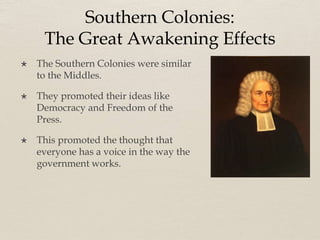
 The Southern Colonies were similar
to the Middles.
 They promoted their ideas like
Democracy and Freedom of the
Press.
 This promoted the thought that
everyone has a voice in the way the
government works.
Southern Colonies:
Enlightenment Thinking Effects
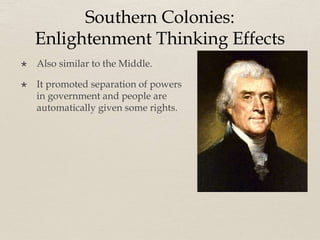
 Also similar to the Middle.
 It promoted separation of powers
in government and people are
automatically given some rights.
Middle Colonies
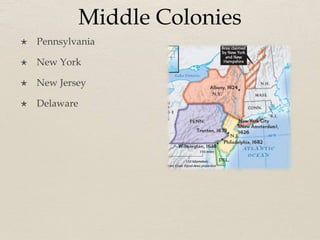
 Pennsylvania
 New York
 New Jersey
 Delaware
Middle Colonies
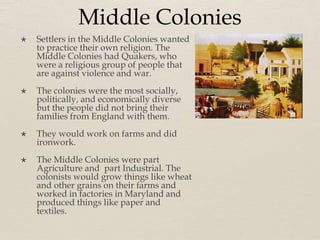
 Settlers in the Middle Colonies wanted
to practice their own religion. The
Middle Colonies had Quakers, who
were a religious group of people that
are against violence and war.
 The colonies were the most socially,
politically, and economically diverse
but the people did not bring their
families from England with them.
 They would work on farms and did
ironwork.
 The Middle Colonies were part
Agriculture and part Industrial. The
colonists would grow things like wheat
and other grains on their farms and
worked in factories in Maryland and
produced things like paper and
textiles.
Middle Colonies:
Triangular Trade Effects
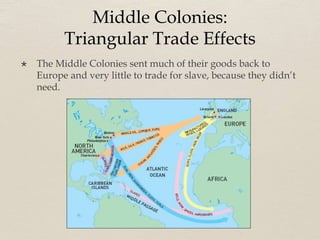
 The Middle Colonies sent much of their goods back to
Europe and very little to trade for slave, because they didn’t
need.
Middle Colonies:
The Great Awakening Effects
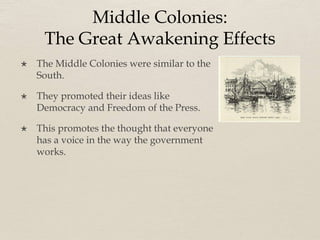
 The Middle Colonies were similar to the
South.
 They promoted their ideas like
Democracy and Freedom of the Press.
 This promotes the thought that everyone
has a voice in the way the government
works.
Middle Colonies:
Enlightenment Thinking Effects
 Also similar to the south.
 It promoted separation of powers
in government and people are
automatically given some rights.
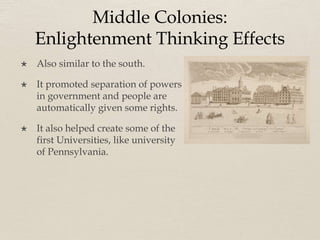
 It also helped create some of the
first Universities, like university
of Pennsylvania.

The thirteen colonies

  • 2.
    The Thirteen Colonies English colonies along the East Coast  These colonies later formed the United States  New Hampshire, Massachusetts, Connecticut, Rhode Island, New York, New Jersey, Pennsylvania, Delaware, Maryland, Virginia, North Carolina, South Carolina and Georgia  Broken into three groups
  • 3.
    New England Colonies Rhode Island  Connecticut  Massachusetts  New Hampshire
  • 4.
    New England Colonies:Attributes  Settlers in the New England colonies were mainly people who wanted to find religious freedom. These people were called Pilgrims.  Shipbuilding was very important to the settlers because of the ports that were easy to get to.  Mercantilism was a large part of the colonies because the colonists believed they must export more than they import for the nation to improve.
  • 5.
    New England Colonies: TriangularTrade Effects  The New England Colonies produced rum which was used to trade for slaves in West Africa.  It also produced iron, gunpowder, cloth and tools.
  • 6.
    New England Colonies: TheGreat Awakening Effects  Religious started to break away from old religion.  This had an effect on government and politics in New England  This also helped colonists understand the power of religion belonged to them.
  • 7.
    New England Colonies: EnlightenmentThinking Effects  Many founding fathers were influenced by enlightenment ideas.  They wanted to keep up with Europe so they produced education and advancements in science and medicine.  This plus increased increased religious freedom and helped move the colonies being toward a more modern society.  Balance and order of enlightenment thinking influenced the balance of power of the American Government.
  • 8.
    Southern Colonies  Maryland Virginia  North Carolina  South Carolina  Georgia
  • 9.
    Southern Colonies  Colonistsin the south relied on slaves for labor which helped develop the Carolina colonies.  Colonists were very focused on making money and would move their entire family so they would help in the farms.  The colonies were mostly agricultural and had lots of farmland and plantations. The colonists would grow cash crops like tobacco, corn, and rice which helped the colonists make money.
  • 10.
    Southern Colonies: Triangular TradeEffects  Southern colonies settled for economic reasons instead of religious reasons.  Their farming was very important.  They needed slaves because the farming of cash crops like tobacco, and indigo, required so much labor.  African slaves were an important part of the triangular trade route to the southern colonies.
  • 11.
    Southern Colonies: The GreatAwakening Effects  The Southern Colonies were similar to the Middles.  They promoted their ideas like Democracy and Freedom of the Press.  This promoted the thought that everyone has a voice in the way the government works.
  • 12.
    Southern Colonies: Enlightenment ThinkingEffects  Also similar to the Middle.  It promoted separation of powers in government and people are automatically given some rights.
  • 13.
    Middle Colonies  Pennsylvania New York  New Jersey  Delaware
  • 14.
    Middle Colonies  Settlersin the Middle Colonies wanted to practice their own religion. The Middle Colonies had Quakers, who were a religious group of people that are against violence and war.  The colonies were the most socially, politically, and economically diverse but the people did not bring their families from England with them.  They would work on farms and did ironwork.  The Middle Colonies were part Agriculture and part Industrial. The colonists would grow things like wheat and other grains on their farms and worked in factories in Maryland and produced things like paper and textiles.
  • 15.
    Middle Colonies: Triangular TradeEffects  The Middle Colonies sent much of their goods back to Europe and very little to trade for slave, because they didn’t need.
  • 16.
    Middle Colonies: The GreatAwakening Effects  The Middle Colonies were similar to the South.  They promoted their ideas like Democracy and Freedom of the Press.  This promotes the thought that everyone has a voice in the way the government works.
  • 17.
    Middle Colonies: Enlightenment ThinkingEffects  Also similar to the south.  It promoted separation of powers in government and people are automatically given some rights.  It also helped create some of the first Universities, like university of Pennsylvania.