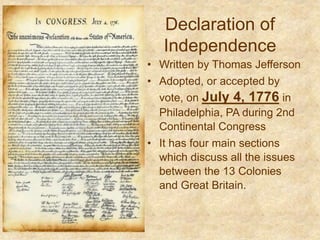
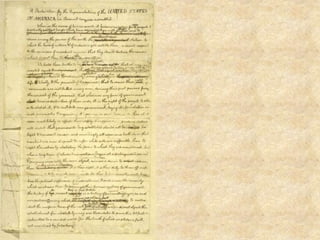
Declaration of 
Independence 
• Written by Thomas Jefferson 
• Adopted, or accepted by 
vote, on July 4, 1776 in 
Philadelphia, PA during 2nd 
Continental Congress 
• It has four main sections 
which discuss all the issues 
between the 13 Colonies 
and Great Britain.
Part 1: Preamble (Introduction) 
• The document begins by saying that when one 
groups separates from another, an explanation 
should be given. 
• WRITING down the colonies intentions of 
separating from England will give them a good 
place to start new.
Part 2: Principles and Beliefs 
• All men are created equal 
• All people have certain rights that no one can take away: 
– These rights come from God 
– These rights are: “life, liberty, and pursuit of happiness” 
• Government is created by people to protect these rights and that 
government gets its power from the people it governs 
• If a government doesn’t protect these rights then the people have 
the right to change that government. 
• Principles reflected in the Declaration: 
– _____________________________________ 
– _____________________________________ 
– _____________________________________ 
– _____________________________________
Part 3: Grievances of the Colonies 
• King George III and Parliament had violated the 
unalienable rights of the colonists. 
• The Declaration lists the GRIEVANCES or 
complaints, of the colonists against King George 
III and Parliament: 
1. ___________________________ 
2. ___________________________ 
3. ___________________________ 
4. ___________________________
Part 4: Declaring Independence 
• Colonists had tried to work with King George 
and Parliament through negotiating, petitioning, 
and sending people to speak before them. 
• Since King George III and Parliament did not 
listen, then colonists felt they had the right to 
declare independence and become their own 
nation. 
• The Colonies are now STATES and can do all 
things free countries can do.
Declaration of Independence

Declaration of Independence

  • 1.
    Declaration of Independence • Written by Thomas Jefferson • Adopted, or accepted by vote, on July 4, 1776 in Philadelphia, PA during 2nd Continental Congress • It has four main sections which discuss all the issues between the 13 Colonies and Great Britain.
  • 2.
    Part 1: Preamble(Introduction) • The document begins by saying that when one groups separates from another, an explanation should be given. • WRITING down the colonies intentions of separating from England will give them a good place to start new.
  • 3.
    Part 2: Principlesand Beliefs • All men are created equal • All people have certain rights that no one can take away: – These rights come from God – These rights are: “life, liberty, and pursuit of happiness” • Government is created by people to protect these rights and that government gets its power from the people it governs • If a government doesn’t protect these rights then the people have the right to change that government. • Principles reflected in the Declaration: – _____________________________________ – _____________________________________ – _____________________________________ – _____________________________________
  • 4.
    Part 3: Grievancesof the Colonies • King George III and Parliament had violated the unalienable rights of the colonists. • The Declaration lists the GRIEVANCES or complaints, of the colonists against King George III and Parliament: 1. ___________________________ 2. ___________________________ 3. ___________________________ 4. ___________________________
  • 5.
    Part 4: DeclaringIndependence • Colonists had tried to work with King George and Parliament through negotiating, petitioning, and sending people to speak before them. • Since King George III and Parliament did not listen, then colonists felt they had the right to declare independence and become their own nation. • The Colonies are now STATES and can do all things free countries can do.