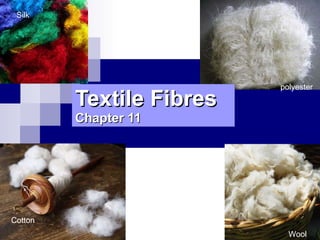
Textile Fibres Chapter 11 polyester Wool Cotton Silk
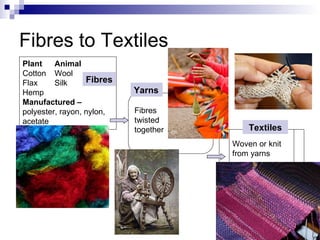
Fibres to Textiles Fibres Textiles Yarns Plant Animal  Cotton Wool Flax Silk Hemp Manufactured –  polyester, rayon, nylon, acetate  Fibres  twisted together Woven or knit from yarns
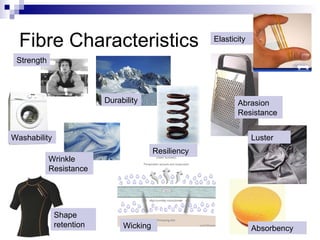
Fibre Characteristics Durability Elasticity Abrasion Resistance Wrinkle Resistance Shape retention Luster Absorbency Wicking Washability Strength Resiliency
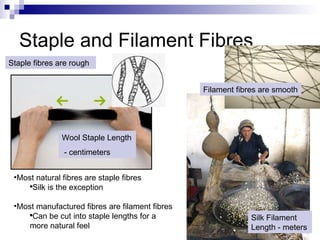
Staple and Filament Fibres Wool Staple Length - centimeters Silk Filament Length - meters Most natural fibres are staple fibres Silk is the exception Most manufactured fibres are filament fibres Can be cut into staple lengths for a more natural feel Staple fibres are rough Filament fibres are smooth
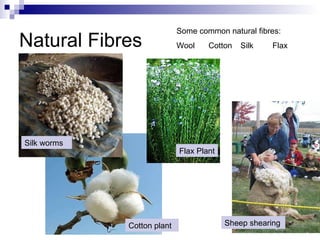
Natural Fibres Some common natural fibres: Wool  Cotton  Silk  Flax Silk worms Sheep shearing Cotton plant Flax Plant
Manufactured Fibres Some common manufactured fibres : Rayon Acrylic Nylon Polyester Spandex Acetate

Textile fibres

  • 1.
    Textile Fibres Chapter11 polyester Wool Cotton Silk
  • 2.
    Fibres to TextilesFibres Textiles Yarns Plant Animal Cotton Wool Flax Silk Hemp Manufactured – polyester, rayon, nylon, acetate Fibres twisted together Woven or knit from yarns
  • 3.
    Fibre Characteristics DurabilityElasticity Abrasion Resistance Wrinkle Resistance Shape retention Luster Absorbency Wicking Washability Strength Resiliency
  • 4.
    Staple and FilamentFibres Wool Staple Length - centimeters Silk Filament Length - meters Most natural fibres are staple fibres Silk is the exception Most manufactured fibres are filament fibres Can be cut into staple lengths for a more natural feel Staple fibres are rough Filament fibres are smooth
  • 5.
    Natural Fibres Somecommon natural fibres: Wool Cotton Silk Flax Silk worms Sheep shearing Cotton plant Flax Plant
  • 6.
    Manufactured Fibres Somecommon manufactured fibres : Rayon Acrylic Nylon Polyester Spandex Acetate