TEXTILE FFIBRE
TEXTILES




A Textile or cloth is a flexible material
consisting of a network of natural or
artificial fibres often referred to as
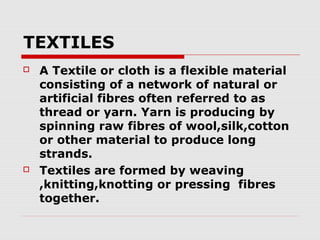
thread or yarn. Yarn is producing by
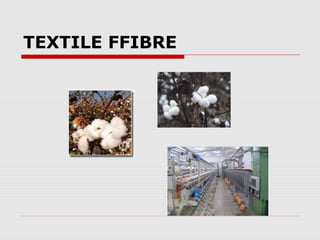
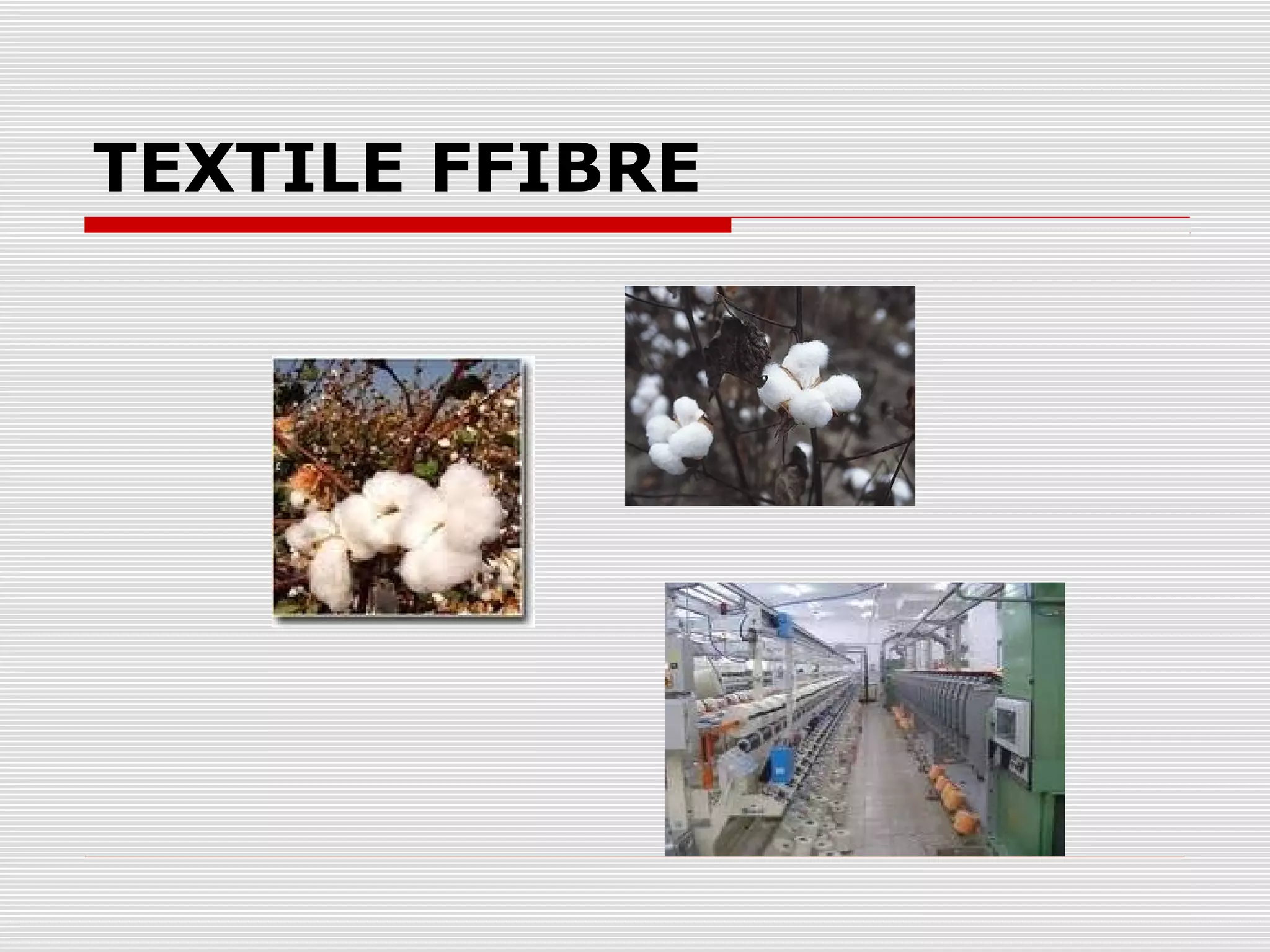
spinning raw fibres of wool,silk,cotton
or other material to produce long
strands.
Textiles are formed by weaving
,knitting,knotting or pressing fibres
together.
Uses:







-The most common uses are for clothing and
containers such ass bags and baskets.
-In the household,they are used in
carpeting,upholstered furnishing ,window
shades,towels,covering tables.
-they are used in industrial & scientific process
such as
filtering,tents,fibreglass,geotextiles,protective
clothing.
FIBRE










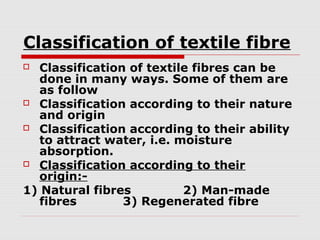
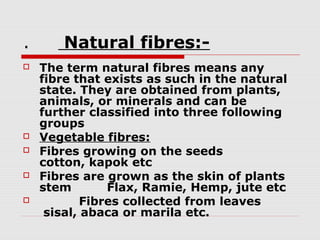
Fibre: The material , which consists fibrous structure and length is
thousand times higher than its width is called fibre.
Technically the term “fibre” or textile fibre means a unit of matter
which is capable of being spun into a yarn or made into a fabric of
any nature or character.
According to textile institute, fibres are defined as the units of
matter characterized by fineness, flexibility and high ratio of length
to thickness.
To be textile fibres it should have length to width ratio more than
100:1.
Almost all the textile fibres have length to width ratio more than
1000:1.
Typical ratios for several natural fibres are as follows:
Cotton=1400, wool=3000, silk=33×106

Textile Fiber is the raw material required for the textile industry.
FIBRE
Classification of textile fibre
Classification of textile fibres can be
done in many ways. Some of them are
as follow
 Classification according to their nature
and origin
 Classification according to their ability
to attract water, i.e. moisture
absorption.
 Classification according to their
origin:1) Natural fibres
2) Man-made
fibres
3) Regenerated fibre

.







Natural fibres:The term natural fibres means any
fibre that exists as such in the natural
state. They are obtained from plants,
animals, or minerals and can be
further classified into three following
groups
Vegetable fibres:
Fibres growing on the seeds
cotton, kapok etc
Fibres are grown as the skin of plants
stem
Flax, Ramie, Hemp, jute etc
Fibres collected from leaves
sisal, abaca or marila etc.
Animal fibres:



After the coagulation of the
mucus thrown up by the body of
silk worm
silk fibre
Fibres are found from Hair
sheep wool, cashmere wool,
camel wool, mohair etc.
Minerals fibres:


- The only natural fibre occurring
from minerals in asbestos. There
are several kinds of asbestos
fibres, all of which are fire
resistant and not easily destroyed
or degraded by natural process.
They are usually used as the non
combustible insulation materials
Man made or artificial fibre:


Manmade fibre means any fibre
which is derived by an artificial
process from any substance
which, at any point is not a fibre.
eg: Polyester, Nylon
Regenerated fibre:


The fibres regenerated from natural
cellulose sources like wood pulp or
cotton linters are referred to as
regenerated fibres. However a certain
variation in degree of polymerization
occurs resulting in some modified
physical properties of the regenerated
fibres that essentially differ from the
original one. i.e. viscose rayon,
polynosic, cupro, lyocell etc belong to
this category.
Classification according to their
ability to attract water, i.e.
moisture absorption

 Hydrophilic

Fibre :



The fibres which have the ability
to absorb water is known as
Hydrophilic fibre. ie. Cotton , Jute
etc.
Hydrophobic Fibre


The fibres which have not the
ability to absorb water is known
as Hydrophobic fibre. ie.
Polyester , Nylon etc
Natural fiber


Vegetable fibersare generally
composed mainly of cellulose:
examples include cotton, jute, flax,
ramie, sisal, and hemp. Cellulose
fibers serve in the manufacture of
paper and cloth. This fiber can be
further categorized into the following:

Textile Fibre

  • 1.
  • 2.
    TEXTILES   A Textile orcloth is a flexible material consisting of a network of natural or artificial fibres often referred to as thread or yarn. Yarn is producing by spinning raw fibres of wool,silk,cotton or other material to produce long strands. Textiles are formed by weaving ,knitting,knotting or pressing fibres together.
  • 3.
    Uses:    -The most commonuses are for clothing and containers such ass bags and baskets. -In the household,they are used in carpeting,upholstered furnishing ,window shades,towels,covering tables. -they are used in industrial & scientific process such as filtering,tents,fibreglass,geotextiles,protective clothing.
  • 4.
    FIBRE        Fibre: The material, which consists fibrous structure and length is thousand times higher than its width is called fibre. Technically the term “fibre” or textile fibre means a unit of matter which is capable of being spun into a yarn or made into a fabric of any nature or character. According to textile institute, fibres are defined as the units of matter characterized by fineness, flexibility and high ratio of length to thickness. To be textile fibres it should have length to width ratio more than 100:1. Almost all the textile fibres have length to width ratio more than 1000:1. Typical ratios for several natural fibres are as follows: Cotton=1400, wool=3000, silk=33×106 Textile Fiber is the raw material required for the textile industry.
  • 5.
  • 6.
    Classification of textilefibre Classification of textile fibres can be done in many ways. Some of them are as follow  Classification according to their nature and origin  Classification according to their ability to attract water, i.e. moisture absorption.  Classification according to their origin:1) Natural fibres 2) Man-made fibres 3) Regenerated fibre 
  • 7.
    .      Natural fibres:The termnatural fibres means any fibre that exists as such in the natural state. They are obtained from plants, animals, or minerals and can be further classified into three following groups Vegetable fibres: Fibres growing on the seeds cotton, kapok etc Fibres are grown as the skin of plants stem Flax, Ramie, Hemp, jute etc Fibres collected from leaves sisal, abaca or marila etc.
  • 8.
    Animal fibres:  After thecoagulation of the mucus thrown up by the body of silk worm silk fibre Fibres are found from Hair sheep wool, cashmere wool, camel wool, mohair etc.
  • 9.
    Minerals fibres:  - Theonly natural fibre occurring from minerals in asbestos. There are several kinds of asbestos fibres, all of which are fire resistant and not easily destroyed or degraded by natural process. They are usually used as the non combustible insulation materials
  • 10.
    Man made orartificial fibre:  Manmade fibre means any fibre which is derived by an artificial process from any substance which, at any point is not a fibre. eg: Polyester, Nylon
  • 11.
    Regenerated fibre:  The fibresregenerated from natural cellulose sources like wood pulp or cotton linters are referred to as regenerated fibres. However a certain variation in degree of polymerization occurs resulting in some modified physical properties of the regenerated fibres that essentially differ from the original one. i.e. viscose rayon, polynosic, cupro, lyocell etc belong to this category.
  • 12.
    Classification according totheir ability to attract water, i.e. moisture absorption  Hydrophilic Fibre :  The fibres which have the ability to absorb water is known as Hydrophilic fibre. ie. Cotton , Jute etc.
  • 13.
    Hydrophobic Fibre  The fibreswhich have not the ability to absorb water is known as Hydrophobic fibre. ie. Polyester , Nylon etc
  • 14.
    Natural fiber  Vegetable fibersaregenerally composed mainly of cellulose: examples include cotton, jute, flax, ramie, sisal, and hemp. Cellulose fibers serve in the manufacture of paper and cloth. This fiber can be further categorized into the following: