TESTICULAR CANCERS
Dr. Ayush Garg
Overview
Cancers of testis are relatively rare cancer accounting for approx. 1 % cancer in
males.
However it is important in field of oncology as it represents a highly curable
neoplasm & the incidence is focused on young patients at their peak of
productivity
Anatomy
• The testis is the male gonad.
• It is homologous with the ovary in female.
• It lies obliquely within the scrotum suspended by
the spermatic cord
• The left testis is slightly lower than the right
• Shape: Oval
• Size:3.75 cm long, 2.5 cm broad, 1.8 cm thick
• Weight: about 10-15 gm.
• Has 2poles , 2surface, 2 borders
 Skin
 DARTOS Muscle
 External Spermatic Fascia
 Cremastric Muscle
 Internal Spermatic Fascia
 Tunica Vaginalis
 Tunica Albuginea
Coverings of testis
Blood Supply
Areterial supply
• The testicular artery branch of abdominal aorta .
• The testis has collateral blood supply from
1. the cremasteric artery
2. artery to the ductus deferens
Venous drainage
• The veins emerge from the back of the testis, and receive
tributaries from the epididymis;
• they unite and form convoluted plexus, called the
pampiniform plexus.
• plexus to form a single vein, which opens, on the right side,
into the inferior vena cava ,on the left side into the left
renal vein
Lymphatic Drainage
Drain into the retroperitoneal lymph glands between the
levels of T11 and L4, but they are concentrated at the level
of the L1 and L3 vertebrae
Lymph nodes located lateral or anterior to the inferior
vena cava are called paracaval or precaval nodes,
respectively.
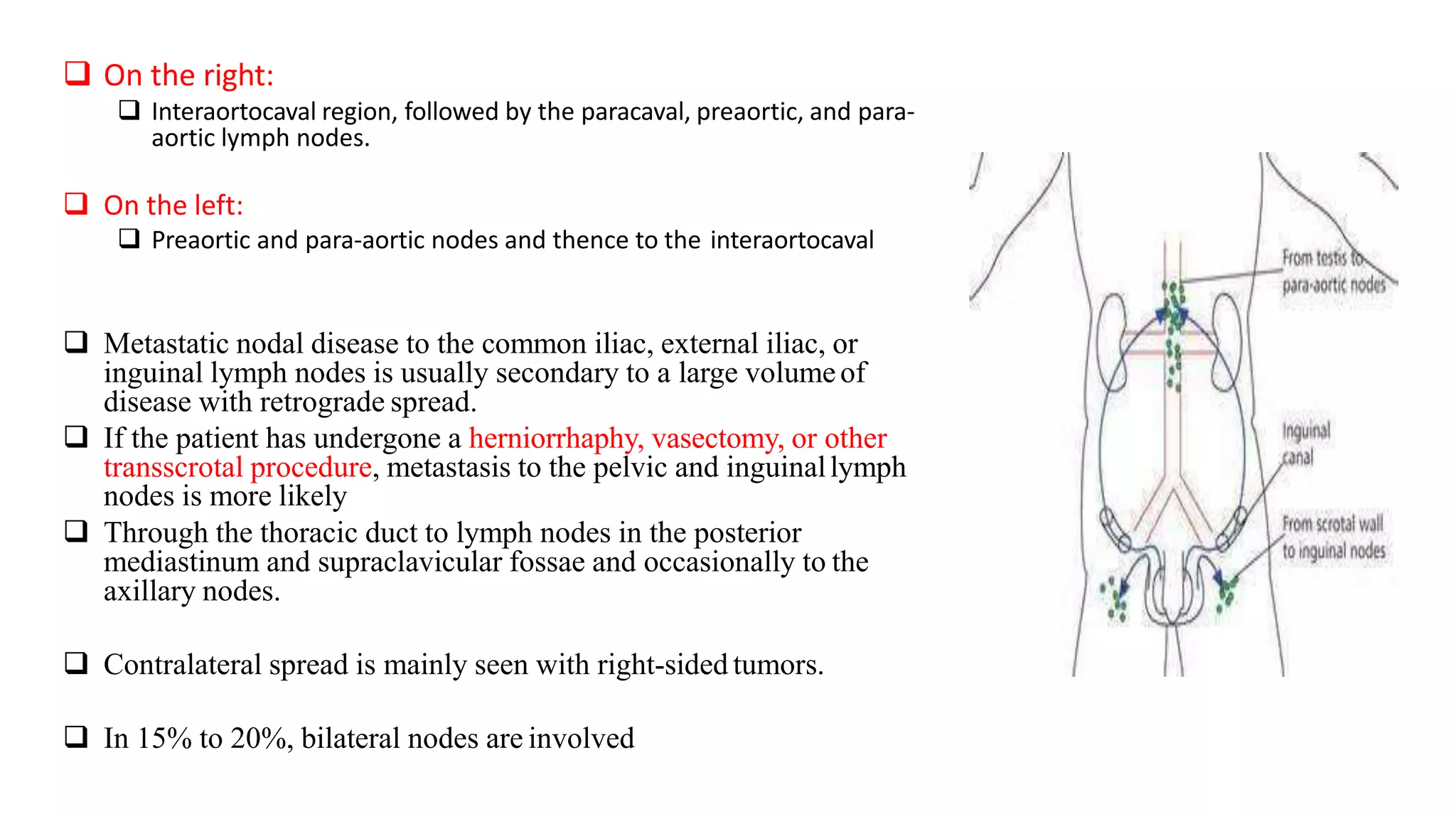
Interaortocaval nodes are located between the inferior
vena cava and the aorta.
Nodes anterior or lateral to the aorta are preaortic or para-
aortic nodes, respectively
 On the right:
 Interaortocaval region, followed by the paracaval, preaortic, and para-
aortic lymph nodes.
 On the left:
 Preaortic and para-aortic nodes and thence to the interaortocaval
 Metastatic nodal disease to the common iliac, external iliac, or
inguinal lymph nodes is usually secondary to a large volumeof
disease with retrograde spread.
 If the patient has undergone a herniorrhaphy, vasectomy, or other
transscrotal procedure, metastasis to the pelvic and inguinallymph
nodes is more likely
 Through the thoracic duct to lymph nodes in the posterior
mediastinum and supraclavicular fossae and occasionally to the
axillary nodes.
 Contralateral spread is mainly seen with right-sided tumors.
 In 15% to 20%, bilateral nodes are involved
INTRODUCTION
 Comprise a morphologically and clinically diverse group of tumors
 Predominantly affects young males
 1 -2 % of all cancers in USA
 Testicular cancer forms about 1% of all malignancies in males in India.
 Incidence (ASR)– 0.6 per 100000
 Mortality (ASR)– 0.3 per 100000
 95% are Germ Cell Tumours (GCTs)
 90% GCT are in testes,2-10% in extra gonadal (eg retropreitoneum, mediastinal)
 Cure rate increased with introduction of platinum based chemotherapy from 10 to 80%
EPIDEMOLOGY OF TESTICULAR CANCER
• Age: for GCT: median age at diagnosis is 34 years, with 50% of incident
cases between 20 and 34 years.
• In a man age: 50 years or older solid testicular mass is usually lymphoma
• Age - 3 peaks
2 – 4 yrs
20 – 40 yrs
above 50 yrs
• Geographic: Highest incidence in Denmark, Norway, and Switzerland
and the lowest in eastern Europe andAsia.
• Race: more common in young white men ,less in AfricanAmericans
Predisposing Factors
1. Cryptorchidism
2. Klinefelter syndrome
3. Positive family history
4. Positive personal history
5. Intratubular germ cell neoplasia
6. Trauma
7. Viral infection
8. Hormonal factors
9. Exposure to environmental oestrogen
Pathological classification
1:Intra tubular germ-cell neoplasia(IGCN)
2:GERM CELL TUMORS 95%
Seminoma 40%
Classic type
anaplastic
Spermatocytic type
Non seminomatous germ-cell tumors 60%
 Embryonal carcinoma 20-25%
 Teratoma 25-35%
 Yolk sac (endodermal sinus) tumor
 Choriocarcinoma 1%
 Mixed germ-cell tumor
3:Classification of Sex-Cord Stromal Tumors of the
Testis 2-3%
 Leydig cell tumor
 Sertoli cell tumor
 Granulosa cell tumor
 Fibroma-thecoma stromal tumor
 Gonadoblastoma
 Sex cord-stromal tumor unclassified type
4: others 5%
 lymphoma
 rabdomyosarcoma
 melanoma
Seminoma
 The commonest variety of testicular tumour
 Adults are the usual target (4th and 5th decade); never seen in infancy
 Right > Left Testis
 Starts in the mediastinum: compresses the surrounding structure.
 Patients present with painless testicular mass
 30 % have metastases at presentation, but only 3% have symptoms related to
metastases
Seminoma
• Serum alpha fetoprotein is normal
• Beta HCG is elevated in 30% of patients with Seminoma
• Classification
a) classical
b) Anaplastic
c) Spermatocytic
Spread
1. Direct Spread:
 This spread occurs by invasion.
 Whole of testis in involved and restricted
 Tunica albuginea is rarely penetrated
 May be crossed by “blunder biopsy”
 Scrotal skin involvement
 Fungation on the anterior aspect
 Spread to spermatic cord and epidedymis
may occur : points towards bad prognosis
Spread
2. Lymphatic spread:
Seminoma metastasize exclusively through
lymphatics
They drain primarily to para-aortic lymph nodes
From RPLN drain into cysterna chili, thoracic duct
,posterior mediastinum & left supraclavicular
Lymph
from medial side of testes run along the artery to
the vas to drain to nodes at the bifurcation of
common iliac
No inguinal nodes until scrotal skin involvement
Spread
3. Blood Spread
 NSGCT spread through blood route
 Lungs, liver, bones and brain are the usual sites usually involved
Clinical Features
1. Due to primary tumor
a) Painless testicular lump
b) Sensation of heaviness if size > than 2-3 times
c) Rarely dragging pain is complained of (1/3rd cases)
d) May mimic epidedymo-orchitis
e) Sudden pain and enlargement due to hemorrhage mimicking torsion
f) History of trauma (co-incidental)
Clinical Features
2. Due to metastasis
 Abdominal or lumbar pain (lymphatic spread)
 Dyspnoea, hemoptysis and chest pain with lung mets
 Jaundice with liver mets
 Hydronephrosis by para-aortic lymph nodes enlargement
 Pedal oedema by IVC obstruction
 Troiser’s sign
Clinical Features
3. Clinical examination:
a) Enlarged testis (except choriocarcinoma)
b) Nodular testis
c) Firm to hard in consistency
d) Loss of testicular sensation
e) Secondary hydrocele
f) Flat and difficult to feel epididymis
g) General examination for metastasis
Tumor markers
TWO MAIN CLASSES
• Onco-fetal Substances : AFP & HCG
• AFP - Trophoblastic Cells
HCG - Syncytiotrophoblastic Cells
AFP, BHCG & LDH are included in TNM staging of testicular cancers
Staging Work Up
• General
History (document cryptorchidism and previous inguinal or scrotal
surgery)
Physical examination
• Laboratory Studies
CBC, LFT, RFT, LDH
• Serum assays
Alpha fetoprotein (AFP)
Beta human chorionic gonadotropin
• Diagnostic Radiology
– Chest x-ray films, posterior/anterior and lateral views
– Computed tomography (CT) scan of abdomen and
pelvis
– CT scan of chest for non seminomas and stage II
seminomas
– Ultrasound of contralateral testis
LDH Beta HCG AFP
(mIu/ml) (ng/ml)
S1 < 1.5 x N <5000 <1000
S2 1.5-10 x N 5000-50000 1000-10000
S3 >10 x N >50000 >10000
Serum Tumor Markers (S)
Surgery
Radical orchidectomy:
all patients
done via an inguinal incision, with cross
clamping of spermatic cord vasculature and
delivery of testis into the surgical field.
Scrotal violation, increased local/regional
recurrence, but no difference in distant
recurrence rate or overall survival.
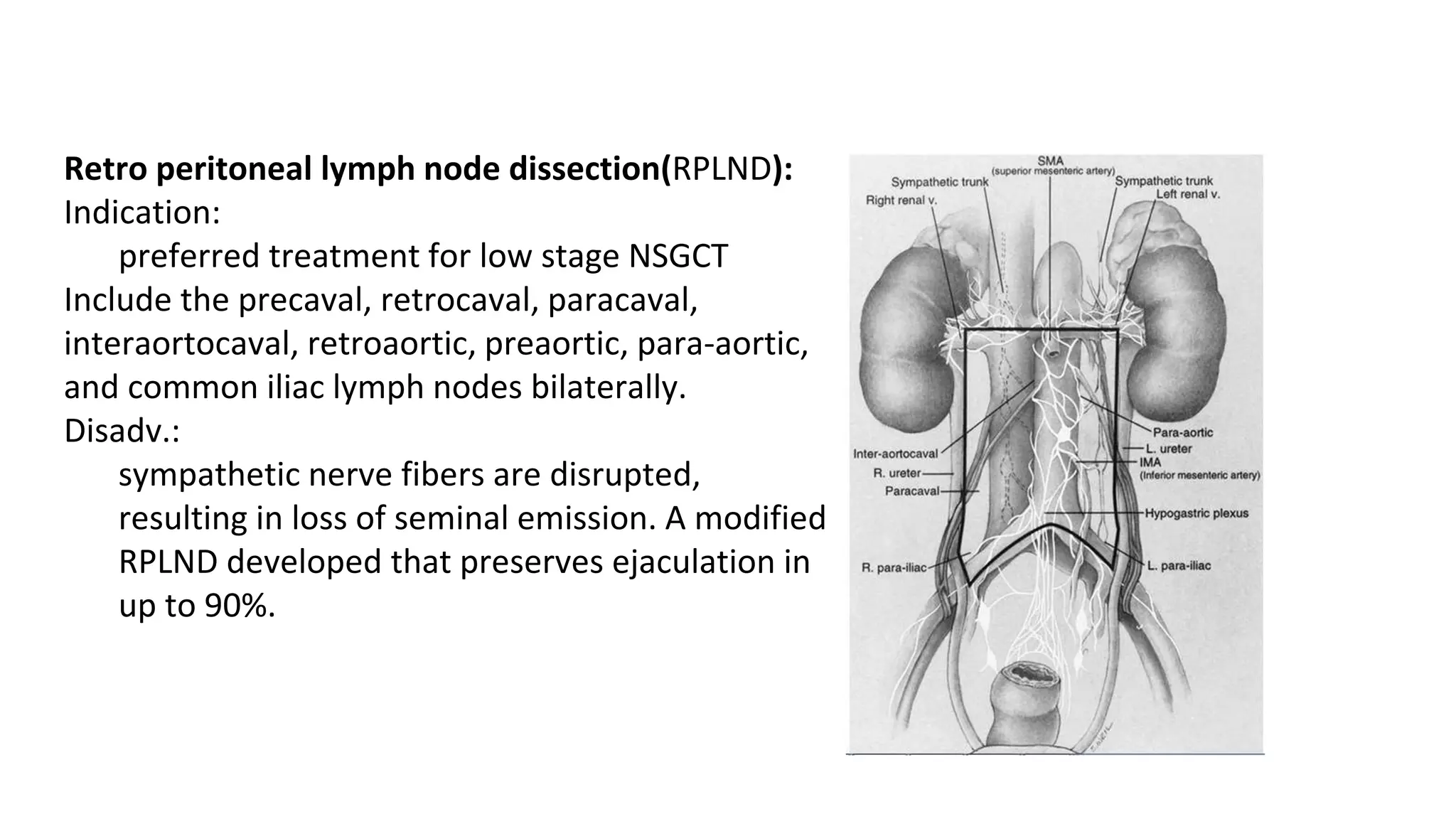
Retro peritoneal lymph node dissection(RPLND):
Indication:
preferred treatment for low stage NSGCT
Include the precaval, retrocaval, paracaval,
interaortocaval, retroaortic, preaortic, para-aortic,
and common iliac lymph nodes bilaterally.
Disadv.:
sympathetic nerve fibers are disrupted,
resulting in loss of seminal emission. A modified
RPLND developed that preserves ejaculation in
up to 90%.
PRINCIPLES OF RADIOTHERAPY FOR PURE TESTICULAR SEMINOMA
Linear accelerators with >6 MV photons should be used when possible.
The mean dose (Dmean) and dose delivered to 50% of the volume (D50%) of
the kidneys, liver, and bowel are lower with CT-based AP-PA 3D-CRT than
IMRT.
As a result, the risk of second cancers arising in the kidneys, liver, or bowel
may be lower with 3D-CRT than IMRT, and IMRT is not recommended.
3D Planning
3D planning is preferred due to potential of marginal miss, with 2D
planning based on bony anatomy .
 3D planning improves target definition and kidney/small bowel shielding.
Para-aortic field:
Contour IVC and aorta
separately from 2 cm below the
top of the kidneys down to the
point where these vessels
bifurcate.
Use a 1.2 cm expansion
radially around IVC and a 1.9 cm
expansion around the aorta,
excluding bone and bowel.
Dogleg field:
In addition to PA field,
contour the ipsilateral
common, external, and
proximal internal iliac veins
and arteries down to upper
border of acetabulum.
Use a 1.2 cm expansion on
the iliac vessels, excluding
bone and bowel.PTV=CTV+0.5 cm
0.7 cm margin on PTV to block edge to take penumbra
into account
3D PLANNING
Dog Leg Field
upper border of T10 or T11
left renal hilum is
included for left-sided
tumors (only)
Traditionally, the inferior border was placed at the
superior obturator foramen (indicated in orange) to
include all external iliac nodes
10 cm wide in the para-aortic region and usually covers the
transverse processes
At the mid-L4 level, the field is extended laterally to cover
the i/l external iliac
Dog Leg Field- Modified
Superior border :bottom of body T11.
Inferior border : top of the acetabulum.
The medial border for the lower aspect of the modified
dog-leg fields extends from the tip of the c/l transverse
process of L5 toward the medial border of the i/l
obturator foramen.
The lateral border for the lower aspect of the modified
dog-leg fields is defined by a line from the tip of the i/l
transverse process of L5 to the superolateral border of
the i/l acetabulum.
Radiation therapy
Indications
Adjuvant therapy for stages I–IIb diseases
Salvage of loco-regional failure after surgery or chemotherapy
Palliative treatment to loco-regional or distant metastatic sites
Techniques
EBRT to lymph nodes
High-energy radiation (6 – 18 MV)
Seminoma is extremely radiosensitive. Radiation therapy is often used for adjuvant
therapy for early-stage seminoma, and its use in non-seminoma germ cell tumors (GCT) is
limited.
Position and immobilization
Supine, arms placed by the pt. side and legs straight, with feet stabilized with a
foam wedge underneath the knees.
Position penis out of field
Shielding
Contra-lateral testis is shielded with a lead clamshell device.
Mean dose values to the contralateral testicle.
PA PA + IL iliac
Without shield 1.86
cGy
3.89 cGy
With shield 0.65
cGy
1.48 cGy
Stage I:
Field margins
Superior: T10–T11 interspace
Inferior: L5–S1 interspace
Lateral: transverse process
For left testis: cover renal hilum
Dose
20 Gy in 10# to para-aortic ± pelivic lymph node by ap-pa field
Elective para-aortic field for stage I
seminoma
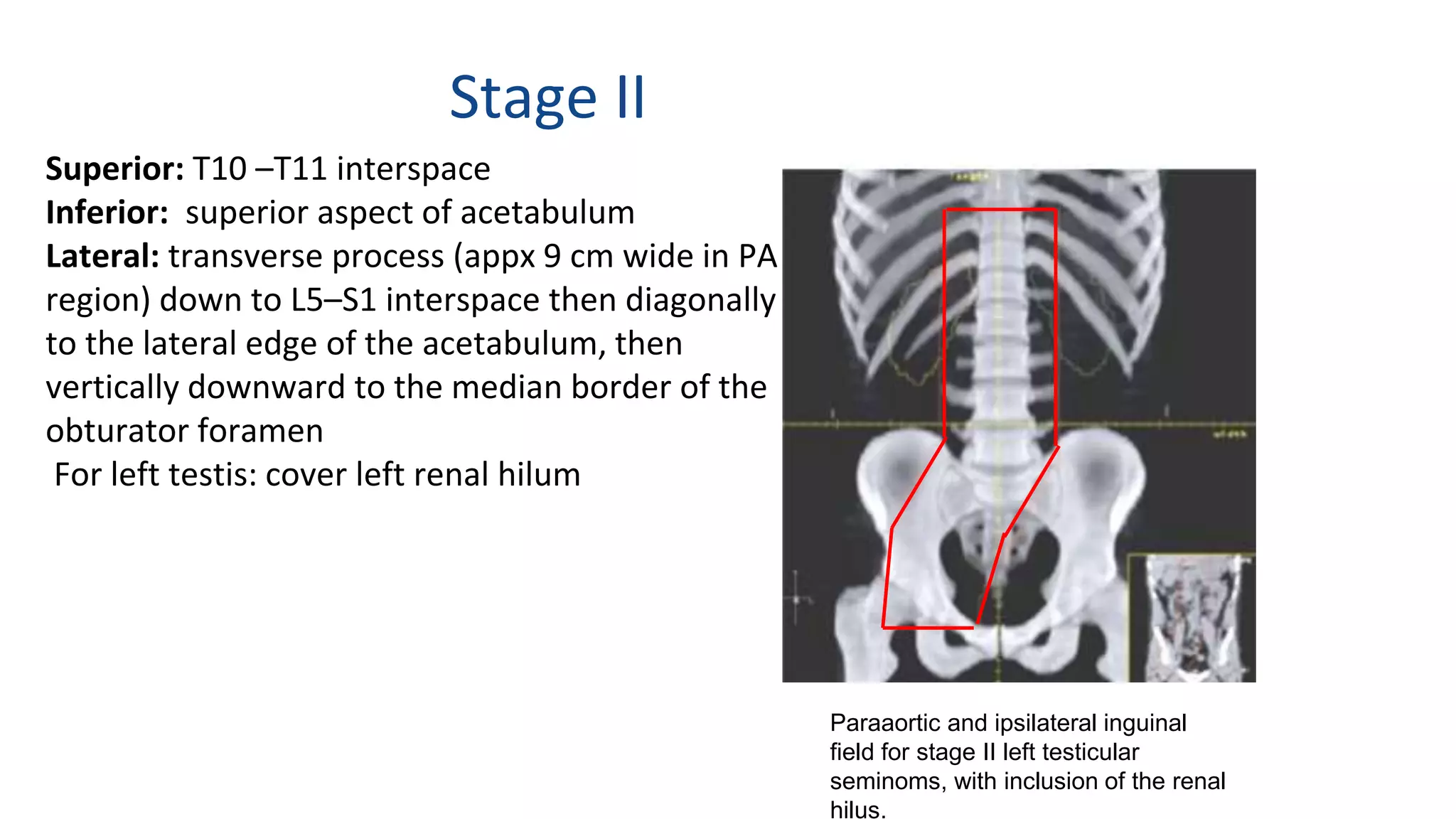
Stage II
Superior: T10 –T11 interspace
Inferior: superior aspect of acetabulum
Lateral: transverse process (appx 9 cm wide in PA
region) down to L5–S1 interspace then diagonally
to the lateral edge of the acetabulum, then
vertically downward to the median border of the
obturator foramen
For left testis: cover left renal hilum
Paraaortic and ipsilateral inguinal
field for stage II left testicular
seminoms, with inclusion of the renal
hilus.
Stage II a-
25Gy in 20 # by AP-PA
Stage II b & IIc
25 Gy in 20 #
10 Gy in 5 #
Complications : Radiotherapy
Acute nausea, vomiting, diarrhea
Late small bowel obstruction, chronic diarrhea, peptic ulcer disease (<2% with <35 Gy)
Second cancers: 5–10% increased risk vs. general population after RT
With testicular shielding, most patients will have oligospermia by 4 months that lasts
~1 year
Infertility: 50% of patients have subfertile counts on presentation or after surgery.
After RT, 30% able to have children
50 cGy causes transient azospermia with recovery at 1 year, but only 50% of patients reach
their baseline
80–100 cGy causes total azospermia with recovery 1–2 year later for some patients
200 cGy causes sterilization
Testicular shield reduces testicle dose by 2–3x
Kidneys: limit at least 70% <20 Gy
Chemotherapy
Indications
As an alternative to adjuvant RT for stages I–II seminoma
Adjuvant therapy for stages II–IV seminoma
Regimens
Single-agent one cycle of carboplatin become an alternative for stage I
seminoma
Regimens including BEP x 3 cycles, EP x 4 cycles, PVB, and VIP for stages II–IV
diseases
“I always had the size difference there, but I didn’t
know…I would’ve still been waiting if it hadn’t started
hurting, it just got so painful I couldn’t sit on my bike
anymore.”
-Lance Armstrong

testicular tumors

  • 1.
  • 2.
    Overview Cancers of testisare relatively rare cancer accounting for approx. 1 % cancer in males. However it is important in field of oncology as it represents a highly curable neoplasm & the incidence is focused on young patients at their peak of productivity
  • 3.
    Anatomy • The testisis the male gonad. • It is homologous with the ovary in female. • It lies obliquely within the scrotum suspended by the spermatic cord • The left testis is slightly lower than the right • Shape: Oval • Size:3.75 cm long, 2.5 cm broad, 1.8 cm thick • Weight: about 10-15 gm. • Has 2poles , 2surface, 2 borders
  • 4.
     Skin  DARTOSMuscle  External Spermatic Fascia  Cremastric Muscle  Internal Spermatic Fascia  Tunica Vaginalis  Tunica Albuginea Coverings of testis
  • 5.
    Blood Supply Areterial supply •The testicular artery branch of abdominal aorta . • The testis has collateral blood supply from 1. the cremasteric artery 2. artery to the ductus deferens Venous drainage • The veins emerge from the back of the testis, and receive tributaries from the epididymis; • they unite and form convoluted plexus, called the pampiniform plexus. • plexus to form a single vein, which opens, on the right side, into the inferior vena cava ,on the left side into the left renal vein
  • 6.
    Lymphatic Drainage Drain intothe retroperitoneal lymph glands between the levels of T11 and L4, but they are concentrated at the level of the L1 and L3 vertebrae Lymph nodes located lateral or anterior to the inferior vena cava are called paracaval or precaval nodes, respectively. Interaortocaval nodes are located between the inferior vena cava and the aorta. Nodes anterior or lateral to the aorta are preaortic or para- aortic nodes, respectively
  • 7.
     On theright:  Interaortocaval region, followed by the paracaval, preaortic, and para- aortic lymph nodes.  On the left:  Preaortic and para-aortic nodes and thence to the interaortocaval  Metastatic nodal disease to the common iliac, external iliac, or inguinal lymph nodes is usually secondary to a large volumeof disease with retrograde spread.  If the patient has undergone a herniorrhaphy, vasectomy, or other transscrotal procedure, metastasis to the pelvic and inguinallymph nodes is more likely  Through the thoracic duct to lymph nodes in the posterior mediastinum and supraclavicular fossae and occasionally to the axillary nodes.  Contralateral spread is mainly seen with right-sided tumors.  In 15% to 20%, bilateral nodes are involved
  • 8.
    INTRODUCTION  Comprise amorphologically and clinically diverse group of tumors  Predominantly affects young males  1 -2 % of all cancers in USA  Testicular cancer forms about 1% of all malignancies in males in India.  Incidence (ASR)– 0.6 per 100000  Mortality (ASR)– 0.3 per 100000  95% are Germ Cell Tumours (GCTs)  90% GCT are in testes,2-10% in extra gonadal (eg retropreitoneum, mediastinal)  Cure rate increased with introduction of platinum based chemotherapy from 10 to 80%
  • 9.
    EPIDEMOLOGY OF TESTICULARCANCER • Age: for GCT: median age at diagnosis is 34 years, with 50% of incident cases between 20 and 34 years. • In a man age: 50 years or older solid testicular mass is usually lymphoma • Age - 3 peaks 2 – 4 yrs 20 – 40 yrs above 50 yrs • Geographic: Highest incidence in Denmark, Norway, and Switzerland and the lowest in eastern Europe andAsia. • Race: more common in young white men ,less in AfricanAmericans
  • 10.
    Predisposing Factors 1. Cryptorchidism 2.Klinefelter syndrome 3. Positive family history 4. Positive personal history 5. Intratubular germ cell neoplasia 6. Trauma 7. Viral infection 8. Hormonal factors 9. Exposure to environmental oestrogen
  • 11.
    Pathological classification 1:Intra tubulargerm-cell neoplasia(IGCN) 2:GERM CELL TUMORS 95% Seminoma 40% Classic type anaplastic Spermatocytic type Non seminomatous germ-cell tumors 60%  Embryonal carcinoma 20-25%  Teratoma 25-35%  Yolk sac (endodermal sinus) tumor  Choriocarcinoma 1%  Mixed germ-cell tumor 3:Classification of Sex-Cord Stromal Tumors of the Testis 2-3%  Leydig cell tumor  Sertoli cell tumor  Granulosa cell tumor  Fibroma-thecoma stromal tumor  Gonadoblastoma  Sex cord-stromal tumor unclassified type 4: others 5%  lymphoma  rabdomyosarcoma  melanoma
  • 12.
    Seminoma  The commonestvariety of testicular tumour  Adults are the usual target (4th and 5th decade); never seen in infancy  Right > Left Testis  Starts in the mediastinum: compresses the surrounding structure.  Patients present with painless testicular mass  30 % have metastases at presentation, but only 3% have symptoms related to metastases
  • 13.
    Seminoma • Serum alphafetoprotein is normal • Beta HCG is elevated in 30% of patients with Seminoma • Classification a) classical b) Anaplastic c) Spermatocytic
  • 14.
    Spread 1. Direct Spread: This spread occurs by invasion.  Whole of testis in involved and restricted  Tunica albuginea is rarely penetrated  May be crossed by “blunder biopsy”  Scrotal skin involvement  Fungation on the anterior aspect  Spread to spermatic cord and epidedymis may occur : points towards bad prognosis
  • 15.
    Spread 2. Lymphatic spread: Seminomametastasize exclusively through lymphatics They drain primarily to para-aortic lymph nodes From RPLN drain into cysterna chili, thoracic duct ,posterior mediastinum & left supraclavicular Lymph from medial side of testes run along the artery to the vas to drain to nodes at the bifurcation of common iliac No inguinal nodes until scrotal skin involvement
  • 16.
    Spread 3. Blood Spread NSGCT spread through blood route  Lungs, liver, bones and brain are the usual sites usually involved
  • 17.
    Clinical Features 1. Dueto primary tumor a) Painless testicular lump b) Sensation of heaviness if size > than 2-3 times c) Rarely dragging pain is complained of (1/3rd cases) d) May mimic epidedymo-orchitis e) Sudden pain and enlargement due to hemorrhage mimicking torsion f) History of trauma (co-incidental)
  • 18.
    Clinical Features 2. Dueto metastasis  Abdominal or lumbar pain (lymphatic spread)  Dyspnoea, hemoptysis and chest pain with lung mets  Jaundice with liver mets  Hydronephrosis by para-aortic lymph nodes enlargement  Pedal oedema by IVC obstruction  Troiser’s sign
  • 19.
    Clinical Features 3. Clinicalexamination: a) Enlarged testis (except choriocarcinoma) b) Nodular testis c) Firm to hard in consistency d) Loss of testicular sensation e) Secondary hydrocele f) Flat and difficult to feel epididymis g) General examination for metastasis
  • 20.
    Tumor markers TWO MAINCLASSES • Onco-fetal Substances : AFP & HCG • AFP - Trophoblastic Cells HCG - Syncytiotrophoblastic Cells AFP, BHCG & LDH are included in TNM staging of testicular cancers
  • 21.
    Staging Work Up •General History (document cryptorchidism and previous inguinal or scrotal surgery) Physical examination • Laboratory Studies CBC, LFT, RFT, LDH • Serum assays Alpha fetoprotein (AFP) Beta human chorionic gonadotropin
  • 22.
    • Diagnostic Radiology –Chest x-ray films, posterior/anterior and lateral views – Computed tomography (CT) scan of abdomen and pelvis – CT scan of chest for non seminomas and stage II seminomas – Ultrasound of contralateral testis
  • 24.
    LDH Beta HCGAFP (mIu/ml) (ng/ml) S1 < 1.5 x N <5000 <1000 S2 1.5-10 x N 5000-50000 1000-10000 S3 >10 x N >50000 >10000 Serum Tumor Markers (S)
  • 25.
    Surgery Radical orchidectomy: all patients donevia an inguinal incision, with cross clamping of spermatic cord vasculature and delivery of testis into the surgical field. Scrotal violation, increased local/regional recurrence, but no difference in distant recurrence rate or overall survival.
  • 26.
    Retro peritoneal lymphnode dissection(RPLND): Indication: preferred treatment for low stage NSGCT Include the precaval, retrocaval, paracaval, interaortocaval, retroaortic, preaortic, para-aortic, and common iliac lymph nodes bilaterally. Disadv.: sympathetic nerve fibers are disrupted, resulting in loss of seminal emission. A modified RPLND developed that preserves ejaculation in up to 90%.
  • 31.
    PRINCIPLES OF RADIOTHERAPYFOR PURE TESTICULAR SEMINOMA Linear accelerators with >6 MV photons should be used when possible. The mean dose (Dmean) and dose delivered to 50% of the volume (D50%) of the kidneys, liver, and bowel are lower with CT-based AP-PA 3D-CRT than IMRT. As a result, the risk of second cancers arising in the kidneys, liver, or bowel may be lower with 3D-CRT than IMRT, and IMRT is not recommended. 3D Planning 3D planning is preferred due to potential of marginal miss, with 2D planning based on bony anatomy .  3D planning improves target definition and kidney/small bowel shielding.
  • 32.
    Para-aortic field: Contour IVCand aorta separately from 2 cm below the top of the kidneys down to the point where these vessels bifurcate. Use a 1.2 cm expansion radially around IVC and a 1.9 cm expansion around the aorta, excluding bone and bowel. Dogleg field: In addition to PA field, contour the ipsilateral common, external, and proximal internal iliac veins and arteries down to upper border of acetabulum. Use a 1.2 cm expansion on the iliac vessels, excluding bone and bowel.PTV=CTV+0.5 cm 0.7 cm margin on PTV to block edge to take penumbra into account 3D PLANNING
  • 33.
    Dog Leg Field upperborder of T10 or T11 left renal hilum is included for left-sided tumors (only) Traditionally, the inferior border was placed at the superior obturator foramen (indicated in orange) to include all external iliac nodes 10 cm wide in the para-aortic region and usually covers the transverse processes At the mid-L4 level, the field is extended laterally to cover the i/l external iliac
  • 34.
    Dog Leg Field-Modified Superior border :bottom of body T11. Inferior border : top of the acetabulum. The medial border for the lower aspect of the modified dog-leg fields extends from the tip of the c/l transverse process of L5 toward the medial border of the i/l obturator foramen. The lateral border for the lower aspect of the modified dog-leg fields is defined by a line from the tip of the i/l transverse process of L5 to the superolateral border of the i/l acetabulum.
  • 35.
    Radiation therapy Indications Adjuvant therapyfor stages I–IIb diseases Salvage of loco-regional failure after surgery or chemotherapy Palliative treatment to loco-regional or distant metastatic sites Techniques EBRT to lymph nodes High-energy radiation (6 – 18 MV) Seminoma is extremely radiosensitive. Radiation therapy is often used for adjuvant therapy for early-stage seminoma, and its use in non-seminoma germ cell tumors (GCT) is limited.
  • 36.
    Position and immobilization Supine,arms placed by the pt. side and legs straight, with feet stabilized with a foam wedge underneath the knees. Position penis out of field Shielding Contra-lateral testis is shielded with a lead clamshell device. Mean dose values to the contralateral testicle. PA PA + IL iliac Without shield 1.86 cGy 3.89 cGy With shield 0.65 cGy 1.48 cGy
  • 37.
    Stage I: Field margins Superior:T10–T11 interspace Inferior: L5–S1 interspace Lateral: transverse process For left testis: cover renal hilum Dose 20 Gy in 10# to para-aortic ± pelivic lymph node by ap-pa field Elective para-aortic field for stage I seminoma
  • 38.
    Stage II Superior: T10–T11 interspace Inferior: superior aspect of acetabulum Lateral: transverse process (appx 9 cm wide in PA region) down to L5–S1 interspace then diagonally to the lateral edge of the acetabulum, then vertically downward to the median border of the obturator foramen For left testis: cover left renal hilum Paraaortic and ipsilateral inguinal field for stage II left testicular seminoms, with inclusion of the renal hilus.
  • 39.
    Stage II a- 25Gyin 20 # by AP-PA Stage II b & IIc 25 Gy in 20 # 10 Gy in 5 #
  • 40.
    Complications : Radiotherapy Acutenausea, vomiting, diarrhea Late small bowel obstruction, chronic diarrhea, peptic ulcer disease (<2% with <35 Gy) Second cancers: 5–10% increased risk vs. general population after RT With testicular shielding, most patients will have oligospermia by 4 months that lasts ~1 year Infertility: 50% of patients have subfertile counts on presentation or after surgery. After RT, 30% able to have children
  • 41.
    50 cGy causestransient azospermia with recovery at 1 year, but only 50% of patients reach their baseline 80–100 cGy causes total azospermia with recovery 1–2 year later for some patients 200 cGy causes sterilization Testicular shield reduces testicle dose by 2–3x Kidneys: limit at least 70% <20 Gy
  • 42.
    Chemotherapy Indications As an alternativeto adjuvant RT for stages I–II seminoma Adjuvant therapy for stages II–IV seminoma Regimens Single-agent one cycle of carboplatin become an alternative for stage I seminoma Regimens including BEP x 3 cycles, EP x 4 cycles, PVB, and VIP for stages II–IV diseases
  • 43.
    “I always hadthe size difference there, but I didn’t know…I would’ve still been waiting if it hadn’t started hurting, it just got so painful I couldn’t sit on my bike anymore.” -Lance Armstrong