CA Rectum Presented By: Dr. Vandana Dept. of Radiotherapy CSMMU, Lucknow
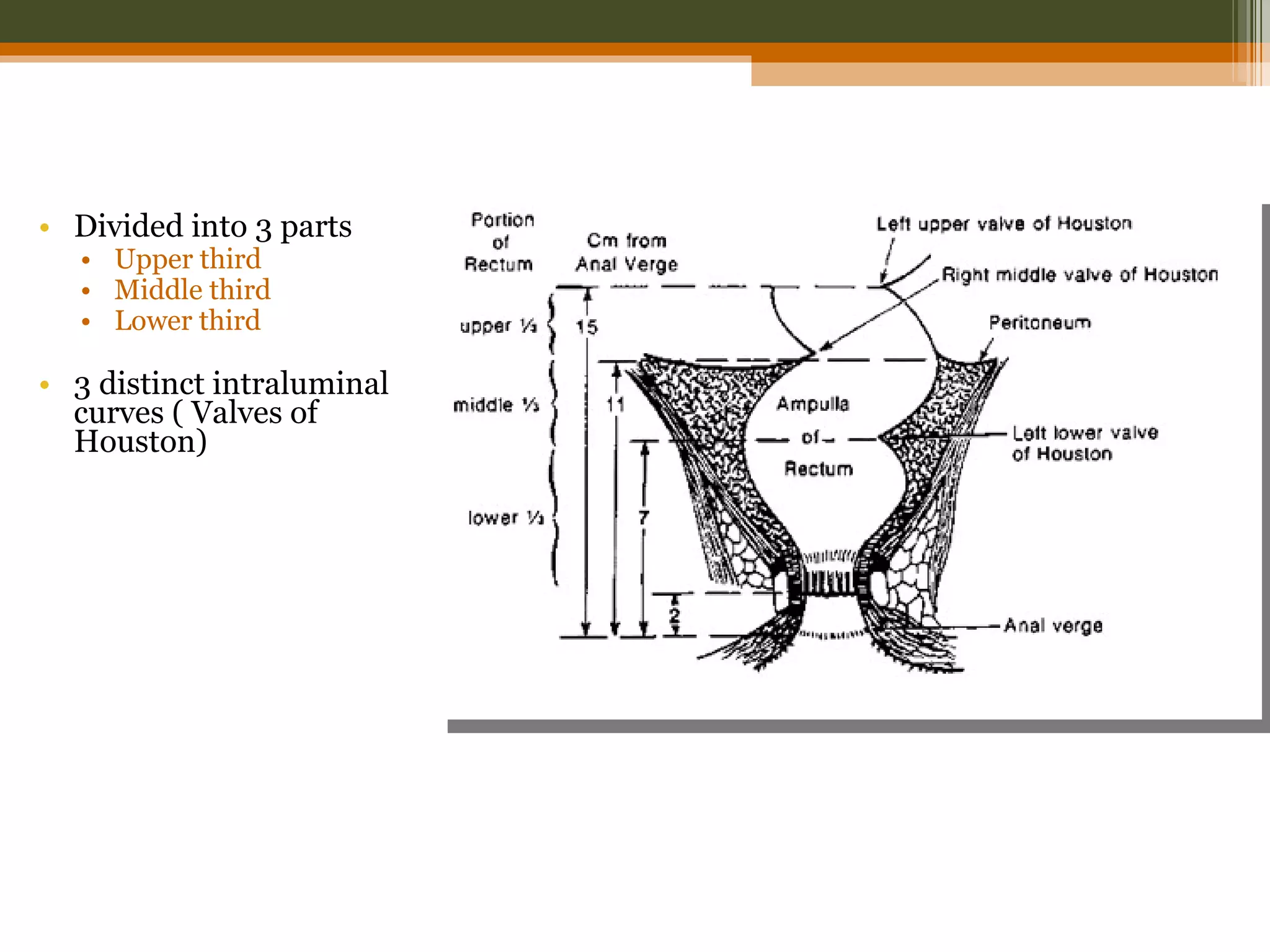
Clinical Anatomy 12-15 cm from anal verge. Diameter 4 cm (upper part) Dilated (lower part) Posterior part of the lesser pelvis and in front of lower three pieces of sacrum and the coccyx Begins at the rectosigmoid junction, at level of third sacral vertebra Ends at the anorectal junction, 2-3 cm in front of and a little below the coccyx
Divided into 3 parts Upper third Middle third Lower third 3 distinct intraluminal curves ( Valves of Houston)
Superior 1/3rd of the rectum Covered by peritoneum on the anterior and lateral surfaces Middle 1/3rd of the rectum Covered by peritoneum on the anterior surface Inferior 1/3rd of the rectum Devoid of peritoneum Close proximity to adjacent structure including boney pelvis. Note: - Distal rectal tumors have no serosal barrier to invasion of adjacent structures and are more difficult to resect given the close confines of the deep pelvis. Peritoneal Relations
Arterial supply Superior rectal A – fr. IMA; supplies upper and middle rectum Middle rectal A- fr. Internal iliac A. (supplies lower rectum) Inferior rectal A- fr. Internal pudendal A. Venous drainage Superior rectal V- upper & middle third rectum Middle rectal V- lower rectum and upper anal canal Inferior rectal vein- lower anal canal Innervations Sympathetic: L1-L3, Hypogastric nerve ParaSympathetic: S2-S4
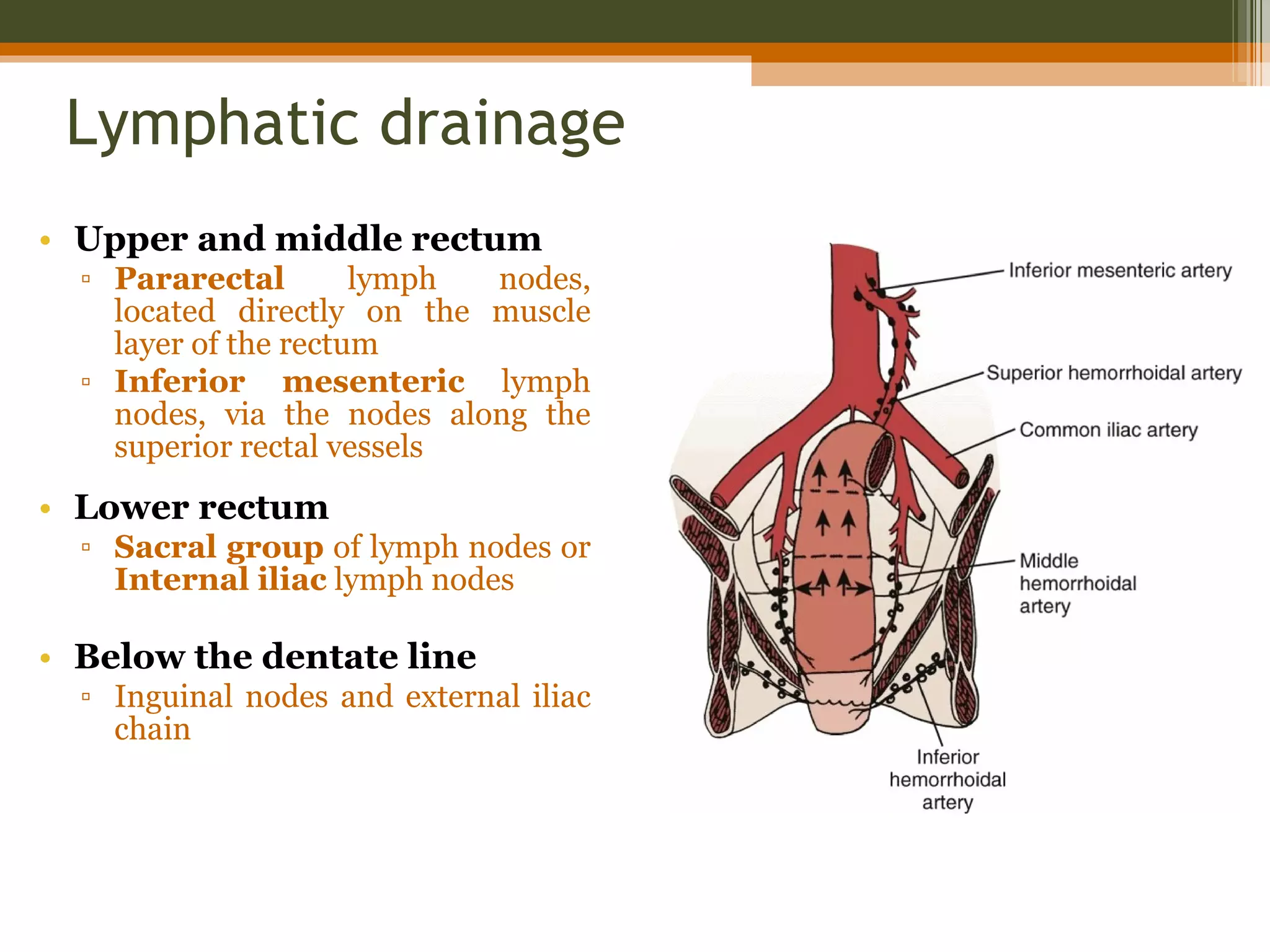
Lymphatic drainage Upper and middle rectum Pararectal  lymph nodes, located directly on the muscle layer of the rectum Inferior mesenteric  lymph nodes, via the nodes along the superior rectal vessels Lower rectum Sacral group  of lymph nodes or  Internal iliac  lymph nodes Below the dentate line  Inguinal nodes and external iliac chain
Epidemiology Colorectal caner is the  third  most frequently diagnosed cancer in the US men and women. 108,070 new cases of colon cancer and 40,740 new cases of rectal cancer in the US in 2008. Combined mortality for colorectal cancer 49,960 in 2008. Worldwide  approx. 1 million new cases p.a. are diagnosed, with 529,000 deaths. Incidence  rate in India is quite low about 2 to 8 per 100,000 Median age-  7 th  decade but can occur any time in adulthood. **  Globocan IARC 2008
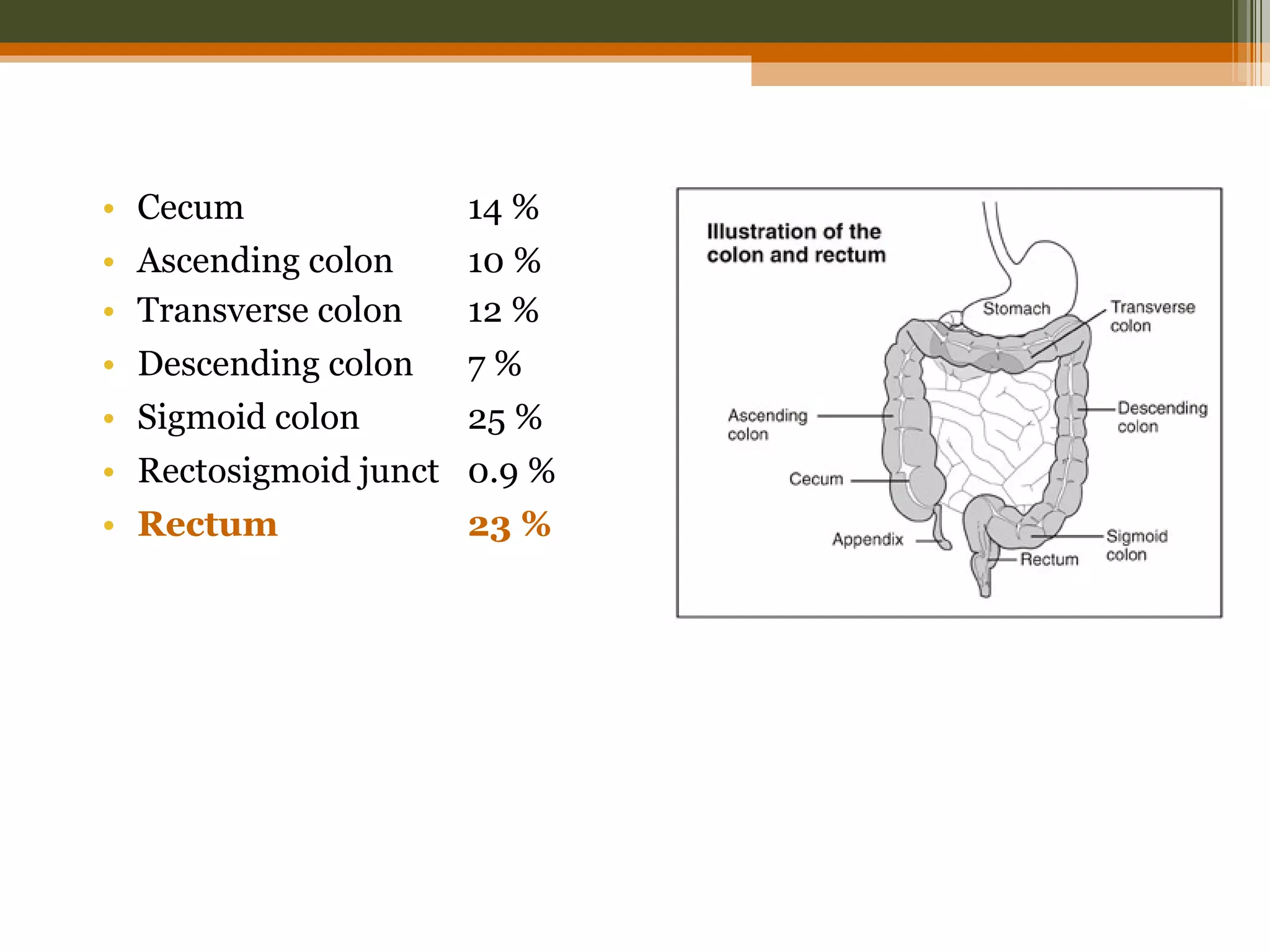
Cecum 14 % Ascending colon 10 % Transverse colon 12 % Descending colon 7 % Sigmoid colon 25 % Rectosigmoid junct 0.9 % Rectum 23 %
Etiological agents Environmental & dietary factors Chemical carcinogenesis. Associated risk factors Male sex Family history of colorectal cancer Personal history of colorectal cancer, ovary, endometrial, breast Excessive BMI Processed meat intake Excessive alcohol intake Low folate consumption Neoplastic polyps. Hereditary Conditions  (FAP, HNPCC)
Clinical Presentations Symptoms Asymptomatic Change in bowel habit (diarrhoea, constipation, narrow stool, incomplete evacuation, tenesmus). Blood PR. Abdominal discomfort (pain, fullness, cramps, bloating, vomiting). Weight loss, tiredness. Acute Presentations Intestinal obstruction. Perforation. Massive bleeding.
Signs Pallor Abdominal mass PR mass Jaundice Nodular liver Ascites Rectal metastasis travel along portal drainage to liver via superior rectal vein as well as systemic drainage to lung via middle inferior rectal veins.
Pathological features WHO Classification Adenocarcinoma in situ Adenocarcinoma Mucinous (colloid) adenocarcinoma (>50% mucinous) Signet ring cell carcinoma (>50% signet ring cells) Squamous cell (epidermoid) carcinoma Adenosquamous carcinoma Small-cell (oat cell) carcinoma Medullary carcinoma Undifferentiated Carcinoma
Dukes classification- Dukes A:  Invasion into but not through the bowel wall. Dukes B : Invasion through the bowel wall but not involving lymph nodes. Dukes C : Involvement of lymph nodes Dukes D : Widespread metastases Modified astler coller classification- Stage A  :  Limited to  mucosa. Stage B1 :  Extending into  muscularis propria but not penetrating through it; nodes not involved. Stage B2  : Penetrating through muscularis propria; nodes not involved Stage C1  : Extending into muscularis propria but not penetrating through it. Nodes involved Stage C2 :  Penetrating through muscularis propria. Nodes involved Stage D: Distant metastatic spread
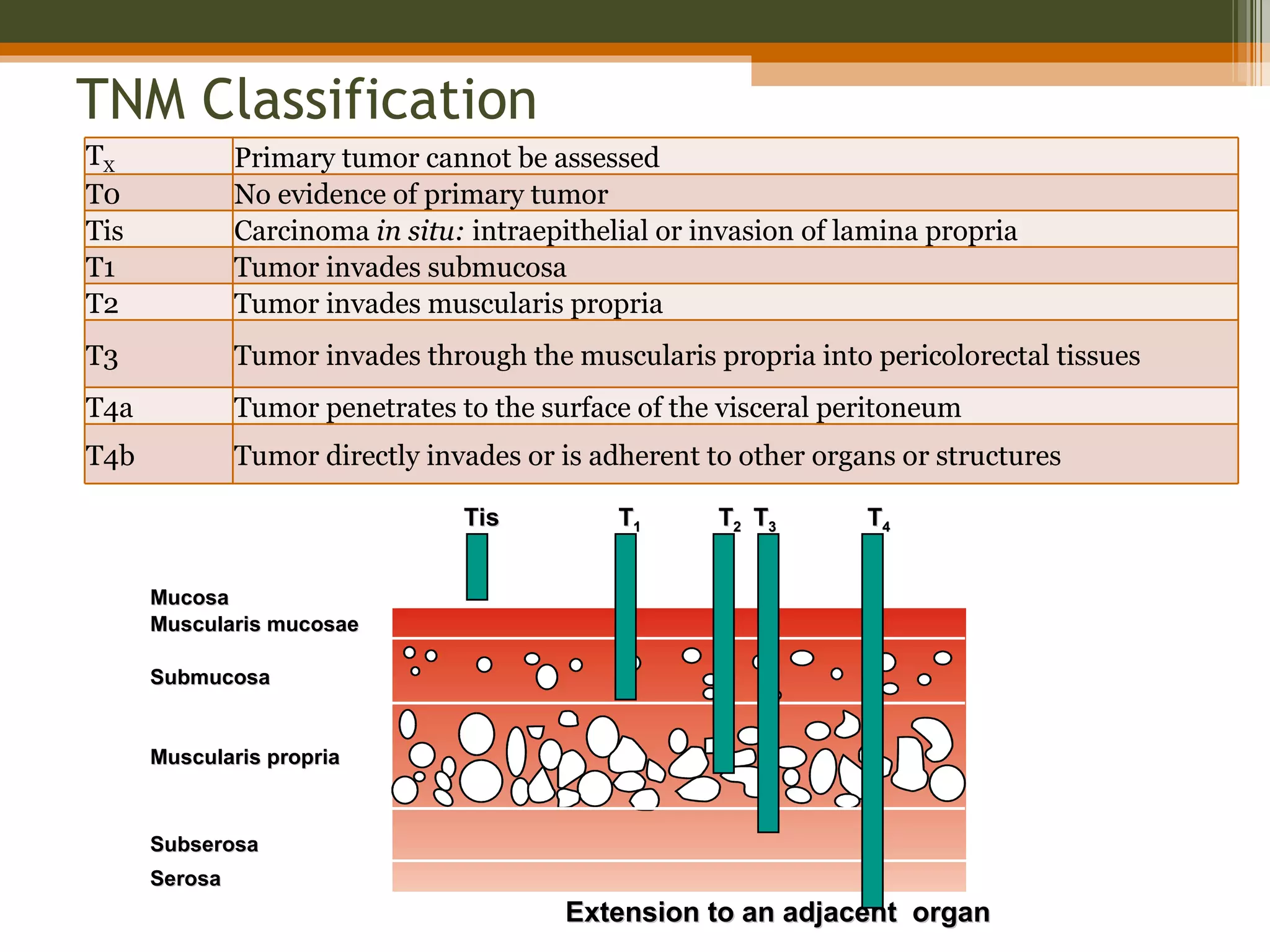
TNM Classification Tis  T 1   T 2  T 3   T 4 Extension  to an adjacent  organ Mucosa Muscularis mucosae Submucosa Muscularis propria Subserosa Serosa T X Primary tumor cannot be assessed T0 No evidence of primary tumor Tis Carcinoma  in situ:  intraepithelial or invasion of lamina propria T1 Tumor invades submucosa T2 Tumor invades muscularis propria T3 Tumor invades through the muscularis propria into pericolorectal tissues T4a Tumor penetrates to the surface of the visceral peritoneum T4b Tumor directly invades or is adherent to other organs or structures
TNM Classification
Stage Grouping
Prognostic factors Good prognostic factors Old age Gender(F>M) Asymptomatic pts Polypoidal lesions Diploid Poor prognostic factors Obstruction Perforation Ulcerative lesion Adjacent structures involvement Positive margins LVSI Signet cell carcinoma High CEA Tethered and fixed cancer
Stage and Prognosis Stage 5-year Survival (%) 0,1 Tis,T1;No;Mo > 90 I T2;No;Mo 80-85 II T3-4;No;Mo 70-75 III T2;N1-3;Mo 70-75 III T3;N1-3;Mo 50-65 III T4;N1-2;Mo 25-45 IV M1 <3
Diagnostic Workup History —including family history of colorectal cancer or polyps Physical examinations  including DRE and complete pelvic examination in women: size, location, ulceration, mobile vs. tethered vs. fixed, distance from anal verge and sphincter functions. Proctoscopy —including assessment of mobility, minimum diameter of the lumen, and distance from the anal verge Biopsy  of the primary tumor
Colonoscopy or barium enema Figure: C arcinoma of the rectum. Double-contrast barium enema shows a long segment of concentric luminal narrowing  (arrows)  along the rectum with minimal irregularity of the mucosal surface. To evaluate remainder of large bowel to rule out synchronous tumor or presence of polyp syndrome.
Transrectal ultrasound –EUS use for clinical staging. 80-95% accurate in tumor staging 70-75% accurate in mesorectal lymph node staging Very good at demonstrating layers of rectal wall Use is limited to lesion < 14 cm from anus, not applicable for upper rectum, for stenosing tumor Very useful in determining extension of disease into anal canal (clinical important for planning sphincter preserving surgery) Figure.  Endorectal ultrasound of a T3 tumor of the rectum, extension through the muscularis propria, and into perirectal fat.
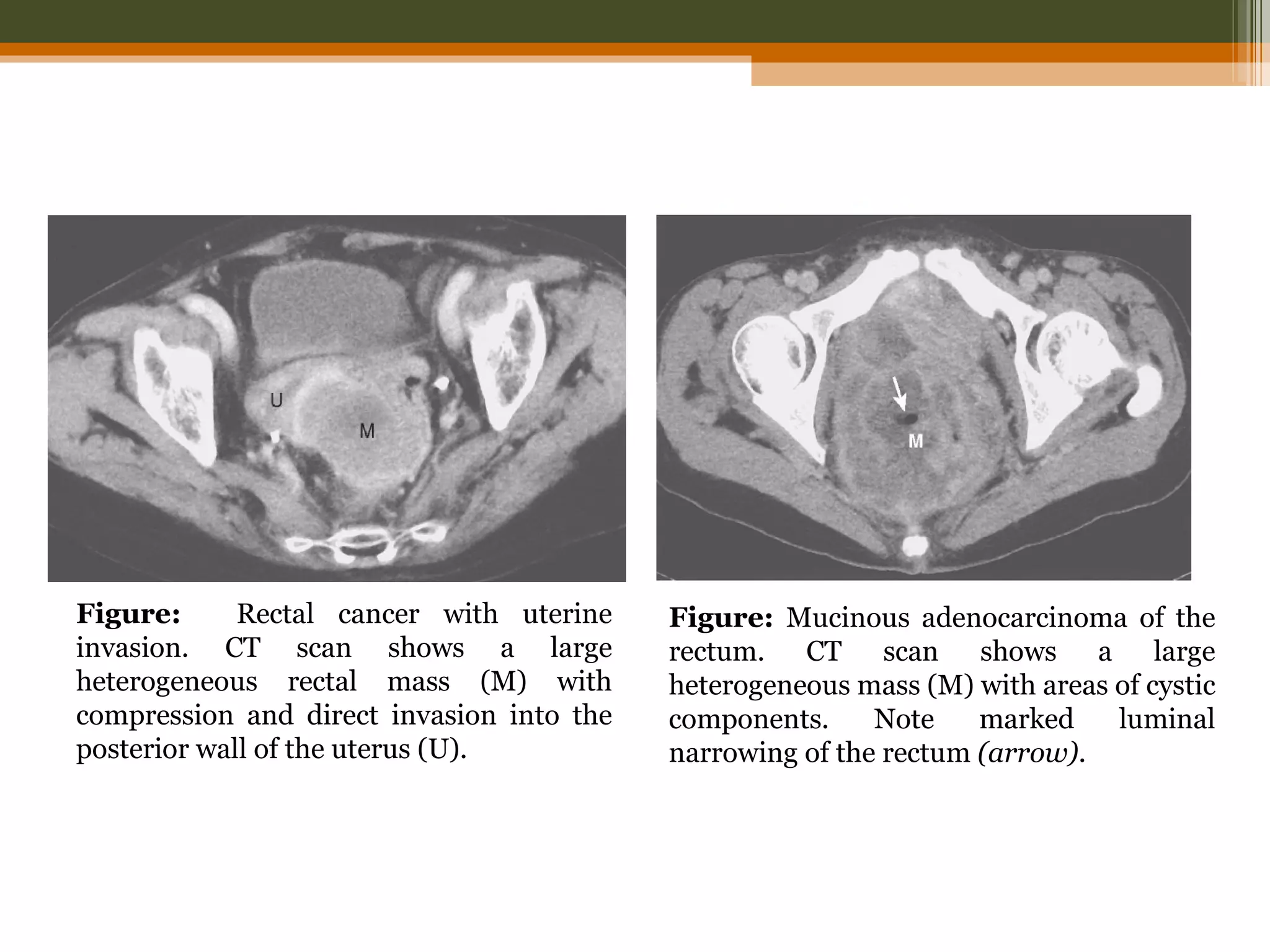
CT scan Part of routine workup of patients Useful in identifying enlarged pelvic lymph-nodes and metastasis outside the pelvis than the extent or stage of primary tumor Limited utility in small primary cancer Sensitivity 50-80% Specificity 30-80% Ability to detect pelvic and para-aortic lymph nodes is higher than peri-rectal lymph nodes.
Figure:  Mucinous adenocarcinoma of the rectum. CT scan shows a large heterogeneous mass (M) with areas of cystic components. Note marked luminal narrowing of the rectum  (arrow) . Figure:    Rectal cancer with uterine invasion. CT scan shows a large heterogeneous rectal mass (M) with compression and direct invasion into the posterior wall of the uterus (U).
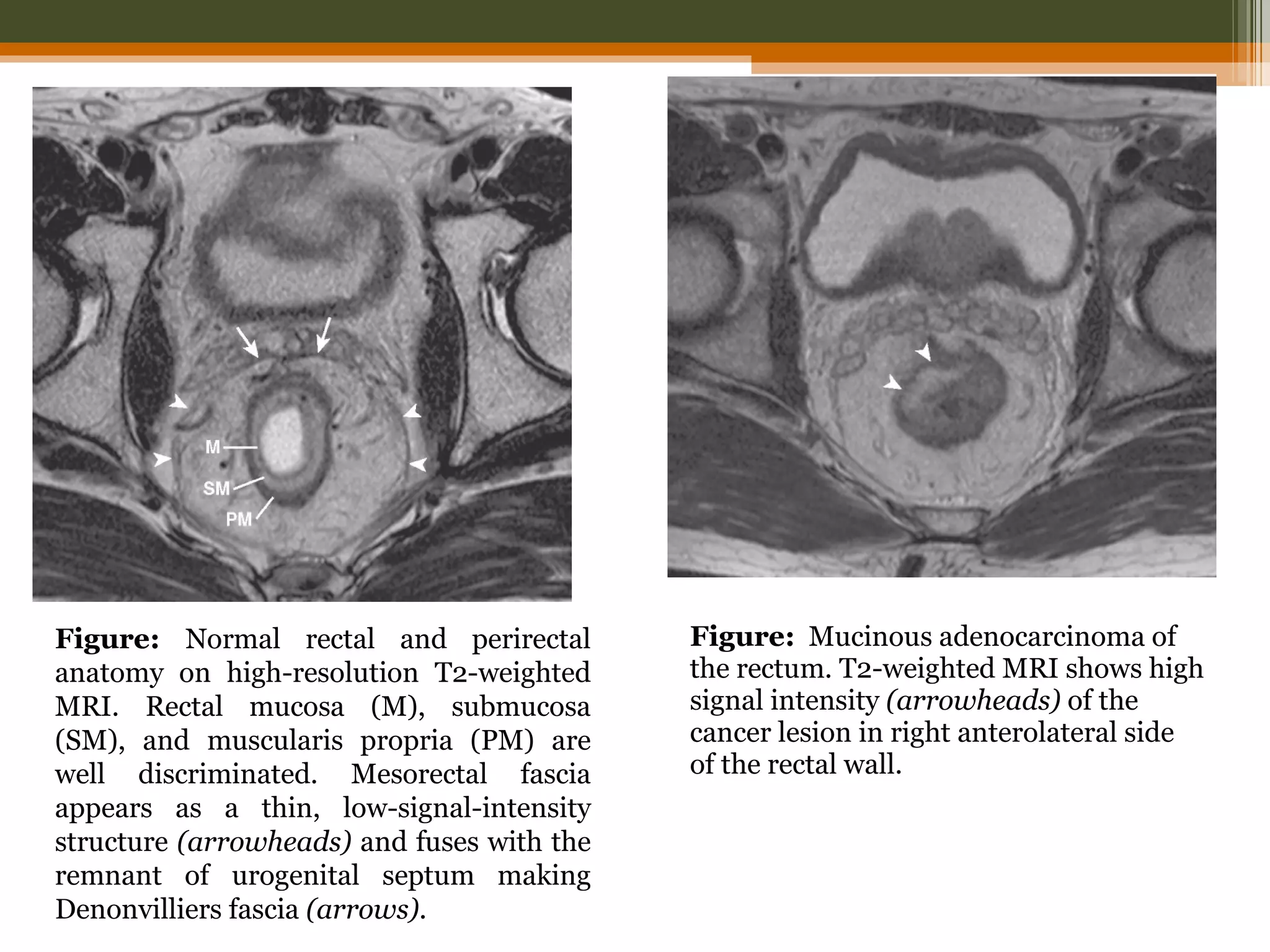
Magnetic Resonance Imaging (MRI) Greater accuracy in defining extent of rectal cancer extension and also location & stage of tumor Also helpful in lateral extension of disease, critical in predicting circumferential margin for surgical excision. Different approaches (body coils, endorectal MRI & phased array technique) Mercury study:  711 patients from 11 European centers. Extramural tumor depth by MR & histo-pathological evaluation equivalent.
Figure:   Mucinous adenocarcinoma of the rectum. T2-weighted MRI shows high signal intensity  (arrowheads)  of the cancer lesion in right anterolateral side of the rectal wall. Figure:  Normal rectal and perirectal anatomy on high-resolution T2-weighted MRI. Rectal mucosa (M), submucosa (SM), and muscularis propria (PM) are well discriminated. Mesorectal fascia appears as a thin, low-signal-intensity structure  (arrowheads)  and fuses with the remnant of urogenital septum making Denonvilliers fascia  (arrows) .
PET with FDG Shows promise as the most sensitive study for the detection of metastatic disease in the liver and elsewhere. Sensitivity of 97% and specificity of 76% in evaluating for recurrent colorectal cancer. cancer rectum prostate pubic bone bladder Small bowel
CEA: High CEA levels associated with poorer survival Routine investigation Complete blood count, KFT, LFT Chest X-ray
 
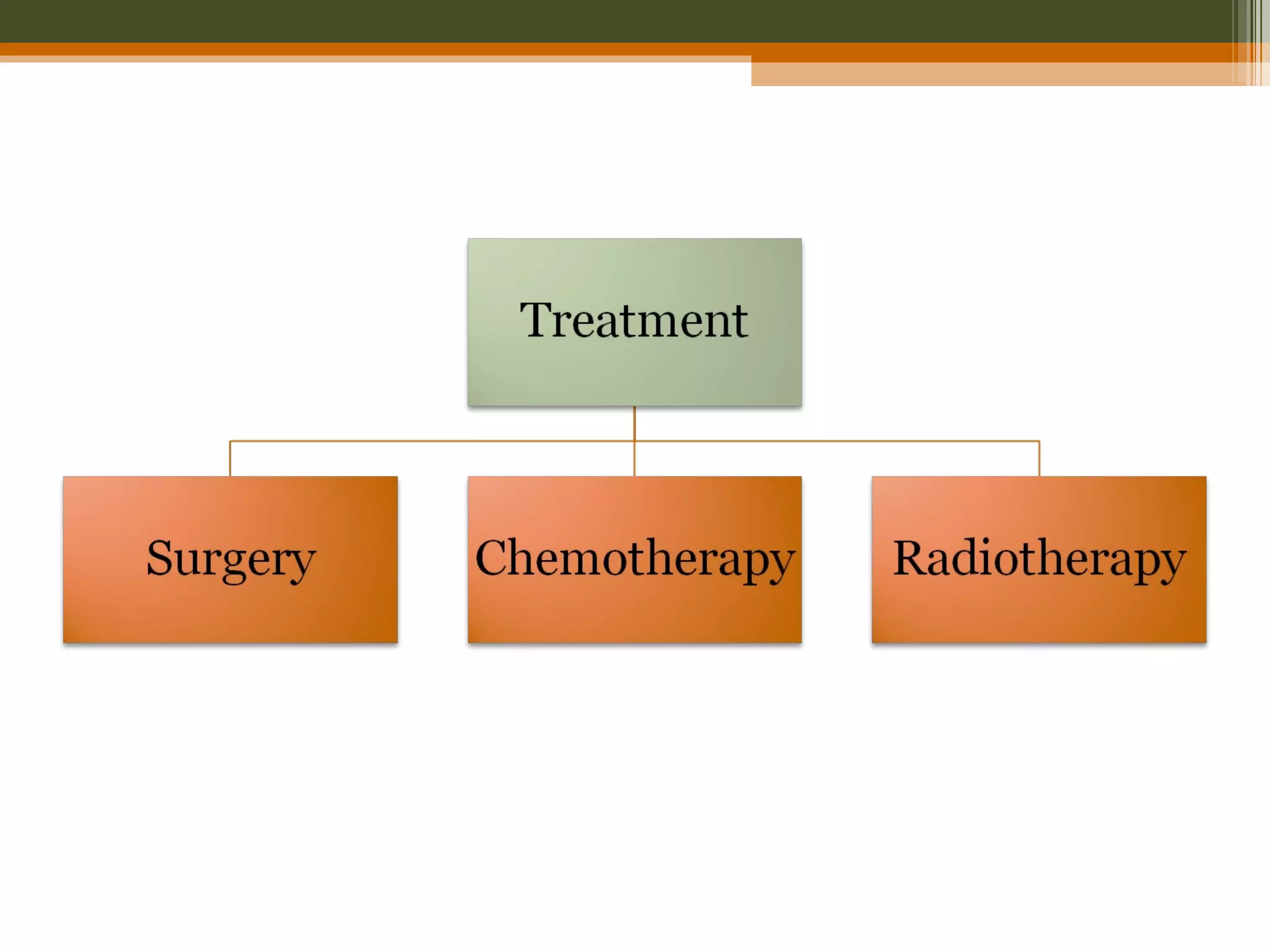
Surgery Surgery is the mainstay of treatment of RC After surgical resection, local failure is common Local recurrence after conventional surgery: 20%-50% (average of 35%)** Radiotherapy significantly reduces the number of local recurrences **  Reference: facts taken from Perez
Types of Surgery Local excision- reserved for superficially invasive  (T1) tumors with low likelihood of LN metastases Should be considered a total biopsy, with further treatment based on pathology With unfavorable pathology patient should undergo total mesorectal excision with or without sphincter-preservation: positive margin (or <2 mm), lymphovascular invasion,  poorly differentiated tumors, T2 lesion
Low Anterior Resection  - for tumors in upper/mid rectum; allows preservation of anal sphincter Abdominoperineal resection for tumors of distal rectum with distal edge up to 6 cm from anal verge associated with permanent colostomy and high incidence of sexual and genitourinary dysfunction
Total mesorectal excision local failures are most often due to inadequate surgical clearance of radial margins. conventional resection violates the mesorectal circumference during blunt dissection, leaving residual mesorectum. TME involves precise dissection and removal of the entire rectal mesentery as an intact unit. local recurrence with conventional surgery averages approx. 25-30% vs. TME 4-7% by several groups (although several series have higher recurrence) **  referred from Perez
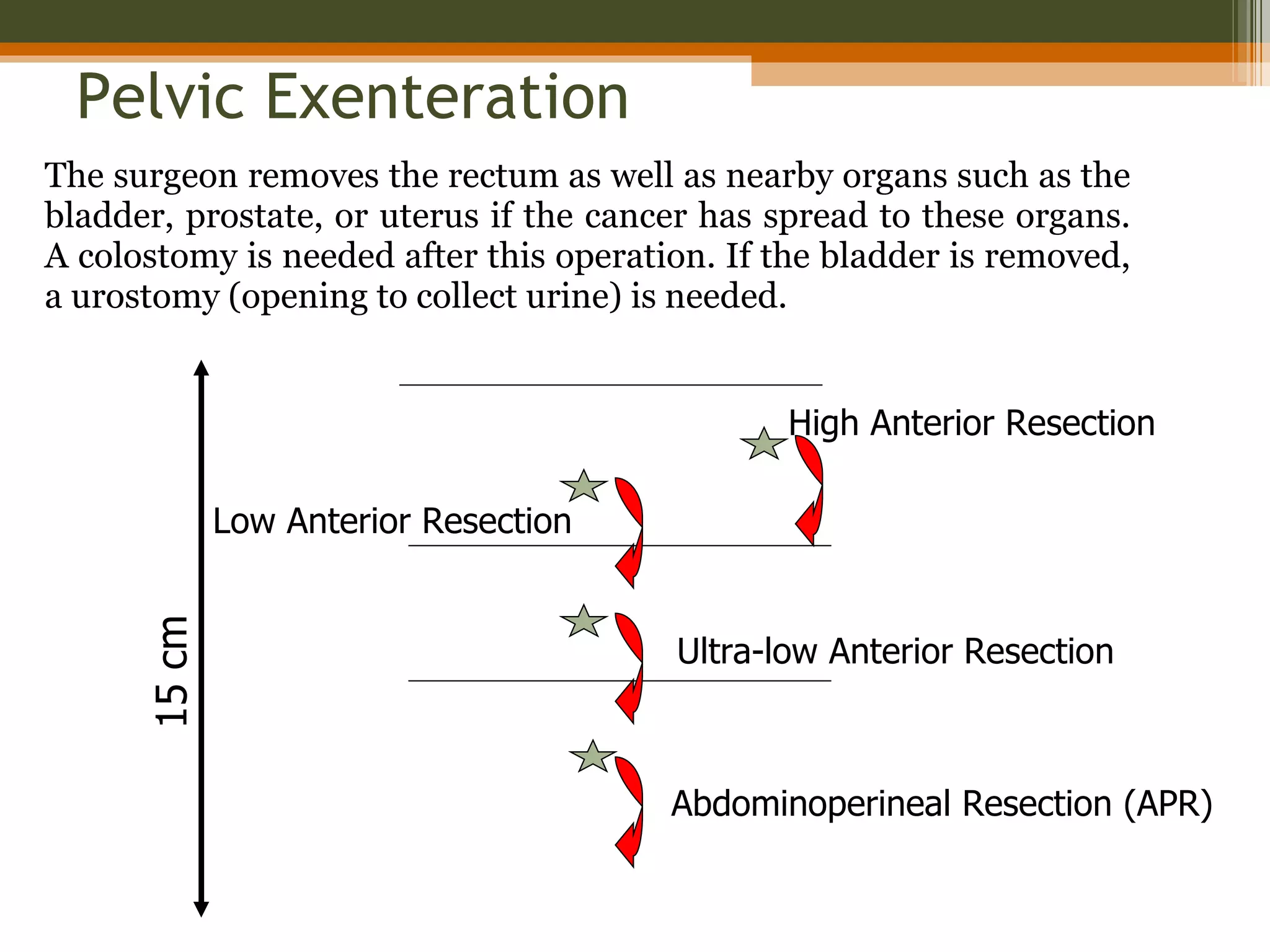
Pelvic Exenteration The surgeon removes the rectum as well as nearby organs such as the bladder, prostate, or uterus if the cancer has spread to these organs. A colostomy is needed after this operation. If the bladder is removed, a urostomy (opening to collect urine) is needed. 15   cm High Anterior Resection Low Anterior Resection Ultra-low Anterior Resection Abdominoperineal Resection (APR)
Complications of Surgery Bleeding Infection Anastomotic Leakage Blood clots Anesthetic Risks
 
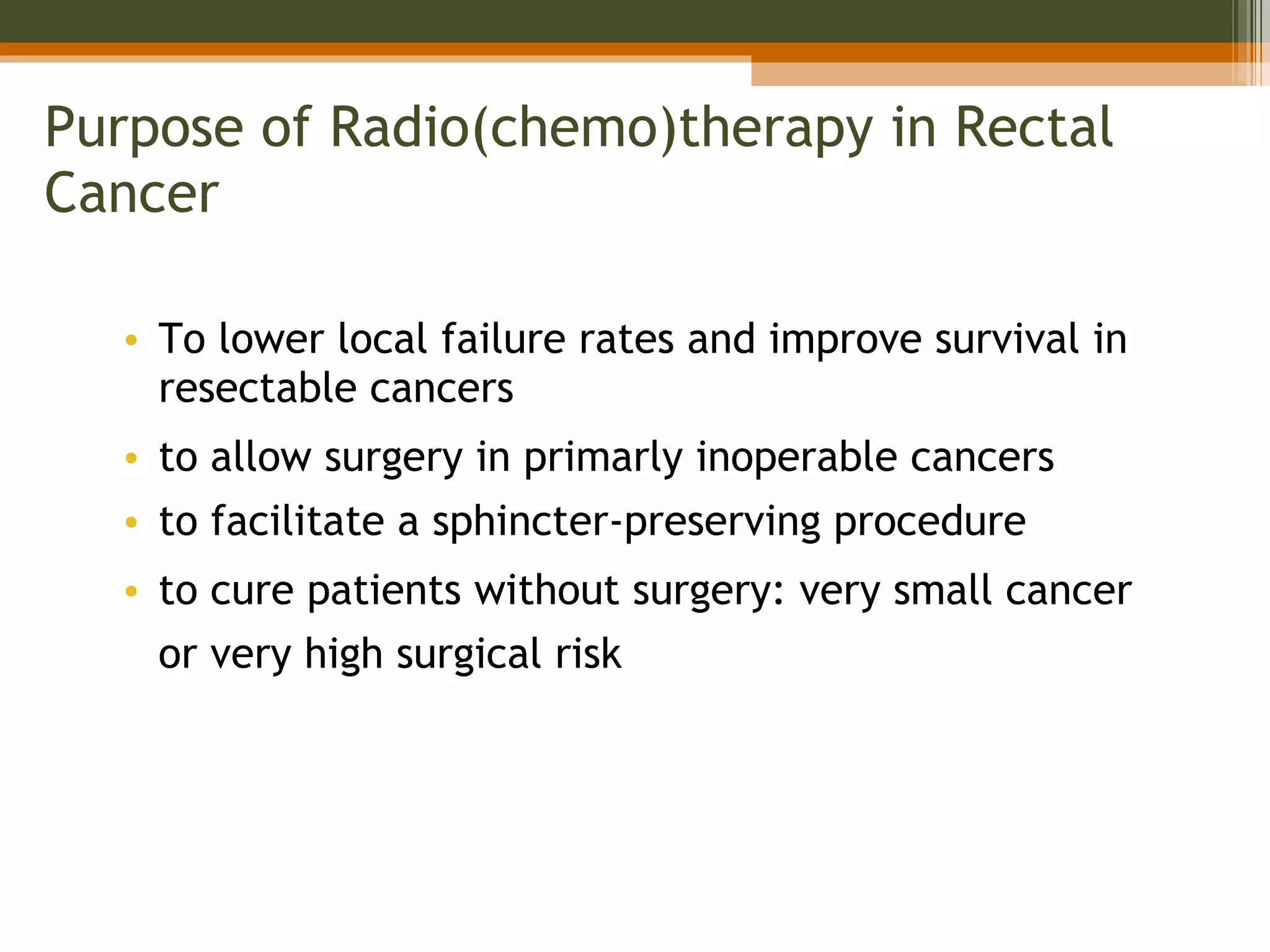
Purpose of Radio(chemo)therapy in Rectal Cancer To lower local failure rates and improve survival in resectable cancers to allow surgery in primarly inoperable cancers to facilitate a sphincter-preserving procedure to cure patients without surgery: very small cancer or very high surgical risk
5Fu Leucovorin Oxaliplatin Irinotecan Bevacizumab cetuximab Combinations FOLFOX FOLFIRI Leucovorin/5FU  Capecitabine Bevacizumab in combination with the above regimens. Chemotherapy agents
Radiotherapy Prone position:  radiopaque markers include anal, vaginal, rectal, perineal skin; wire perineal scar if present; small bowel contrast, ensure bladder full. Target Volume:  Primary Tumor or Tumor bed, with margin presacral, and internal iliac nodes (if T4, external iliac nodes also). Energy 6 MV linac or Co 60 Portals 4 fields (AP, PA, two lateral fields) 3 fields (PA, Rt. Lateral ,, two lateral fields)
Dose Preoperative radiotherapy Short course: 25 Gy in 5 daily fractions of 5 Gy given in 1 week. Long course Phase 1 45 Gy in 25 daily fractions of 1.8 Gy given in 5 weeks. Phase 2 (optional) 5.4–9 Gy in 3–5 daily fractions of 1.8 Gy Postoperative radiotherapy Phase 1 45 Gy in 25 daily fractions of 1.8 Gy given in 5 weeks. Phase 2 (optional) 5.4–9 Gy in 3–5 daily fractions of 1.8 Gy.
Palliative radiotherapy Phase 1 45 Gy in 25 daily fractions of 1.8 Gy given in 5 weeks. Phase 2 (optional) 5.4–14.4 Gy in 3–8 daily fractions of 1.8 Gy or a hypofractionated regimen can be used 30–36 Gy in 5–6 fractions of 6 Gy once weekly given in 5–6 weeks. Dose limitations (at standard fractionation ) Small bowel 45–50 Gy Femoral head and neck 42 Gy Bladder 65 Gy Rectum 60 Gy
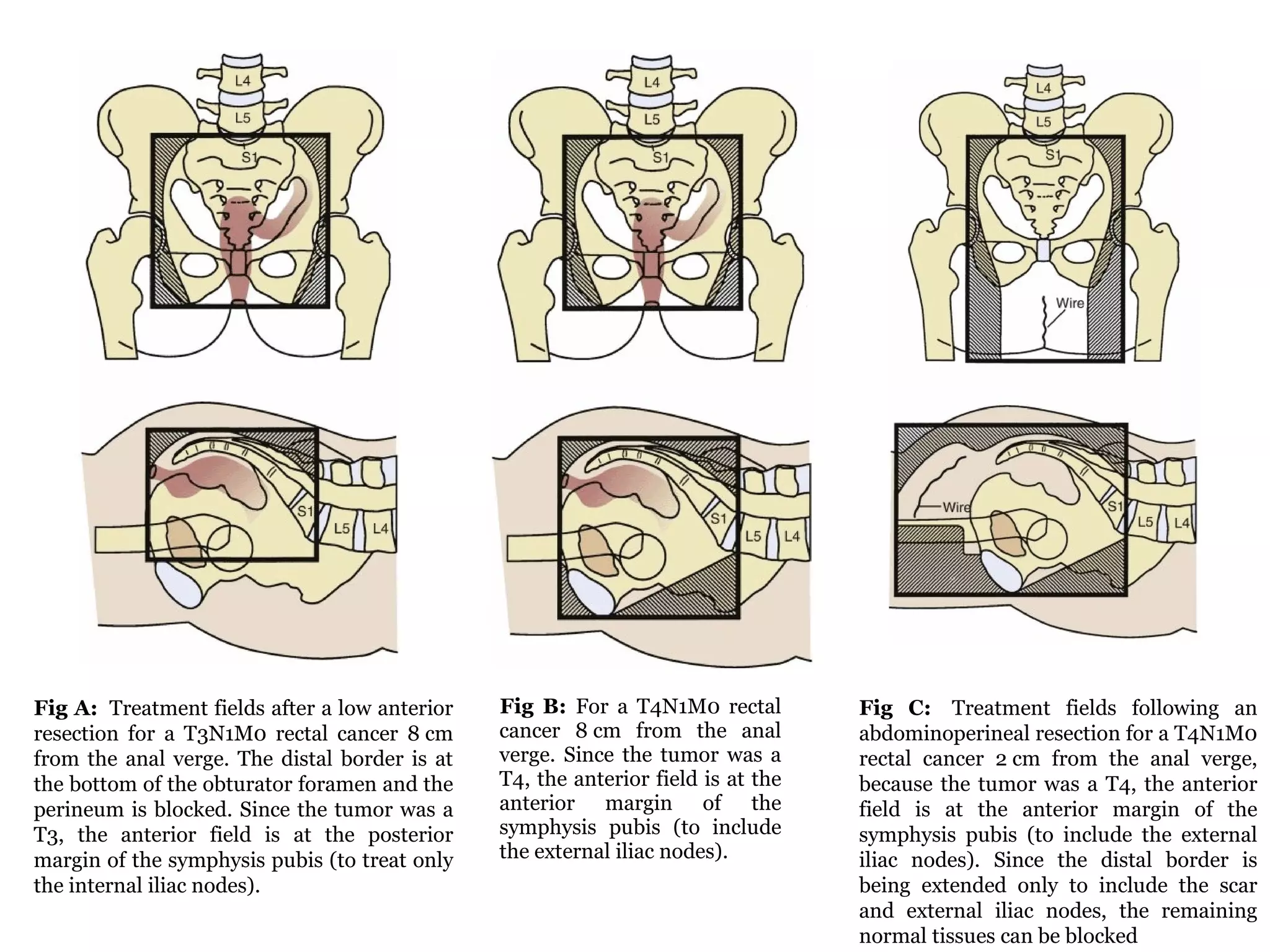
Field Arrangement Whole pelvic field: A  : Posterior-anterior   Lateral borders:  1.5 cm lateral to the widest bony margin of the true pelvic side walls. Distal border:  3 cm below the primary tumor or at the inferior aspect of the obturator foramina, whichever is the most inferior. Superior border:  L5-S1 junction. B  : Laterals Posterior border:  1 to 1.5 cm behind the anterior bony sacral margin. Anterior border: T3 disease:  Posterior margin of the symphysis pubis (to treat only the internal iliac nodes). T4 disease:  Anterior margin of the symphysis pubis (to include the external iliac nodes).      
Boost field: A   : Treat the primary tumor bed plus a 3-cm margin (not the nodes). After an abdominoperineal resection: A   :Wire the perineal scar and create a 1.5-cm margin beyond the wire in all fields. B   : Never use an electron or photon boost for the perineum—there will be overlap between the fields. Blocks are used to spare the posterior muscle and soft tissues behind the sacrum and small bowel.
Fig B:  For a T4N1M0 rectal cancer 8 cm from the anal verge. Since the tumor was a T4, the anterior field is at the anterior margin of the symphysis pubis (to include the external iliac nodes). Fig A:   Treatment fields after a low anterior resection for a T3N1M0 rectal cancer 8 cm from the anal verge. The distal border is at the bottom of the obturator foramen and the perineum is blocked. Since the tumor was a T3, the anterior field is at the posterior margin of the symphysis pubis (to treat only the internal iliac nodes). Fig C:   Treatment fields following an abdominoperineal resection for a T4N1M0 rectal cancer 2 cm from the anal verge, because the tumor was a T4, the anterior field is at the anterior margin of the symphysis pubis (to include the external iliac nodes). Since the distal border is being extended only to include the scar and external iliac nodes, the remaining normal tissues can be blocked
Clinical Trials
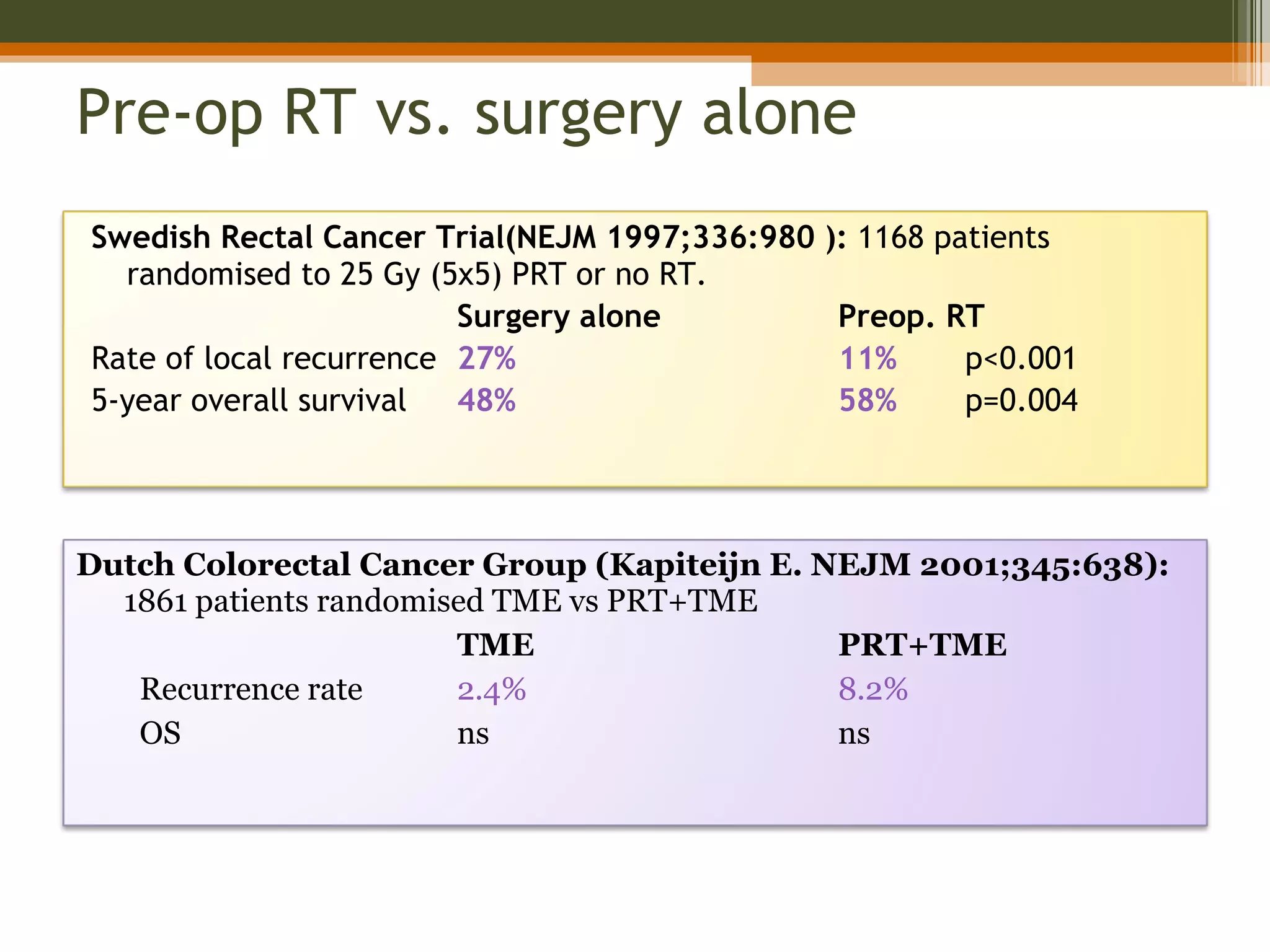
Pre-op RT vs. surgery alone Swedish Rectal Cancer Trial(NEJM 1997;336:980 ):   1168 patients randomised to 25 Gy (5x5) PRT or no RT. Surgery alone Preop. RT Rate of local recurrence 27% 11% p<0.001 5-year overall survival 48% 58% p=0.004 Dutch Colorectal Cancer Group (Kapiteijn E. NEJM 2001;345:638):  1861 patients randomised TME vs PRT+TME TME PRT+TME Recurrence rate 2.4% 8.2% OS ns ns
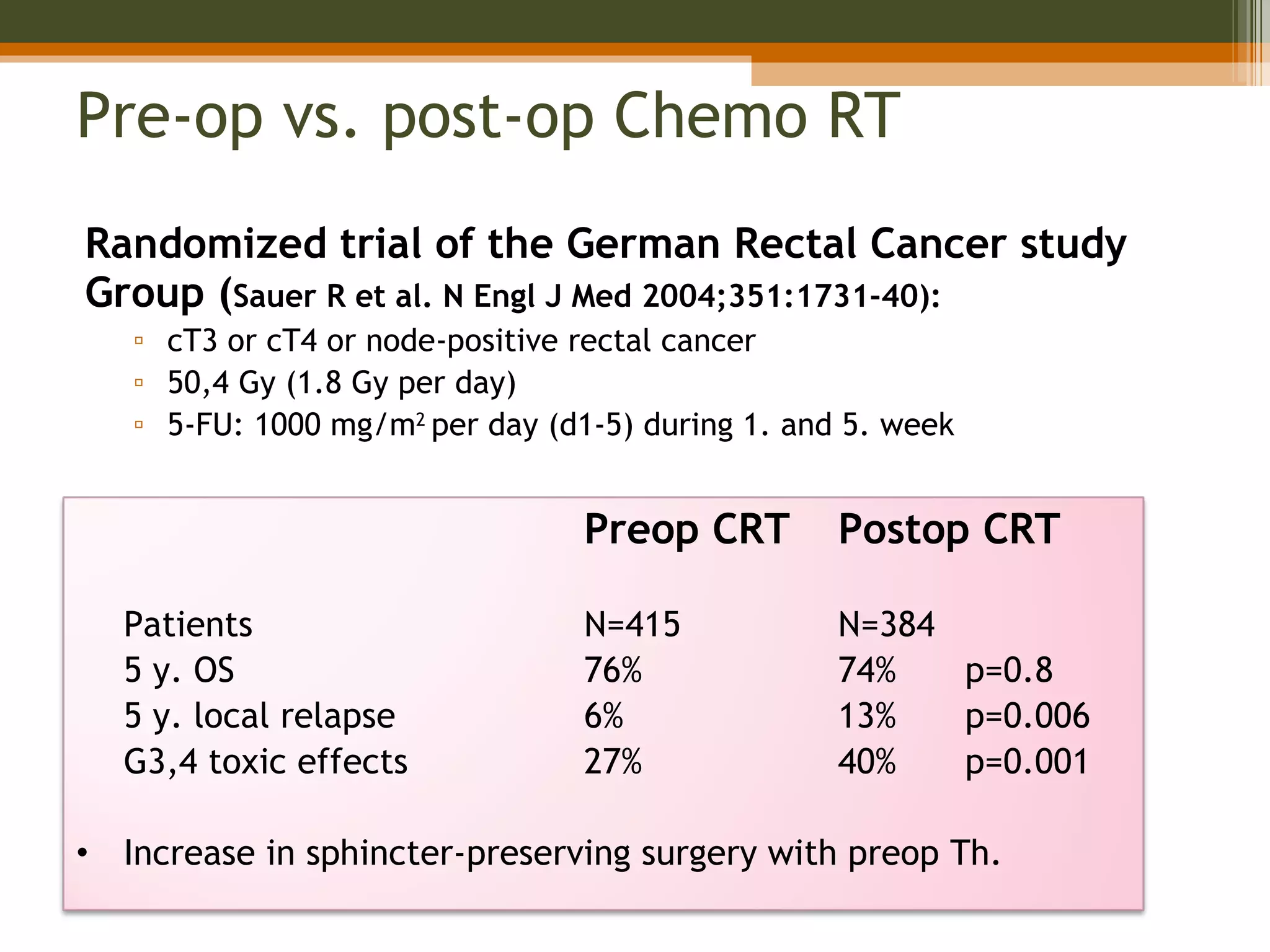
Pre-op vs. post-op Chemo RT Randomized trial of the German Rectal Cancer study Group ( Sauer R et al. N Engl J Med 2004;351:1731-40):  cT3 or cT4 or node-positive rectal cancer 50,4 Gy (1.8 Gy per day) 5-FU: 1000 mg/m 2  per day (d1-5) during 1. and 5. week Preop CRT Postop CRT Patients N=415 N=384 5 y. OS 76% 74% p=0.8 5 y. local relapse 6% 13% p=0.006 G3,4 toxic effects 27% 40% p=0.001 Increase in sphincter-preserving surgery with preop Th.
MRC CR07/NCIC-CTG C016 (Sebag-Montefiore et al. 2009): 1350 pt. with resectable rectal cancer randomized. 25 Gy/5# + Surgery (TME) Surgery (TME) + (45 Gy & 5 FU)     Preop RT   Postop CRT 5 y. OS 80.8% 78.7% 5 y. local relapse 4.4% 10.6% DFS 79.5% 74.5%
Polish Trial Polish Study (Br J Surg. 2006): 316 pts with resectable T3-4 rectal cancer, no sphincter involvement, tumor palpable on DRE (1999-2002). RT     short-course RT with 5 Gy/d x 5 days + Surgery (TME) CRT     50.4 Gy  (1.8 Gy /# over 5.5 weeks) + bolus 5-FU 325 mg/m²/d + LV x 5 days 1 st  and 5 th  wks of RT + Surgery (TME)     Preop SCRT  Preop LCRT 5 y. OS 67.2% 66.2% 5 y. local relapse 9.0% 14.2% DFS 58.4% 55.6%
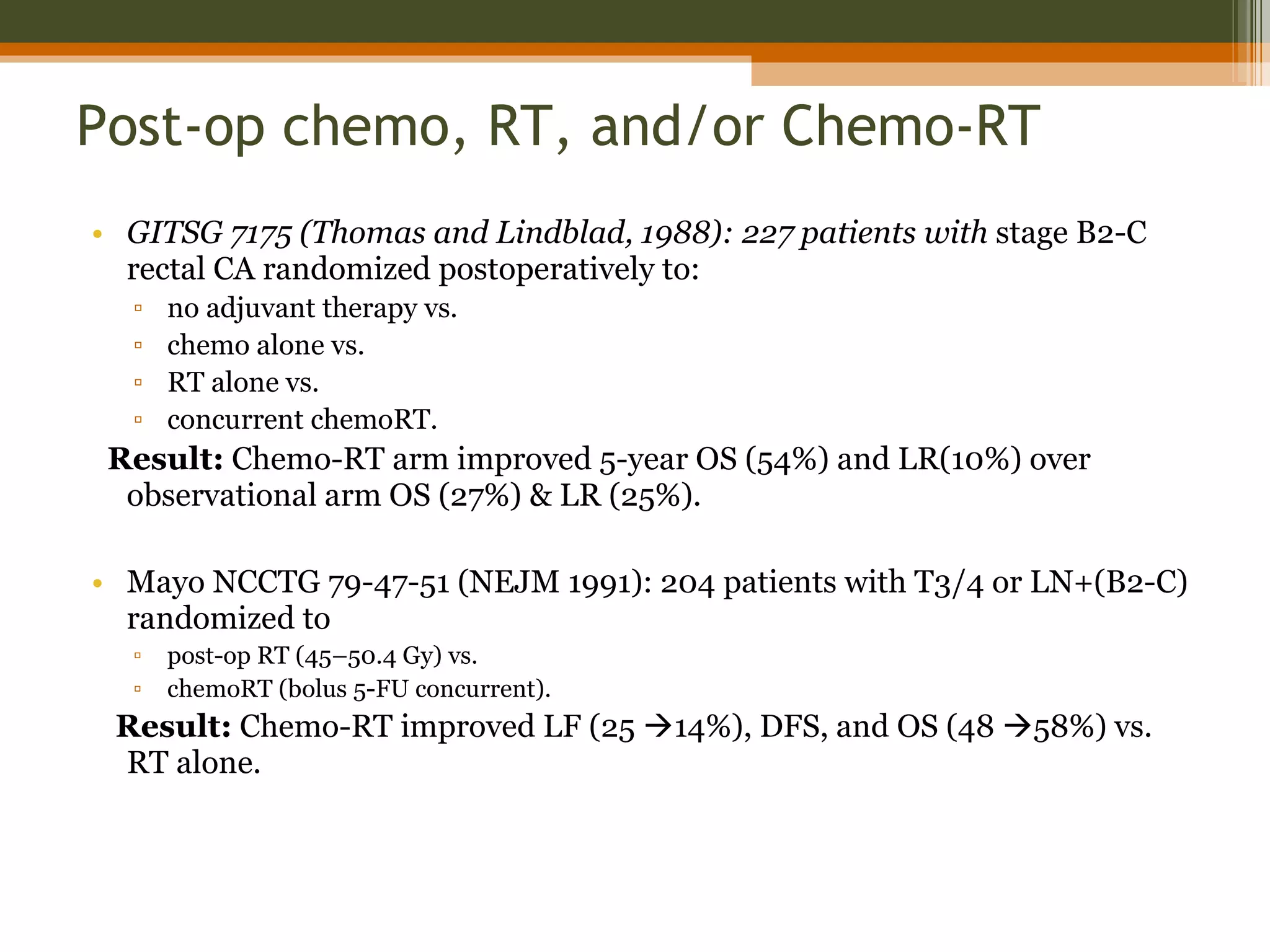
Post-op chemo, RT, and/or Chemo-RT GITSG 7175 (Thomas and Lindblad, 1988): 227 patients with  stage B2-C rectal CA randomized postoperatively to:  no adjuvant therapy vs.  chemo alone vs.  RT alone vs.  concurrent chemoRT.  Result:  Chemo-RT arm improved 5-year OS (54%) and LR(10%) over observational arm OS (27%) & LR (25%). Mayo NCCTG 79-47-51 (NEJM 1991): 204 patients with T3/4 or LN+(B2-C) randomized to  post-op RT (45–50.4 Gy) vs.  chemoRT  (bolus 5-FU concurrent).  Result:  Chemo-RT improved LF (25   14%) , DFS, and OS (48   58%) vs. RT alone.
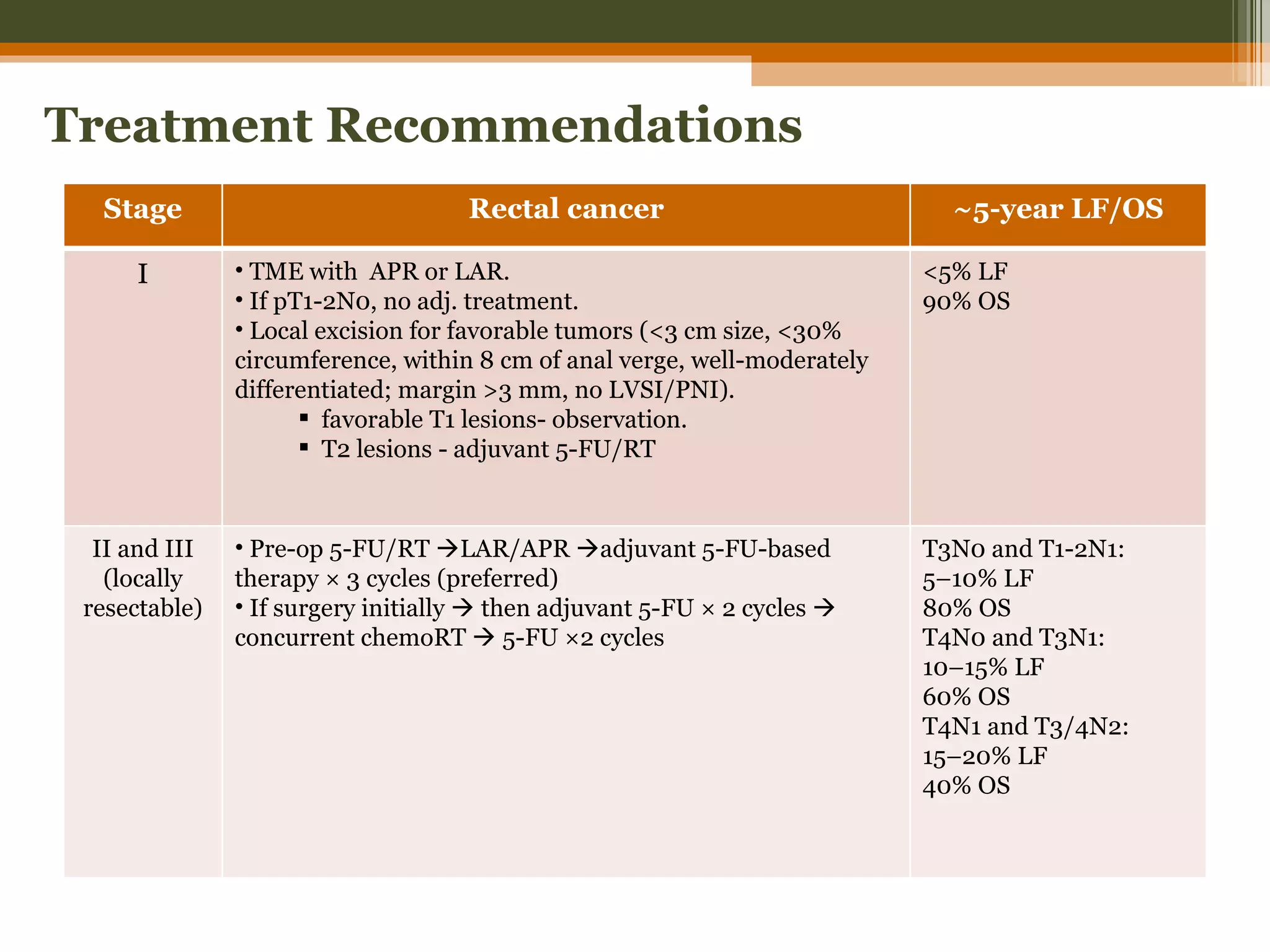
Treatment Recommendations Stage Rectal cancer ~5-year LF/OS I TME with  APR or LAR.  If pT1-2N0, no adj. treatment. Local excision for favorable tumors (<3 cm size, <30% circumference, within 8 cm of anal verge, well-moderately differentiated; margin >3 mm, no LVSI/PNI).  favorable T1 lesions- observation. T2 lesions - adjuvant 5-FU/RT <5% LF 90% OS II and III (locally resectable) Pre-op 5-FU/RT   LAR/APR   adjuvant 5-FU-based therapy × 3 cycles (preferred) If surgery initially    then adjuvant 5-FU × 2 cycles    concurrent chemoRT    5-FU ×2 cycles T3N0 and T1-2N1: 5–10% LF 80% OS T4N0 and T3N1: 10–15% LF 60% OS T4N1 and T3/4N2: 15–20% LF 40% OS
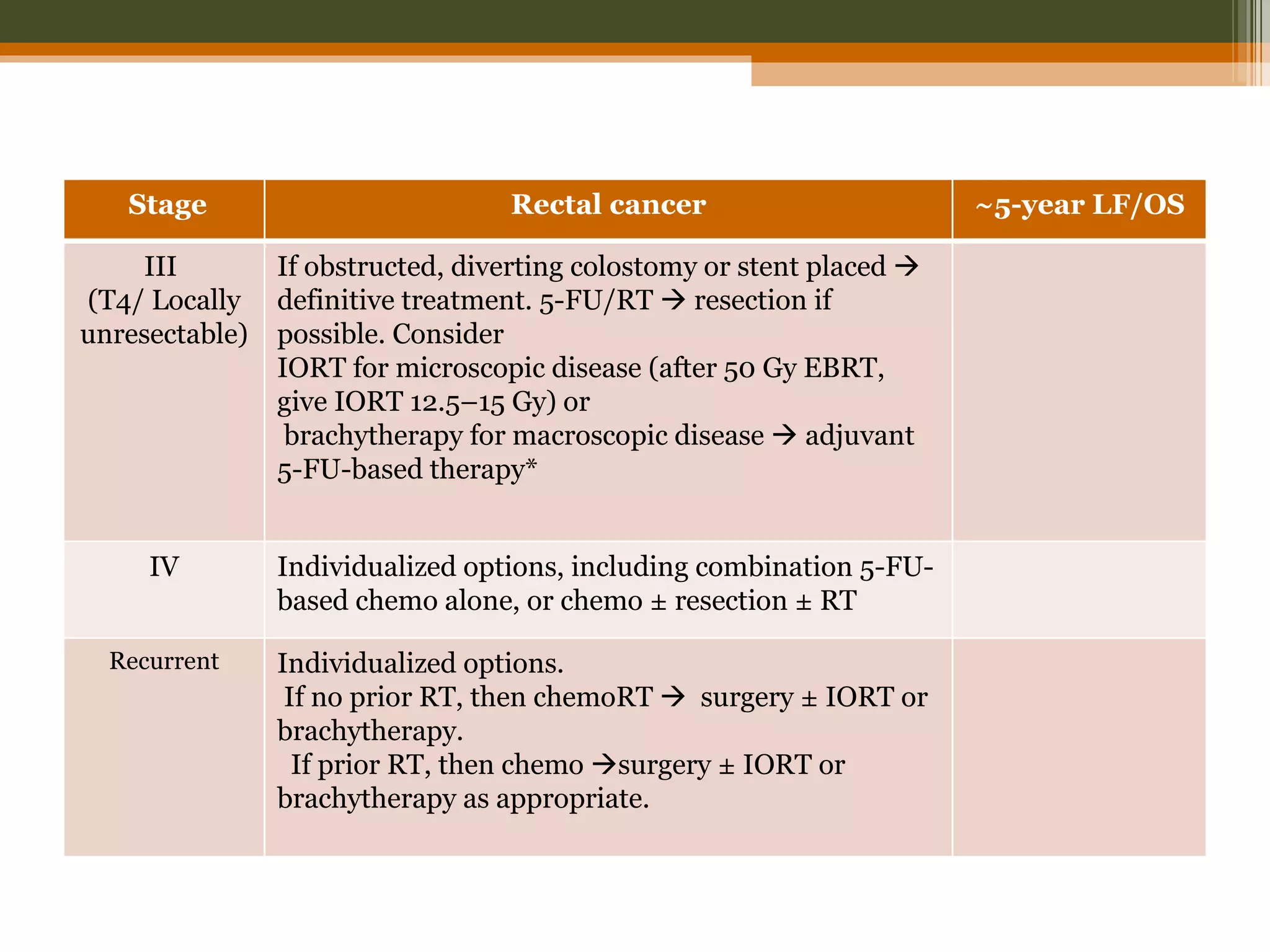
Stage Rectal cancer ~5-year LF/OS III  (T4/ Locally unresectable) If obstructed, diverting colostomy or stent placed    definitive treatment. 5-FU/RT    resection if possible. Consider IORT for microscopic disease (after  50 Gy EBRT, give IORT 12.5–15 Gy)  or brachytherapy for macroscopic disease    adjuvant 5-FU-based therapy* IV Individualized options, including combination 5-FU-based chemo alone, or chemo ± resection ± RT Recurrent Individualized options. If no prior RT, then chemoRT     surgery ± IORT or brachytherapy. If prior RT, then chemo   surgery ± IORT or brachytherapy as appropriate.
Thank You !!

Carcinoma rectum (Rectal Cancer)

  • 1.
    CA Rectum PresentedBy: Dr. Vandana Dept. of Radiotherapy CSMMU, Lucknow
  • 2.
    Clinical Anatomy 12-15cm from anal verge. Diameter 4 cm (upper part) Dilated (lower part) Posterior part of the lesser pelvis and in front of lower three pieces of sacrum and the coccyx Begins at the rectosigmoid junction, at level of third sacral vertebra Ends at the anorectal junction, 2-3 cm in front of and a little below the coccyx
  • 3.
    Divided into 3parts Upper third Middle third Lower third 3 distinct intraluminal curves ( Valves of Houston)
  • 4.
    Superior 1/3rd ofthe rectum Covered by peritoneum on the anterior and lateral surfaces Middle 1/3rd of the rectum Covered by peritoneum on the anterior surface Inferior 1/3rd of the rectum Devoid of peritoneum Close proximity to adjacent structure including boney pelvis. Note: - Distal rectal tumors have no serosal barrier to invasion of adjacent structures and are more difficult to resect given the close confines of the deep pelvis. Peritoneal Relations
  • 5.
    Arterial supply Superiorrectal A – fr. IMA; supplies upper and middle rectum Middle rectal A- fr. Internal iliac A. (supplies lower rectum) Inferior rectal A- fr. Internal pudendal A. Venous drainage Superior rectal V- upper & middle third rectum Middle rectal V- lower rectum and upper anal canal Inferior rectal vein- lower anal canal Innervations Sympathetic: L1-L3, Hypogastric nerve ParaSympathetic: S2-S4
  • 6.
    Lymphatic drainage Upperand middle rectum Pararectal lymph nodes, located directly on the muscle layer of the rectum Inferior mesenteric lymph nodes, via the nodes along the superior rectal vessels Lower rectum Sacral group of lymph nodes or Internal iliac lymph nodes Below the dentate line Inguinal nodes and external iliac chain
  • 7.
    Epidemiology Colorectal caneris the third most frequently diagnosed cancer in the US men and women. 108,070 new cases of colon cancer and 40,740 new cases of rectal cancer in the US in 2008. Combined mortality for colorectal cancer 49,960 in 2008. Worldwide approx. 1 million new cases p.a. are diagnosed, with 529,000 deaths. Incidence rate in India is quite low about 2 to 8 per 100,000 Median age- 7 th decade but can occur any time in adulthood. ** Globocan IARC 2008
  • 8.
    Cecum 14 %Ascending colon 10 % Transverse colon 12 % Descending colon 7 % Sigmoid colon 25 % Rectosigmoid junct 0.9 % Rectum 23 %
  • 9.
    Etiological agents Environmental& dietary factors Chemical carcinogenesis. Associated risk factors Male sex Family history of colorectal cancer Personal history of colorectal cancer, ovary, endometrial, breast Excessive BMI Processed meat intake Excessive alcohol intake Low folate consumption Neoplastic polyps. Hereditary Conditions (FAP, HNPCC)
  • 10.
    Clinical Presentations SymptomsAsymptomatic Change in bowel habit (diarrhoea, constipation, narrow stool, incomplete evacuation, tenesmus). Blood PR. Abdominal discomfort (pain, fullness, cramps, bloating, vomiting). Weight loss, tiredness. Acute Presentations Intestinal obstruction. Perforation. Massive bleeding.
  • 11.
    Signs Pallor Abdominalmass PR mass Jaundice Nodular liver Ascites Rectal metastasis travel along portal drainage to liver via superior rectal vein as well as systemic drainage to lung via middle inferior rectal veins.
  • 12.
    Pathological features WHOClassification Adenocarcinoma in situ Adenocarcinoma Mucinous (colloid) adenocarcinoma (>50% mucinous) Signet ring cell carcinoma (>50% signet ring cells) Squamous cell (epidermoid) carcinoma Adenosquamous carcinoma Small-cell (oat cell) carcinoma Medullary carcinoma Undifferentiated Carcinoma
  • 13.
    Dukes classification- DukesA: Invasion into but not through the bowel wall. Dukes B : Invasion through the bowel wall but not involving lymph nodes. Dukes C : Involvement of lymph nodes Dukes D : Widespread metastases Modified astler coller classification- Stage A : Limited to mucosa. Stage B1 : Extending into muscularis propria but not penetrating through it; nodes not involved. Stage B2 : Penetrating through muscularis propria; nodes not involved Stage C1 : Extending into muscularis propria but not penetrating through it. Nodes involved Stage C2 : Penetrating through muscularis propria. Nodes involved Stage D: Distant metastatic spread
  • 14.
    TNM Classification Tis T 1 T 2 T 3 T 4 Extension to an adjacent organ Mucosa Muscularis mucosae Submucosa Muscularis propria Subserosa Serosa T X Primary tumor cannot be assessed T0 No evidence of primary tumor Tis Carcinoma in situ: intraepithelial or invasion of lamina propria T1 Tumor invades submucosa T2 Tumor invades muscularis propria T3 Tumor invades through the muscularis propria into pericolorectal tissues T4a Tumor penetrates to the surface of the visceral peritoneum T4b Tumor directly invades or is adherent to other organs or structures
  • 15.
  • 16.
  • 17.
    Prognostic factors Goodprognostic factors Old age Gender(F>M) Asymptomatic pts Polypoidal lesions Diploid Poor prognostic factors Obstruction Perforation Ulcerative lesion Adjacent structures involvement Positive margins LVSI Signet cell carcinoma High CEA Tethered and fixed cancer
  • 18.
    Stage and PrognosisStage 5-year Survival (%) 0,1 Tis,T1;No;Mo > 90 I T2;No;Mo 80-85 II T3-4;No;Mo 70-75 III T2;N1-3;Mo 70-75 III T3;N1-3;Mo 50-65 III T4;N1-2;Mo 25-45 IV M1 <3
  • 19.
    Diagnostic Workup History—including family history of colorectal cancer or polyps Physical examinations including DRE and complete pelvic examination in women: size, location, ulceration, mobile vs. tethered vs. fixed, distance from anal verge and sphincter functions. Proctoscopy —including assessment of mobility, minimum diameter of the lumen, and distance from the anal verge Biopsy of the primary tumor
  • 20.
    Colonoscopy or bariumenema Figure: C arcinoma of the rectum. Double-contrast barium enema shows a long segment of concentric luminal narrowing (arrows) along the rectum with minimal irregularity of the mucosal surface. To evaluate remainder of large bowel to rule out synchronous tumor or presence of polyp syndrome.
  • 21.
    Transrectal ultrasound –EUSuse for clinical staging. 80-95% accurate in tumor staging 70-75% accurate in mesorectal lymph node staging Very good at demonstrating layers of rectal wall Use is limited to lesion < 14 cm from anus, not applicable for upper rectum, for stenosing tumor Very useful in determining extension of disease into anal canal (clinical important for planning sphincter preserving surgery) Figure. Endorectal ultrasound of a T3 tumor of the rectum, extension through the muscularis propria, and into perirectal fat.
  • 22.
    CT scan Partof routine workup of patients Useful in identifying enlarged pelvic lymph-nodes and metastasis outside the pelvis than the extent or stage of primary tumor Limited utility in small primary cancer Sensitivity 50-80% Specificity 30-80% Ability to detect pelvic and para-aortic lymph nodes is higher than peri-rectal lymph nodes.
  • 23.
    Figure: Mucinousadenocarcinoma of the rectum. CT scan shows a large heterogeneous mass (M) with areas of cystic components. Note marked luminal narrowing of the rectum (arrow) . Figure:   Rectal cancer with uterine invasion. CT scan shows a large heterogeneous rectal mass (M) with compression and direct invasion into the posterior wall of the uterus (U).
  • 24.
    Magnetic Resonance Imaging(MRI) Greater accuracy in defining extent of rectal cancer extension and also location & stage of tumor Also helpful in lateral extension of disease, critical in predicting circumferential margin for surgical excision. Different approaches (body coils, endorectal MRI & phased array technique) Mercury study: 711 patients from 11 European centers. Extramural tumor depth by MR & histo-pathological evaluation equivalent.
  • 25.
    Figure:   Mucinousadenocarcinoma of the rectum. T2-weighted MRI shows high signal intensity (arrowheads) of the cancer lesion in right anterolateral side of the rectal wall. Figure: Normal rectal and perirectal anatomy on high-resolution T2-weighted MRI. Rectal mucosa (M), submucosa (SM), and muscularis propria (PM) are well discriminated. Mesorectal fascia appears as a thin, low-signal-intensity structure (arrowheads) and fuses with the remnant of urogenital septum making Denonvilliers fascia (arrows) .
  • 26.
    PET with FDGShows promise as the most sensitive study for the detection of metastatic disease in the liver and elsewhere. Sensitivity of 97% and specificity of 76% in evaluating for recurrent colorectal cancer. cancer rectum prostate pubic bone bladder Small bowel
  • 27.
    CEA: High CEAlevels associated with poorer survival Routine investigation Complete blood count, KFT, LFT Chest X-ray
  • 28.
  • 29.
    Surgery Surgery isthe mainstay of treatment of RC After surgical resection, local failure is common Local recurrence after conventional surgery: 20%-50% (average of 35%)** Radiotherapy significantly reduces the number of local recurrences ** Reference: facts taken from Perez
  • 30.
    Types of SurgeryLocal excision- reserved for superficially invasive (T1) tumors with low likelihood of LN metastases Should be considered a total biopsy, with further treatment based on pathology With unfavorable pathology patient should undergo total mesorectal excision with or without sphincter-preservation: positive margin (or <2 mm), lymphovascular invasion, poorly differentiated tumors, T2 lesion
  • 31.
    Low Anterior Resection - for tumors in upper/mid rectum; allows preservation of anal sphincter Abdominoperineal resection for tumors of distal rectum with distal edge up to 6 cm from anal verge associated with permanent colostomy and high incidence of sexual and genitourinary dysfunction
  • 32.
    Total mesorectal excisionlocal failures are most often due to inadequate surgical clearance of radial margins. conventional resection violates the mesorectal circumference during blunt dissection, leaving residual mesorectum. TME involves precise dissection and removal of the entire rectal mesentery as an intact unit. local recurrence with conventional surgery averages approx. 25-30% vs. TME 4-7% by several groups (although several series have higher recurrence) ** referred from Perez
  • 33.
    Pelvic Exenteration Thesurgeon removes the rectum as well as nearby organs such as the bladder, prostate, or uterus if the cancer has spread to these organs. A colostomy is needed after this operation. If the bladder is removed, a urostomy (opening to collect urine) is needed. 15 cm High Anterior Resection Low Anterior Resection Ultra-low Anterior Resection Abdominoperineal Resection (APR)
  • 34.
    Complications of SurgeryBleeding Infection Anastomotic Leakage Blood clots Anesthetic Risks
  • 35.
  • 36.
    Purpose of Radio(chemo)therapyin Rectal Cancer To lower local failure rates and improve survival in resectable cancers to allow surgery in primarly inoperable cancers to facilitate a sphincter-preserving procedure to cure patients without surgery: very small cancer or very high surgical risk
  • 37.
    5Fu Leucovorin OxaliplatinIrinotecan Bevacizumab cetuximab Combinations FOLFOX FOLFIRI Leucovorin/5FU Capecitabine Bevacizumab in combination with the above regimens. Chemotherapy agents
  • 38.
    Radiotherapy Prone position: radiopaque markers include anal, vaginal, rectal, perineal skin; wire perineal scar if present; small bowel contrast, ensure bladder full. Target Volume: Primary Tumor or Tumor bed, with margin presacral, and internal iliac nodes (if T4, external iliac nodes also). Energy 6 MV linac or Co 60 Portals 4 fields (AP, PA, two lateral fields) 3 fields (PA, Rt. Lateral ,, two lateral fields)
  • 39.
    Dose Preoperative radiotherapyShort course: 25 Gy in 5 daily fractions of 5 Gy given in 1 week. Long course Phase 1 45 Gy in 25 daily fractions of 1.8 Gy given in 5 weeks. Phase 2 (optional) 5.4–9 Gy in 3–5 daily fractions of 1.8 Gy Postoperative radiotherapy Phase 1 45 Gy in 25 daily fractions of 1.8 Gy given in 5 weeks. Phase 2 (optional) 5.4–9 Gy in 3–5 daily fractions of 1.8 Gy.
  • 40.
    Palliative radiotherapy Phase1 45 Gy in 25 daily fractions of 1.8 Gy given in 5 weeks. Phase 2 (optional) 5.4–14.4 Gy in 3–8 daily fractions of 1.8 Gy or a hypofractionated regimen can be used 30–36 Gy in 5–6 fractions of 6 Gy once weekly given in 5–6 weeks. Dose limitations (at standard fractionation ) Small bowel 45–50 Gy Femoral head and neck 42 Gy Bladder 65 Gy Rectum 60 Gy
  • 41.
    Field Arrangement Wholepelvic field: A  : Posterior-anterior   Lateral borders: 1.5 cm lateral to the widest bony margin of the true pelvic side walls. Distal border: 3 cm below the primary tumor or at the inferior aspect of the obturator foramina, whichever is the most inferior. Superior border: L5-S1 junction. B  : Laterals Posterior border: 1 to 1.5 cm behind the anterior bony sacral margin. Anterior border: T3 disease: Posterior margin of the symphysis pubis (to treat only the internal iliac nodes). T4 disease: Anterior margin of the symphysis pubis (to include the external iliac nodes).      
  • 42.
    Boost field: A  : Treat the primary tumor bed plus a 3-cm margin (not the nodes). After an abdominoperineal resection: A   :Wire the perineal scar and create a 1.5-cm margin beyond the wire in all fields. B   : Never use an electron or photon boost for the perineum—there will be overlap between the fields. Blocks are used to spare the posterior muscle and soft tissues behind the sacrum and small bowel.
  • 43.
    Fig B: For a T4N1M0 rectal cancer 8 cm from the anal verge. Since the tumor was a T4, the anterior field is at the anterior margin of the symphysis pubis (to include the external iliac nodes). Fig A:   Treatment fields after a low anterior resection for a T3N1M0 rectal cancer 8 cm from the anal verge. The distal border is at the bottom of the obturator foramen and the perineum is blocked. Since the tumor was a T3, the anterior field is at the posterior margin of the symphysis pubis (to treat only the internal iliac nodes). Fig C:   Treatment fields following an abdominoperineal resection for a T4N1M0 rectal cancer 2 cm from the anal verge, because the tumor was a T4, the anterior field is at the anterior margin of the symphysis pubis (to include the external iliac nodes). Since the distal border is being extended only to include the scar and external iliac nodes, the remaining normal tissues can be blocked
  • 44.
  • 45.
    Pre-op RT vs.surgery alone Swedish Rectal Cancer Trial(NEJM 1997;336:980 ): 1168 patients randomised to 25 Gy (5x5) PRT or no RT. Surgery alone Preop. RT Rate of local recurrence 27% 11% p<0.001 5-year overall survival 48% 58% p=0.004 Dutch Colorectal Cancer Group (Kapiteijn E. NEJM 2001;345:638): 1861 patients randomised TME vs PRT+TME TME PRT+TME Recurrence rate 2.4% 8.2% OS ns ns
  • 46.
    Pre-op vs. post-opChemo RT Randomized trial of the German Rectal Cancer study Group ( Sauer R et al. N Engl J Med 2004;351:1731-40): cT3 or cT4 or node-positive rectal cancer 50,4 Gy (1.8 Gy per day) 5-FU: 1000 mg/m 2 per day (d1-5) during 1. and 5. week Preop CRT Postop CRT Patients N=415 N=384 5 y. OS 76% 74% p=0.8 5 y. local relapse 6% 13% p=0.006 G3,4 toxic effects 27% 40% p=0.001 Increase in sphincter-preserving surgery with preop Th.
  • 47.
    MRC CR07/NCIC-CTG C016(Sebag-Montefiore et al. 2009): 1350 pt. with resectable rectal cancer randomized. 25 Gy/5# + Surgery (TME) Surgery (TME) + (45 Gy & 5 FU) Preop RT Postop CRT 5 y. OS 80.8% 78.7% 5 y. local relapse 4.4% 10.6% DFS 79.5% 74.5%
  • 48.
    Polish Trial PolishStudy (Br J Surg. 2006): 316 pts with resectable T3-4 rectal cancer, no sphincter involvement, tumor palpable on DRE (1999-2002). RT  short-course RT with 5 Gy/d x 5 days + Surgery (TME) CRT  50.4 Gy (1.8 Gy /# over 5.5 weeks) + bolus 5-FU 325 mg/m²/d + LV x 5 days 1 st and 5 th wks of RT + Surgery (TME) Preop SCRT Preop LCRT 5 y. OS 67.2% 66.2% 5 y. local relapse 9.0% 14.2% DFS 58.4% 55.6%
  • 49.
    Post-op chemo, RT,and/or Chemo-RT GITSG 7175 (Thomas and Lindblad, 1988): 227 patients with stage B2-C rectal CA randomized postoperatively to: no adjuvant therapy vs. chemo alone vs. RT alone vs. concurrent chemoRT. Result: Chemo-RT arm improved 5-year OS (54%) and LR(10%) over observational arm OS (27%) & LR (25%). Mayo NCCTG 79-47-51 (NEJM 1991): 204 patients with T3/4 or LN+(B2-C) randomized to post-op RT (45–50.4 Gy) vs. chemoRT (bolus 5-FU concurrent). Result: Chemo-RT improved LF (25  14%) , DFS, and OS (48  58%) vs. RT alone.
  • 50.
    Treatment Recommendations StageRectal cancer ~5-year LF/OS I TME with APR or LAR. If pT1-2N0, no adj. treatment. Local excision for favorable tumors (<3 cm size, <30% circumference, within 8 cm of anal verge, well-moderately differentiated; margin >3 mm, no LVSI/PNI). favorable T1 lesions- observation. T2 lesions - adjuvant 5-FU/RT <5% LF 90% OS II and III (locally resectable) Pre-op 5-FU/RT  LAR/APR  adjuvant 5-FU-based therapy × 3 cycles (preferred) If surgery initially  then adjuvant 5-FU × 2 cycles  concurrent chemoRT  5-FU ×2 cycles T3N0 and T1-2N1: 5–10% LF 80% OS T4N0 and T3N1: 10–15% LF 60% OS T4N1 and T3/4N2: 15–20% LF 40% OS
  • 51.
    Stage Rectal cancer~5-year LF/OS III (T4/ Locally unresectable) If obstructed, diverting colostomy or stent placed  definitive treatment. 5-FU/RT  resection if possible. Consider IORT for microscopic disease (after 50 Gy EBRT, give IORT 12.5–15 Gy) or brachytherapy for macroscopic disease  adjuvant 5-FU-based therapy* IV Individualized options, including combination 5-FU-based chemo alone, or chemo ± resection ± RT Recurrent Individualized options. If no prior RT, then chemoRT  surgery ± IORT or brachytherapy. If prior RT, then chemo  surgery ± IORT or brachytherapy as appropriate.
  • 52.

Editor's Notes

  • #53 There are interesting things to be found when researching information on the internet to include in a presentation. The Colossal Colon is a replica of the human colon that is four feet wide. It was modeled from colonoscopy footage. It has traveled across the U.S. to inform the public about colon health. People can crawl through the colon or view through windows on the outside. It shows healthy colon tissue as well as diseased tissue including polyps and colon cancer. This picture was taken at a mall near the Creighton University Medical Center. It’s a fun way to spread information about colon health.