- Dr.Akif A.B
- Core body temperature = 36.5 – 37.5* C
- In neutral temperature human metabolism produces more heat than is required to
maintain core body temperature but hypothalamus maintains it
- Mean oral temperature = 36.8 +/- 0.4
- Maximum oral temperature at 6am = 37.2*C
- Maximum oral temperature at 4-6pm = 37.7* C
- Fever is defined as A.M temperature > 37.2 *C and P.M temp. > 37.7* C
- Anal temperature is 0.4*C higher than oral temperature
- An axillary/tympanic temperature is usually 0.3°C to 0.6°C lower than an oral temperature.
- Lower esophageal temperature closely relates core body temperature
To convert temperatures in degrees Celsius to Fahrenheit, multiply by 1.8 (or 9/5) and add
32.
- Body temperature is controlled by hypothalamus
- Thermoregulatory centre is located in preoptic nucleus of hypothalamus
- Anterior hypothalamus responds to heat and posterior hypothalamus responds to
cold
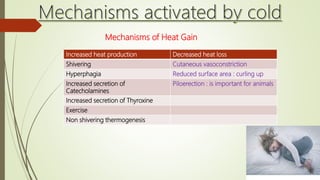
Increased heat production Decreased heat loss
Shivering Cutaneous vasoconstriction
Hyperphagia Reduced surface area : curling up
Increased secretion of
Catecholamines
Piloerection : is important for animals
Increased secretion of Thyroxine
Exercise
Non shivering thermogenesis
Mechanisms of Heat Gain
Mechanism of Heat Loss
Increase heat loss Decrease heat production
Cutaneous vasodilatation ( Earliest) Anorexia
Sweating Lethargy ( decrease muscular activity)
Earliest response to heat stress Cutaneous
vasodilatation
Earliest response to cold stress Cutaneous
vasoconstriction
Most important mechanism of heat loss in response
to heat stress
Sweating
Most important mechanism of heat gain in cold stress Shiverring
Chemical thermogenesis
- It involves heat production by many organ systems including liver and other abdominal
viscera, skeletal muscles and brown fat.
- Under the control of catecholamines and symphatetic nervous system
- Symphatetic activation causes metabolism of brown fat and leads to heat production
- It is present only in neonates and young infants which have brown fat
- Brown fat is absent in adults
- Brown fat is located at subscapular, interscapular, axilla, between shoulder blades,
around the neck, behind the sternum, around heart , kidney and adrenal glands.
- Chemical thermogenesis is promoted by Thyroxine
- Most important mechanism of heat loss
- It is the only mechanism of heat loss when patient is exposed to environmental
temperature greater than body temperature.
- Glands responsible are eccrine sweat glands, present all over body.
- Sweat gland has uniqueness that they have symphatetic but cholinergic supply
(generally symphatetic are non adrenergic)
Temperature regulation

Temperature regulation

  • 1.
  • 2.
    - Core bodytemperature = 36.5 – 37.5* C - In neutral temperature human metabolism produces more heat than is required to maintain core body temperature but hypothalamus maintains it - Mean oral temperature = 36.8 +/- 0.4 - Maximum oral temperature at 6am = 37.2*C - Maximum oral temperature at 4-6pm = 37.7* C - Fever is defined as A.M temperature > 37.2 *C and P.M temp. > 37.7* C - Anal temperature is 0.4*C higher than oral temperature - An axillary/tympanic temperature is usually 0.3°C to 0.6°C lower than an oral temperature. - Lower esophageal temperature closely relates core body temperature To convert temperatures in degrees Celsius to Fahrenheit, multiply by 1.8 (or 9/5) and add 32.
  • 3.
    - Body temperatureis controlled by hypothalamus - Thermoregulatory centre is located in preoptic nucleus of hypothalamus - Anterior hypothalamus responds to heat and posterior hypothalamus responds to cold
  • 4.
    Increased heat productionDecreased heat loss Shivering Cutaneous vasoconstriction Hyperphagia Reduced surface area : curling up Increased secretion of Catecholamines Piloerection : is important for animals Increased secretion of Thyroxine Exercise Non shivering thermogenesis Mechanisms of Heat Gain
  • 5.
    Mechanism of HeatLoss Increase heat loss Decrease heat production Cutaneous vasodilatation ( Earliest) Anorexia Sweating Lethargy ( decrease muscular activity)
  • 6.
    Earliest response toheat stress Cutaneous vasodilatation Earliest response to cold stress Cutaneous vasoconstriction Most important mechanism of heat loss in response to heat stress Sweating Most important mechanism of heat gain in cold stress Shiverring
  • 7.
    Chemical thermogenesis - Itinvolves heat production by many organ systems including liver and other abdominal viscera, skeletal muscles and brown fat. - Under the control of catecholamines and symphatetic nervous system - Symphatetic activation causes metabolism of brown fat and leads to heat production - It is present only in neonates and young infants which have brown fat - Brown fat is absent in adults - Brown fat is located at subscapular, interscapular, axilla, between shoulder blades, around the neck, behind the sternum, around heart , kidney and adrenal glands. - Chemical thermogenesis is promoted by Thyroxine
  • 9.
    - Most importantmechanism of heat loss - It is the only mechanism of heat loss when patient is exposed to environmental temperature greater than body temperature. - Glands responsible are eccrine sweat glands, present all over body. - Sweat gland has uniqueness that they have symphatetic but cholinergic supply (generally symphatetic are non adrenergic)