TEMPERATURE
REGULATION
By- Nikta jain
 Homoeothermic animals – Warm
blooded animals. They are able to
maintain their body temp. with in a
normal narrow range in spite of wide
variation in the environmental
temperature.
 Eg – Bird and mammals
 Poikilothermic animals – also known
as cold blooded animal . They do not
have an efficient temp. regulation
system so their body temp fluctuation
with the environmental temperature eg –
reptiles , amphibians.
Body Temperature
 Normal Body Temperature (NBT) –
98.60
F(370
C)
 Range of NBT ----- (970
F to 990
F)
1. Oral temp. – 36ºC – 37.5 ºC(97.5 to 99F average 37º
C (98.6 F)
2. Axillary temp. – slightly lower 0.5ºC the oral temp.
3. Rectal and esophageal temp. slightly higher 0.5ºC
than the oral temp.
 Rectal Temp ----- (0.50
F to 10
F) above
the Oral
.
 Rectal Temp reflects the internal
body Temp (Core Body Temp)
 Core Body Temp remain almost
constant
 Skin Temp (Shell Temp)-----
Variable
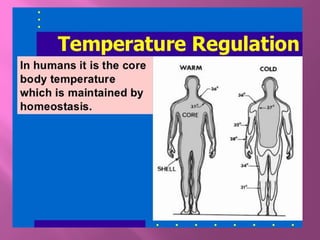
The body is hypothetically
divided into core and shell. -
 Shell temp. – It includes temperature of limb
and surface layer of trunk. Temp. of shell can
change with the temp. of external
environment.
 Core temperature- Temperature of deeper
body structure and it is maintained strictly
constant . It is 37.8 ºC
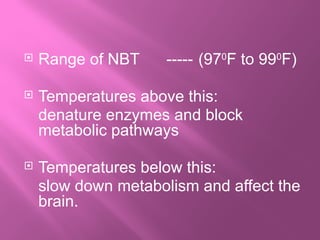
 Range of NBT ----- (970
F to 990
F)
 Temperatures above this:
denature enzymes and block
metabolic pathways
 Temperatures below this:
slow down metabolism and affect the
brain.
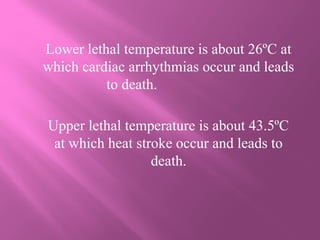
Lower lethal temperature is about 26ºC at
which cardiac arrhythmias occur and leads
to death.
Upper lethal temperature is about 43.5ºC
at which heat stroke occur and leads to
death.
FACTORS AFFECTING
BODY TEMPERATURE
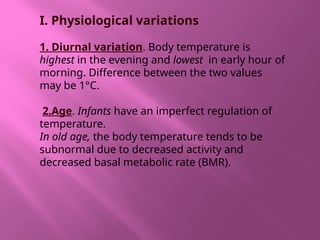
I. Physiological variations
1. Diurnal variation. Body temperature is
highest in the evening and lowest in early hour of
morning. Difference between the two values
may be 1°C.
2.Age. Infants have an imperfect regulation of
temperature.
In old age, the body temperature tends to be
subnormal due to decreased activity and
decreased basal metabolic rate (BMR).
3. Sex. Females have a slightly low body
temperature due to relatively low BMR and
thick layer of subcutaneous.
Due to thermogenic effect of progesterone,
the body temperature is higher in the post-
ovulatory phase of menstrual cycle than in the
pre-ovulatory phase.
.
4. Food. Protein food, due to high
specific dynamic action may raise body
temperature.
5. Exercise increases temperature. Only
25% of muscular energy is converted
into mechanical work, the rest comes
out as heat.
6. Sleep. Because of muscular inactivity,
sleep results in a slight fall of body
temperature
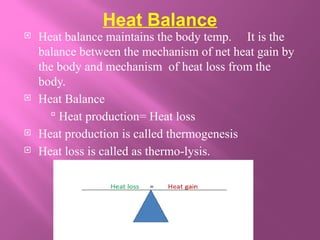
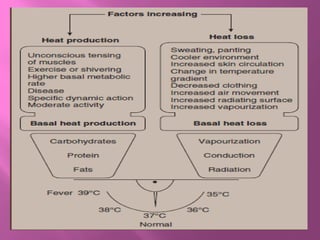
Heat Balance
 Heat balance maintains the body temp. It is the
balance between the mechanism of net heat gain by
the body and mechanism of heat loss from the
body.
 Heat Balance
 Heat production= Heat loss
 Heat production is called thermogenesis
 Heat loss is called as thermo-lysis.
Heat Production (Thermogenesis)
 BMR
 Specific Dynamic Action of food
 Activity of skeletal muscle
Shivering
Exercise
 Chemical Thermogenesis
Epinephrine &Norepinephrine
Thyroxine
 Brown Fat-
Source of considerable heat production
Abundant in infants
Basal metabolic activity
 The main mechanism responsible for heat
production in the body is physiological oxidation of
food material means combustion of carbohydrate,
protein and fats.
Muscular activity
 Exercise-Heat is produced during exercise by
respiratory muscle and skeletal muscle.
 SHIVERING - Shivering is oscillating rhythmic
muscle tremor occurring at a rate of 10-20/sec
during shivering no work is performed so all energy
generated by muscle is converted in the heat.
Specific dynamic action of food
 It is obligatory energy expenditure that occurs
during digestion. During digestion peristaltic action
of intestine produce heat . Specific dynamic action
of protein is maximum.
Hormone
 Hormone like epinephrine and thyroid is
increase ,they increase basal metabolic rate and
increase heat production.
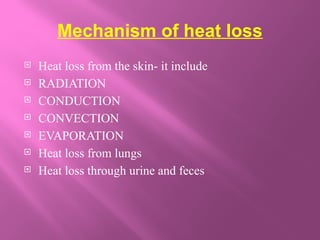
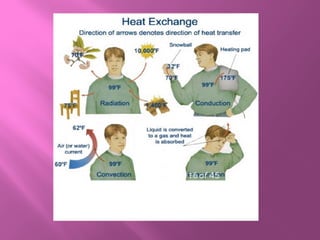
Mechanism of heat loss
 Heat loss from the skin- it include
 RADIATION
 CONDUCTION
 CONVECTION
 EVAPORATION
 Heat loss from lungs
 Heat loss through urine and feces
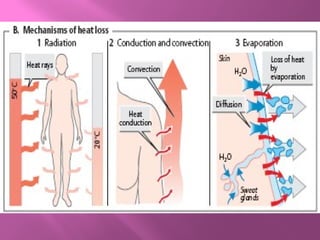
Radiation
 Transfer of heat from an object to another object
with which it is not in contact. About 50% of heat
loss from the body occurs by radiation.
 It depends on Body surface area and Average
temperature difference between skin and
surrounding atmosphere.
Conduction
 Heat exchange between object that are in contact
with one another. It depends upon temperature
difference between two objects.
Convection
 Movement of molecules of a gas or liquid from one
place to another place at different temperature.
About 20% of heat loss by conduction and
convection.
Evaporation
 About 27% of heat loss by evaporation from skin. It
occurs in two forms –
 Insensible water loss (perspiration) - It is
independent of environmental temperature. It
occurs due to continuous diffusion of fluid through
the epidermis. Heat loss by evaporation is
approximately 400 kcal/day.
 Evaporation of sweat- Sweating occurs by eccrine
sweat gland. then sweat vaporized from the skin
which decrease body temperature.
Heat Loss From The Lung
 Heat loss from the lung occurs by three processes-
1. Evaporation of water in expired air.
2. Warming of inspired air.
3. Panting- It is rapid and shallow breathing by which
more water evaporated from the mouth.
Regulation of Body Temperature
 Normal body temperature is the ‘setpoint’ in the
thermo regulatory system.
 In human this set point is 98.6ºF.
 This set point can be altered in pathological status
for example pyrogens induced fever.
Temperature Control
System
It is formed by –
1. Thermo receptor
2. Hypothalamus – It is the thermostat and integrator
of temperature control system.
3. Thermoregulatory effector mechanism
Thermo receptor
They give information about body temperature to the
hypothalamus.
1. Peripheral thermo receptor- which present
throughout the body in the skin and mucus membrane.
Cutaneous thermoreceptors sense the ambient temperature
, 90% of them are cold receptors.
Deep receptors present in the viscera sense the core
temperature .
cutaneous receptors and deep receptors also mainly detect
cold than warmth.
2.Central thermo receptor – They are mainly
present in hypo thalamus so their firing rate
depends on the local temperature of the blood.
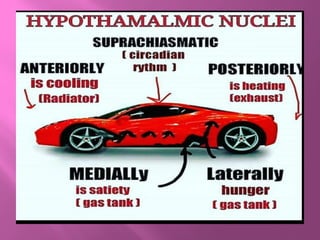
HYPOTHALAMUS
Hypo thalamus has three type of neuron depending
upon their function.
1. Sensing neuron – Located in the anterior
hypothalamus and collect information about
temperature from central and peripheral thermo
receptor.
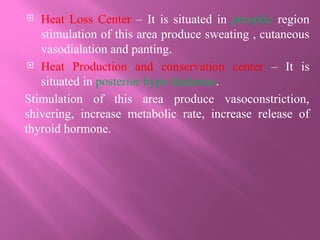
 Heat Loss Center – It is situated in preoptic region
stimulation of this area produce sweating , cutaneous
vasodialation and panting.
 Heat Production and conservation center – It is
situated in posterior hypo thalamus.
Stimulation of this area produce vasoconstriction,
shivering, increase metabolic rate, increase release of
thyroid hormone.
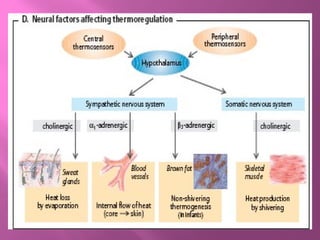
Thermo regulatory effector
mechanism
Hypothalamic thermostat has a set point at 98.6ºF.
Deviation from the set point evoke responds that tend
to restore body temperature towards set point. These
responses are mediated by autonomic, somatic and
endocrine system.
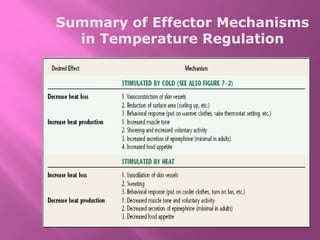
Mechanism Activated by Heat
Increase heat loss
Decrease heat production.
Mechanism increasing heat loss
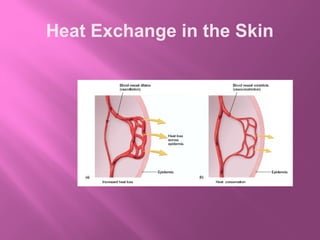
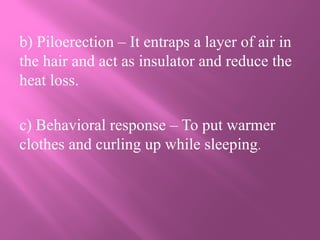
1. Cutaneous vasodilation - On exposure to heat
cutaneous blood flow increases . By this warm
blood from the deeper tissue is brought to the
surface and heat loss by conduction radiation and
convection.
Heat Exchange in the Skin
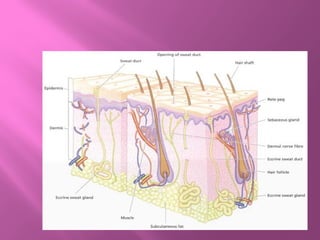
2. Sweating – There are two type of sweat glands.
1. Eccrine Sweat gland – Distributed all over the
body.
2. Apocrine glands – Present in the skin of
axilla, pubic, areas.
When environmental temperature rises above
thermal comfort level heat loss center of
hypothalamus is stimulated and it stimulate
sympathetic cholinergic fiber to sweat gland as a
result sweating starts.
 Rate of sweating progressively
increases with increase in
environmental temperature.
 In a very hot climate rate of sweating
may increase upto 10 L/Day so there
is marked loss of body water and
NaCl and that’s why in heat stress
death may occur due to severe
dehydration and salt loss.
 Acclimatization of sweating mechanism is
an adaptation which occurs following
prolonged exposure to high
environmental temperature. The
acclimatization is very useful in
conserving body NaCl . This occurs due
to increase secreation of ALDOSTERONE
which results in increase absorption of
Na+ and Cl−.
3. Panting is rapid shallow
breathing which increases heat loss
by increasing water vaporization in
the mouth and respiratory passage .
In some animal like dog panting is
an effective means of heat loss.
Mechanism Decreasing Heat
Production
1. Anorexia – Decrease food intake leads
to decreased heat production by
decrease in specific dynamic action of
food.
2. Lethargy means decreased muscular
activity – Results in decrease heat of
activity.
3. Behavioral response preference for cold
food and drinks, shelter for shadow.
Mechanism Activated By Cold
 Cutaneous Vasoconstriction – Cold stimulated
and increase sympathetic discharge and cause
cutaneous vasoconstriction as a result blood
less skin prevent heat loss .
 Bloodless skin prevents heat loss by becoming
an insulating barrier between the warm core of
the body and the cold enviornment.
Vasoconstriction and
Vasodilatation
b) Piloerection – It entraps a layer of air in
the hair and act as insulator and reduce the
heat loss.
c) Behavioral response – To put warmer
clothes and curling up while sleeping.
 Behavioral response –
Hyperphagia – Increase apatite so there is
increased specific dynamic action of the food.
Hyperactivity
Consumption Of Hot Food
 Mechanism increases heat production –
 Shivering Thermogenesis – Shivering is
oscillating rhythmic muscle tremor
occurring at a rate of 10-20/ sec. During
shivering no work is performed so all the
energy generated by muscle is converted
into the heat.
 Non shivering thermogenesis or
chemical thermogenesis –
1. Role of brown fat --it contains large
number of special mitochondria where
uncoupled oxidation occurs. So there is
release of heat rather than generation of
ATPs. Adult do not have brown fat but
infant brown fat is present at inter scalper
region, around the neck, behind the sternum
2. During cold  Increase
sympathetic stimulation  Increase
epinephrine and nor epinephrine 
increase heat production by chemical
thermogenesis.
3. Increase secretion of thyroxin
Thyroxin secretion increases in
winters
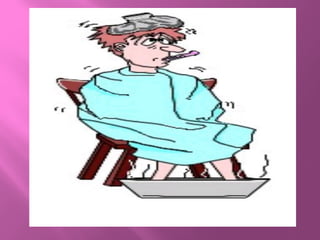
FEVER
PATHOGENESIS OF FEVER
 Toxins liberated from the infecting organism
and tissue destruction act on phagocytic cells
(monocytes, macrophages and Kupffer cells)
to produce cytokines that act as endogenous
pyrogens. The pyrogens are polypeptides and
interleukin-I (IL-I) , which act on the anterior
hypothalamus to increase the production of
prostaglandin E2. Prostaglandin E2 acts on
the hypothalamus to increase the thermostat
‘set point’.
 The drugs like aspirin, which prevent the
formation of prostaglandinE2 from
arachidonic acid, act as antipyretics.
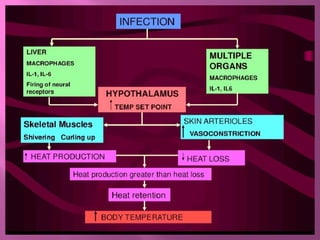
PRODUCTION OF FEVER
 Once the thermostat set point is raised by
the pyrogens, the heat producing
mechanisms and heat conserving
mechanisms of the body are activated till the
body temperature equals the elevated
hypothalamic thermostat set point.
•Shivering (which produces heat)
•Skin vessels are constricted to minimize heat
loss,
•Rate of metabolism is increased which
increases further heat production
•Chills are felt in fever when the heat
generating and heat conserving mechanisms
are active.
BENEFICIAL EFFECT OF FEVER
 Inhibition of growth of bacteria, viruses and
other infecting organisms occurs at a high
body temperature.
 Antibody production is increased when
body temperature is raised.
 Growth of some tumours is slowed down by
the increased
HARMFUL EFFECT OF FEVER
 Dehydration, negative nitrogen balance, loss
of NaCl and alkalosis .
 Permanent damage to the brain, kidney and
liver may occur when core temperature is
more than 41°C for prolonged period.

 Death may occur due to heat stroke when
temperature rises above 43°C
HEAT EXHAUSTION
It is a condition of circulatory failure caused by
excessive sweating following prolonged exposure to
heat. It is characterized by dehydration, salt loss,
decreased blood volume, decreased arterial pressure
and syncope (fainting).
HEAT STROKE
It usually occurs when heavy physical work is
performed in hot and humid environment. In
this condition normal sweating is impaired and
core temperature increases to the point
of tissue damage. Convulsion, loss of
consciousness and death may occur when body
temperature exceeds 41°C.
HYPOTHERMIA
Hypothermia results when the ambient
temperature is so low that the body’s heat
generating mechanisms cannot adequately
maintain core temperature near the set point.
Infants and old people develop hypothermia
more easily than the adults.
1-A major source of heat
production in infants is
A. Increased muscular activity
B. Brown fat
C. Increased sympathetic activity
D. Specific dynamic action of food
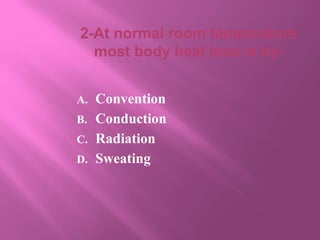
2-At normal room temperature
most body heat loss is by-
A. Convention
B. Conduction
C. Radiation
D. Sweating
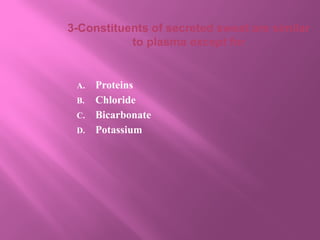
3-Constituents of secreted sweat are similar
to plasma except for
A. Proteins
B. Chloride
C. Bicarbonate
D. Potassium
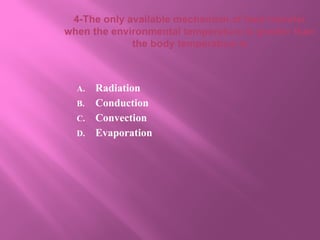
4-The only available mechanism of heat transfer
when the environmental temperature is greater than
the body temperature is
A. Radiation
B. Conduction
C. Convection
D. Evaporation
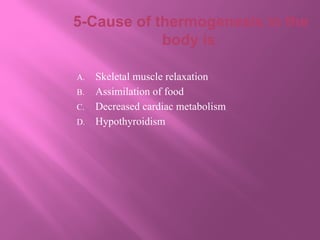
5-Cause of thermogenesis in the
body is
A. Skeletal muscle relaxation
B. Assimilation of food
C. Decreased cardiac metabolism
D. Hypothyroidism
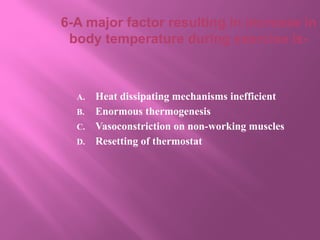
6-A major factor resulting in increase in
body temperature during exercise is-
A. Heat dissipating mechanisms inefficient
B. Enormous thermogenesis
C. Vasoconstriction on non-working muscles
D. Resetting of thermostat
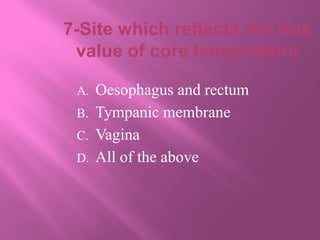
7-Site which reflects the true
value of core temperature
A. Oesophagus and rectum
B. Tympanic membrane
C. Vagina
D. All of the above
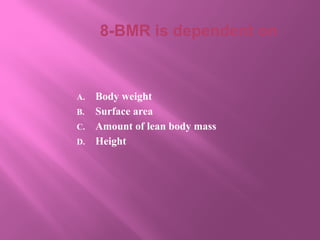
8-BMR is dependent on
A. Body weight
B. Surface area
C. Amount of lean body mass
D. Height
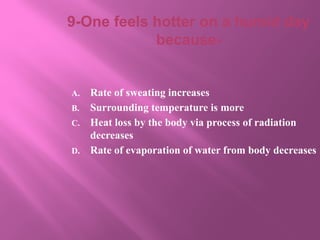
9-One feels hotter on a humid day
because-
A. Rate of sweating increases
B. Surrounding temperature is more
C. Heat loss by the body via process of radiation
decreases
D. Rate of evaporation of water from body decreases
10-A major factor resulting in increase
in body temperature during exercise is-
A. Heat dissipating mechanisms inefficient
B. Enormous thermogenesis
C. Vasoconstriction on non-working muscles
D. Resetting of thermostat
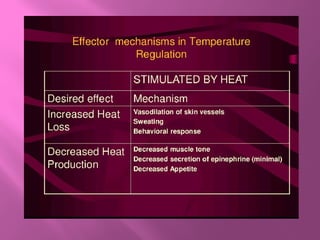
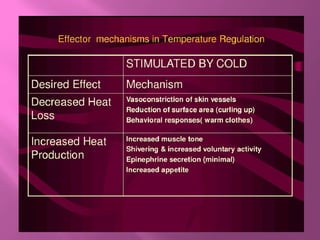
Summary of Effector Mechanisms
in Temperature Regulation

temperture regulation ppt.pptx regulation of

  • 1.
  • 2.
     Homoeothermic animals– Warm blooded animals. They are able to maintain their body temp. with in a normal narrow range in spite of wide variation in the environmental temperature.  Eg – Bird and mammals
  • 3.
     Poikilothermic animals– also known as cold blooded animal . They do not have an efficient temp. regulation system so their body temp fluctuation with the environmental temperature eg – reptiles , amphibians.
  • 4.
    Body Temperature  NormalBody Temperature (NBT) – 98.60 F(370 C)  Range of NBT ----- (970 F to 990 F) 1. Oral temp. – 36ºC – 37.5 ºC(97.5 to 99F average 37º C (98.6 F) 2. Axillary temp. – slightly lower 0.5ºC the oral temp. 3. Rectal and esophageal temp. slightly higher 0.5ºC than the oral temp.  Rectal Temp ----- (0.50 F to 10 F) above the Oral
  • 5.
    .  Rectal Tempreflects the internal body Temp (Core Body Temp)  Core Body Temp remain almost constant  Skin Temp (Shell Temp)----- Variable
  • 6.
    The body ishypothetically divided into core and shell. -  Shell temp. – It includes temperature of limb and surface layer of trunk. Temp. of shell can change with the temp. of external environment.  Core temperature- Temperature of deeper body structure and it is maintained strictly constant . It is 37.8 ºC
  • 9.
     Range ofNBT ----- (970 F to 990 F)  Temperatures above this: denature enzymes and block metabolic pathways  Temperatures below this: slow down metabolism and affect the brain.
  • 10.
    Lower lethal temperatureis about 26ºC at which cardiac arrhythmias occur and leads to death. Upper lethal temperature is about 43.5ºC at which heat stroke occur and leads to death.
  • 11.
  • 12.
    I. Physiological variations 1.Diurnal variation. Body temperature is highest in the evening and lowest in early hour of morning. Difference between the two values may be 1°C. 2.Age. Infants have an imperfect regulation of temperature. In old age, the body temperature tends to be subnormal due to decreased activity and decreased basal metabolic rate (BMR).
  • 13.
    3. Sex. Femaleshave a slightly low body temperature due to relatively low BMR and thick layer of subcutaneous. Due to thermogenic effect of progesterone, the body temperature is higher in the post- ovulatory phase of menstrual cycle than in the pre-ovulatory phase. .
  • 14.
    4. Food. Proteinfood, due to high specific dynamic action may raise body temperature. 5. Exercise increases temperature. Only 25% of muscular energy is converted into mechanical work, the rest comes out as heat. 6. Sleep. Because of muscular inactivity, sleep results in a slight fall of body temperature
  • 15.
    Heat Balance  Heatbalance maintains the body temp. It is the balance between the mechanism of net heat gain by the body and mechanism of heat loss from the body.  Heat Balance  Heat production= Heat loss  Heat production is called thermogenesis  Heat loss is called as thermo-lysis.
  • 16.
    Heat Production (Thermogenesis) BMR  Specific Dynamic Action of food  Activity of skeletal muscle Shivering Exercise  Chemical Thermogenesis Epinephrine &Norepinephrine Thyroxine  Brown Fat- Source of considerable heat production Abundant in infants
  • 17.
    Basal metabolic activity The main mechanism responsible for heat production in the body is physiological oxidation of food material means combustion of carbohydrate, protein and fats.
  • 18.
    Muscular activity  Exercise-Heatis produced during exercise by respiratory muscle and skeletal muscle.  SHIVERING - Shivering is oscillating rhythmic muscle tremor occurring at a rate of 10-20/sec during shivering no work is performed so all energy generated by muscle is converted in the heat.
  • 19.
    Specific dynamic actionof food  It is obligatory energy expenditure that occurs during digestion. During digestion peristaltic action of intestine produce heat . Specific dynamic action of protein is maximum.
  • 20.
    Hormone  Hormone likeepinephrine and thyroid is increase ,they increase basal metabolic rate and increase heat production.
  • 21.
    Mechanism of heatloss  Heat loss from the skin- it include  RADIATION  CONDUCTION  CONVECTION  EVAPORATION  Heat loss from lungs  Heat loss through urine and feces
  • 23.
    Radiation  Transfer ofheat from an object to another object with which it is not in contact. About 50% of heat loss from the body occurs by radiation.  It depends on Body surface area and Average temperature difference between skin and surrounding atmosphere.
  • 24.
    Conduction  Heat exchangebetween object that are in contact with one another. It depends upon temperature difference between two objects.
  • 25.
    Convection  Movement ofmolecules of a gas or liquid from one place to another place at different temperature. About 20% of heat loss by conduction and convection.
  • 26.
    Evaporation  About 27%of heat loss by evaporation from skin. It occurs in two forms –  Insensible water loss (perspiration) - It is independent of environmental temperature. It occurs due to continuous diffusion of fluid through the epidermis. Heat loss by evaporation is approximately 400 kcal/day.
  • 27.
     Evaporation ofsweat- Sweating occurs by eccrine sweat gland. then sweat vaporized from the skin which decrease body temperature.
  • 29.
    Heat Loss FromThe Lung  Heat loss from the lung occurs by three processes- 1. Evaporation of water in expired air. 2. Warming of inspired air. 3. Panting- It is rapid and shallow breathing by which more water evaporated from the mouth.
  • 32.
    Regulation of BodyTemperature  Normal body temperature is the ‘setpoint’ in the thermo regulatory system.  In human this set point is 98.6ºF.  This set point can be altered in pathological status for example pyrogens induced fever.
  • 33.
    Temperature Control System It isformed by – 1. Thermo receptor 2. Hypothalamus – It is the thermostat and integrator of temperature control system. 3. Thermoregulatory effector mechanism
  • 34.
    Thermo receptor They giveinformation about body temperature to the hypothalamus. 1. Peripheral thermo receptor- which present throughout the body in the skin and mucus membrane. Cutaneous thermoreceptors sense the ambient temperature , 90% of them are cold receptors. Deep receptors present in the viscera sense the core temperature . cutaneous receptors and deep receptors also mainly detect cold than warmth.
  • 35.
    2.Central thermo receptor– They are mainly present in hypo thalamus so their firing rate depends on the local temperature of the blood.
  • 36.
    HYPOTHALAMUS Hypo thalamus hasthree type of neuron depending upon their function. 1. Sensing neuron – Located in the anterior hypothalamus and collect information about temperature from central and peripheral thermo receptor.
  • 37.
     Heat LossCenter – It is situated in preoptic region stimulation of this area produce sweating , cutaneous vasodialation and panting.  Heat Production and conservation center – It is situated in posterior hypo thalamus. Stimulation of this area produce vasoconstriction, shivering, increase metabolic rate, increase release of thyroid hormone.
  • 39.
    Thermo regulatory effector mechanism Hypothalamicthermostat has a set point at 98.6ºF. Deviation from the set point evoke responds that tend to restore body temperature towards set point. These responses are mediated by autonomic, somatic and endocrine system.
  • 40.
    Mechanism Activated byHeat Increase heat loss Decrease heat production.
  • 42.
    Mechanism increasing heatloss 1. Cutaneous vasodilation - On exposure to heat cutaneous blood flow increases . By this warm blood from the deeper tissue is brought to the surface and heat loss by conduction radiation and convection.
  • 43.
  • 45.
    2. Sweating –There are two type of sweat glands. 1. Eccrine Sweat gland – Distributed all over the body. 2. Apocrine glands – Present in the skin of axilla, pubic, areas. When environmental temperature rises above thermal comfort level heat loss center of hypothalamus is stimulated and it stimulate sympathetic cholinergic fiber to sweat gland as a result sweating starts.
  • 46.
     Rate ofsweating progressively increases with increase in environmental temperature.  In a very hot climate rate of sweating may increase upto 10 L/Day so there is marked loss of body water and NaCl and that’s why in heat stress death may occur due to severe dehydration and salt loss.
  • 47.
     Acclimatization ofsweating mechanism is an adaptation which occurs following prolonged exposure to high environmental temperature. The acclimatization is very useful in conserving body NaCl . This occurs due to increase secreation of ALDOSTERONE which results in increase absorption of Na+ and Cl−.
  • 48.
    3. Panting israpid shallow breathing which increases heat loss by increasing water vaporization in the mouth and respiratory passage . In some animal like dog panting is an effective means of heat loss.
  • 49.
    Mechanism Decreasing Heat Production 1.Anorexia – Decrease food intake leads to decreased heat production by decrease in specific dynamic action of food. 2. Lethargy means decreased muscular activity – Results in decrease heat of activity. 3. Behavioral response preference for cold food and drinks, shelter for shadow.
  • 51.
  • 53.
     Cutaneous Vasoconstriction– Cold stimulated and increase sympathetic discharge and cause cutaneous vasoconstriction as a result blood less skin prevent heat loss .  Bloodless skin prevents heat loss by becoming an insulating barrier between the warm core of the body and the cold enviornment.
  • 54.
  • 55.
    b) Piloerection –It entraps a layer of air in the hair and act as insulator and reduce the heat loss. c) Behavioral response – To put warmer clothes and curling up while sleeping.
  • 56.
     Behavioral response– Hyperphagia – Increase apatite so there is increased specific dynamic action of the food. Hyperactivity Consumption Of Hot Food
  • 57.
     Mechanism increasesheat production –  Shivering Thermogenesis – Shivering is oscillating rhythmic muscle tremor occurring at a rate of 10-20/ sec. During shivering no work is performed so all the energy generated by muscle is converted into the heat.
  • 58.
     Non shiveringthermogenesis or chemical thermogenesis – 1. Role of brown fat --it contains large number of special mitochondria where uncoupled oxidation occurs. So there is release of heat rather than generation of ATPs. Adult do not have brown fat but infant brown fat is present at inter scalper region, around the neck, behind the sternum
  • 59.
    2. During cold Increase sympathetic stimulation  Increase epinephrine and nor epinephrine  increase heat production by chemical thermogenesis. 3. Increase secretion of thyroxin Thyroxin secretion increases in winters
  • 61.
  • 63.
    PATHOGENESIS OF FEVER Toxins liberated from the infecting organism and tissue destruction act on phagocytic cells (monocytes, macrophages and Kupffer cells) to produce cytokines that act as endogenous pyrogens. The pyrogens are polypeptides and interleukin-I (IL-I) , which act on the anterior hypothalamus to increase the production of prostaglandin E2. Prostaglandin E2 acts on the hypothalamus to increase the thermostat ‘set point’.
  • 65.
     The drugslike aspirin, which prevent the formation of prostaglandinE2 from arachidonic acid, act as antipyretics.
  • 66.
    PRODUCTION OF FEVER Once the thermostat set point is raised by the pyrogens, the heat producing mechanisms and heat conserving mechanisms of the body are activated till the body temperature equals the elevated hypothalamic thermostat set point.
  • 67.
    •Shivering (which producesheat) •Skin vessels are constricted to minimize heat loss, •Rate of metabolism is increased which increases further heat production •Chills are felt in fever when the heat generating and heat conserving mechanisms are active.
  • 68.
    BENEFICIAL EFFECT OFFEVER  Inhibition of growth of bacteria, viruses and other infecting organisms occurs at a high body temperature.  Antibody production is increased when body temperature is raised.  Growth of some tumours is slowed down by the increased
  • 69.
    HARMFUL EFFECT OFFEVER  Dehydration, negative nitrogen balance, loss of NaCl and alkalosis .  Permanent damage to the brain, kidney and liver may occur when core temperature is more than 41°C for prolonged period.   Death may occur due to heat stroke when temperature rises above 43°C
  • 70.
    HEAT EXHAUSTION It isa condition of circulatory failure caused by excessive sweating following prolonged exposure to heat. It is characterized by dehydration, salt loss, decreased blood volume, decreased arterial pressure and syncope (fainting).
  • 71.
    HEAT STROKE It usuallyoccurs when heavy physical work is performed in hot and humid environment. In this condition normal sweating is impaired and core temperature increases to the point of tissue damage. Convulsion, loss of consciousness and death may occur when body temperature exceeds 41°C.
  • 72.
    HYPOTHERMIA Hypothermia results whenthe ambient temperature is so low that the body’s heat generating mechanisms cannot adequately maintain core temperature near the set point. Infants and old people develop hypothermia more easily than the adults.
  • 74.
    1-A major sourceof heat production in infants is A. Increased muscular activity B. Brown fat C. Increased sympathetic activity D. Specific dynamic action of food
  • 75.
    2-At normal roomtemperature most body heat loss is by- A. Convention B. Conduction C. Radiation D. Sweating
  • 76.
    3-Constituents of secretedsweat are similar to plasma except for A. Proteins B. Chloride C. Bicarbonate D. Potassium
  • 77.
    4-The only availablemechanism of heat transfer when the environmental temperature is greater than the body temperature is A. Radiation B. Conduction C. Convection D. Evaporation
  • 78.
    5-Cause of thermogenesisin the body is A. Skeletal muscle relaxation B. Assimilation of food C. Decreased cardiac metabolism D. Hypothyroidism
  • 79.
    6-A major factorresulting in increase in body temperature during exercise is- A. Heat dissipating mechanisms inefficient B. Enormous thermogenesis C. Vasoconstriction on non-working muscles D. Resetting of thermostat
  • 80.
    7-Site which reflectsthe true value of core temperature A. Oesophagus and rectum B. Tympanic membrane C. Vagina D. All of the above
  • 81.
    8-BMR is dependenton A. Body weight B. Surface area C. Amount of lean body mass D. Height
  • 82.
    9-One feels hotteron a humid day because- A. Rate of sweating increases B. Surrounding temperature is more C. Heat loss by the body via process of radiation decreases D. Rate of evaporation of water from body decreases
  • 83.
    10-A major factorresulting in increase in body temperature during exercise is- A. Heat dissipating mechanisms inefficient B. Enormous thermogenesis C. Vasoconstriction on non-working muscles D. Resetting of thermostat
  • 84.
    Summary of EffectorMechanisms in Temperature Regulation