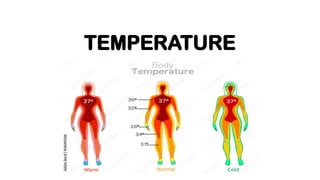
TEMPERATURE
BODY TEMPERATURE
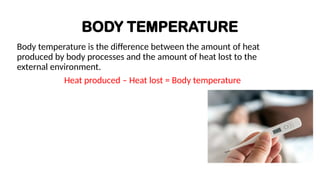
Body temperature is the difference between the amount of heat
produced by body processes and the amount of heat lost to the
external environment.
Heat produced – Heat lost = Body temperature
Physiology and Regulation of Body
Temperature
• Physiological and behavioral mechanism precisely regulate and
control body temperature mechanisms (thermo- regulation).
• For the body temperature to stay constant and within an acceptable
range, the body needs to maintain the relationship between heat
production and heat loss.
Neural and Vascular Control
• The hypothalamus, located between the cerebral hemispheres of the brain and below
the thalamus, controls body temperature by attempting to maintain a comfortable
temperature or set point.
• When the hypothalamus senses an increase in body temperature, it sends out impulses
for the release of hormones to reduce body temperature by sweating and vasodilation
( widening of blood vessels).
• Vasodilation increases blood flow to the skin, which enables heat loss through radiation.
• If the hypothalamus senses that body temperature is lower than set point, it triggers
hormone release to increase heat production by muscle shivering or heat conservation
by vasoconstriction (narrowing of surface blood vessels)
• Disease or trauma to the hypothalamus or spinal cord, which carries hypothalamic
messages, decreases the ability of the body control body temperature.
Heat Production
• Temperature regulation depends on normal heat production processes. Heat
produced by the body is a by- product of metabolism. which is the chemical
reaction in all body cells.
• Food is the primary fuel source for metabolism.
• Activities requiring additional chemical reactions increase the metabolic rate.
• As metabolism increases, additional heat is produced.
• When metabolism decreases, less heat is produced.
• Heat production occurs during rest, voluntary movements, involuntary
shivering, and non shievering thermogenesis.
asal Metabolic rate (BMR)
• Basal metabolism accounts for the heat produced by the body at absolute rest. The average
basal metabolic rate (BMR) depends on the body surface area.
• Thyroid hormones also affect the BMR. By promoting the breakdown of body glucose and fat,
thyroid hormones increase the rate of chemical reactions in almost all cells of the body. When
large amounts of thyroid hormone are secreted, the BMR can increase 100% above normal.
• The absence of thyroid hormones reduces the BMR by half. Causing a decrease in heat
production.
• The testosterone increases BMR ( Men have higher BMR then women)
Cont….
• Voluntary movements such as muscular activity during exercise require additional
energy. The metabolic rate increases during activity, sometimes causing heat
production to increase up to 50 times normal.
• Shievering is an involuntary body response to temperature differences in the
body. The skeletal muscle movement during shievering requires significant energy.
Shievering sometimes increases heat production four to five times more than
normal. The heat that is produced helps equalize the body temperature, and the
shivering ceases. In vulnerable patients, shivering seriously drains energy sources,
resulting in further physiological deterioration.
Cont..
• Non shivering thermogenesis occurs primarily in neonates. Because
neonates cannot shiver, a limited amount of vascular brown tissue,
present at birth, is metabolized for heat production.
Heat Loss
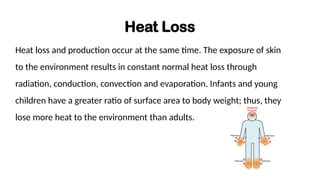
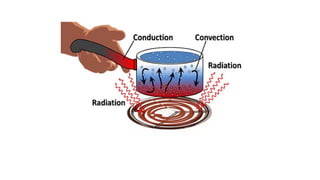
Heat loss and production occur at the same time. The exposure of skin
to the environment results in constant normal heat loss through
radiation, conduction, convection and evaporation. Infants and young
children have a greater ratio of surface area to body weight; thus, they
lose more heat to the environment than adults.
Radiation
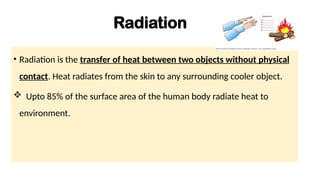
• Radiation is the transfer of heat between two objects without physical
contact. Heat radiates from the skin to any surrounding cooler object.
 Upto 85% of the surface area of the human body radiate heat to
environment.
Evaporation
• Heat energy transfers from a liquid to a gas state by evaporation.
 The body continuously loses heat by evaporation; approximately
600-900 mL of water evaporates daily from the skin and lungs.
The body promotes additional evaporative heat loss through
perspiration or sweating. Diaphoresis drastically lowers body
temperature and typically manifests on the forehead, upper chest,
and arms.
Conduction
A small amount of heat loss occurs through conduction, which is the
transfer of heat from one object to another with direct contact.
 when warm skin touches a cooler object, heat transfers from the skin to
object until temperature equalize.
Convection
• Convection is the transfer of heat away from the body by air
movement.
• Fans promote heat loss through through convection. The rate of heat
loss increases when moist skin comes into contact with slightly
moving air.
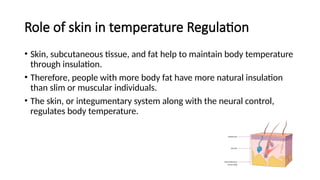
Role of skin in temperature Regulation
• Skin, subcutaneous tissue, and fat help to maintain body temperature
through insulation.
• Therefore, people with more body fat have more natural insulation
than slim or muscular individuals.
• The skin, or integumentary system along with the neural control,
regulates body temperature.
• The internal organs of the body produce heat, and during exercise or
increased sympathetic stimulation the amount of heat produced is
more than usual body temperature.
• Blood flows from the internal organs, carrying heat through the body
surface.
• At the surface, blood passing through the vascular areas of the hands
and feet varies from minimal flow to 30% of the blood pumped from
the heart.
• Heat transfers from the blood through vessel walls to the surface of
the skin and is lost to the environment through heat-loss mechanisms.
Behavioral Control
• When the environmental temperature falls, a person adds clothing,
moves to a warmer place, raises the thermostat setting on a furnace,
increases muscular activity by running in place, or sits with arms and
legs tightly wrapped together. In contrast.
• when the temperature becomes hot, a person removes clothing,
stops activity, turns on a fan or lowers the thermostat setting on an air
conditioner, seeks a cooler place, or takes a cool shower.
Factors affecting body temperature
1. Age – Infants and children normally have a higher body temperature
than adults because of immature heat regulation.
older adults usuallyt have lower than normal body temperature.
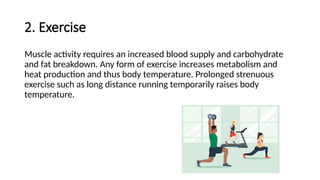
2. Exercise
Muscle activity requires an increased blood supply and carbohydrate
and fat breakdown. Any form of exercise increases metabolism and
heat production and thus body temperature. Prolonged strenuous
exercise such as long distance running temporarily raises body
temperature.
3. Hormone Level
• Women generally experience greater fluctuations in body
temperature than men.
• Hormonal variations during the menstrual cycle cause body
temperature fluctuations.
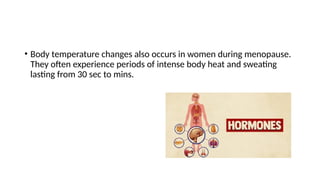
• Body temperature changes also occurs in women during menopause.
They often experience periods of intense body heat and sweating
lasting from 30 sec to mins.
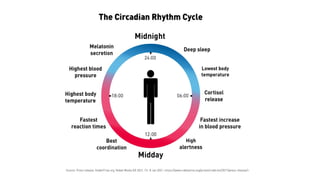
4. Circadian Rhythm
• Body temperature normally changes 0.5 – 1 degree C (0.9 – 1.8
degree F) during a 24 hour period. However, temperature is one of
the most stable rhythms in humans.
• The temperature is usually lowest between 1:00 and 4:00 am. During
the day, body temperature rises steadily to a maximum temperature
value at about 4:00 pm and then declines to early – morning levels.
• Temperature patterns are not automatically reversed in people who
work for the cycle to reverse.
• In general circadian temperature rhythm does not change with age.
5. Stress
Physical and emotional stress increase body temperature through
hormonal and neural stimulation (beta - adrenoreceptors ). These
physiological changes increases heat production.
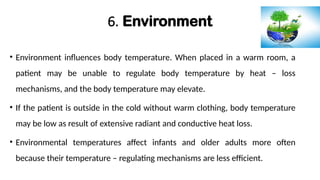
6. Environment
• Environment influences body temperature. When placed in a warm room, a
patient may be unable to regulate body temperature by heat – loss
mechanisms, and the body temperature may elevate.
• If the patient is outside in the cold without warm clothing, body temperature
may be low as result of extensive radiant and conductive heat loss.
• Environmental temperatures affect infants and older adults more often
because their temperature – regulating mechanisms are less efficient.
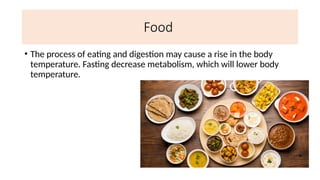
Food
• The process of eating and digestion may cause a rise in the body
temperature. Fasting decrease metabolism, which will lower body
temperature.
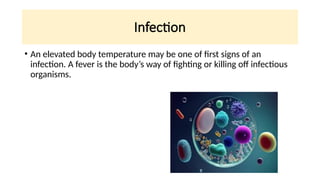
Infection
• An elevated body temperature may be one of first signs of an
infection. A fever is the body’s way of fighting or killing off infectious
organisms.
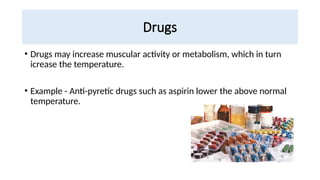
Drugs
• Drugs may increase muscular activity or metabolism, which in turn
icrease the temperature.
• Example - Anti-pyretic drugs such as aspirin lower the above normal
temperature.
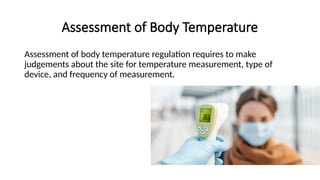
Assessment of Body Temperature
Assessment of body temperature regulation requires to make
judgements about the site for temperature measurement, type of
device, and frequency of measurement.
Sites for assessment of temperature
• Body temperature can be measured by using core or body surface
sites.
• The sites for assessing the core temperature are pulmonary artery,
esophagus, and urinary bladder it requires continous invasive
monitoring devices placed in arteries or internal organs.
• The most common sites for intermittent temperature measurements
are surface sites such as tympanic membrane, temporal artery,
mouth, rectum and axilla.
• Depending on the site used, temperatures normally varies.
• Rectal temperature are usually 0.5 degree C (0.9 degree F) higher
than oral temperatures,
• whereas tympanic and axillary temperatures are usually 0.5 degree C
(0.9 degree F) lower than oral temperatures.
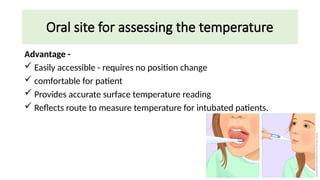
Oral site for assessing the temperature
Advantage -
 Easily accessible - requires no position change
 comfortable for patient
 Provides accurate surface temperature reading
 Reflects route to measure temperature for intubated patients.
Disdavantge
 Causes delay in measurement if patient recently ingested hot/cold
fluids, or food, smoked or chewed gum.
 Not used with patients who have had oral surgery, trauma, shaking
or chills, or history of seizures.
Not used with infants; small children or confused , unconcious or
uncooperative patients.
 Risk for body fluid expousre.
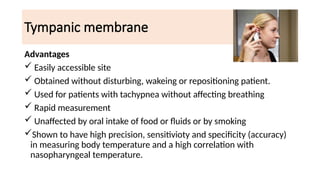
Tympanic membrane
Advantages
 Easily accessible site
 Obtained without disturbing, wakeing or repositioning patient.
 Used for patients with tachypnea without affecting breathing
 Rapid measurement
 Unaffected by oral intake of food or fluids or by smoking
Shown to have high precision, sensitivioty and specificity (accuracy)
in measuring body temperature and a high correlation with
nasopharyngeal temperature.
Disadvantages
Susceptible to user error
Has low sensitivity for detecting fever compared with standard core
temperature measurement methods (rectal, bladder)
Requires removal of hearing aids before measurement
Requires disposabal sensor cover with only one size available
Otitis media and cerumen impaction distort readings.
Not used with patients who have had recent surgery of the ear or tympanic
membrane
Anatomy of ear canal makes it difficult to position correctly in neonates,
infants, and children younger than 3 years.
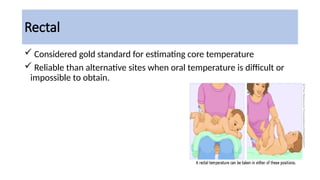
Rectal
 Considered gold standard for estimating core temperature
 Reliable than alternative sites when oral temperature is difficult or
impossible to obtain.
Disadvantages
 Lags behind core temperature during rapid temperature changes.
Not used for patients with diarrhea or patients who have had rectal
surgery, rectal disorders, bleeding tendencies or neutropenia.
 Requires positioning and is a source of patient embrassement and anxiety.
 Risk for body fulid exposure, thermometer can serve as reservior for
clostridium difficile.
 Reuqires lubrication
Not used for routine vital signs in newborn
 Reading sometimes influence by the impacted stool
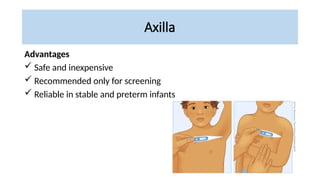
Axilla
Advantages
 Safe and inexpensive
 Recommended only for screening
 Reliable in stable and preterm infants
Disadvantages
 Long measurement time
 Requires continous positioning
 Poorly reflects core temperature
 Measurement lags behind core temperature during rapid
temperature changes.
 Noot recommended to detect fever in infants and young children
 Requires exposure of thorax, which results in temperature loss,
especially in newborns.
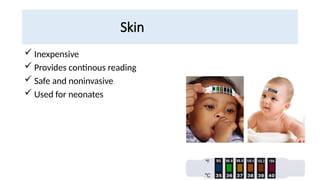
Skin
 Inexpensive
 Provides continous reading
 Safe and noninvasive
 Used for neonates
Disdavantages
• Lags behind measurements obtained at other sites during
temperature changes, especially during hyperthermia.
• Diaphoresis or sweat impairs adhesion
• Affected by environmental temperature
• Cannot be used on patients with adhesive allergy
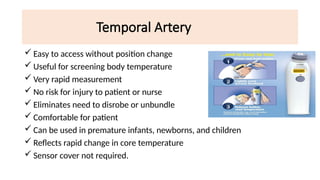
Temporal Artery
 Easy to access without position change
 Useful for screening body temperature
 Very rapid measurement
 No risk for injury to patient or nurse
 Eliminates need to disrobe or unbundle
 Comfortable for patient
 Can be used in premature infants, newborns, and children
 Reflects rapid change in core temperature
 Sensor cover not required.
Disadvantages
• Inaccurate with head covering or hair on forehead
• Affected by skin moisture such as diaphoresis
• Underestimates temperature in patients with fever.
Equipment for temperature assessment
Thermometers
Four types of thermometers are commonly available for measuring
body temperature:
1. Electronic
2. Infrared
3. Digital
4. Disposable chemical dot
 Mercury-in-glass thermometers are obsolete in the health
care setting because of the environmental hazards of mercury.
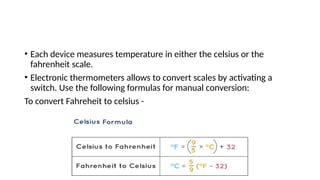
• Each device measures temperature in either the celsius or the
fahrenheit scale.
• Electronic thermometers allows to convert scales by activating a
switch. Use the following formulas for manual conversion:
To convert Fahreheit to celsius -
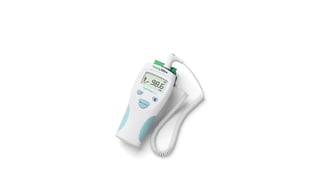
Electronic Thermometers
• Electronic thermometers have a rechargeable battery - powered
display display unit, a thin wire cord, and temperature - processing
probe or sensor covered by a disposable probe cover.
• Separate probes are availabe for oral (blue tip) and rectal (red tip).
• Electronic thermometers provide provide two modes of operation
• four second predective temperatures and three minute standard
temperatures.
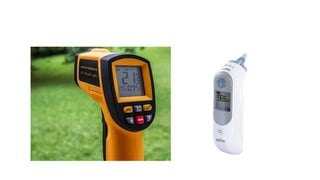
Infrared Thermometer
An infrared thermometer relies on thermal radiation to measure body temperature.
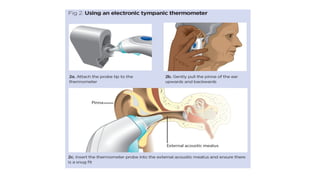
The tympanic membrane thermometer has an otoscope - like speculum with an
infrared sensor tip that detects heat radiated from the tympanic membrane of the ear.
• Within seconds after placement in the ear canal and pressing the scan button, a
sound signals when the peak temperature has been measured, and a reading
appears on the display unit.
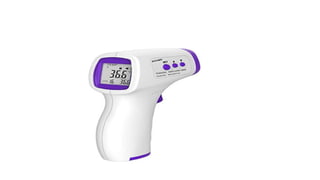
• The temporal artery thermometer measures blood flow through the superficial
temporal artery.
• Proper technique involves sweeping an infrared handheld scanner across the
forehead then just behind the ear.
• After scanning in complete, a reading appears on the display unit.
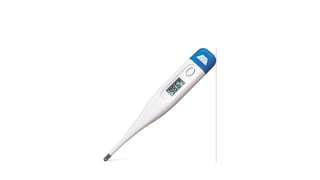
Digital Thermometer
A digital thermometer contains a probe connected to a microprocessor
chip, which translates signals into degrees and sends a temperature
measurement to a digital display.
• The rectal temperature is still the gold standard for estimating core
body temperature, but the thermometer is difficult to use in older
adults.
Chemical Thermometers
• Single - use or reusable chemical thermometers are thin strips of
plastic with a temperature sensor on one end.
• The sensor consists of chemically impregnated dots that change color
at different temperatures.
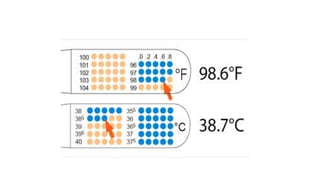
• The celsius version has 50 dots, each representing temperature
increments of 0.1 degree C over a range of 35.5 - 40. 4 degree C.
• The Fahrenheit has 45 dots with increments of 0.2 degree F over a
range of 96 - 104.8 degree F.
• Chemicals on the thermometer cahnge color to reflect temprature
reading, three minutes for axilla and 1 minute for oral.
• Single use chemical thermometers are useful in caring for patients in
emergency departments or in protective isolation and screening
temperatures, especially in infants and young children.
• Another form of disposable chemical thermometer is a temperature-
sensitive patch or tape. Applied to the forehead or abdomen,
temperature - sensitive areas of the patch change color at different
temperatures.
Thermal Scanners
• Viral diseases which are highly contagious in nature and therefore
requires temperature measurement with a device without touching
the patient’s body to prevent the infection transmission.
• Ehich can be accomplished by use of thermal scanners.
• The infared thermal scanners are noninvasive, speedy, cost-effective,
and fairly accurate device for individual and mass temperature
screening for infectious individuals.
• In addition, the mass screening device infared thermography provides
a digital image showing temperature patterns.
Care of Thermometer
Disinfecting a Digital Thermometer:
• 60-90% rubbing alcohol
• Cotton balls or pads
• Alternatively, an alcohol wipes
Instructions
• Wipe the digital display with the microfiber towel.
• Dip the cotton ball or pad in alcohol and squeeze out some of the
excess, or use an alcohol wipe.
• Avoiding the digital display, wipe down the rest of the thermometer,
paying special attention to the tip.
• Use immediately, and then repeat the disinfecting process, except you
don’t need to wipe off the alcohol this time.
• Let the thermometer air dry on a clean paper towel before putting it
back in its case.
Oral Temperature
Temperature check by the oral cavity. The normal oral temperature for
adults is 98.6 degree F.
Purpose
• To determine the body temperature of the patient.
• To aid in making diagnosis.
General Instructions
• Position the tip of the thermometer under the patient’s tongue, as far
back as possible on either side of the frenulum linguae.
• Placing the tip in this area, promotes contact with superficial blood
vessels and contributes to an accurate reading.
• Instruct the patient to close his lips but to avoid biting down with his
teeth.
• Biting can break the thermometer, cutting the mouth or lips or causing
ingestion of broken glass or mercury.
• For a digital thermometer, wait until the maximum temperature is
displayed.
Preliminary Assessment
• Determine the need to measure client’s body temperature.
• Assemble equipment.
• Identify the patient, greet the patient and explain the procedure.
• Place the client in comfortable position, assess site most appropriate
for temperature measurement.
• Wait 20-30 minutes before measuring oral temperature if client has
ingested hot or cold liquid or foods.
Equipment
• Digital thermometer
• Swab in a container
• Kidney basin or thermometer container
• Blue pen
• Watch with second hand
• Graphic temperature, pulse and respiration (TPR) chart
• Paper bag
Procedure
• Hold the color coded end with finger tips.
• Take swab and wipe thermometer bulb end towards fingers in
rotating fashion. Dispose of tissue.
• Ask client to open mouth and gently place thermometer under
tongue in posterior sublingual, lateral to center of lower jaw.
• Ask client to hold thermometer with lips closed.
• Caution against biting down on thermometer.
After care
• Wipe secretions from thermometer with soft tissue. wipe in rotating
fashion from fingers towrads buld. Dispose of tissue
• Wash thermometer in lukewarm water, rinse in cool water, dry and
replace in container
• Record the temperature on the chart.
• Wash hands
• Report any unusal variation to the charge nurse or physician.
Contraindications
• Injuries, inflammation and surgeries of oral cavity.
• Infants, children below 6 years, and patients who cannot retain
thermometer in mouth.
• Unconscious, delirious, uncooperative and mentally disturbed
patients.
• Patients with convulsions, oxygen masks, frequent and severe cough.
Axiliary Temperature
Purpose -
• To determine the body temperature of the patient
• To aid in making diagnosis.
General Instructions
• Position the patient with the axilla exposed.
• Gently pat the axilla dry with a facial tissue because moisture conducts
heat, avoid harsh rubbing, which generates heat.
• Ask the patient to reach across his chest and grasp his opposite
shoulder and to lower his elbow and hold it against his chest. This
promotes skin contact with the thermometer.
• Remove thermometer when it displays the maximum temperature.
Axiliary temperture takes longer to register than oral or rectal
temperature because the thermometer is not closed in a body cavity.
• Grasp the end of the thermometer and remove it from the axilla.
Preliminary Assessment
Equipment
Procedure
• Dry the axilla
• Insert thermometer into centre of axilla, low arm over thermometer ,
and place arm across client’s chest.
• Leave the thermometer from the axilla.
• Remove the thermometer from the axilla.
• Wipe the thermometer using a spirit swab from stem to bulb use a
firm twisting mostion.
Aftercare
• Discard the used swab into the paper bag
• Read the thermometer holding it horizontally at the eye level, rotates
it until the mercury column is seen.
• Place the thermometer in the kidney basin
• Record the temperature
• wash hands
• Report any unsual variations to charge nurse.
•
Temperature Alterations
Hyperthermia - It is an elevated body temperature related to the
inability of the body to promote heat loss or reduce heat production.
 Fever is an upward shift in the set point, whereas hyperthermia is
caused by an overload on the temperature release mechanism.
 Any injury to to the hypothalamus impairs heat-loss mechanism.
Prevention of Hyperthermia
• Avoid strenous exercise is hot, humid weather
• Avoid exercising in areas with poor ventilation
• Drink fluids such as water and clear fruit juices before, during and
after exercise.
• Wear light, loose-fitting, light-colored clothing.
• Wear a protective covering over the head when outdoors.
• Expose themeselves to hot climates gradually.
Heat stroke or Sun stroke
Prolonged exposure to the sun or high environmental temperatures
overwhelms the heat-loss mechanisms of the body. Heat also depresses
hypothalamic function. Thses conditions cause heat stroke.
Signs and symptoms
• Headache
• Dizziness
• Discomfort
• Restleness
• Hot and flushed
• Dry skin
• bounding pulse
• High temperature above 104 degree F
• rapid unconciousness
Heat Exhaustion
It is caused by too high temperature in the atmosphere directly by the
sun, or due to hard work and confinement in a close, hot atmosphere.
 profuse diaphoresis results in excess water and electrolyte loss.
Example - Factories
Signs and symptoms
• Headache, dizziness, nausea, vomiting, and sometimes abdominal
cramps, or cramps in the limbs.
• Pale face with cold sweat
• Weak pulse
• Shallow breathing
• Temperature is normal or slightly raised
• loss of appetite
• Sometimes there may be unconsiousness or shock
•
Heat Cramps
Thses are intermittent painful contractions of skeleton muscles. These
cramps occurs the fluid lost in sweat by drinking water but don’t
replace sodium.
 Sodium depeltion is responsible for the cramps.
 Heat cramps usually occurs in muscles that have been involved in a
strenuous activity.
 Body temperature is normal and the serum sodium level may be
normal or low.
Hypothermia
Heat loss during prolonged exposure to cold overwhelms the ability of
the body to produce heat, causing hypothermia.
 Hypothermia is classified by core temperature measurements as
Mild (34-36 degree C or 93.2-96.8 degree F)
Moderate (30-34 degree C or 86-93.2 degree F)
 Severe(Less than 30 or less than 86)
Types
• Accidental Hypothermia
• Intentional Hypothermia
Accidental Hypothermia - It occurs when a person is exposed to a cold
environment without protective clothing.
 It usually develops gradually and may go unnoticed for several hours.
Symptoms - Uncontrolled shivering, loss of memory, depression, and
poor judgement, temperature below 34 degree C, pulse, BP, respiratory
rate decrease.
• Intentional Hypothermia - It is a therapeutic approach that reduces
the body’s need for oxygenated blood.
• It can preserve vital organs during prolonged neurological or cardiac
surgery
Frost Bite
It occurs when the body is exposed to subnormal temperatures.
 Ice crystal froming inside the cells, and permanent circulatory and
tissue damage occurs.
 Areas particularly susceptible to frost bite are the ear lobes, tip of
the nose, fingers and toes.
Symptoms - Injured area becomes white, waxy, and firm to touch.The
patient loses sensation in the affected area.
RIGOR
Rigor is sudden attack of intense shivering when the heat regulating
center in the brain is distrubed.
 It is seen in certain infections like malaria, in allergic reactions after
intravenous infusions.
Stages of Rigor
1. Cold stage - The patient shivers uncontrollably. The skin is cold, face
is pinched and pale, and the pulse is feeble and rapid. The temperature
rises rapidly to 103 degree F (39.4 degree C) or above.
2. Hot stage - The skin feels hot and dry and patient feels very thristy.
The shivering stops, the patient may be restless.
The temperature may continue to rise during the second stage.
3. Sweating stage - The patient sweats profusely. The temperature falls,
the pulse improves, the acute discomforts are diminished. The patient
may go into state of shock and collapse if not cared properly.
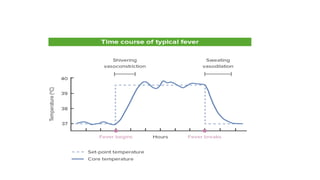
Fever (Pyrexia)
Fever is not a disease but it is a sign.
Fever or pyrexia is defined as the rise in body temperatureabove 99
degree F (37.2 degree C).
Fever is a protective function of the body, “because the rise in
temperature prevents the growth of organisms causing the disease.
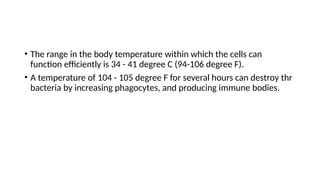
• The range in the body temperature within which the cells can
function efficiently is 34 - 41 degree C (94-106 degree F).
• A temperature of 104 - 105 degree F for several hours can destroy thr
bacteria by increasing phagocytes, and producing immune bodies.
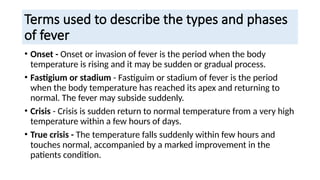
Terms used to describe the types and phases
of fever
• Onset - Onset or invasion of fever is the period when the body
temperature is rising and it may be sudden or gradual process.
• Fastigium or stadium - Fastiguim or stadium of fever is the period
when the body temperature has reached its apex and returning to
normal. The fever may subside suddenly.
• Crisis - Crisis is sudden return to normal temperature from a very high
temperature within a few hours of days.
• True crisis - The temperature falls suddenly within few hours and
touches normal, accompanied by a marked improvement in the
patients condition.
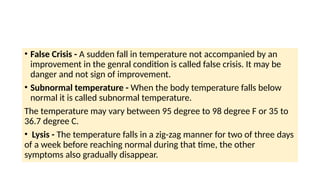
• False Crisis - A sudden fall in temperature not accompanied by an
improvement in the genral condition is called false crisis. It may be
danger and not sign of improvement.
• Subnormal temperature - When the body temperature falls below
normal it is called subnormal temperature.
The temperature may vary between 95 degree to 98 degree F or 35 to
36.7 degree C.
• Lysis - The temperature falls in a zig-zag manner for two of three days
of a week before reaching normal during that time, the other
symptoms also gradually disappear.
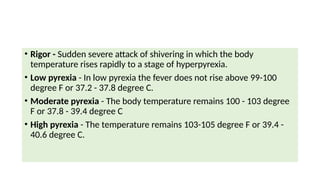
• Rigor - Sudden severe attack of shivering in which the body
temperature rises rapidly to a stage of hyperpyrexia.
• Low pyrexia - In low pyrexia the fever does not rise above 99-100
degree F or 37.2 - 37.8 degree C.
• Moderate pyrexia - The body temperature remains 100 - 103 degree
F or 37.8 - 39.4 degree C
• High pyrexia - The temperature remains 103-105 degree F or 39.4 -
40.6 degree C.
Causes of Fever
• Infection - Any infectionwhether bacterial, viral, fungal or parasitic
can give rise to fever.
• Neoplasm - An abnormal growth of tissue in a part of the body,
especially as a characterstic of cancer.
• Vascular causes - Acute myocardial infraction, pulmonary embolism.
• Trauma - A massive crush injury may lead to pyrexia.
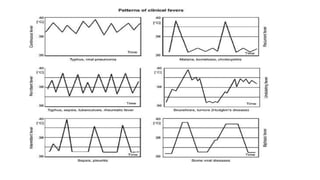
CLASSIFICATION/TYPES OF FEVER
1. Constant or continous fever - Constant fever or continous fever is
one in which the temperature varies not more than two degrees
between morning and evening and it neither reach normal for a
period of days or weeks.
example - Pneumonia, Urinary tract infection
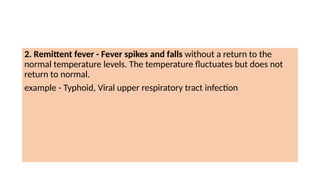
2. Remittent fever - Fever spikes and falls without a return to the
normal temperature levels. The temperature fluctuates but does not
return to normal.
example - Typhoid, Viral upper respiratory tract infection
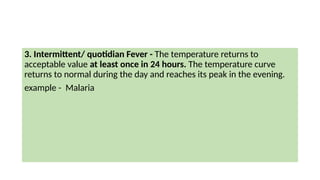
3. Intermittent/ quotidian Fever - The temperature returns to
acceptable value at least once in 24 hours. The temperature curve
returns to normal during the day and reaches its peak in the evening.
example - Malaria
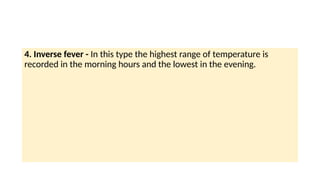
4. Inverse fever - In this type the highest range of temperature is
recorded in the morning hours and the lowest in the evening.
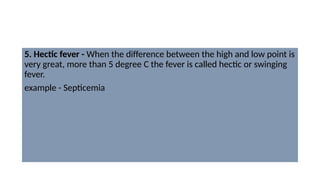
5. Hectic fever - When the difference between the high and low point is
very great, more than 5 degree C the fever is called hectic or swinging
fever.
example - Septicemia
6. Relapsing fever - Relapsing fever is one in which there are brief
febrile period followed by one or more days of normal temperature.
7. Irregular fever - When the fever is entirely irregular in its course, it
cannot be classified under any one of the fevers described above and it
is called irrgeular fever.
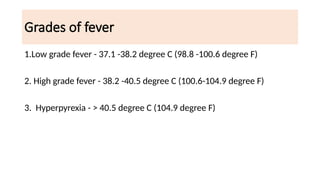
Grades of fever
1.Low grade fever - 37.1 -38.2 degree C (98.8 -100.6 degree F)
2. High grade fever - 38.2 -40.5 degree C (100.6-104.9 degree F)
3. Hyperpyrexia - > 40.5 degree C (104.9 degree F)
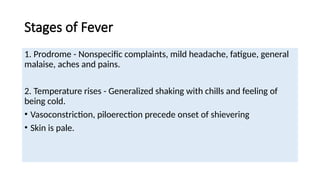
Stages of Fever
1. Prodrome - Nonspecific complaints, mild headache, fatigue, general
malaise, aches and pains.
2. Temperature rises - Generalized shaking with chills and feeling of
being cold.
• Vasoconstriction, piloerection precede onset of shievering
• Skin is pale.
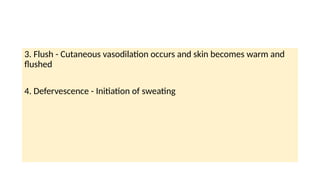
3. Flush - Cutaneous vasodilation occurs and skin becomes warm and
flushed
4. Defervescence - Initiation of sweating
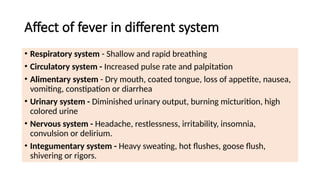
Affect of fever in different system
• Respiratory system - Shallow and rapid breathing
• Circulatory system - Increased pulse rate and palpitation
• Alimentary system - Dry mouth, coated tongue, loss of appetite, nausea,
vomiting, constipation or diarrhea
• Urinary system - Diminished urinary output, burning micturition, high
colored urine
• Nervous system - Headache, restlessness, irritability, insomnia,
convulsion or delirium.
• Integumentary system - Heavy sweating, hot flushes, goose flush,
shivering or rigors.
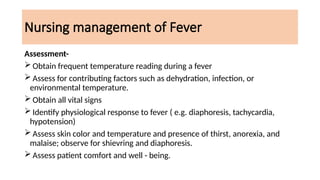
Nursing management of Fever
Assessment-
 Obtain frequent temperature reading during a fever
 Assess for contributing factors such as dehydration, infection, or
environmental temperature.
 Obtain all vital signs
 Identify physiological response to fever ( e.g. diaphoresis, tachycardia,
hypotension)
 Assess skin color and temperature and presence of thirst, anorexia, and
malaise; observe for shievring and diaphoresis.
 Assess patient comfort and well - being.
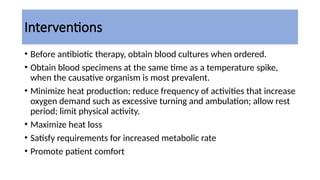
Interventions
• Before antibiotic therapy, obtain blood cultures when ordered.
• Obtain blood specimens at the same time as a temperature spike,
when the causative organism is most prevalent.
• Minimize heat production; reduce frequency of activities that increase
oxygen demand such as excessive turning and ambulation; allow rest
period; limit physical activity.
• Maximize heat loss
• Satisfy requirements for increased metabolic rate
• Promote patient comfort
• Identify onset and duration of febrile episodes phases
• Initiate health teaching as indicated
• Maintain environmental temperature at 21 - 27 degree C ( 70-80
degree F)
• Administer antipyretic (medication that reduce fever) as prescribed by
physician.
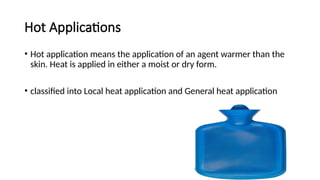
Hot Applications
• Hot application means the application of an agent warmer than the
skin. Heat is applied in either a moist or dry form.
• classified into Local heat application and General heat application
Classification
I. Local heat application -
1. Dry heat - Hot water bottles, chemical heating bottles, infrared rays,
ultravoilent rays, electric cradels , electric healting pads and short wave
diathermy.
2. Moist heat - Warm soaks (local baths), hot fermentations
(cpmpresses) poultices, paraffin baths and sitz bath.
II. General Application
1. Dry heat - Sun bath, electric cradle and blanket bed
2. Moist heat - steam baths, hot packs, whirlpool bath (full immersion)
Physiological effects of hot applications
• Peripheral vasodialtion
• Increased capillary permeability
• Increased local metabolism
• Increased oxygen consumption
• Blood -flow is increased
• Lymph flow is increased
• Motility of leukocytes is increased
Complications
• Pain
• Burns
• Redness of the skin
• Edema
• pallor
• Hyperthermia
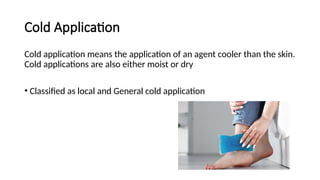
Cold Application
Cold application means the application of an agent cooler than the skin.
Cold applications are also either moist or dry
• Classified as local and General cold application
I. Local cold Application
• Dry cold - Ice bag, ice collar, ice pack (poultice), chemical cold packs
and ice cradle.
• Moist cold - Apllications are ice to suck, cold compress and
evaporating lotion.
II. General cold Apllication
• Moist cold - cold sponging, cold bath and cold packs
• Dry cold - Induced hypothermia
Physiological effects of cold applications
Primary effects
• Peripheral vasoconstriction
• Decreased capillary permeability
• Decreased local metabolism
• Decreased oxygen consumption
• Blood flow is decreased
• Lymph flow is decreased
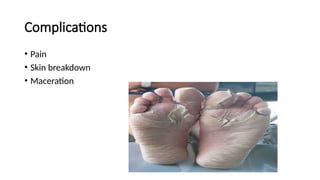
Complications
• Pain
• Skin breakdown
• Maceration
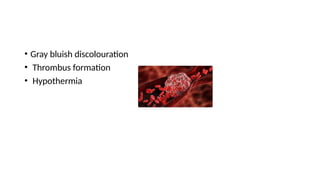
• Gray bluish discolouration
• Thrombus formation
• Hypothermia
TEMPERATURE.pptx bsc nursing 1st semester

TEMPERATURE.pptx bsc nursing 1st semester

  • 1.
  • 2.
    BODY TEMPERATURE Body temperatureis the difference between the amount of heat produced by body processes and the amount of heat lost to the external environment. Heat produced – Heat lost = Body temperature
  • 3.
    Physiology and Regulationof Body Temperature • Physiological and behavioral mechanism precisely regulate and control body temperature mechanisms (thermo- regulation). • For the body temperature to stay constant and within an acceptable range, the body needs to maintain the relationship between heat production and heat loss.
  • 4.
    Neural and VascularControl • The hypothalamus, located between the cerebral hemispheres of the brain and below the thalamus, controls body temperature by attempting to maintain a comfortable temperature or set point. • When the hypothalamus senses an increase in body temperature, it sends out impulses for the release of hormones to reduce body temperature by sweating and vasodilation ( widening of blood vessels). • Vasodilation increases blood flow to the skin, which enables heat loss through radiation. • If the hypothalamus senses that body temperature is lower than set point, it triggers hormone release to increase heat production by muscle shivering or heat conservation by vasoconstriction (narrowing of surface blood vessels) • Disease or trauma to the hypothalamus or spinal cord, which carries hypothalamic messages, decreases the ability of the body control body temperature.
  • 5.
    Heat Production • Temperatureregulation depends on normal heat production processes. Heat produced by the body is a by- product of metabolism. which is the chemical reaction in all body cells. • Food is the primary fuel source for metabolism. • Activities requiring additional chemical reactions increase the metabolic rate. • As metabolism increases, additional heat is produced. • When metabolism decreases, less heat is produced. • Heat production occurs during rest, voluntary movements, involuntary shivering, and non shievering thermogenesis.
  • 6.
    asal Metabolic rate(BMR) • Basal metabolism accounts for the heat produced by the body at absolute rest. The average basal metabolic rate (BMR) depends on the body surface area. • Thyroid hormones also affect the BMR. By promoting the breakdown of body glucose and fat, thyroid hormones increase the rate of chemical reactions in almost all cells of the body. When large amounts of thyroid hormone are secreted, the BMR can increase 100% above normal. • The absence of thyroid hormones reduces the BMR by half. Causing a decrease in heat production. • The testosterone increases BMR ( Men have higher BMR then women)
  • 7.
    Cont…. • Voluntary movementssuch as muscular activity during exercise require additional energy. The metabolic rate increases during activity, sometimes causing heat production to increase up to 50 times normal. • Shievering is an involuntary body response to temperature differences in the body. The skeletal muscle movement during shievering requires significant energy. Shievering sometimes increases heat production four to five times more than normal. The heat that is produced helps equalize the body temperature, and the shivering ceases. In vulnerable patients, shivering seriously drains energy sources, resulting in further physiological deterioration.
  • 8.
    Cont.. • Non shiveringthermogenesis occurs primarily in neonates. Because neonates cannot shiver, a limited amount of vascular brown tissue, present at birth, is metabolized for heat production.
  • 9.
    Heat Loss Heat lossand production occur at the same time. The exposure of skin to the environment results in constant normal heat loss through radiation, conduction, convection and evaporation. Infants and young children have a greater ratio of surface area to body weight; thus, they lose more heat to the environment than adults.
  • 11.
    Radiation • Radiation isthe transfer of heat between two objects without physical contact. Heat radiates from the skin to any surrounding cooler object.  Upto 85% of the surface area of the human body radiate heat to environment.
  • 12.
    Evaporation • Heat energytransfers from a liquid to a gas state by evaporation.  The body continuously loses heat by evaporation; approximately 600-900 mL of water evaporates daily from the skin and lungs. The body promotes additional evaporative heat loss through perspiration or sweating. Diaphoresis drastically lowers body temperature and typically manifests on the forehead, upper chest, and arms.
  • 13.
    Conduction A small amountof heat loss occurs through conduction, which is the transfer of heat from one object to another with direct contact.  when warm skin touches a cooler object, heat transfers from the skin to object until temperature equalize.
  • 14.
    Convection • Convection isthe transfer of heat away from the body by air movement. • Fans promote heat loss through through convection. The rate of heat loss increases when moist skin comes into contact with slightly moving air.
  • 15.
    Role of skinin temperature Regulation • Skin, subcutaneous tissue, and fat help to maintain body temperature through insulation. • Therefore, people with more body fat have more natural insulation than slim or muscular individuals. • The skin, or integumentary system along with the neural control, regulates body temperature.
  • 16.
    • The internalorgans of the body produce heat, and during exercise or increased sympathetic stimulation the amount of heat produced is more than usual body temperature. • Blood flows from the internal organs, carrying heat through the body surface. • At the surface, blood passing through the vascular areas of the hands and feet varies from minimal flow to 30% of the blood pumped from the heart. • Heat transfers from the blood through vessel walls to the surface of the skin and is lost to the environment through heat-loss mechanisms.
  • 17.
    Behavioral Control • Whenthe environmental temperature falls, a person adds clothing, moves to a warmer place, raises the thermostat setting on a furnace, increases muscular activity by running in place, or sits with arms and legs tightly wrapped together. In contrast. • when the temperature becomes hot, a person removes clothing, stops activity, turns on a fan or lowers the thermostat setting on an air conditioner, seeks a cooler place, or takes a cool shower.
  • 18.
    Factors affecting bodytemperature 1. Age – Infants and children normally have a higher body temperature than adults because of immature heat regulation. older adults usuallyt have lower than normal body temperature.
  • 19.
    2. Exercise Muscle activityrequires an increased blood supply and carbohydrate and fat breakdown. Any form of exercise increases metabolism and heat production and thus body temperature. Prolonged strenuous exercise such as long distance running temporarily raises body temperature.
  • 20.
    3. Hormone Level •Women generally experience greater fluctuations in body temperature than men. • Hormonal variations during the menstrual cycle cause body temperature fluctuations.
  • 21.
    • Body temperaturechanges also occurs in women during menopause. They often experience periods of intense body heat and sweating lasting from 30 sec to mins.
  • 23.
    4. Circadian Rhythm •Body temperature normally changes 0.5 – 1 degree C (0.9 – 1.8 degree F) during a 24 hour period. However, temperature is one of the most stable rhythms in humans. • The temperature is usually lowest between 1:00 and 4:00 am. During the day, body temperature rises steadily to a maximum temperature value at about 4:00 pm and then declines to early – morning levels. • Temperature patterns are not automatically reversed in people who work for the cycle to reverse. • In general circadian temperature rhythm does not change with age.
  • 24.
    5. Stress Physical andemotional stress increase body temperature through hormonal and neural stimulation (beta - adrenoreceptors ). These physiological changes increases heat production.
  • 25.
    6. Environment • Environmentinfluences body temperature. When placed in a warm room, a patient may be unable to regulate body temperature by heat – loss mechanisms, and the body temperature may elevate. • If the patient is outside in the cold without warm clothing, body temperature may be low as result of extensive radiant and conductive heat loss. • Environmental temperatures affect infants and older adults more often because their temperature – regulating mechanisms are less efficient.
  • 26.
    Food • The processof eating and digestion may cause a rise in the body temperature. Fasting decrease metabolism, which will lower body temperature.
  • 27.
    Infection • An elevatedbody temperature may be one of first signs of an infection. A fever is the body’s way of fighting or killing off infectious organisms.
  • 28.
    Drugs • Drugs mayincrease muscular activity or metabolism, which in turn icrease the temperature. • Example - Anti-pyretic drugs such as aspirin lower the above normal temperature.
  • 30.
    Assessment of BodyTemperature Assessment of body temperature regulation requires to make judgements about the site for temperature measurement, type of device, and frequency of measurement.
  • 31.
    Sites for assessmentof temperature • Body temperature can be measured by using core or body surface sites. • The sites for assessing the core temperature are pulmonary artery, esophagus, and urinary bladder it requires continous invasive monitoring devices placed in arteries or internal organs. • The most common sites for intermittent temperature measurements are surface sites such as tympanic membrane, temporal artery, mouth, rectum and axilla.
  • 32.
    • Depending onthe site used, temperatures normally varies. • Rectal temperature are usually 0.5 degree C (0.9 degree F) higher than oral temperatures, • whereas tympanic and axillary temperatures are usually 0.5 degree C (0.9 degree F) lower than oral temperatures.
  • 33.
    Oral site forassessing the temperature Advantage -  Easily accessible - requires no position change  comfortable for patient  Provides accurate surface temperature reading  Reflects route to measure temperature for intubated patients.
  • 34.
    Disdavantge  Causes delayin measurement if patient recently ingested hot/cold fluids, or food, smoked or chewed gum.  Not used with patients who have had oral surgery, trauma, shaking or chills, or history of seizures. Not used with infants; small children or confused , unconcious or uncooperative patients.  Risk for body fluid expousre.
  • 35.
    Tympanic membrane Advantages  Easilyaccessible site  Obtained without disturbing, wakeing or repositioning patient.  Used for patients with tachypnea without affecting breathing  Rapid measurement  Unaffected by oral intake of food or fluids or by smoking Shown to have high precision, sensitivioty and specificity (accuracy) in measuring body temperature and a high correlation with nasopharyngeal temperature.
  • 36.
    Disadvantages Susceptible to usererror Has low sensitivity for detecting fever compared with standard core temperature measurement methods (rectal, bladder) Requires removal of hearing aids before measurement Requires disposabal sensor cover with only one size available Otitis media and cerumen impaction distort readings. Not used with patients who have had recent surgery of the ear or tympanic membrane Anatomy of ear canal makes it difficult to position correctly in neonates, infants, and children younger than 3 years.
  • 38.
    Rectal  Considered goldstandard for estimating core temperature  Reliable than alternative sites when oral temperature is difficult or impossible to obtain.
  • 39.
    Disadvantages  Lags behindcore temperature during rapid temperature changes. Not used for patients with diarrhea or patients who have had rectal surgery, rectal disorders, bleeding tendencies or neutropenia.  Requires positioning and is a source of patient embrassement and anxiety.  Risk for body fulid exposure, thermometer can serve as reservior for clostridium difficile.  Reuqires lubrication Not used for routine vital signs in newborn  Reading sometimes influence by the impacted stool
  • 40.
    Axilla Advantages  Safe andinexpensive  Recommended only for screening  Reliable in stable and preterm infants
  • 41.
    Disadvantages  Long measurementtime  Requires continous positioning  Poorly reflects core temperature  Measurement lags behind core temperature during rapid temperature changes.  Noot recommended to detect fever in infants and young children  Requires exposure of thorax, which results in temperature loss, especially in newborns.
  • 42.
    Skin  Inexpensive  Providescontinous reading  Safe and noninvasive  Used for neonates
  • 43.
    Disdavantages • Lags behindmeasurements obtained at other sites during temperature changes, especially during hyperthermia. • Diaphoresis or sweat impairs adhesion • Affected by environmental temperature • Cannot be used on patients with adhesive allergy
  • 44.
    Temporal Artery  Easyto access without position change  Useful for screening body temperature  Very rapid measurement  No risk for injury to patient or nurse  Eliminates need to disrobe or unbundle  Comfortable for patient  Can be used in premature infants, newborns, and children  Reflects rapid change in core temperature  Sensor cover not required.
  • 45.
    Disadvantages • Inaccurate withhead covering or hair on forehead • Affected by skin moisture such as diaphoresis • Underestimates temperature in patients with fever.
  • 46.
    Equipment for temperatureassessment Thermometers Four types of thermometers are commonly available for measuring body temperature: 1. Electronic 2. Infrared 3. Digital 4. Disposable chemical dot  Mercury-in-glass thermometers are obsolete in the health care setting because of the environmental hazards of mercury.
  • 47.
    • Each devicemeasures temperature in either the celsius or the fahrenheit scale. • Electronic thermometers allows to convert scales by activating a switch. Use the following formulas for manual conversion: To convert Fahreheit to celsius -
  • 49.
    Electronic Thermometers • Electronicthermometers have a rechargeable battery - powered display display unit, a thin wire cord, and temperature - processing probe or sensor covered by a disposable probe cover. • Separate probes are availabe for oral (blue tip) and rectal (red tip). • Electronic thermometers provide provide two modes of operation • four second predective temperatures and three minute standard temperatures.
  • 51.
    Infrared Thermometer An infraredthermometer relies on thermal radiation to measure body temperature. The tympanic membrane thermometer has an otoscope - like speculum with an infrared sensor tip that detects heat radiated from the tympanic membrane of the ear. • Within seconds after placement in the ear canal and pressing the scan button, a sound signals when the peak temperature has been measured, and a reading appears on the display unit. • The temporal artery thermometer measures blood flow through the superficial temporal artery. • Proper technique involves sweeping an infrared handheld scanner across the forehead then just behind the ear. • After scanning in complete, a reading appears on the display unit.
  • 53.
    Digital Thermometer A digitalthermometer contains a probe connected to a microprocessor chip, which translates signals into degrees and sends a temperature measurement to a digital display. • The rectal temperature is still the gold standard for estimating core body temperature, but the thermometer is difficult to use in older adults.
  • 55.
    Chemical Thermometers • Single- use or reusable chemical thermometers are thin strips of plastic with a temperature sensor on one end. • The sensor consists of chemically impregnated dots that change color at different temperatures. • The celsius version has 50 dots, each representing temperature increments of 0.1 degree C over a range of 35.5 - 40. 4 degree C. • The Fahrenheit has 45 dots with increments of 0.2 degree F over a range of 96 - 104.8 degree F.
  • 56.
    • Chemicals onthe thermometer cahnge color to reflect temprature reading, three minutes for axilla and 1 minute for oral. • Single use chemical thermometers are useful in caring for patients in emergency departments or in protective isolation and screening temperatures, especially in infants and young children. • Another form of disposable chemical thermometer is a temperature- sensitive patch or tape. Applied to the forehead or abdomen, temperature - sensitive areas of the patch change color at different temperatures.
  • 58.
    Thermal Scanners • Viraldiseases which are highly contagious in nature and therefore requires temperature measurement with a device without touching the patient’s body to prevent the infection transmission. • Ehich can be accomplished by use of thermal scanners. • The infared thermal scanners are noninvasive, speedy, cost-effective, and fairly accurate device for individual and mass temperature screening for infectious individuals. • In addition, the mass screening device infared thermography provides a digital image showing temperature patterns.
  • 59.
    Care of Thermometer Disinfectinga Digital Thermometer: • 60-90% rubbing alcohol • Cotton balls or pads • Alternatively, an alcohol wipes
  • 60.
    Instructions • Wipe thedigital display with the microfiber towel. • Dip the cotton ball or pad in alcohol and squeeze out some of the excess, or use an alcohol wipe. • Avoiding the digital display, wipe down the rest of the thermometer, paying special attention to the tip. • Use immediately, and then repeat the disinfecting process, except you don’t need to wipe off the alcohol this time. • Let the thermometer air dry on a clean paper towel before putting it back in its case.
  • 61.
    Oral Temperature Temperature checkby the oral cavity. The normal oral temperature for adults is 98.6 degree F. Purpose • To determine the body temperature of the patient. • To aid in making diagnosis.
  • 62.
    General Instructions • Positionthe tip of the thermometer under the patient’s tongue, as far back as possible on either side of the frenulum linguae. • Placing the tip in this area, promotes contact with superficial blood vessels and contributes to an accurate reading. • Instruct the patient to close his lips but to avoid biting down with his teeth. • Biting can break the thermometer, cutting the mouth or lips or causing ingestion of broken glass or mercury. • For a digital thermometer, wait until the maximum temperature is displayed.
  • 63.
    Preliminary Assessment • Determinethe need to measure client’s body temperature. • Assemble equipment. • Identify the patient, greet the patient and explain the procedure. • Place the client in comfortable position, assess site most appropriate for temperature measurement. • Wait 20-30 minutes before measuring oral temperature if client has ingested hot or cold liquid or foods.
  • 64.
    Equipment • Digital thermometer •Swab in a container • Kidney basin or thermometer container • Blue pen • Watch with second hand • Graphic temperature, pulse and respiration (TPR) chart • Paper bag
  • 65.
    Procedure • Hold thecolor coded end with finger tips. • Take swab and wipe thermometer bulb end towards fingers in rotating fashion. Dispose of tissue. • Ask client to open mouth and gently place thermometer under tongue in posterior sublingual, lateral to center of lower jaw. • Ask client to hold thermometer with lips closed. • Caution against biting down on thermometer.
  • 66.
    After care • Wipesecretions from thermometer with soft tissue. wipe in rotating fashion from fingers towrads buld. Dispose of tissue • Wash thermometer in lukewarm water, rinse in cool water, dry and replace in container • Record the temperature on the chart. • Wash hands • Report any unusal variation to the charge nurse or physician.
  • 67.
    Contraindications • Injuries, inflammationand surgeries of oral cavity. • Infants, children below 6 years, and patients who cannot retain thermometer in mouth. • Unconscious, delirious, uncooperative and mentally disturbed patients. • Patients with convulsions, oxygen masks, frequent and severe cough.
  • 68.
    Axiliary Temperature Purpose - •To determine the body temperature of the patient • To aid in making diagnosis.
  • 69.
    General Instructions • Positionthe patient with the axilla exposed. • Gently pat the axilla dry with a facial tissue because moisture conducts heat, avoid harsh rubbing, which generates heat. • Ask the patient to reach across his chest and grasp his opposite shoulder and to lower his elbow and hold it against his chest. This promotes skin contact with the thermometer. • Remove thermometer when it displays the maximum temperature. Axiliary temperture takes longer to register than oral or rectal temperature because the thermometer is not closed in a body cavity. • Grasp the end of the thermometer and remove it from the axilla.
  • 70.
  • 71.
  • 72.
    Procedure • Dry theaxilla • Insert thermometer into centre of axilla, low arm over thermometer , and place arm across client’s chest. • Leave the thermometer from the axilla. • Remove the thermometer from the axilla. • Wipe the thermometer using a spirit swab from stem to bulb use a firm twisting mostion.
  • 73.
    Aftercare • Discard theused swab into the paper bag • Read the thermometer holding it horizontally at the eye level, rotates it until the mercury column is seen. • Place the thermometer in the kidney basin • Record the temperature • wash hands • Report any unsual variations to charge nurse. •
  • 74.
    Temperature Alterations Hyperthermia -It is an elevated body temperature related to the inability of the body to promote heat loss or reduce heat production.  Fever is an upward shift in the set point, whereas hyperthermia is caused by an overload on the temperature release mechanism.  Any injury to to the hypothalamus impairs heat-loss mechanism.
  • 75.
    Prevention of Hyperthermia •Avoid strenous exercise is hot, humid weather • Avoid exercising in areas with poor ventilation • Drink fluids such as water and clear fruit juices before, during and after exercise. • Wear light, loose-fitting, light-colored clothing. • Wear a protective covering over the head when outdoors. • Expose themeselves to hot climates gradually.
  • 76.
    Heat stroke orSun stroke Prolonged exposure to the sun or high environmental temperatures overwhelms the heat-loss mechanisms of the body. Heat also depresses hypothalamic function. Thses conditions cause heat stroke.
  • 77.
    Signs and symptoms •Headache • Dizziness • Discomfort • Restleness • Hot and flushed • Dry skin • bounding pulse • High temperature above 104 degree F • rapid unconciousness
  • 78.
    Heat Exhaustion It iscaused by too high temperature in the atmosphere directly by the sun, or due to hard work and confinement in a close, hot atmosphere.  profuse diaphoresis results in excess water and electrolyte loss. Example - Factories
  • 79.
    Signs and symptoms •Headache, dizziness, nausea, vomiting, and sometimes abdominal cramps, or cramps in the limbs. • Pale face with cold sweat • Weak pulse • Shallow breathing • Temperature is normal or slightly raised • loss of appetite • Sometimes there may be unconsiousness or shock •
  • 80.
    Heat Cramps Thses areintermittent painful contractions of skeleton muscles. These cramps occurs the fluid lost in sweat by drinking water but don’t replace sodium.  Sodium depeltion is responsible for the cramps.  Heat cramps usually occurs in muscles that have been involved in a strenuous activity.  Body temperature is normal and the serum sodium level may be normal or low.
  • 81.
    Hypothermia Heat loss duringprolonged exposure to cold overwhelms the ability of the body to produce heat, causing hypothermia.  Hypothermia is classified by core temperature measurements as Mild (34-36 degree C or 93.2-96.8 degree F) Moderate (30-34 degree C or 86-93.2 degree F)  Severe(Less than 30 or less than 86)
  • 82.
    Types • Accidental Hypothermia •Intentional Hypothermia
  • 83.
    Accidental Hypothermia -It occurs when a person is exposed to a cold environment without protective clothing.  It usually develops gradually and may go unnoticed for several hours. Symptoms - Uncontrolled shivering, loss of memory, depression, and poor judgement, temperature below 34 degree C, pulse, BP, respiratory rate decrease.
  • 84.
    • Intentional Hypothermia- It is a therapeutic approach that reduces the body’s need for oxygenated blood. • It can preserve vital organs during prolonged neurological or cardiac surgery
  • 85.
    Frost Bite It occurswhen the body is exposed to subnormal temperatures.  Ice crystal froming inside the cells, and permanent circulatory and tissue damage occurs.  Areas particularly susceptible to frost bite are the ear lobes, tip of the nose, fingers and toes. Symptoms - Injured area becomes white, waxy, and firm to touch.The patient loses sensation in the affected area.
  • 86.
    RIGOR Rigor is suddenattack of intense shivering when the heat regulating center in the brain is distrubed.  It is seen in certain infections like malaria, in allergic reactions after intravenous infusions.
  • 87.
    Stages of Rigor 1.Cold stage - The patient shivers uncontrollably. The skin is cold, face is pinched and pale, and the pulse is feeble and rapid. The temperature rises rapidly to 103 degree F (39.4 degree C) or above. 2. Hot stage - The skin feels hot and dry and patient feels very thristy. The shivering stops, the patient may be restless. The temperature may continue to rise during the second stage.
  • 88.
    3. Sweating stage- The patient sweats profusely. The temperature falls, the pulse improves, the acute discomforts are diminished. The patient may go into state of shock and collapse if not cared properly.
  • 89.
    Fever (Pyrexia) Fever isnot a disease but it is a sign. Fever or pyrexia is defined as the rise in body temperatureabove 99 degree F (37.2 degree C). Fever is a protective function of the body, “because the rise in temperature prevents the growth of organisms causing the disease.
  • 90.
    • The rangein the body temperature within which the cells can function efficiently is 34 - 41 degree C (94-106 degree F). • A temperature of 104 - 105 degree F for several hours can destroy thr bacteria by increasing phagocytes, and producing immune bodies.
  • 91.
    Terms used todescribe the types and phases of fever • Onset - Onset or invasion of fever is the period when the body temperature is rising and it may be sudden or gradual process. • Fastigium or stadium - Fastiguim or stadium of fever is the period when the body temperature has reached its apex and returning to normal. The fever may subside suddenly. • Crisis - Crisis is sudden return to normal temperature from a very high temperature within a few hours of days. • True crisis - The temperature falls suddenly within few hours and touches normal, accompanied by a marked improvement in the patients condition.
  • 92.
    • False Crisis- A sudden fall in temperature not accompanied by an improvement in the genral condition is called false crisis. It may be danger and not sign of improvement. • Subnormal temperature - When the body temperature falls below normal it is called subnormal temperature. The temperature may vary between 95 degree to 98 degree F or 35 to 36.7 degree C. • Lysis - The temperature falls in a zig-zag manner for two of three days of a week before reaching normal during that time, the other symptoms also gradually disappear.
  • 93.
    • Rigor -Sudden severe attack of shivering in which the body temperature rises rapidly to a stage of hyperpyrexia. • Low pyrexia - In low pyrexia the fever does not rise above 99-100 degree F or 37.2 - 37.8 degree C. • Moderate pyrexia - The body temperature remains 100 - 103 degree F or 37.8 - 39.4 degree C • High pyrexia - The temperature remains 103-105 degree F or 39.4 - 40.6 degree C.
  • 94.
    Causes of Fever •Infection - Any infectionwhether bacterial, viral, fungal or parasitic can give rise to fever. • Neoplasm - An abnormal growth of tissue in a part of the body, especially as a characterstic of cancer. • Vascular causes - Acute myocardial infraction, pulmonary embolism. • Trauma - A massive crush injury may lead to pyrexia.
  • 95.
    CLASSIFICATION/TYPES OF FEVER 1.Constant or continous fever - Constant fever or continous fever is one in which the temperature varies not more than two degrees between morning and evening and it neither reach normal for a period of days or weeks. example - Pneumonia, Urinary tract infection
  • 96.
    2. Remittent fever- Fever spikes and falls without a return to the normal temperature levels. The temperature fluctuates but does not return to normal. example - Typhoid, Viral upper respiratory tract infection
  • 97.
    3. Intermittent/ quotidianFever - The temperature returns to acceptable value at least once in 24 hours. The temperature curve returns to normal during the day and reaches its peak in the evening. example - Malaria
  • 98.
    4. Inverse fever- In this type the highest range of temperature is recorded in the morning hours and the lowest in the evening.
  • 99.
    5. Hectic fever- When the difference between the high and low point is very great, more than 5 degree C the fever is called hectic or swinging fever. example - Septicemia
  • 100.
    6. Relapsing fever- Relapsing fever is one in which there are brief febrile period followed by one or more days of normal temperature.
  • 101.
    7. Irregular fever- When the fever is entirely irregular in its course, it cannot be classified under any one of the fevers described above and it is called irrgeular fever.
  • 103.
    Grades of fever 1.Lowgrade fever - 37.1 -38.2 degree C (98.8 -100.6 degree F) 2. High grade fever - 38.2 -40.5 degree C (100.6-104.9 degree F) 3. Hyperpyrexia - > 40.5 degree C (104.9 degree F)
  • 104.
    Stages of Fever 1.Prodrome - Nonspecific complaints, mild headache, fatigue, general malaise, aches and pains. 2. Temperature rises - Generalized shaking with chills and feeling of being cold. • Vasoconstriction, piloerection precede onset of shievering • Skin is pale.
  • 105.
    3. Flush -Cutaneous vasodilation occurs and skin becomes warm and flushed 4. Defervescence - Initiation of sweating
  • 107.
    Affect of feverin different system • Respiratory system - Shallow and rapid breathing • Circulatory system - Increased pulse rate and palpitation • Alimentary system - Dry mouth, coated tongue, loss of appetite, nausea, vomiting, constipation or diarrhea • Urinary system - Diminished urinary output, burning micturition, high colored urine • Nervous system - Headache, restlessness, irritability, insomnia, convulsion or delirium. • Integumentary system - Heavy sweating, hot flushes, goose flush, shivering or rigors.
  • 108.
    Nursing management ofFever Assessment-  Obtain frequent temperature reading during a fever  Assess for contributing factors such as dehydration, infection, or environmental temperature.  Obtain all vital signs  Identify physiological response to fever ( e.g. diaphoresis, tachycardia, hypotension)  Assess skin color and temperature and presence of thirst, anorexia, and malaise; observe for shievring and diaphoresis.  Assess patient comfort and well - being.
  • 109.
    Interventions • Before antibiotictherapy, obtain blood cultures when ordered. • Obtain blood specimens at the same time as a temperature spike, when the causative organism is most prevalent. • Minimize heat production; reduce frequency of activities that increase oxygen demand such as excessive turning and ambulation; allow rest period; limit physical activity. • Maximize heat loss • Satisfy requirements for increased metabolic rate • Promote patient comfort
  • 110.
    • Identify onsetand duration of febrile episodes phases • Initiate health teaching as indicated • Maintain environmental temperature at 21 - 27 degree C ( 70-80 degree F) • Administer antipyretic (medication that reduce fever) as prescribed by physician.
  • 111.
    Hot Applications • Hotapplication means the application of an agent warmer than the skin. Heat is applied in either a moist or dry form. • classified into Local heat application and General heat application
  • 112.
    Classification I. Local heatapplication - 1. Dry heat - Hot water bottles, chemical heating bottles, infrared rays, ultravoilent rays, electric cradels , electric healting pads and short wave diathermy. 2. Moist heat - Warm soaks (local baths), hot fermentations (cpmpresses) poultices, paraffin baths and sitz bath.
  • 113.
    II. General Application 1.Dry heat - Sun bath, electric cradle and blanket bed 2. Moist heat - steam baths, hot packs, whirlpool bath (full immersion)
  • 114.
    Physiological effects ofhot applications • Peripheral vasodialtion • Increased capillary permeability • Increased local metabolism • Increased oxygen consumption • Blood -flow is increased • Lymph flow is increased • Motility of leukocytes is increased
  • 115.
    Complications • Pain • Burns •Redness of the skin • Edema • pallor • Hyperthermia
  • 116.
    Cold Application Cold applicationmeans the application of an agent cooler than the skin. Cold applications are also either moist or dry • Classified as local and General cold application
  • 117.
    I. Local coldApplication • Dry cold - Ice bag, ice collar, ice pack (poultice), chemical cold packs and ice cradle. • Moist cold - Apllications are ice to suck, cold compress and evaporating lotion.
  • 118.
    II. General coldApllication • Moist cold - cold sponging, cold bath and cold packs • Dry cold - Induced hypothermia
  • 119.
    Physiological effects ofcold applications Primary effects • Peripheral vasoconstriction • Decreased capillary permeability • Decreased local metabolism • Decreased oxygen consumption • Blood flow is decreased • Lymph flow is decreased
  • 120.
    Complications • Pain • Skinbreakdown • Maceration
  • 121.
    • Gray bluishdiscolouration • Thrombus formation • Hypothermia