Downloaded 329 times
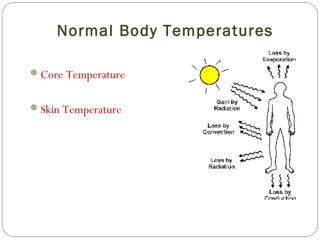
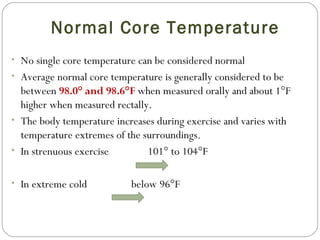
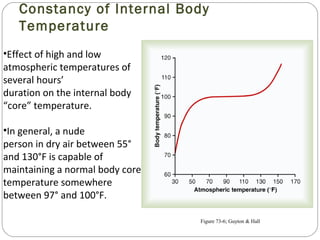
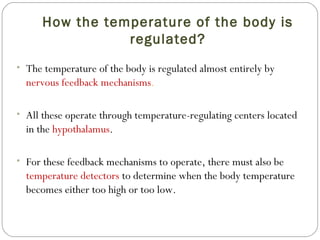
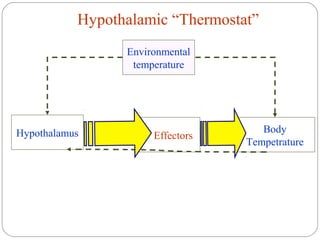
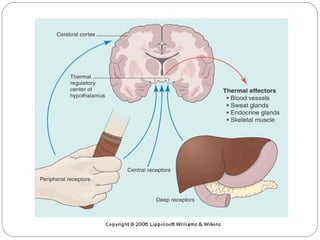
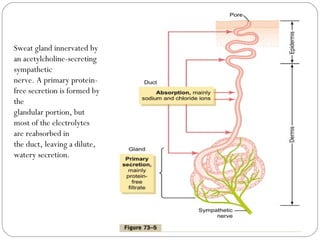
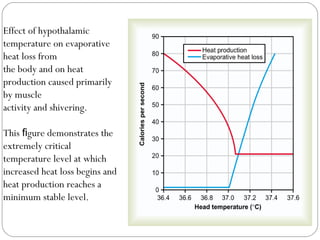
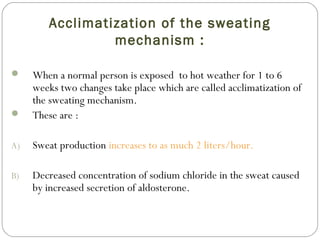
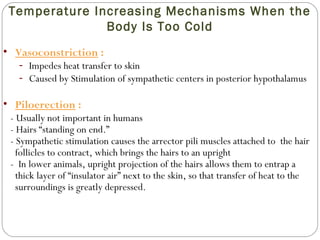
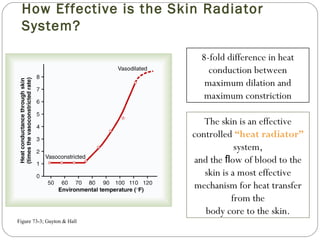
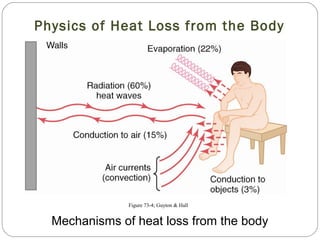

This document discusses temperature regulation by the skin. It begins by defining core and skin temperatures, noting that core temperature remains constant while skin temperature varies. It then explains how the hypothalamus acts as the body's thermostat to detect temperatures and activate mechanisms to increase or decrease body heat through the skin and other effectors. These include sweating, vasodilation, shivering and thyroid secretion to cool down or vasoconstriction and piloerection to warm up. The roles of the anterior hypothalamus, skin receptors and posterior hypothalamus in temperature detection are also summarized.


