Temperate GrasslandBy: Summer Mackey
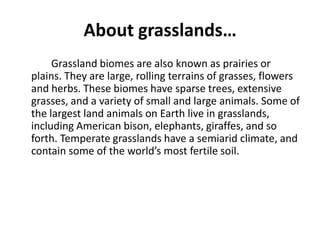
About grasslands…		Grassland biomes are also known as prairies or plains. They are large, rolling terrains of grasses, flowers and herbs. These biomes have sparse trees, extensive grasses, and a variety of small and large animals. Some of the largest land animals on Earth live in grasslands, including American bison, elephants, giraffes, and so forth. Temperate grasslands have a semiarid climate, and contain some of the world’s most fertile soil.
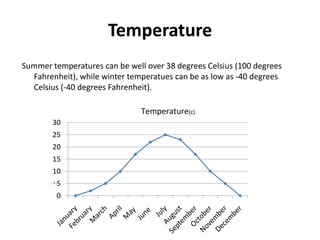
TemperatureSummer temperatures can be well over 38 degrees Celsius (100 degrees Fahrenheit), while winter temperatues can be as low as -40 degrees Celsius (-40 degrees Fahrenheit).
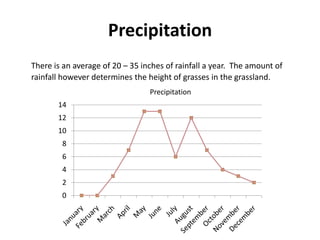
PrecipitationThere is an average of 20 – 35 inches of rainfall a year.  The amount of rainfall however determines the height of grasses in the grassland.Precipitation
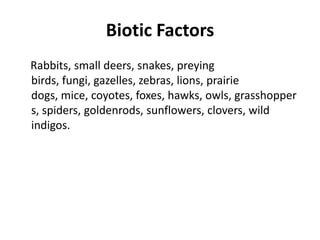
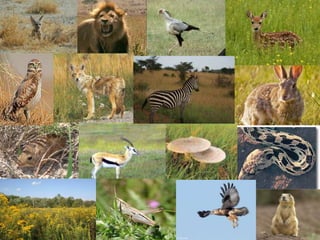
Biotic FactorsRabbits, small deers, snakes, preying birds, fungi, gazelles, zebras, lions, prairie dogs, mice, coyotes, foxes, hawks, owls, grasshoppers, spiders, goldenrods, sunflowers, clovers, wild indigos.
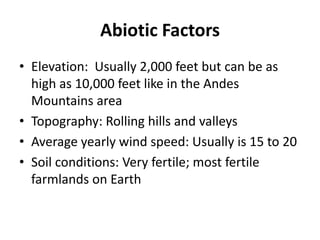
Abiotic FactorsElevation:  Usually 2,000 feet but can be as high as 10,000 feet like in the Andes Mountains areaTopography: Rolling hills and valleysAverage yearly wind speed: Usually is 15 to 20 Soil conditions: Very fertile; most fertile farmlands on Earth
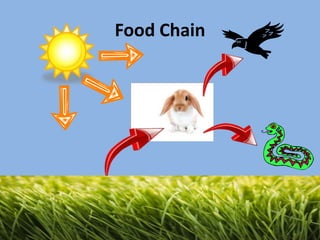
Food Chain
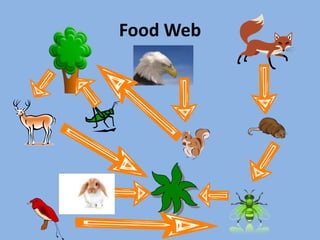
Food Web
Symbiosis RelationshipsMutualism: Symbiosis benefits flowering plants who get pollinated by bees; and bees get food from flowersCommenalism: has large nurseplants that provide protection from heat and deer to small plant seedlings. Deer can’t find the plant seedlings to eat easily in the grassland.Parasitism: Indicates hawks who feed on mice. The hawks soar above the grassland seeing the mice who have come out to feed on grasses.
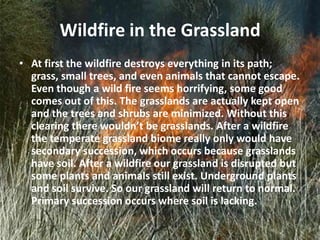
Wildfire in the GrasslandAt first the wildfire destroys everything in its path; grass, small trees, and even animals that cannot escape. Even though a wild fire seems horrifying, some good comes out of this. The grasslands are actually kept open and the trees and shrubs are minimized. Without this clearing there wouldn’t be grasslands. After a wildfire the temperate grassland biome really only would have secondary succession, which occurs because grasslands have soil. After a wildfire our grassland is disrupted but some plants and animals still exist. Underground plants and soil survive. So our grassland will return to normal. Primary succession occurs where soil is lacking.
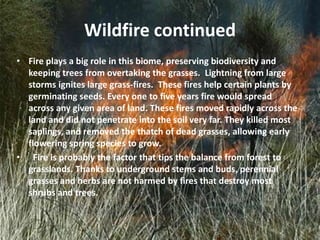
Wildfire continuedFire plays a big role in this biome, preserving biodiversity and keeping trees from overtaking the grasses.  Lightning from large storms ignites large grass-fires.  These fires help certain plants by germinating seeds. Every one to five years fire would spread across any given area of land. These fires moved rapidly across the land and did not penetrate into the soil very far. They killed most saplings, and removed the thatch of dead grasses, allowing early flowering spring species to grow.   Fire is probably the factor that tips the balance from forest to grasslands. Thanks to underground stems and buds, perennial grasses and herbs are not harmed by fires that destroy most shrubs and trees.

Temperate grassland2

  • 1.
  • 2.
    About grasslands… Grassland biomesare also known as prairies or plains. They are large, rolling terrains of grasses, flowers and herbs. These biomes have sparse trees, extensive grasses, and a variety of small and large animals. Some of the largest land animals on Earth live in grasslands, including American bison, elephants, giraffes, and so forth. Temperate grasslands have a semiarid climate, and contain some of the world’s most fertile soil.
  • 3.
    TemperatureSummer temperatures canbe well over 38 degrees Celsius (100 degrees Fahrenheit), while winter temperatues can be as low as -40 degrees Celsius (-40 degrees Fahrenheit).
  • 4.
    PrecipitationThere is anaverage of 20 – 35 inches of rainfall a year.  The amount of rainfall however determines the height of grasses in the grassland.Precipitation
  • 5.
    Biotic FactorsRabbits, smalldeers, snakes, preying birds, fungi, gazelles, zebras, lions, prairie dogs, mice, coyotes, foxes, hawks, owls, grasshoppers, spiders, goldenrods, sunflowers, clovers, wild indigos.
  • 7.
    Abiotic FactorsElevation: Usually 2,000 feet but can be as high as 10,000 feet like in the Andes Mountains areaTopography: Rolling hills and valleysAverage yearly wind speed: Usually is 15 to 20 Soil conditions: Very fertile; most fertile farmlands on Earth
  • 8.
  • 9.
  • 10.
    Symbiosis RelationshipsMutualism: Symbiosisbenefits flowering plants who get pollinated by bees; and bees get food from flowersCommenalism: has large nurseplants that provide protection from heat and deer to small plant seedlings. Deer can’t find the plant seedlings to eat easily in the grassland.Parasitism: Indicates hawks who feed on mice. The hawks soar above the grassland seeing the mice who have come out to feed on grasses.
  • 11.
    Wildfire in theGrasslandAt first the wildfire destroys everything in its path; grass, small trees, and even animals that cannot escape. Even though a wild fire seems horrifying, some good comes out of this. The grasslands are actually kept open and the trees and shrubs are minimized. Without this clearing there wouldn’t be grasslands. After a wildfire the temperate grassland biome really only would have secondary succession, which occurs because grasslands have soil. After a wildfire our grassland is disrupted but some plants and animals still exist. Underground plants and soil survive. So our grassland will return to normal. Primary succession occurs where soil is lacking.
  • 12.
    Wildfire continuedFire playsa big role in this biome, preserving biodiversity and keeping trees from overtaking the grasses.  Lightning from large storms ignites large grass-fires.  These fires help certain plants by germinating seeds. Every one to five years fire would spread across any given area of land. These fires moved rapidly across the land and did not penetrate into the soil very far. They killed most saplings, and removed the thatch of dead grasses, allowing early flowering spring species to grow. Fire is probably the factor that tips the balance from forest to grasslands. Thanks to underground stems and buds, perennial grasses and herbs are not harmed by fires that destroy most shrubs and trees.