GRASSLAND ECOSYSTEMS
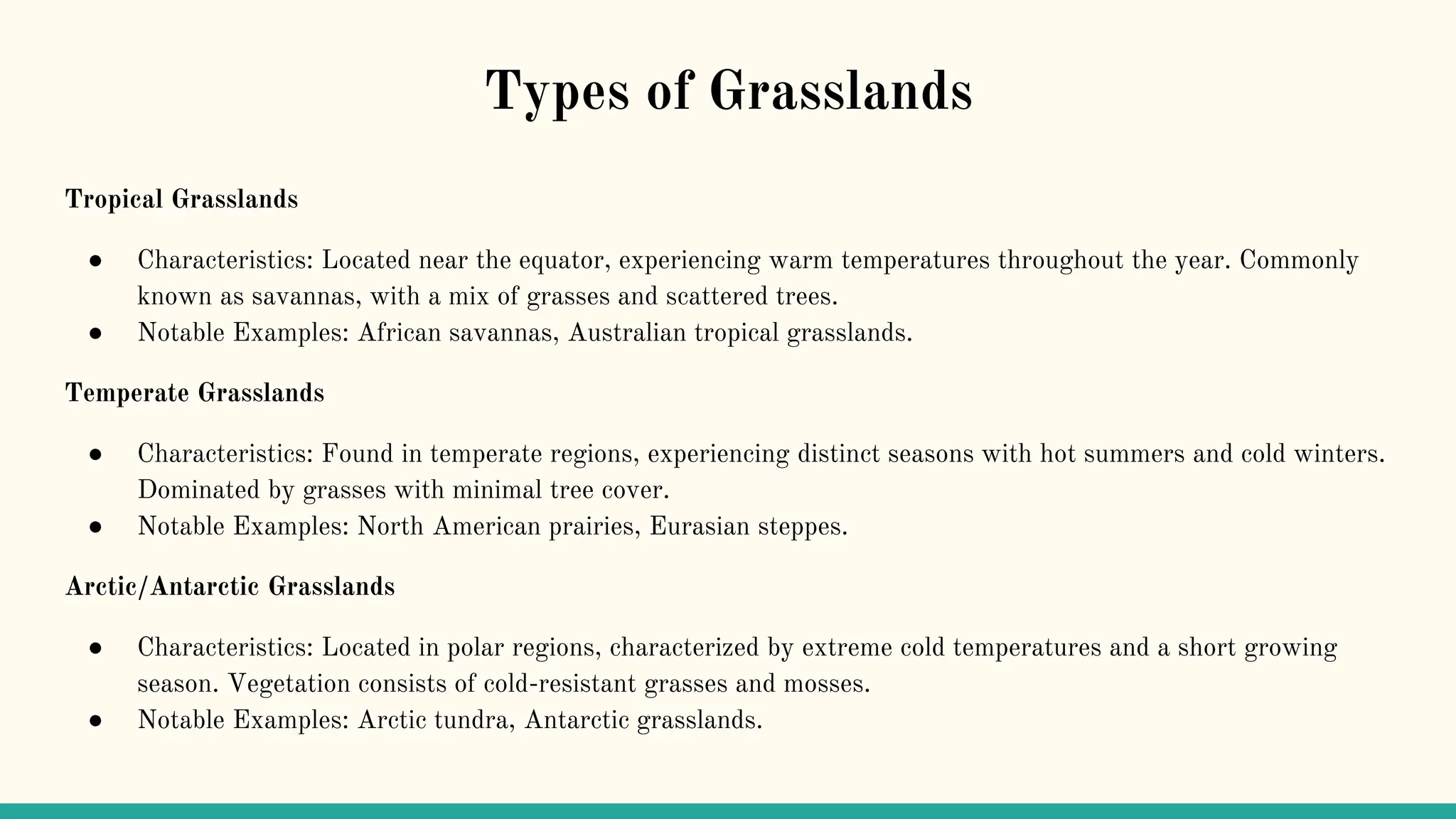
Types of Grasslands
Tropical Grasslands
● Characteristics: Located near the equator, experiencing warm temperatures throughout the year. Commonly
known as savannas, with a mix of grasses and scattered trees.
● Notable Examples: African savannas, Australian tropical grasslands.
Temperate Grasslands
● Characteristics: Found in temperate regions, experiencing distinct seasons with hot summers and cold winters.
Dominated by grasses with minimal tree cover.
● Notable Examples: North American prairies, Eurasian steppes.
Arctic/Antarctic Grasslands
● Characteristics: Located in polar regions, characterized by extreme cold temperatures and a short growing
season. Vegetation consists of cold-resistant grasses and mosses.
● Notable Examples: Arctic tundra, Antarctic grasslands.
Key Climate Characteristics
● Moderate Rainfall
Grasslands typically receive moderate rainfall, creating a semi-arid environment with distinct wet and dry
seasons.
● Seasonal Temperature Variations
Temperatures in grasslands can vary significantly between seasons, with hot summers and cold winters in
temperate grasslands.
● Adaptations to Fire
Some grasslands, especially tropical savannas, are adapted to regular fires, influencing the types of vegetation
that thrive.
● Importance of Grasses
Grasses, well-adapted to the grassland climate, are the dominant vegetation due to their ability to withstand
seasonal changes and periodic disturbances.
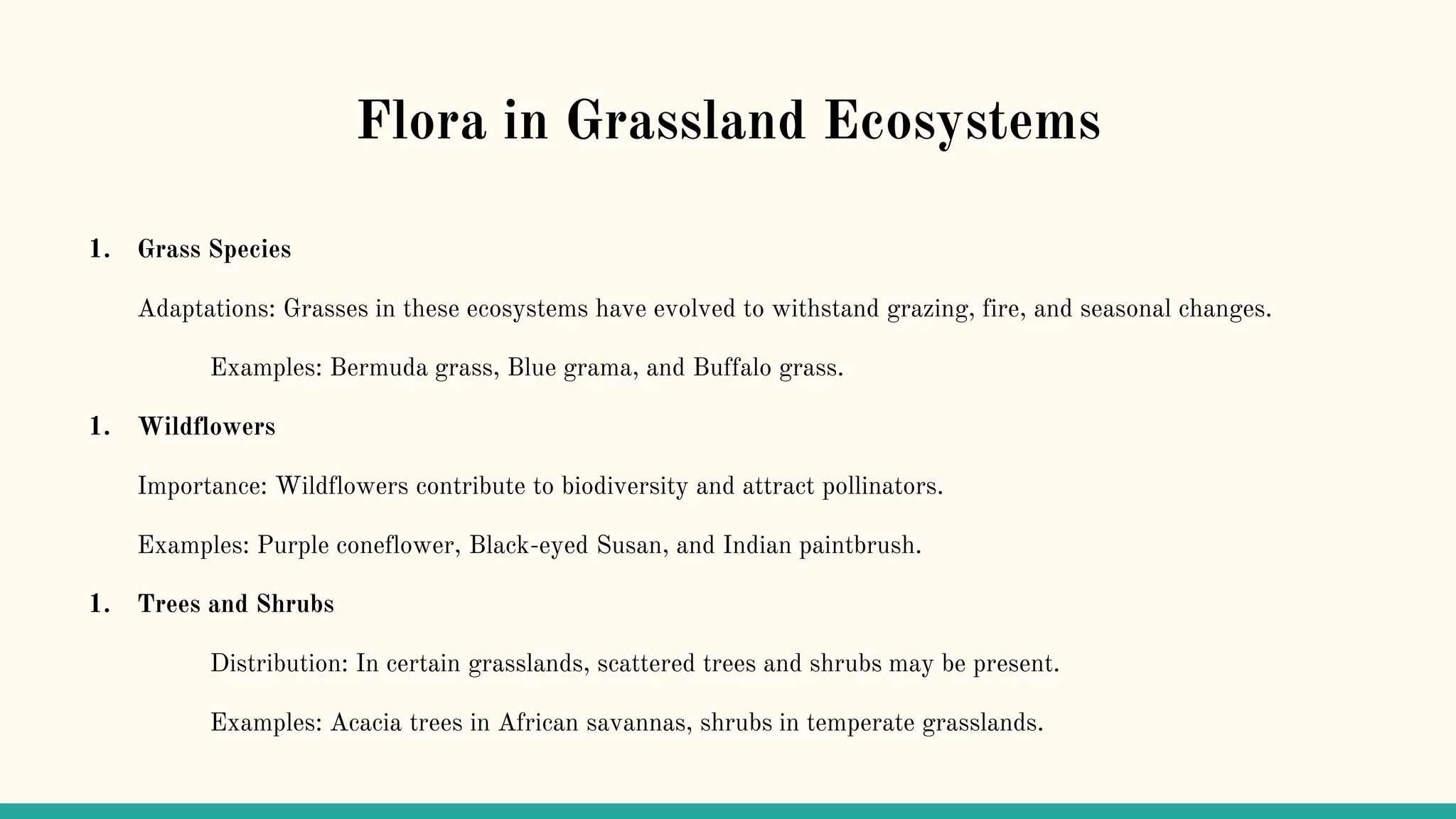
Flora in Grassland Ecosystems
1. Grass Species
Adaptations: Grasses in these ecosystems have evolved to withstand grazing, fire, and seasonal changes.
Examples: Bermuda grass, Blue grama, and Buffalo grass.
1. Wildflowers
Importance: Wildflowers contribute to biodiversity and attract pollinators.
Examples: Purple coneflower, Black-eyed Susan, and Indian paintbrush.
1. Trees and Shrubs
Distribution: In certain grasslands, scattered trees and shrubs may be present.
Examples: Acacia trees in African savannas, shrubs in temperate grasslands.
Fauna in Grassland Ecosystems
1. Herbivores
• Adaptations: Grazing animals have evolved to efficiently consume grasses.
• Examples: Bison, Wildebeest, and Antelope.
2. Predators
• Role in Ecosystem: Predators maintain the balance by controlling herbivore populations.
• Examples: Wolves, Lions, and Cheetahs.
3. Bird Species
• Diversity: Grasslands host a variety of bird species adapted to open environments.
• Examples: Meadowlarks, Falcons, and Grasshopper sparrows.
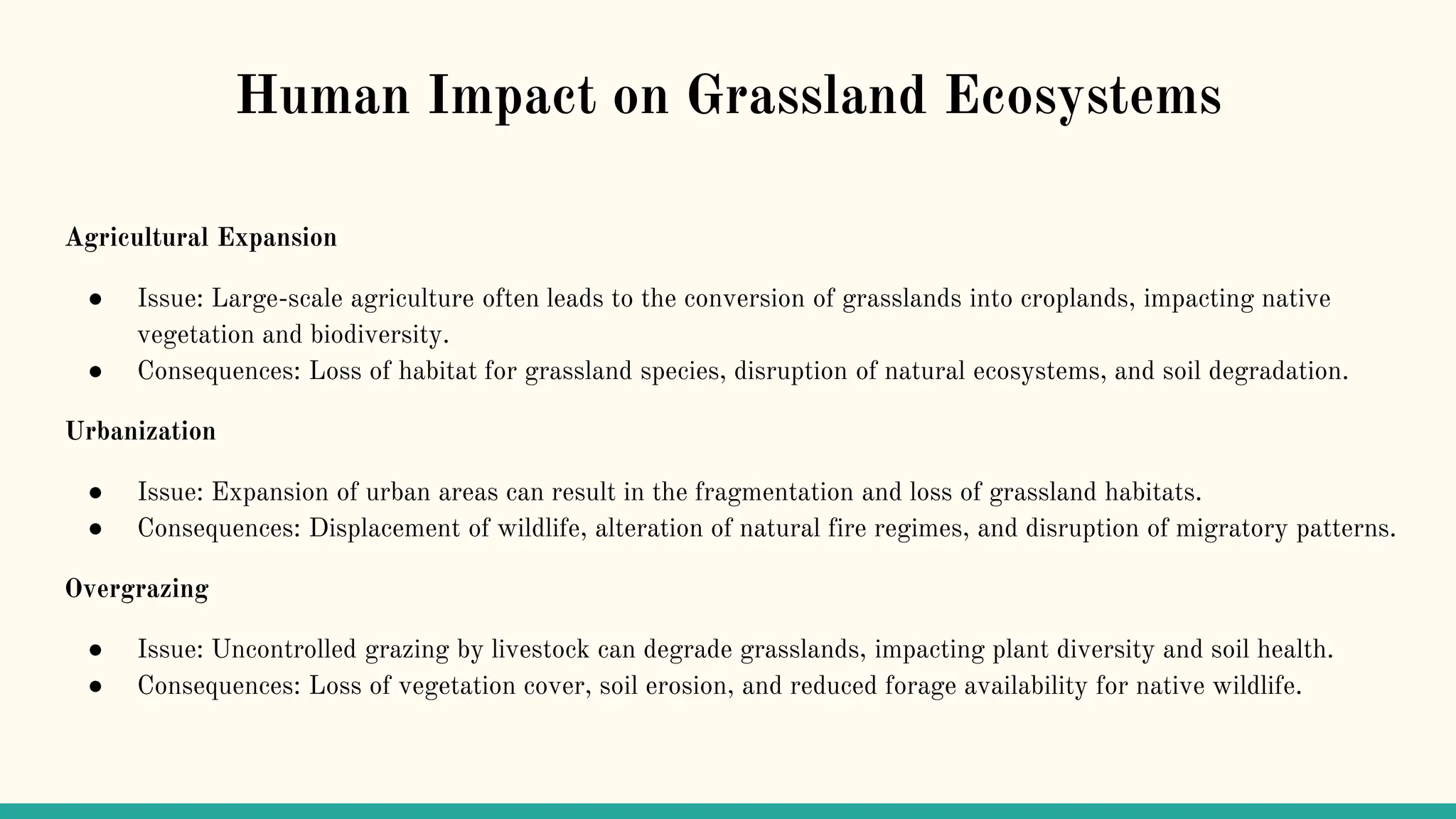
Human Impact on Grassland Ecosystems
Agricultural Expansion
● Issue: Large-scale agriculture often leads to the conversion of grasslands into croplands, impacting native
vegetation and biodiversity.
● Consequences: Loss of habitat for grassland species, disruption of natural ecosystems, and soil degradation.
Urbanization
● Issue: Expansion of urban areas can result in the fragmentation and loss of grassland habitats.
● Consequences: Displacement of wildlife, alteration of natural fire regimes, and disruption of migratory patterns.
Overgrazing
● Issue: Uncontrolled grazing by livestock can degrade grasslands, impacting plant diversity and soil health.
● Consequences: Loss of vegetation cover, soil erosion, and reduced forage availability for native wildlife.
Conservation Efforts
1. Protected Areas
Strategy: Establishing and maintaining protected areas, national parks, and reserves to conserve critical grassland
habitats.
Examples: Grassland reserves like the Serengeti National Park in Africa or the Great Plains Conservation Areas.
1. Sustainable Grazing Practices
Strategy: Implementing rotational grazing and sustainable livestock management to prevent overgrazing.
Benefits: Preserving vegetation, maintaining soil health, and supporting the livelihoods of local communities.
1. Habitat Restoration
Strategy: Undertaking initiatives to restore degraded grassland habitats through reforestation and native plant
reintroduction.
Benefits: Enhancing biodiversity, improving ecosystem services, and promoting resilience.
EVS Presentation on Grassland Ecosystems

EVS Presentation on Grassland Ecosystems

  • 1.
  • 2.
    Types of Grasslands TropicalGrasslands ● Characteristics: Located near the equator, experiencing warm temperatures throughout the year. Commonly known as savannas, with a mix of grasses and scattered trees. ● Notable Examples: African savannas, Australian tropical grasslands. Temperate Grasslands ● Characteristics: Found in temperate regions, experiencing distinct seasons with hot summers and cold winters. Dominated by grasses with minimal tree cover. ● Notable Examples: North American prairies, Eurasian steppes. Arctic/Antarctic Grasslands ● Characteristics: Located in polar regions, characterized by extreme cold temperatures and a short growing season. Vegetation consists of cold-resistant grasses and mosses. ● Notable Examples: Arctic tundra, Antarctic grasslands.
  • 3.
    Key Climate Characteristics ●Moderate Rainfall Grasslands typically receive moderate rainfall, creating a semi-arid environment with distinct wet and dry seasons. ● Seasonal Temperature Variations Temperatures in grasslands can vary significantly between seasons, with hot summers and cold winters in temperate grasslands. ● Adaptations to Fire Some grasslands, especially tropical savannas, are adapted to regular fires, influencing the types of vegetation that thrive. ● Importance of Grasses Grasses, well-adapted to the grassland climate, are the dominant vegetation due to their ability to withstand seasonal changes and periodic disturbances.
  • 4.
    Flora in GrasslandEcosystems 1. Grass Species Adaptations: Grasses in these ecosystems have evolved to withstand grazing, fire, and seasonal changes. Examples: Bermuda grass, Blue grama, and Buffalo grass. 1. Wildflowers Importance: Wildflowers contribute to biodiversity and attract pollinators. Examples: Purple coneflower, Black-eyed Susan, and Indian paintbrush. 1. Trees and Shrubs Distribution: In certain grasslands, scattered trees and shrubs may be present. Examples: Acacia trees in African savannas, shrubs in temperate grasslands.
  • 5.
    Fauna in GrasslandEcosystems 1. Herbivores • Adaptations: Grazing animals have evolved to efficiently consume grasses. • Examples: Bison, Wildebeest, and Antelope. 2. Predators • Role in Ecosystem: Predators maintain the balance by controlling herbivore populations. • Examples: Wolves, Lions, and Cheetahs. 3. Bird Species • Diversity: Grasslands host a variety of bird species adapted to open environments. • Examples: Meadowlarks, Falcons, and Grasshopper sparrows.
  • 6.
    Human Impact onGrassland Ecosystems Agricultural Expansion ● Issue: Large-scale agriculture often leads to the conversion of grasslands into croplands, impacting native vegetation and biodiversity. ● Consequences: Loss of habitat for grassland species, disruption of natural ecosystems, and soil degradation. Urbanization ● Issue: Expansion of urban areas can result in the fragmentation and loss of grassland habitats. ● Consequences: Displacement of wildlife, alteration of natural fire regimes, and disruption of migratory patterns. Overgrazing ● Issue: Uncontrolled grazing by livestock can degrade grasslands, impacting plant diversity and soil health. ● Consequences: Loss of vegetation cover, soil erosion, and reduced forage availability for native wildlife.
  • 7.
    Conservation Efforts 1. ProtectedAreas Strategy: Establishing and maintaining protected areas, national parks, and reserves to conserve critical grassland habitats. Examples: Grassland reserves like the Serengeti National Park in Africa or the Great Plains Conservation Areas. 1. Sustainable Grazing Practices Strategy: Implementing rotational grazing and sustainable livestock management to prevent overgrazing. Benefits: Preserving vegetation, maintaining soil health, and supporting the livelihoods of local communities. 1. Habitat Restoration Strategy: Undertaking initiatives to restore degraded grassland habitats through reforestation and native plant reintroduction. Benefits: Enhancing biodiversity, improving ecosystem services, and promoting resilience.