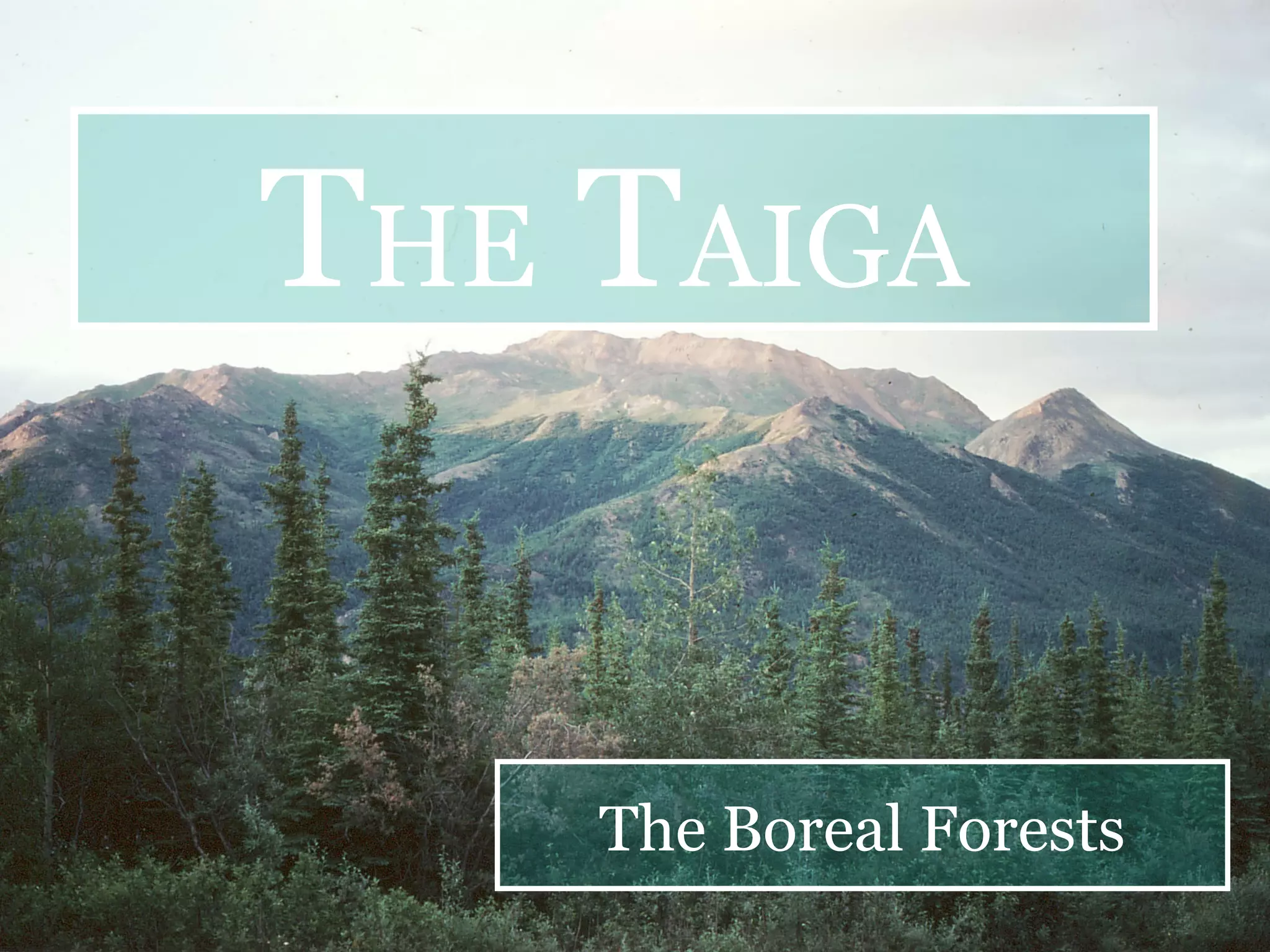
T HE  T AIGA The Boreal Forests
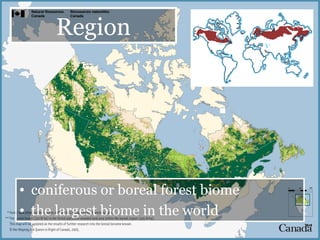
coniferous or boreal forest biome  the largest biome in the world Region
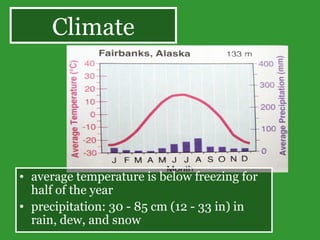
average temperature is below freezing for half of the year  precipitation: 30 - 85 cm (12 - 33 in) in rain, dew, and snow Climate
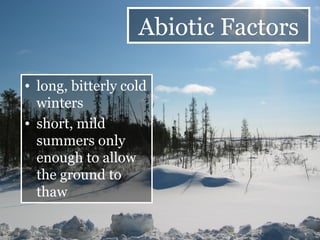
long, bitterly cold winters  short, mild summers only enough to allow the ground to thaw  Abiotic Factors
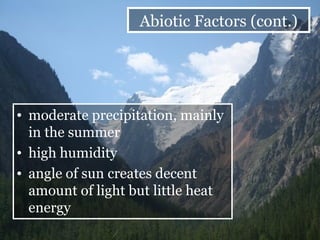
moderate precipitation, mainly in the summer high humidity angle of sun creates decent amount of light but little heat energy Abiotic Factors (cont.)
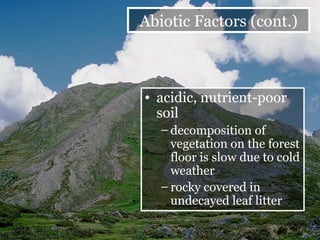
acidic, nutrient-poor soil decomposition of vegetation on the forest floor is slow due to cold weather rocky covered in undecayed leaf litter Abiotic Factors (cont.)
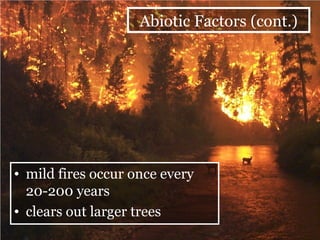
mild fires occur once every 20-200 years clears out larger trees Abiotic Factors (cont.)
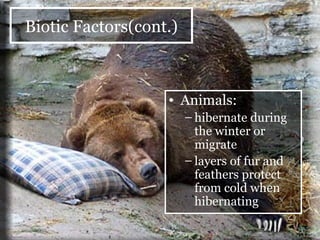
Animals: hibernate during the winter or migrate layers of fur and feathers protect from cold when hibernating  Biotic Factors(cont.)
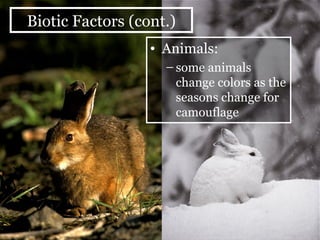
Animals: some animals change colors as the seasons change for camouflage Biotic Factors (cont.)
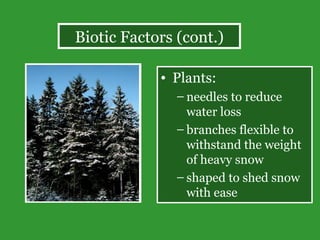
Plants: needles to reduce water loss  branches flexible to withstand the weight of heavy snow shaped to shed snow with ease Biotic Factors (cont.)
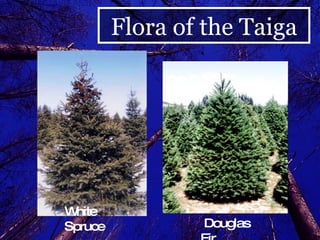
White Spruce Douglas Fir Flora of the Taiga
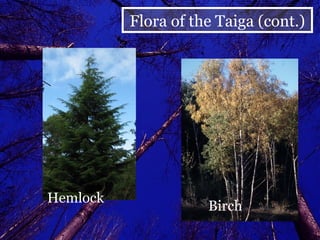
Hemlock   Birch Flora of the Taiga (cont.)
Fauna of the Taiga
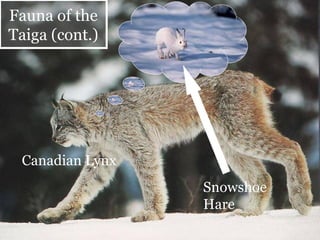
Canadian Lynx Snowshoe Hare Fauna of the Taiga (cont.)
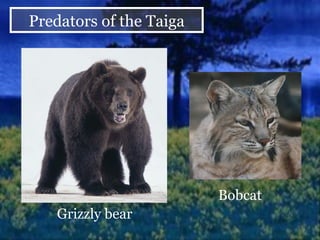
Grizzly bear Bobcat Predators of the Taiga
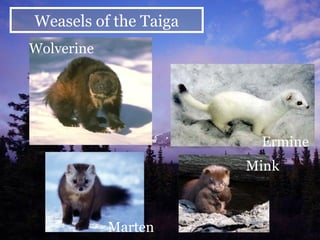
Wolverine Marten Ermine Mink Weasels of the Taiga
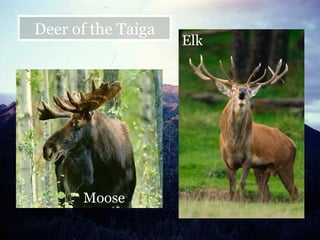
Moose Elk Deer of the Taiga
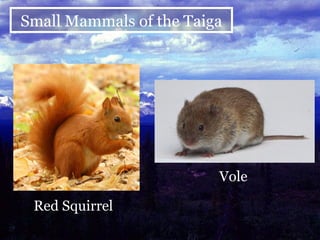
Vole Red Squirrel Small Mammals of the Taiga
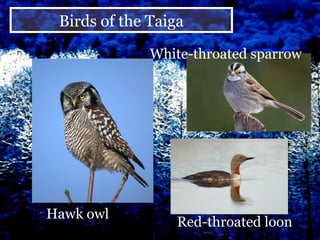
Hawk owl Red-throated loon White-throated sparrow Birds of the Taiga
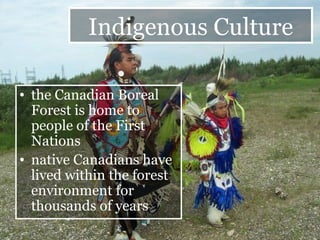
the Canadian Boreal Forest is home to people of the First Nations native Canadians have lived within the forest environment for thousands of years  Indigenous Culture
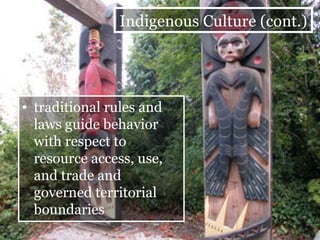
traditional rules and laws guide behavior with respect to resource access, use, and trade and governed territorial boundaries Indigenous Culture (cont.)
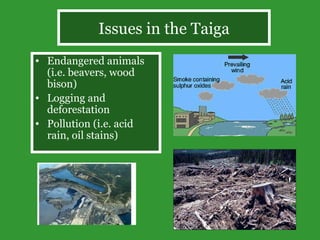
Issues in the Taiga Endangered animals (i.e. beavers, wood bison) Logging and deforestation Pollution (i.e. acid rain, oil stains)
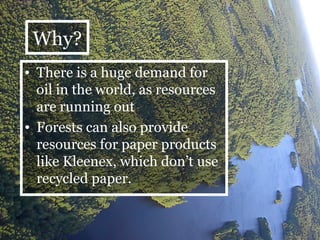
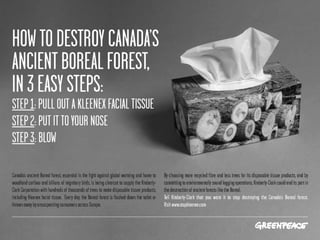
Why? There is a huge demand for oil in the world, as resources are running out Forests can also provide resources for paper products like Kleenex, which don’t use recycled paper.
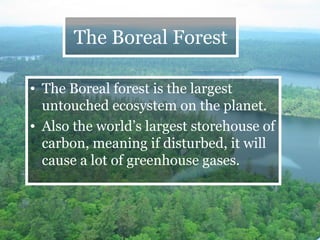
The Boreal Forest The Boreal forest is the largest untouched ecosystem on the planet. Also the world’s largest storehouse of carbon, meaning if disturbed, it will cause a lot of greenhouse gases.
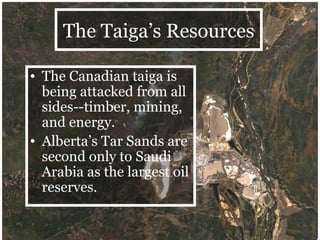
The Taiga’s Resources The Canadian taiga is being attacked from all sides--timber, mining, and energy. Alberta’s Tar Sands are   second only to Saudi Arabia as the largest oil reserves.
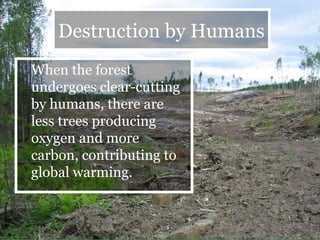
Destruction by Humans When the forest undergoes clear-cutting by humans, there are less trees producing oxygen and more carbon, contributing to global warming.
 
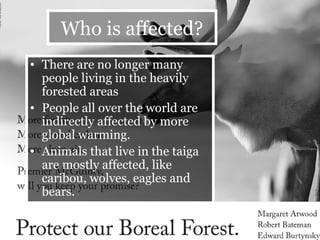
Who is affected? There are no longer many people living in the heavily forested areas People all over the world are indirectly affected by more global warming. Animals that live in the taiga are mostly affected, like caribou, wolves, eagles and bears.
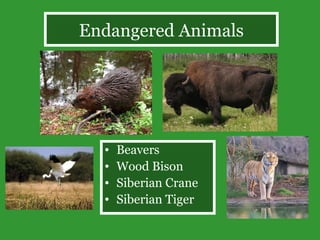
Endangered Animals Beavers Wood Bison Siberian Crane Siberian Tiger
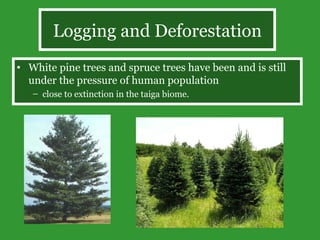
Logging and Deforestation White pine trees and spruce trees have been and is still under the pressure of human population close to extinction in the taiga biome.
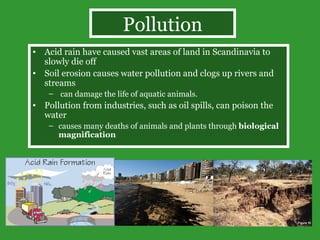
Pollution Acid rain have caused vast areas of land in Scandinavia to slowly die off Soil erosion causes water pollution and clogs up rivers and streams can damage the life of aquatic animals. Pollution from industries, such as oil spills, can poison the water  causes many deaths of animals and plants through  biological magnification
Potential Future More government-protected parks for endangered animals, plants, as well as trees. Encourage companies to use wood from sustainable forest; they are logged in a way that they will have the least impact on the ecosystem.  Greentruck is a program designed by the US Environmental Protection Agency to prevent oil spills. The Species At Risk Act (SARA) in Canada                                
And our IMAGINARY animal from the taiga biome is…
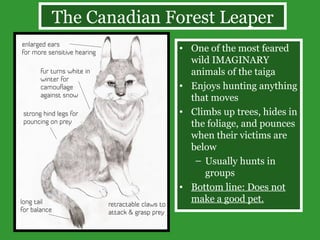
The Canadian Forest Leaper One of the most feared wild IMAGINARY animals of the taiga Enjoys hunting anything that moves Climbs up trees, hides in the foliage, and pounces when their victims are below Usually hunts in groups Bottom line: Does not make a good pet.
Information/Picture Sources http://www.blueplanetbiomes.org/taiga.htm Prentice Hall Biology book http://www.mbgnet.net/sets/taiga/index.htm http://www.cotf.edu/ete/modules/msese/earthsysflr/taiga.html http://library.thinkquest.org/C0113340/main.php?section=biomes&topic=taiga http://www.charmingfare.com/animalfacts/lynx.php http://www.nhptv.org/NatureWorks/moose.htm http://www.borealforest.org/zoo/ermine.htm http://www.runet.edu/~swoodwar/CLASSES/GEOG235/biomes/taiga/taiga.html http://images.google.com/imghp?hl=en&tab=wi http://www.taiga.org/ http://commons.wikimedia.org/wiki/Category:Taiga Credits All work concerning research and creation of this presentation Done by: Tony Lin, Aileen Lu, Janvi Shah, Steven Wong Period 4

Taiga

  • 1.
    T HE T AIGA The Boreal Forests
  • 2.
    coniferous or borealforest biome the largest biome in the world Region
  • 3.
    average temperature isbelow freezing for half of the year precipitation: 30 - 85 cm (12 - 33 in) in rain, dew, and snow Climate
  • 4.
    long, bitterly coldwinters short, mild summers only enough to allow the ground to thaw Abiotic Factors
  • 5.
    moderate precipitation, mainlyin the summer high humidity angle of sun creates decent amount of light but little heat energy Abiotic Factors (cont.)
  • 6.
    acidic, nutrient-poor soildecomposition of vegetation on the forest floor is slow due to cold weather rocky covered in undecayed leaf litter Abiotic Factors (cont.)
  • 7.
    mild fires occuronce every 20-200 years clears out larger trees Abiotic Factors (cont.)
  • 8.
    Animals: hibernate duringthe winter or migrate layers of fur and feathers protect from cold when hibernating Biotic Factors(cont.)
  • 9.
    Animals: some animalschange colors as the seasons change for camouflage Biotic Factors (cont.)
  • 10.
    Plants: needles toreduce water loss branches flexible to withstand the weight of heavy snow shaped to shed snow with ease Biotic Factors (cont.)
  • 11.
    White Spruce DouglasFir Flora of the Taiga
  • 12.
    Hemlock Birch Flora of the Taiga (cont.)
  • 13.
  • 14.
    Canadian Lynx SnowshoeHare Fauna of the Taiga (cont.)
  • 15.
    Grizzly bear BobcatPredators of the Taiga
  • 16.
    Wolverine Marten ErmineMink Weasels of the Taiga
  • 17.
    Moose Elk Deerof the Taiga
  • 18.
    Vole Red SquirrelSmall Mammals of the Taiga
  • 19.
    Hawk owl Red-throatedloon White-throated sparrow Birds of the Taiga
  • 20.
    the Canadian BorealForest is home to people of the First Nations native Canadians have lived within the forest environment for thousands of years Indigenous Culture
  • 21.
    traditional rules andlaws guide behavior with respect to resource access, use, and trade and governed territorial boundaries Indigenous Culture (cont.)
  • 22.
    Issues in theTaiga Endangered animals (i.e. beavers, wood bison) Logging and deforestation Pollution (i.e. acid rain, oil stains)
  • 23.
    Why? There isa huge demand for oil in the world, as resources are running out Forests can also provide resources for paper products like Kleenex, which don’t use recycled paper.
  • 24.
    The Boreal ForestThe Boreal forest is the largest untouched ecosystem on the planet. Also the world’s largest storehouse of carbon, meaning if disturbed, it will cause a lot of greenhouse gases.
  • 25.
    The Taiga’s ResourcesThe Canadian taiga is being attacked from all sides--timber, mining, and energy. Alberta’s Tar Sands are second only to Saudi Arabia as the largest oil reserves.
  • 26.
    Destruction by HumansWhen the forest undergoes clear-cutting by humans, there are less trees producing oxygen and more carbon, contributing to global warming.
  • 27.
  • 28.
    Who is affected?There are no longer many people living in the heavily forested areas People all over the world are indirectly affected by more global warming. Animals that live in the taiga are mostly affected, like caribou, wolves, eagles and bears.
  • 29.
    Endangered Animals BeaversWood Bison Siberian Crane Siberian Tiger
  • 30.
    Logging and DeforestationWhite pine trees and spruce trees have been and is still under the pressure of human population close to extinction in the taiga biome.
  • 31.
    Pollution Acid rainhave caused vast areas of land in Scandinavia to slowly die off Soil erosion causes water pollution and clogs up rivers and streams can damage the life of aquatic animals. Pollution from industries, such as oil spills, can poison the water causes many deaths of animals and plants through biological magnification
  • 32.
    Potential Future Moregovernment-protected parks for endangered animals, plants, as well as trees. Encourage companies to use wood from sustainable forest; they are logged in a way that they will have the least impact on the ecosystem. Greentruck is a program designed by the US Environmental Protection Agency to prevent oil spills. The Species At Risk Act (SARA) in Canada                                
  • 33.
    And our IMAGINARYanimal from the taiga biome is…
  • 34.
    The Canadian ForestLeaper One of the most feared wild IMAGINARY animals of the taiga Enjoys hunting anything that moves Climbs up trees, hides in the foliage, and pounces when their victims are below Usually hunts in groups Bottom line: Does not make a good pet.
  • 35.
    Information/Picture Sources http://www.blueplanetbiomes.org/taiga.htmPrentice Hall Biology book http://www.mbgnet.net/sets/taiga/index.htm http://www.cotf.edu/ete/modules/msese/earthsysflr/taiga.html http://library.thinkquest.org/C0113340/main.php?section=biomes&topic=taiga http://www.charmingfare.com/animalfacts/lynx.php http://www.nhptv.org/NatureWorks/moose.htm http://www.borealforest.org/zoo/ermine.htm http://www.runet.edu/~swoodwar/CLASSES/GEOG235/biomes/taiga/taiga.html http://images.google.com/imghp?hl=en&tab=wi http://www.taiga.org/ http://commons.wikimedia.org/wiki/Category:Taiga Credits All work concerning research and creation of this presentation Done by: Tony Lin, Aileen Lu, Janvi Shah, Steven Wong Period 4