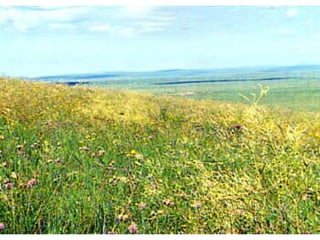
The Prairies
 
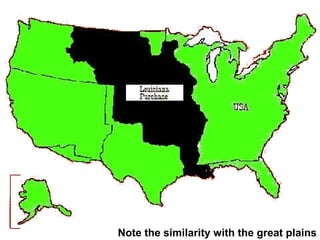
Note the similarity with the great plains
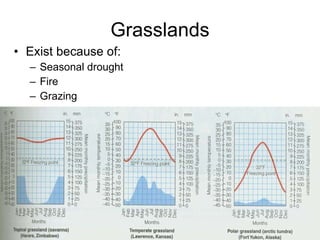
Grasslands Exist because of: Seasonal drought Fire Grazing
 
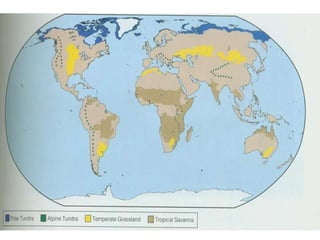
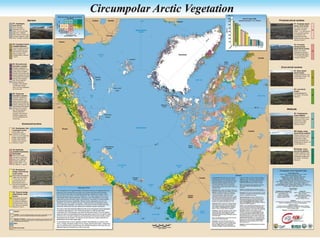
Types of Grasslands Types of Grasslands Tropical Grasslands Savannahs Barrens Temperate grasslands – short, tall, medium grasses Tundra American Prairies South American Pampas African Veldt European and Asian Steppes Arctic Tundra – which is usually separated in to a distinct biome
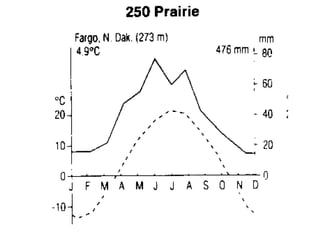
Minnesota has a temperate grassland Cold winters Hot Summers Sparse and uneven rainfall/snowfall Regular and high wind events  High evaporation rate
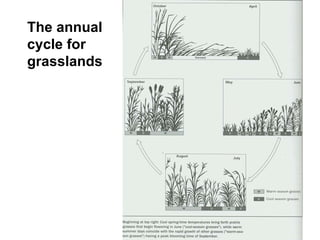
The annual cycle for grasslands
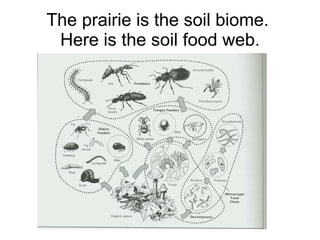
The prairie is the soil biome.  Here is the soil food web.
 
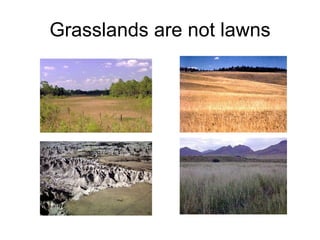
Grasslands are not lawns
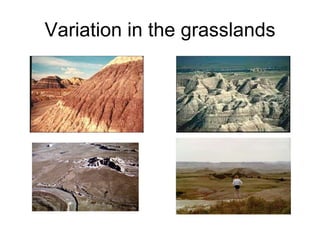
Variation in the grasslands
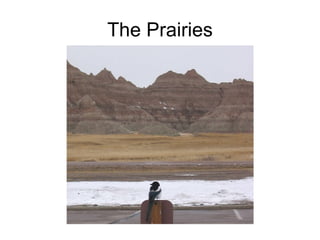
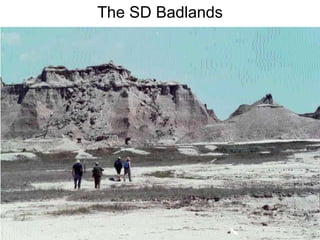
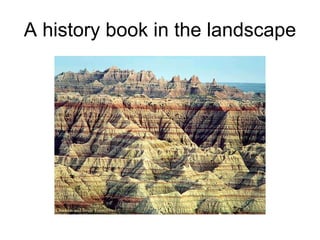
The SD Badlands
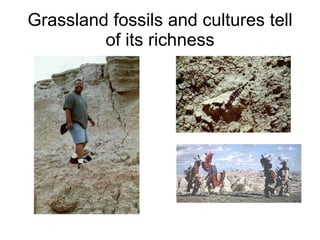
Grassland fossils and cultures tell of its richness
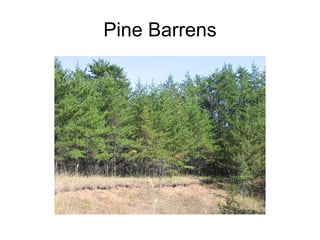
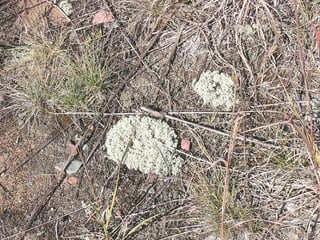
Pine Barrens
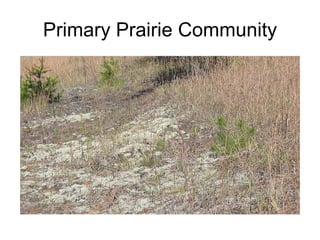
Primary Prairie Community
 
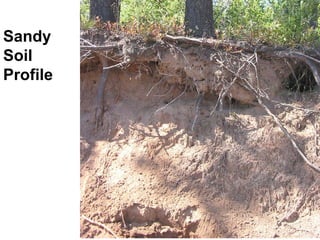
Sandy Soil Profile
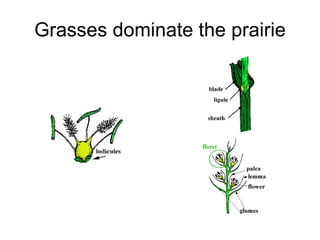
Grasses dominate the prairie
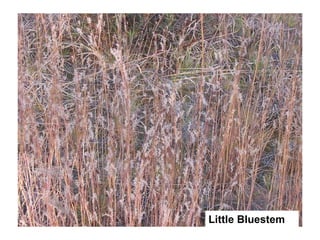
Little Bluestem
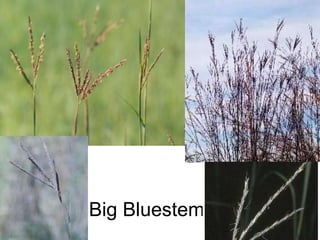
Big Bluestem
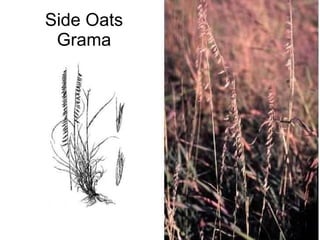
Side Oats Grama
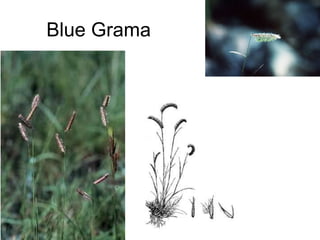
Blue Grama
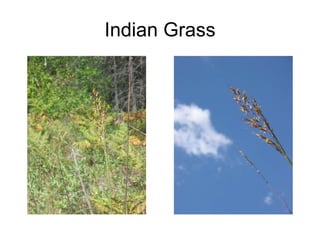
Indian Grass
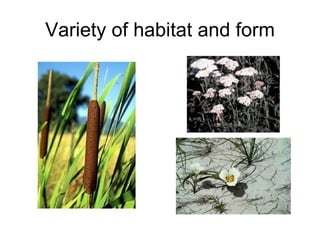
Variety of habitat and form
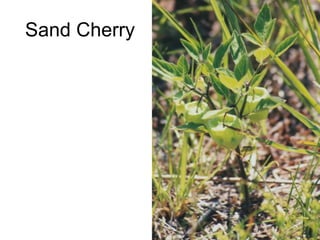
Sand Cherry
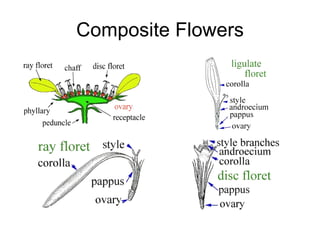
Composite Flowers
 
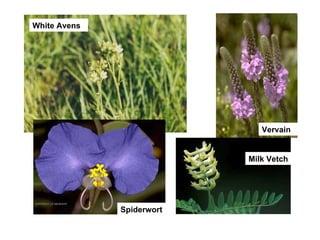
Spiderwort White Avens Vervain Milk Vetch
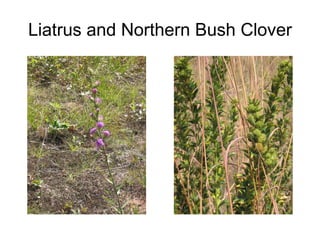
Liatrus and Northern Bush Clover
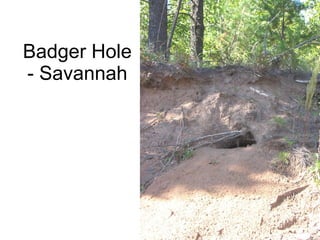
Badger Hole - Savannah
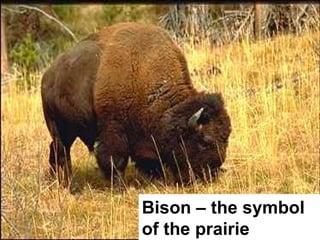
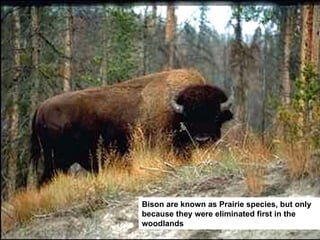
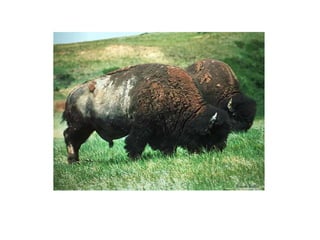
Bison – the symbol of the prairie
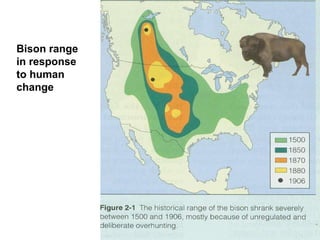
Bison range in response to human change
Bison are known as Prairie species, but only because they were eliminated first in the woodlands
 
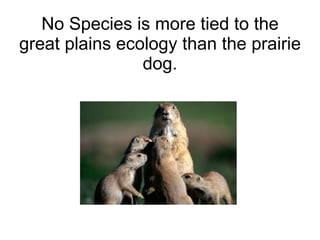
No Species is more tied to the great plains ecology than the prairie dog.
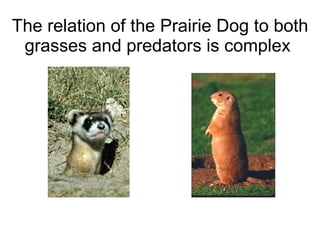
The relation of the Prairie Dog to both grasses and predators is complex
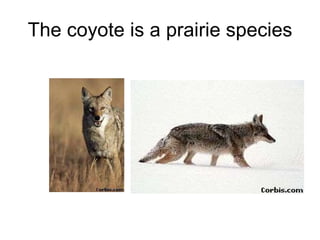
The coyote is a prairie species
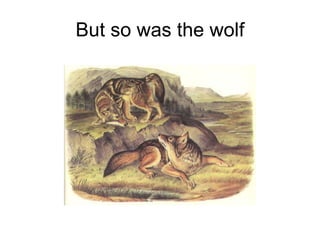
But so was the wolf
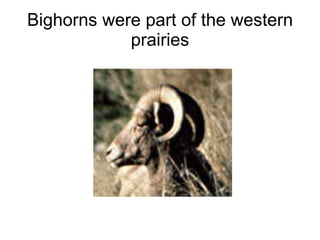
Bighorns were part of the western prairies
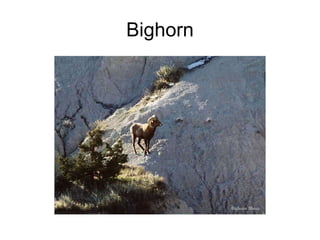
Bighorn


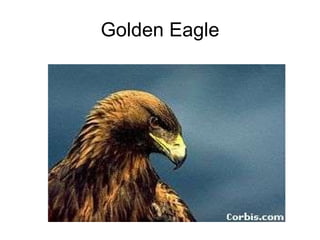
Golden Eagle
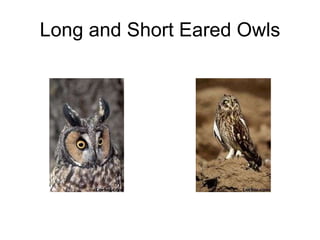
Long and Short Eared Owls
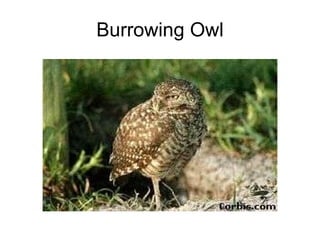
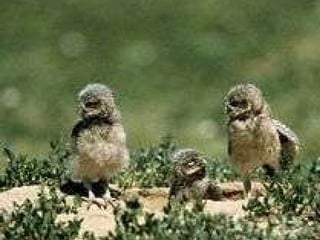
Burrowing Owl
 
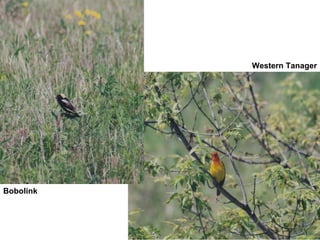
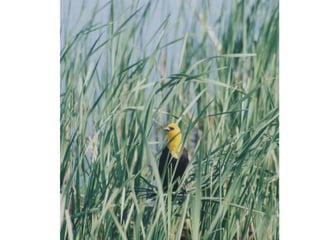
Western Tanager Bobolink
 
 
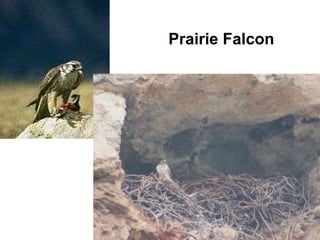
Prairie Falcon
 
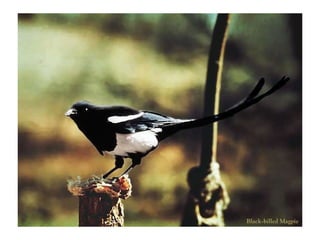
Magpie
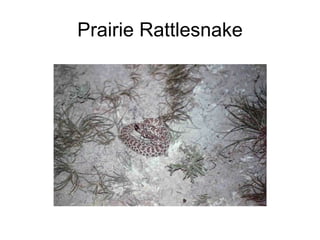
Prairie Rattlesnake
A history book in the landscape
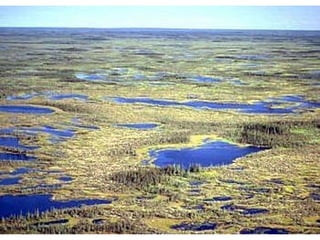
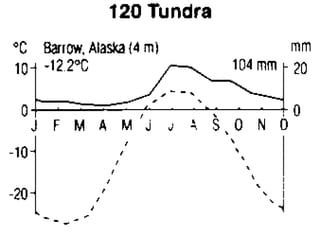
The Tundra Special considerations for this biome include Bitter cold Extend daylight and night photoperiods Covered by ice and snow Permafrost


The prairies