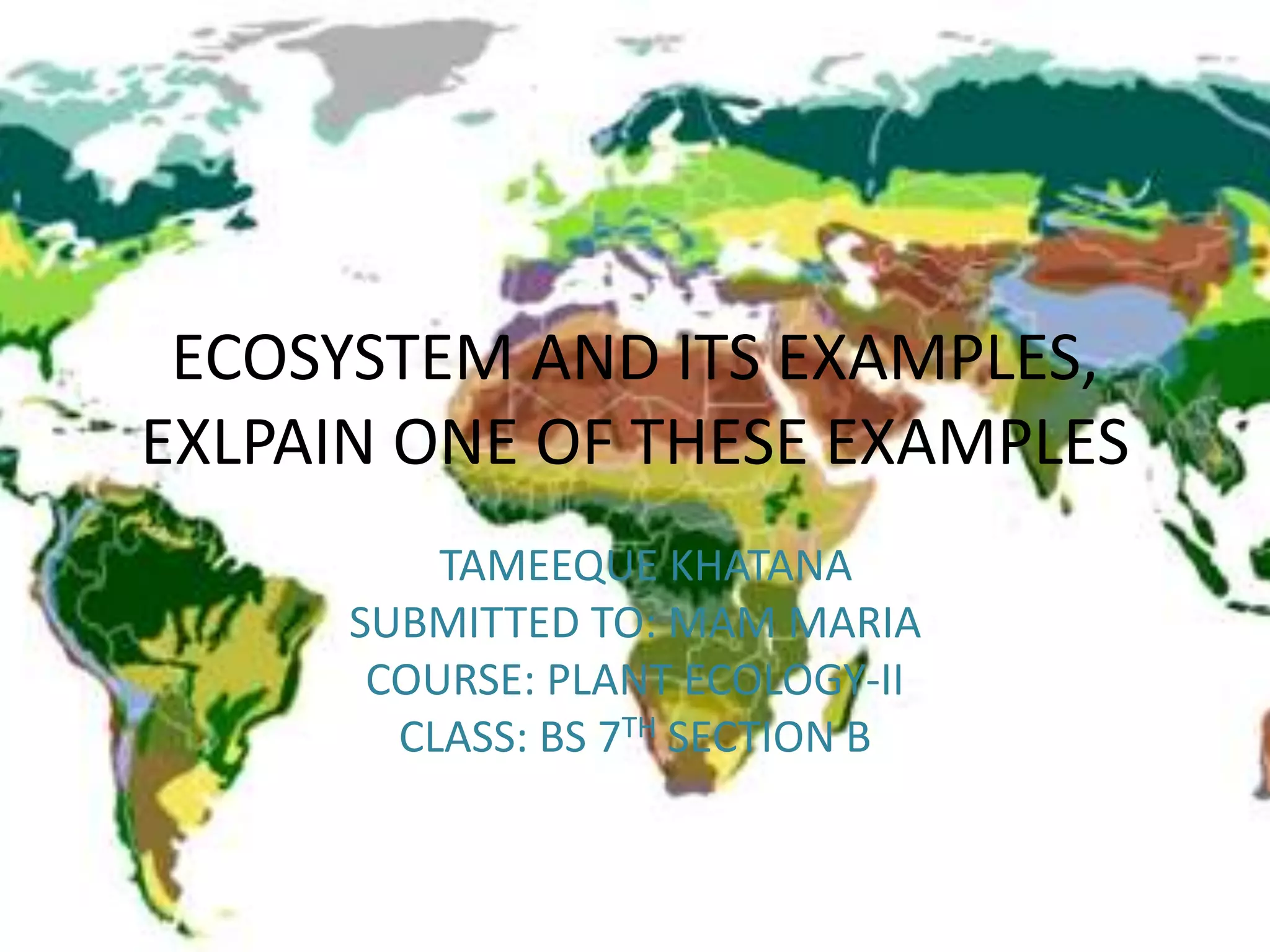
ECOSYSTEM AND ITS EXAMPLES,
EXLPAIN ONE OF THESE EXAMPLES
TAMEEQUE KHATANA
SUBMITTED TO: MAM MARIA
COURSE: PLANT ECOLOGY-II
CLASS: BS 7TH SECTION B
CONTENTS
• Introduction
• Examples of ecosystem
• Temperate forest ecosystem
– Climate
– Location
– Vegetation
– Wildlife
Introduction
• The ecosystem is the set of species in a given area
that interact among themselves, through
processes such as predation, parasitism,
competition and symbiosis, and with their abiotic
environment to disintegrate and become part of
cycles of energy and nutrients. The species of the
ecosystem, including bacteria, fungi, plants and
animals, are dependent on each other. The
relationships between species and their
environment facilitate the flow of matter and
energy within the ecosystem.
Examples of Ecosystem
• Tropical Rainforest Ecosystems.
• Temperate Forest Ecosystems.
• Taiga Ecosystems.
• Desert Ecosystems.
• Tundra Ecosystems.
• Freshwater Ecosystems.
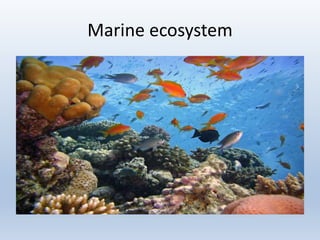
• Marine Ecosystems.
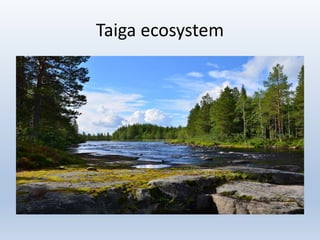
Taiga ecosystem
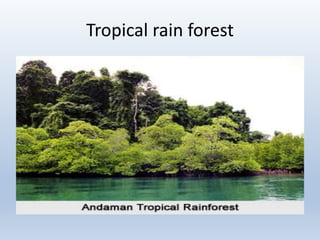
Tropical rain forest
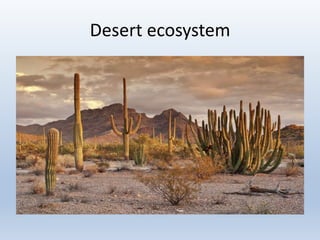
Desert ecosystem
Marine ecosystem
Temperate Forest Ecosystems
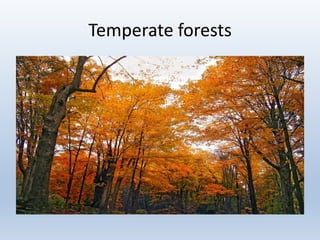
• Temperate forest ecosystems are common in
regions where winters are cold and summers
are warm. The ecosystems normally comprise
deciduous trees, which shed their leaves every
autumn, and coniferous trees that remain
green all year round.
Temperate forests
Climate
• Temperate forests have a wide range of
temperatures that correlate with the
distinctive seasons. Temperatures range from
hot in the summer, with highs of 86 F, to
extremely cold in the winter, with lows of -22
F. Temperate forests receive abundant
amounts of precipitation, usually between 20
and 60 inches of precipitation annually. This
precipitation is in the form of rain and snow.
Location
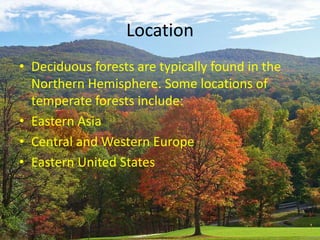
• Deciduous forests are typically found in the
Northern Hemisphere. Some locations of
temperate forests include:
• Eastern Asia
• Central and Western Europe
• Eastern United States
Vegetation
• Due to abundant rainfall and thick soil humus,
temperate forests are able to support a wide
variety of plant life and vegetation. This
vegetation exists in several layers, ranging
from lichens and mosses on the ground layer
to large tree species like oak and hickory that
stretch high above the forest floor.
Other examples of temperate forest vegetation
include:
• Forest canopy tier: Maple trees, walnut trees,
birch trees
• Small tree tier: Dogwoods, redbuds, shadbush
• Shrub tier: Azaleas, mountain laurel,
huckleberries
• Herb tier: Blue bead lily, Indian cucumber, wild
sarsaparilla
• Floor tier: Lichens and mosses
Wildlife
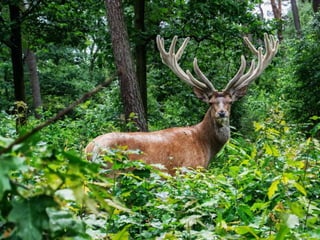
• Temperate forests are home to a diverse
wildlife biosystem including
various insects and spiders, wolves, foxes,
bears, coyotes, bobcats, mountain lions,
eagles, rabbits, deer, skunks, squirrels,
raccoons, squirrels, moose, snakes, and
hummingbirds.
• Temperate forest animals have many different
ways to deal with the cold and lack of food in
winter. Some animals hibernate during the
winter and arise in spring when food is more
plentiful. Other animals store food and
burrow underground to escape the cold. Many
animals escape the harsh conditions by
migrating to warmer regions in winter

Ecosystem and its type

  • 1.
    ECOSYSTEM AND ITSEXAMPLES, EXLPAIN ONE OF THESE EXAMPLES TAMEEQUE KHATANA SUBMITTED TO: MAM MARIA COURSE: PLANT ECOLOGY-II CLASS: BS 7TH SECTION B
  • 2.
    CONTENTS • Introduction • Examplesof ecosystem • Temperate forest ecosystem – Climate – Location – Vegetation – Wildlife
  • 3.
    Introduction • The ecosystemis the set of species in a given area that interact among themselves, through processes such as predation, parasitism, competition and symbiosis, and with their abiotic environment to disintegrate and become part of cycles of energy and nutrients. The species of the ecosystem, including bacteria, fungi, plants and animals, are dependent on each other. The relationships between species and their environment facilitate the flow of matter and energy within the ecosystem.
  • 4.
    Examples of Ecosystem •Tropical Rainforest Ecosystems. • Temperate Forest Ecosystems. • Taiga Ecosystems. • Desert Ecosystems. • Tundra Ecosystems. • Freshwater Ecosystems. • Marine Ecosystems.
  • 5.
  • 6.
  • 7.
  • 8.
  • 9.
    Temperate Forest Ecosystems •Temperate forest ecosystems are common in regions where winters are cold and summers are warm. The ecosystems normally comprise deciduous trees, which shed their leaves every autumn, and coniferous trees that remain green all year round.
  • 10.
  • 11.
    Climate • Temperate forestshave a wide range of temperatures that correlate with the distinctive seasons. Temperatures range from hot in the summer, with highs of 86 F, to extremely cold in the winter, with lows of -22 F. Temperate forests receive abundant amounts of precipitation, usually between 20 and 60 inches of precipitation annually. This precipitation is in the form of rain and snow.
  • 12.
    Location • Deciduous forestsare typically found in the Northern Hemisphere. Some locations of temperate forests include: • Eastern Asia • Central and Western Europe • Eastern United States
  • 13.
    Vegetation • Due toabundant rainfall and thick soil humus, temperate forests are able to support a wide variety of plant life and vegetation. This vegetation exists in several layers, ranging from lichens and mosses on the ground layer to large tree species like oak and hickory that stretch high above the forest floor.
  • 14.
    Other examples oftemperate forest vegetation include: • Forest canopy tier: Maple trees, walnut trees, birch trees • Small tree tier: Dogwoods, redbuds, shadbush • Shrub tier: Azaleas, mountain laurel, huckleberries • Herb tier: Blue bead lily, Indian cucumber, wild sarsaparilla • Floor tier: Lichens and mosses
  • 15.
    Wildlife • Temperate forestsare home to a diverse wildlife biosystem including various insects and spiders, wolves, foxes, bears, coyotes, bobcats, mountain lions, eagles, rabbits, deer, skunks, squirrels, raccoons, squirrels, moose, snakes, and hummingbirds.
  • 17.
    • Temperate forestanimals have many different ways to deal with the cold and lack of food in winter. Some animals hibernate during the winter and arise in spring when food is more plentiful. Other animals store food and burrow underground to escape the cold. Many animals escape the harsh conditions by migrating to warmer regions in winter