

 Where did we use the term tectonic plates in the
                 previous lecture?


          What is the age of the earth?
 What is tectonic plates?
 What are the different tectonic plates?
 What is the history of tectonic plates?
 Do the tectonic plates move?
 Briefly explain the movement of plates?
 What is continental drift?
 What is the evidence of continental drift?
IAL - ?
 CANZA, (Clue : The 4th theatre in Coimbatore is still
 kicking, Akka)

 AABRAIN (Clue : Dubaia, Bahraina, Sharjahava?)


 RICARBEAN (Clue : West Indies)
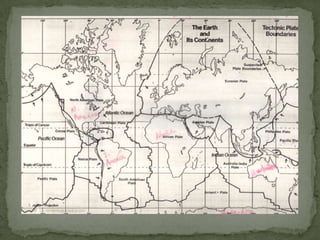
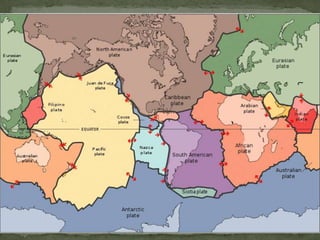
The lithosphere is divided into several slabs or
blocks or plates. These plates are supported from
below by Asthenosphere. These plates are called
Lithosphere plates or Tectonic Plates.

Some of these plates encompass continents, some
of these plates encompass oceans and some of the
plates encompass both oceans and continents.
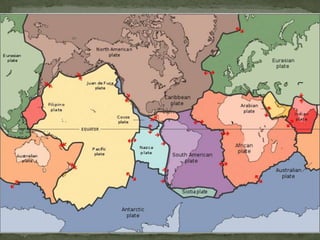
The plates are divided into three categories
Primary Plates
Secondary Plates
Tertiary Plates

  The primary plates and secondary plates are together
  called major plates.

  The tertiary plates are sub divisions of Primary and
  Secondary Plates
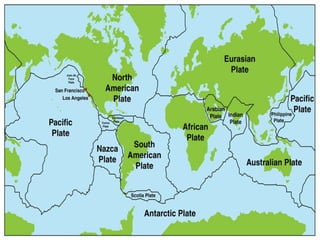
Primary
African Plate
Antarctic Plate
Eurasian Plate
Indo-Australian Plate (sometimes Indian and Australian)
North American Plate
Pacific Plate
South American Plate
Secondary
Arabian Plate
Caribbean Plate
Cocos Plate
Juan de Fuca Plate
Nazca Plate
Philippine Sea Plate
Scotia Plate
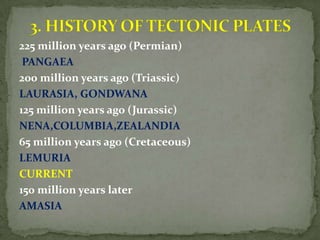
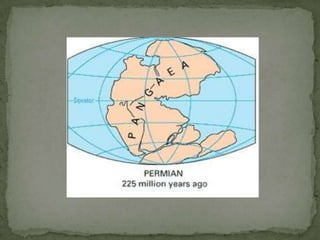
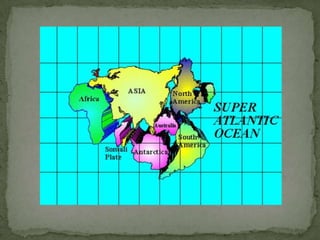
225 million years ago (Permian)
 PANGAEA
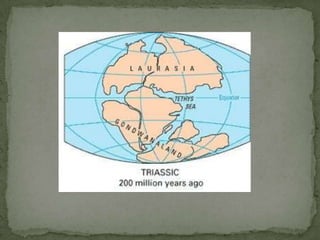
200 million years ago (Triassic)
LAURASIA, GONDWANA
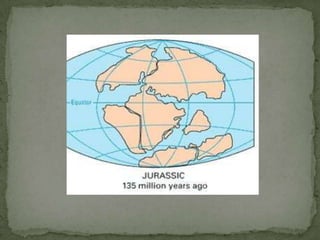
125 million years ago (Jurassic)
NENA,COLUMBIA,ZEALANDIA
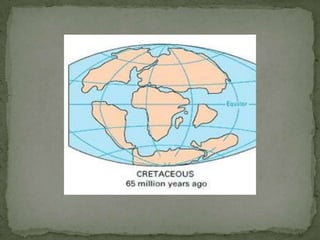
65 million years ago (Cretaceous)
LEMURIA
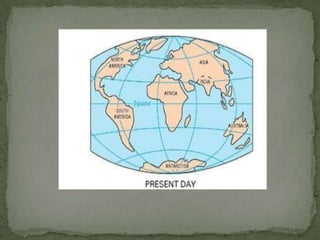
CURRENT
150 million years later
AMASIA
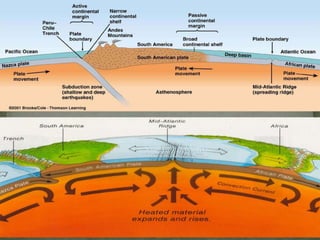
The movement of tectonic plates is believed to be induced
by the asthenosphere which induces heat and convection
currents.

The plates are capable of drifting with respect to each other
along their plate boundaries.

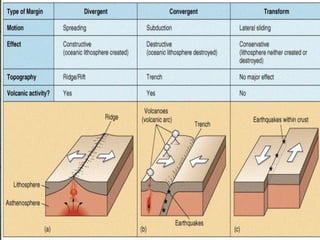
Based on the plate movement, there are 3 principal type of
boundaries namely
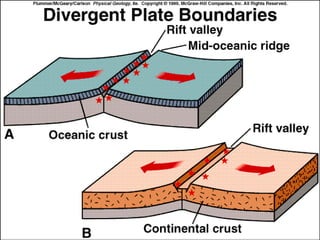
Diverging Boundaries
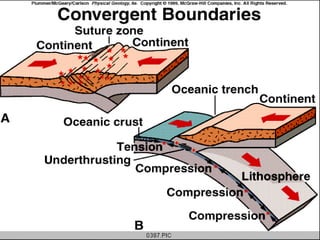
Converging Boundaries
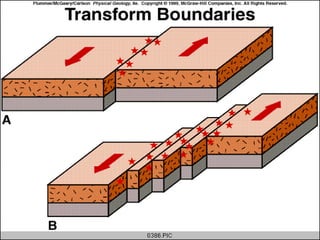
Transform Boundaries
 Divergent Boundary – moving   _____
 Convergent Boundary – moving ________
 Transform Fault Boundary – moving _____________
EXAMPLES


Divergent Boundaries
North American Plate & Eurasian Plate

Convergent Boundaries
South American Plate & Nazca Plate

Transform Boundaries
North American Plate & Pacific Plate near the JDF Plate
PLEASE NOTE
When two continental plates diverge, a rift is created.
Eg. East African Rift

When two oceanic plates diverge, a ridge is created. Sea
Floor Spreading is said to occur.
Eg. Mid Atlantic Ridge

When two oceanic plates converge, an island arc and
trench are created.

When an oceanic and convergent plate converge, a volcano
and trench are created.

When two continental plates converge, a mountain range is
formed.
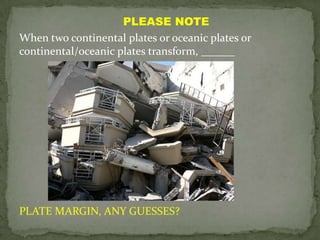
PLEASE NOTE
When two continental plates or oceanic plates or
continental/oceanic plates transform, ______


PLATE MARGIN, ANY GUESSES?

Tectonic Plates

  • 2.
     Where didwe use the term tectonic plates in the previous lecture?  What is the age of the earth?
  • 3.
     What istectonic plates?  What are the different tectonic plates?  What is the history of tectonic plates?  Do the tectonic plates move?  Briefly explain the movement of plates?  What is continental drift?  What is the evidence of continental drift?
  • 4.
  • 5.
     CANZA, (Clue: The 4th theatre in Coimbatore is still kicking, Akka)  AABRAIN (Clue : Dubaia, Bahraina, Sharjahava?)  RICARBEAN (Clue : West Indies)
  • 7.
    The lithosphere isdivided into several slabs or blocks or plates. These plates are supported from below by Asthenosphere. These plates are called Lithosphere plates or Tectonic Plates. Some of these plates encompass continents, some of these plates encompass oceans and some of the plates encompass both oceans and continents.
  • 9.
    The plates aredivided into three categories Primary Plates Secondary Plates Tertiary Plates The primary plates and secondary plates are together called major plates. The tertiary plates are sub divisions of Primary and Secondary Plates
  • 10.
    Primary African Plate Antarctic Plate EurasianPlate Indo-Australian Plate (sometimes Indian and Australian) North American Plate Pacific Plate South American Plate Secondary Arabian Plate Caribbean Plate Cocos Plate Juan de Fuca Plate Nazca Plate Philippine Sea Plate Scotia Plate
  • 14.
    225 million yearsago (Permian) PANGAEA 200 million years ago (Triassic) LAURASIA, GONDWANA 125 million years ago (Jurassic) NENA,COLUMBIA,ZEALANDIA 65 million years ago (Cretaceous) LEMURIA CURRENT 150 million years later AMASIA
  • 22.
    The movement oftectonic plates is believed to be induced by the asthenosphere which induces heat and convection currents. The plates are capable of drifting with respect to each other along their plate boundaries. Based on the plate movement, there are 3 principal type of boundaries namely Diverging Boundaries Converging Boundaries Transform Boundaries
  • 23.
     Divergent Boundary– moving _____  Convergent Boundary – moving ________  Transform Fault Boundary – moving _____________
  • 27.
    EXAMPLES Divergent Boundaries North AmericanPlate & Eurasian Plate Convergent Boundaries South American Plate & Nazca Plate Transform Boundaries North American Plate & Pacific Plate near the JDF Plate
  • 29.
    PLEASE NOTE When twocontinental plates diverge, a rift is created. Eg. East African Rift When two oceanic plates diverge, a ridge is created. Sea Floor Spreading is said to occur. Eg. Mid Atlantic Ridge When two oceanic plates converge, an island arc and trench are created. When an oceanic and convergent plate converge, a volcano and trench are created. When two continental plates converge, a mountain range is formed.
  • 30.
    PLEASE NOTE When twocontinental plates or oceanic plates or continental/oceanic plates transform, ______ PLATE MARGIN, ANY GUESSES?