A Brief History of the
Congo
Objective
 I can explain major historical developments in the Congo.
Pre-Colonial Congo:
500 BCE-600 CE
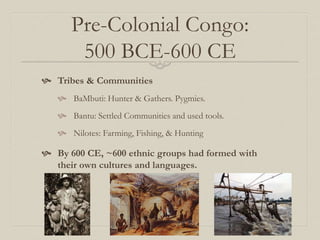
 Tribes & Communities
 BaMbuti: Hunter & Gathers. Pygmies.
 Bantu: Settled Communities and used tools.
 Nilotes: Farming, Fishing, & Hunting
 By 600 CE, ~600 ethnic groups had formed with
their own cultures and languages.
Proverbs
 Read the proverbs to gain an understanding of the values
and culture of the Tribes and people that lived in the
Congo basin.
Protesting the
Congo Free State
 Outside observers placed pressure on Leopold to change
his tactics.
 George Washington Williams: 1880’s- Called for the United
States to lead a push against Leopold.
 Missionaries & the A.P.S.- Humanitarian groups who
spread the message and called for Leopold’s power to be
withdrawn.
 ED Morel-Shipping Agent-1902
 Casement Report-1903
Testimonies from the
Congo Free State
 Read through the Testimonies from the Congo Free State.
 Identify the most important Testimony
 From that testimony, select the most important sentence.
 From that sentence, select the most important word.
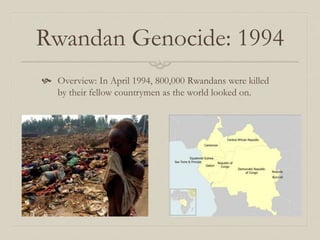
Rwandan Genocide: 1994
 Overview: In April 1994, 800,000 Rwandans were killed
by their fellow countrymen as the world looked on.
Origins of the Rwandan
Conflict
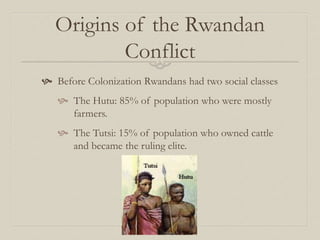
 Before Colonization Rwandans had two social classes
 The Hutu: 85% of population who were mostly
farmers.
 The Tutsi: 15% of population who owned cattle
and became the ruling elite.
Colonization
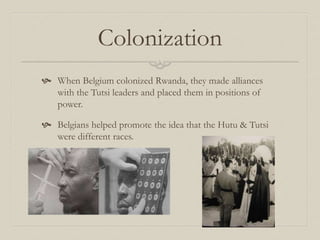
 When Belgium colonized Rwanda, they made alliances
with the Tutsi leaders and placed them in positions of
power.
 Belgians helped promote the idea that the Hutu & Tutsi
were different races.
After Independence:
Persecution of Tutsi
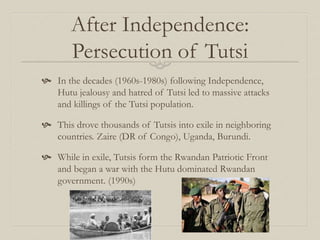
 In the decades (1960s-1980s) following Independence,
Hutu jealousy and hatred of Tutsi led to massive attacks
and killings of the Tutsi population.
 This drove thousands of Tutsis into exile in neighboring
countries. Zaire (DR of Congo), Uganda, Burundi.
 While in exile, Tutsis form the Rwandan Patriotic Front
and began a war with the Hutu dominated Rwandan
government. (1990s)
April 1994
 August 1993: Rwandan president Habyarimana signs a
peace accord with the RPF that agrees to share power in
the government and allow for Tutsi refugees to return to
Rwanda.
 April 6, 1994: Hutu Extremists shoot down a plane
carrying President Habyarimana. They blame the attack
on Tutsis and call for a slaughter of all Tutsi.
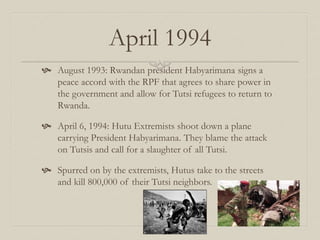
 Spurred on by the extremists, Hutus take to the streets
and kill 800,000 of their Tutsi neighbors.
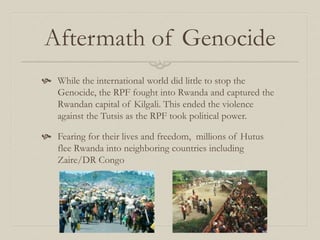
Aftermath of Genocide
 While the international world did little to stop the
Genocide, the RPF fought into Rwanda and captured the
Rwandan capital of Kilgali. This ended the violence
against the Tutsis as the RPF took political power.
 Fearing for their lives and freedom, millions of Hutus
flee Rwanda into neighboring countries including
Zaire/DR Congo
How the Rwandan Genocide
Impacted Congo
 A crisis in eastern Congo developed when massive Hutu
refugee camps formed.
 The RPF became upset with Mubutu for refusing to hand
over Hutu refugees and sent forces in to kill many Hutus.
 Hutu militias supported by Mubutu rose up in the camps
to defend themselves from Tutsi.
 The RPF supported rebel groups that helped overthrow
Mubutu. War in the Congo ensues.
The DR of Congo today
 From what we have seen about the Congo today, list
issues and problems that the DR Congo faces for each
SPICE Category.
 Leave space because you will be adding to this list as you
watch the documentary Virunga.

Congo history overview

  • 1.
    A Brief Historyof the Congo
  • 2.
    Objective  I canexplain major historical developments in the Congo.
  • 3.
    Pre-Colonial Congo: 500 BCE-600CE  Tribes & Communities  BaMbuti: Hunter & Gathers. Pygmies.  Bantu: Settled Communities and used tools.  Nilotes: Farming, Fishing, & Hunting  By 600 CE, ~600 ethnic groups had formed with their own cultures and languages.
  • 4.
    Proverbs  Read theproverbs to gain an understanding of the values and culture of the Tribes and people that lived in the Congo basin.
  • 5.
    Protesting the Congo FreeState  Outside observers placed pressure on Leopold to change his tactics.  George Washington Williams: 1880’s- Called for the United States to lead a push against Leopold.  Missionaries & the A.P.S.- Humanitarian groups who spread the message and called for Leopold’s power to be withdrawn.  ED Morel-Shipping Agent-1902  Casement Report-1903
  • 6.
    Testimonies from the CongoFree State  Read through the Testimonies from the Congo Free State.  Identify the most important Testimony  From that testimony, select the most important sentence.  From that sentence, select the most important word.
  • 7.
    Rwandan Genocide: 1994 Overview: In April 1994, 800,000 Rwandans were killed by their fellow countrymen as the world looked on.
  • 8.
    Origins of theRwandan Conflict  Before Colonization Rwandans had two social classes  The Hutu: 85% of population who were mostly farmers.  The Tutsi: 15% of population who owned cattle and became the ruling elite.
  • 9.
    Colonization  When Belgiumcolonized Rwanda, they made alliances with the Tutsi leaders and placed them in positions of power.  Belgians helped promote the idea that the Hutu & Tutsi were different races.
  • 10.
    After Independence: Persecution ofTutsi  In the decades (1960s-1980s) following Independence, Hutu jealousy and hatred of Tutsi led to massive attacks and killings of the Tutsi population.  This drove thousands of Tutsis into exile in neighboring countries. Zaire (DR of Congo), Uganda, Burundi.  While in exile, Tutsis form the Rwandan Patriotic Front and began a war with the Hutu dominated Rwandan government. (1990s)
  • 11.
    April 1994  August1993: Rwandan president Habyarimana signs a peace accord with the RPF that agrees to share power in the government and allow for Tutsi refugees to return to Rwanda.  April 6, 1994: Hutu Extremists shoot down a plane carrying President Habyarimana. They blame the attack on Tutsis and call for a slaughter of all Tutsi.  Spurred on by the extremists, Hutus take to the streets and kill 800,000 of their Tutsi neighbors.
  • 12.
    Aftermath of Genocide While the international world did little to stop the Genocide, the RPF fought into Rwanda and captured the Rwandan capital of Kilgali. This ended the violence against the Tutsis as the RPF took political power.  Fearing for their lives and freedom, millions of Hutus flee Rwanda into neighboring countries including Zaire/DR Congo
  • 13.
    How the RwandanGenocide Impacted Congo  A crisis in eastern Congo developed when massive Hutu refugee camps formed.  The RPF became upset with Mubutu for refusing to hand over Hutu refugees and sent forces in to kill many Hutus.  Hutu militias supported by Mubutu rose up in the camps to defend themselves from Tutsi.  The RPF supported rebel groups that helped overthrow Mubutu. War in the Congo ensues.
  • 14.
    The DR ofCongo today  From what we have seen about the Congo today, list issues and problems that the DR Congo faces for each SPICE Category.  Leave space because you will be adding to this list as you watch the documentary Virunga.