Species Endemism and Hot 
Spots • A species found naturally in only one geographic area is 
termed endemic 
• Isolated geographical areas, such as islands, lakes or 
mountain ranges, often have many endemic species 
– Notable hotspots of endemism are Madagascar, SE 
Asia, the Caribbean, and SOUTH AFRICA! 
• Unfortunately, many experiencing high rates of 
habitat destruction
Endemism is the ecological state of being unique to a 
defined geographic location, such as an island, nation, 
county or other defined zone, or habitat type; organisms 
that are indigenousto a place are not endemic to it if they 
are also found elsewhere. 
The extreme opposite of endemism is 
cosmopolitan distribution. 
Physical, climatic, and biological factors can contribute to 
endemism. The orange-breasted sunbird is exclusively 
found in the fynbosvegetation zone of southwestern 
South Africa. 
Political factors can play a part if a species is protected, or 
actively hunted, in onejurisdiction but not another.
There are two subcategories of endemism – 
paleoendemism and neoendemism. 
Paleoendemism refers to a species that was formerly 
widespread but is now restricted to a smaller area. 
Neoendemism refers to a species that has recently arisen such 
as a species that has diverged and become reproductively 
isolated, or one that has formed following hybridization and is 
now classified as a separate species.
Endemic types or species are especially likely to develop on 
biologically isolated areas such as islands because of their 
geographical isolation. 
This includes remote island groups, such as Hawaii, the 
Galápagos Islands, and Socotra, biologically isolated but not 
island areas such as the highlands of Ethiopia, or large bodies of 
water like Lake Baikal.
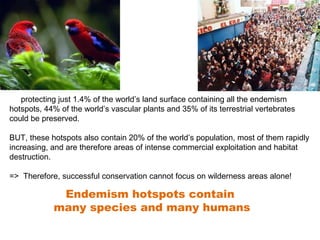
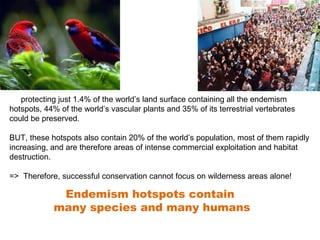
By protecting just 1.4% of the world’s land surface containing all the endemism 
hotspots, 44% of the world’s vascular plants and 35% of its terrestrial vertebrates 
could be preserved. 
BUT, these hotspots also contain 20% of the world’s population, most of them rapidly 
increasing, and are therefore areas of intense commercial exploitation and habitat 
destruction. 
=> Therefore, successful conservation cannot focus on wilderness areas alone! 
Endemism hotspots contain 
many species and many humans
By protecting just 1.4% of the world’s land surface containing all the endemism 
hotspots, 44% of the world’s vascular plants and 35% of its terrestrial vertebrates 
could be preserved. 
BUT, these hotspots also contain 20% of the world’s population, most of them rapidly 
increasing, and are therefore areas of intense commercial exploitation and habitat 
destruction. 
=> Therefore, successful conservation cannot focus on wilderness areas alone! 
Endemism hotspots contain 
many species and many humans

Endemism

  • 1.
    Species Endemism andHot Spots • A species found naturally in only one geographic area is termed endemic • Isolated geographical areas, such as islands, lakes or mountain ranges, often have many endemic species – Notable hotspots of endemism are Madagascar, SE Asia, the Caribbean, and SOUTH AFRICA! • Unfortunately, many experiencing high rates of habitat destruction
  • 2.
    Endemism is theecological state of being unique to a defined geographic location, such as an island, nation, county or other defined zone, or habitat type; organisms that are indigenousto a place are not endemic to it if they are also found elsewhere. The extreme opposite of endemism is cosmopolitan distribution. Physical, climatic, and biological factors can contribute to endemism. The orange-breasted sunbird is exclusively found in the fynbosvegetation zone of southwestern South Africa. Political factors can play a part if a species is protected, or actively hunted, in onejurisdiction but not another.
  • 3.
    There are twosubcategories of endemism – paleoendemism and neoendemism. Paleoendemism refers to a species that was formerly widespread but is now restricted to a smaller area. Neoendemism refers to a species that has recently arisen such as a species that has diverged and become reproductively isolated, or one that has formed following hybridization and is now classified as a separate species.
  • 4.
    Endemic types orspecies are especially likely to develop on biologically isolated areas such as islands because of their geographical isolation. This includes remote island groups, such as Hawaii, the Galápagos Islands, and Socotra, biologically isolated but not island areas such as the highlands of Ethiopia, or large bodies of water like Lake Baikal.
  • 5.
    By protecting just1.4% of the world’s land surface containing all the endemism hotspots, 44% of the world’s vascular plants and 35% of its terrestrial vertebrates could be preserved. BUT, these hotspots also contain 20% of the world’s population, most of them rapidly increasing, and are therefore areas of intense commercial exploitation and habitat destruction. => Therefore, successful conservation cannot focus on wilderness areas alone! Endemism hotspots contain many species and many humans
  • 6.
    By protecting just1.4% of the world’s land surface containing all the endemism hotspots, 44% of the world’s vascular plants and 35% of its terrestrial vertebrates could be preserved. BUT, these hotspots also contain 20% of the world’s population, most of them rapidly increasing, and are therefore areas of intense commercial exploitation and habitat destruction. => Therefore, successful conservation cannot focus on wilderness areas alone! Endemism hotspots contain many species and many humans