Technology in the Cold War
Rockets to Space/Rockets for M.A.D.
Objectives


Students describe events that highlight the Cold War

Students compare goals of technological innovation
and application by Cold War superpowers.

Students investigate origins of modern technology.
Vocabulary
ICBM: Inter-Continental Ballistic Missile - rocket capable of launching
from one nation and detonating its nuclear payload across the planet
in another nation.

U-2: high altitude aircraft used by US to take photo reconnaissance.

Cuban Missile Crisis: confrontation between US and USSR as Soviets
attempt to install ballistic missiles in Cuba. Space Race: Race
between USSR and US to be first or most represented in space travel.

NASA: National Aeronautic and Space Administration - established in
1958; US effort to explore space

Sputnik: Soviet satellite; first satellite launched into Earth’s
atmosphere on October 4, 1957.

Space Race: race between US and USSR to develop technology to
allow ‘firsts’ in exploration of space
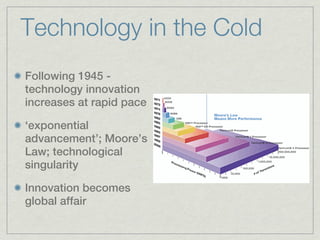
Technology in the Cold
Following 1945 -
technology innovation
increases at rapid pace

‘exponential
advancement’; Moore’s
Law; technological
singularity

Innovation becomes
global affair
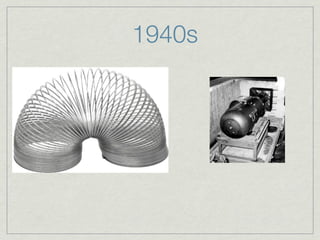
1940s
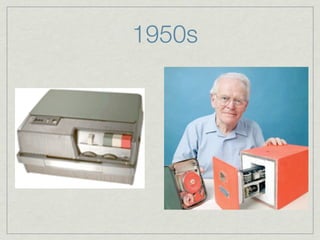
1950s
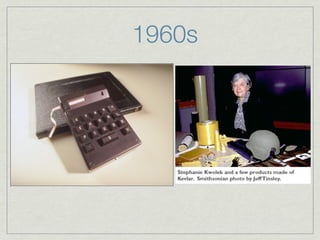
1960s
1970s
1980s
1990s
Case Study:
Rocket Technology
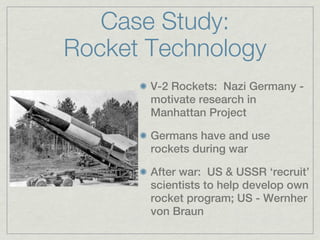
       V-2 Rockets: Nazi Germany -
       motivate research in
       Manhattan Project

       Germans have and use
       rockets during war

       After war: US & USSR ‘recruit’
       scientists to help develop own
       rocket program; US - Wernher
       von Braun
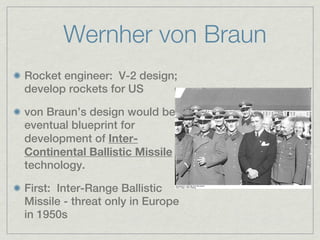
Wernher von Braun
Rocket engineer: V-2 design;
develop rockets for US

von Braun’s design would be
eventual blueprint for
development of Inter-
Continental Ballistic Missile
technology.

First: Inter-Range Ballistic
Missile - threat only in Europe
in 1950s
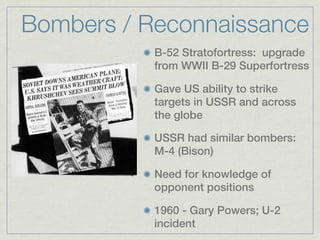
Bombers / Reconnaissance
           B-52 Stratofortress: upgrade
           from WWII B-29 Superfortress

           Gave US ability to strike
           targets in USSR and across
           the globe

           USSR had similar bombers:
           M-4 (Bison)

           Need for knowledge of
           opponent positions

           1960 - Gary Powers; U-2
           incident
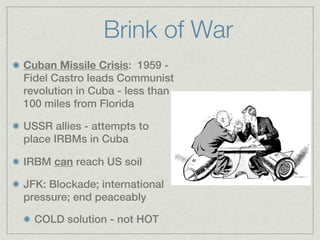
Brink of War
Cuban Missile Crisis: 1959 -
Fidel Castro leads Communist
revolution in Cuba - less than
100 miles from Florida

USSR allies - attempts to
place IRBMs in Cuba

IRBM can reach US soil

JFK: Blockade; international
pressure; end peaceably

  COLD solution - not HOT
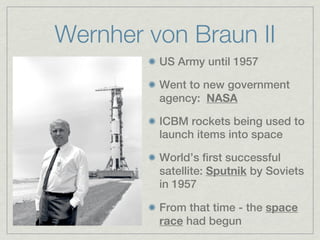
Wernher von Braun II
         US Army until 1957

         Went to new government
         agency: NASA

         ICBM rockets being used to
         launch items into space

         World’s first successful
         satellite: Sputnik by Soviets
         in 1957

         From that time - the space
         race had begun
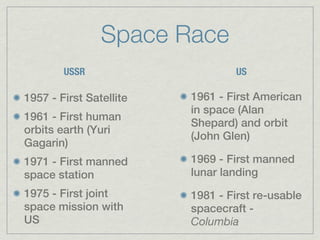
Space Race
        USSR                     US

1957 - First Satellite   1961 - First American
                         in space (Alan
1961 - First human
                         Shepard) and orbit
orbits earth (Yuri
                         (John Glen)
Gagarin)
1971 - First manned      1969 - First manned
space station            lunar landing
1975 - First joint       1981 - First re-usable
space mission with       spacecraft -
US                       Columbia
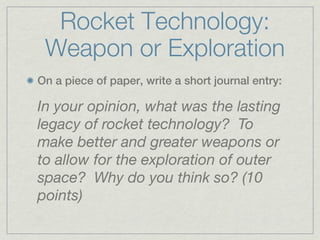
Rocket Technology:
 Weapon or Exploration
On a piece of paper, write a short journal entry:

In your opinion, what was the lasting
legacy of rocket technology? To
make better and greater weapons or
to allow for the exploration of outer
space? Why do you think so? (10
points)

Technology in the Cold War

  • 1.
    Technology in theCold War Rockets to Space/Rockets for M.A.D.
  • 2.
    Objectives Students describe eventsthat highlight the Cold War Students compare goals of technological innovation and application by Cold War superpowers. Students investigate origins of modern technology.
  • 3.
    Vocabulary ICBM: Inter-Continental BallisticMissile - rocket capable of launching from one nation and detonating its nuclear payload across the planet in another nation. U-2: high altitude aircraft used by US to take photo reconnaissance. Cuban Missile Crisis: confrontation between US and USSR as Soviets attempt to install ballistic missiles in Cuba. Space Race: Race between USSR and US to be first or most represented in space travel. NASA: National Aeronautic and Space Administration - established in 1958; US effort to explore space Sputnik: Soviet satellite; first satellite launched into Earth’s atmosphere on October 4, 1957. Space Race: race between US and USSR to develop technology to allow ‘firsts’ in exploration of space
  • 4.
    Technology in theCold Following 1945 - technology innovation increases at rapid pace ‘exponential advancement’; Moore’s Law; technological singularity Innovation becomes global affair
  • 5.
  • 6.
  • 7.
  • 8.
  • 9.
  • 10.
  • 11.
    Case Study: Rocket Technology V-2 Rockets: Nazi Germany - motivate research in Manhattan Project Germans have and use rockets during war After war: US & USSR ‘recruit’ scientists to help develop own rocket program; US - Wernher von Braun
  • 12.
    Wernher von Braun Rocketengineer: V-2 design; develop rockets for US von Braun’s design would be eventual blueprint for development of Inter- Continental Ballistic Missile technology. First: Inter-Range Ballistic Missile - threat only in Europe in 1950s
  • 13.
    Bombers / Reconnaissance B-52 Stratofortress: upgrade from WWII B-29 Superfortress Gave US ability to strike targets in USSR and across the globe USSR had similar bombers: M-4 (Bison) Need for knowledge of opponent positions 1960 - Gary Powers; U-2 incident
  • 14.
    Brink of War CubanMissile Crisis: 1959 - Fidel Castro leads Communist revolution in Cuba - less than 100 miles from Florida USSR allies - attempts to place IRBMs in Cuba IRBM can reach US soil JFK: Blockade; international pressure; end peaceably COLD solution - not HOT
  • 15.
    Wernher von BraunII US Army until 1957 Went to new government agency: NASA ICBM rockets being used to launch items into space World’s first successful satellite: Sputnik by Soviets in 1957 From that time - the space race had begun
  • 16.
    Space Race USSR US 1957 - First Satellite 1961 - First American in space (Alan 1961 - First human Shepard) and orbit orbits earth (Yuri (John Glen) Gagarin) 1971 - First manned 1969 - First manned space station lunar landing 1975 - First joint 1981 - First re-usable space mission with spacecraft - US Columbia
  • 17.
    Rocket Technology: Weaponor Exploration On a piece of paper, write a short journal entry: In your opinion, what was the lasting legacy of rocket technology? To make better and greater weapons or to allow for the exploration of outer space? Why do you think so? (10 points)