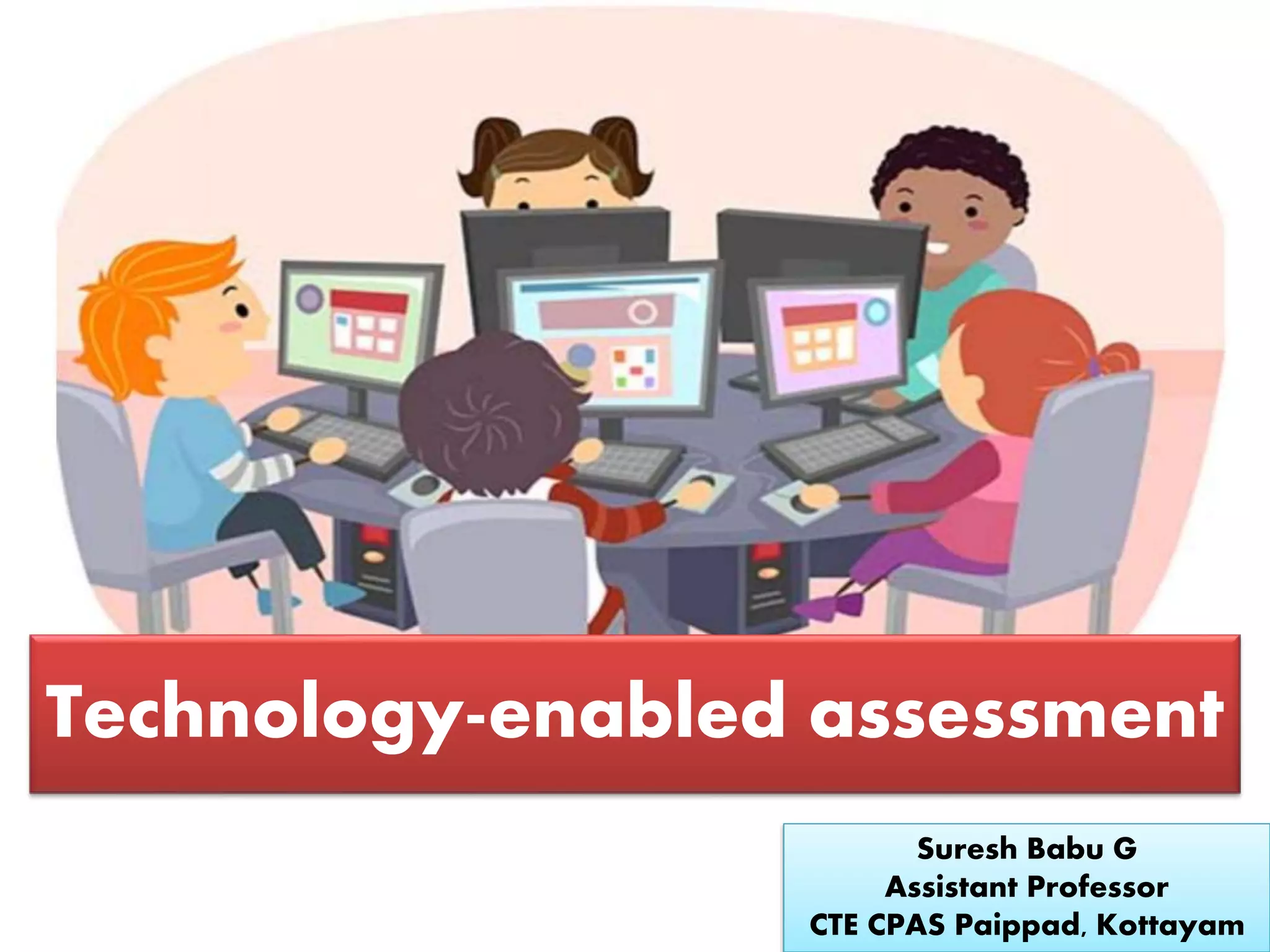
Technology-enabled assessment
Suresh Babu G
Assistant Professor
CTE CPAS Paippad, Kottayam
Technology Enhanced
Assessment (TEA)
Technology Enhanced
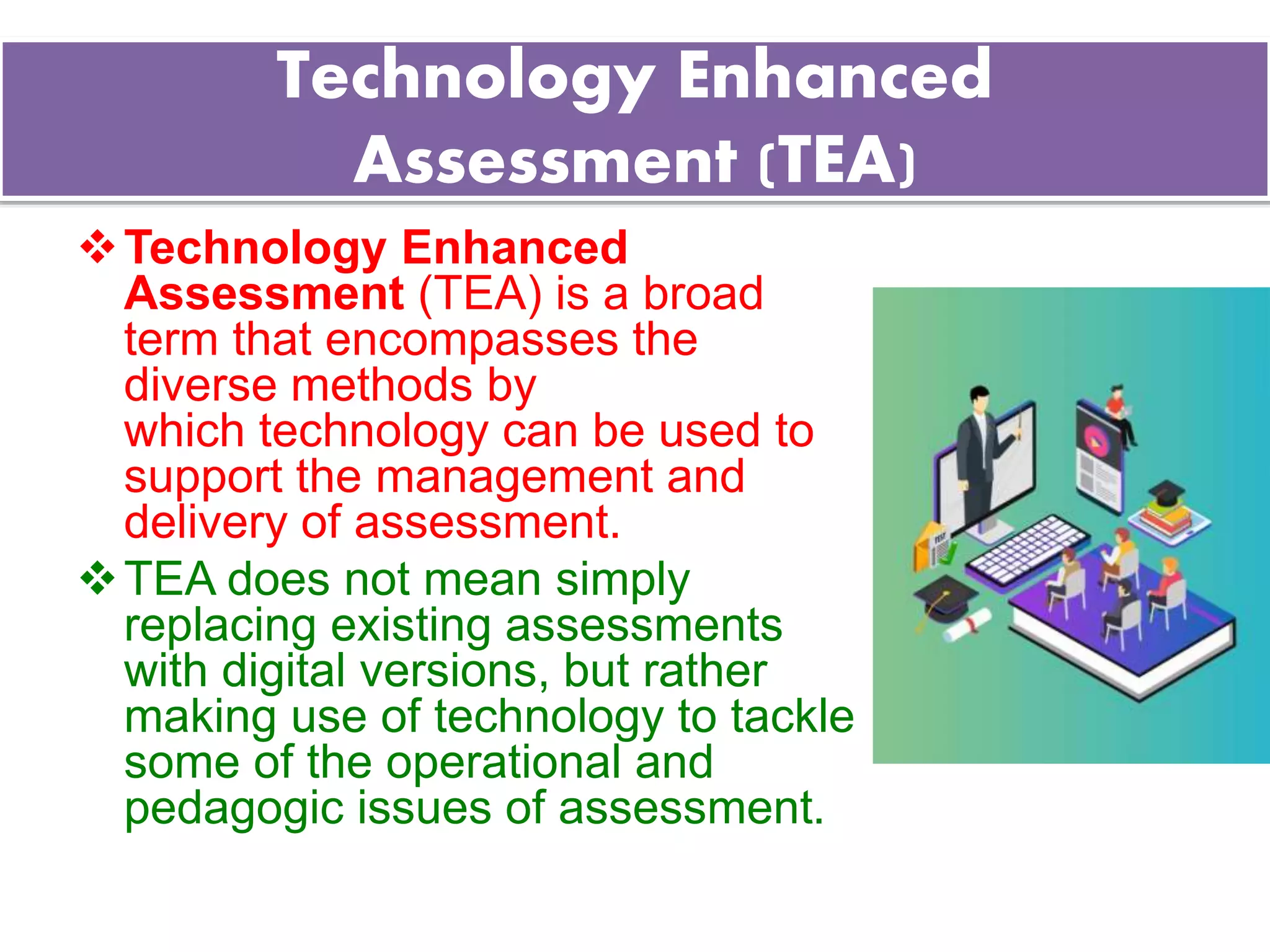
Assessment (TEA) is a broad
term that encompasses the
diverse methods by
which technology can be used to
support the management and
delivery of assessment.
TEA does not mean simply
replacing existing assessments
with digital versions, but rather
making use of technology to tackle
some of the operational and
pedagogic issues of assessment.
Importance of TEA
• Technology can help us imagine and redefine assessment
in a variety of ways.
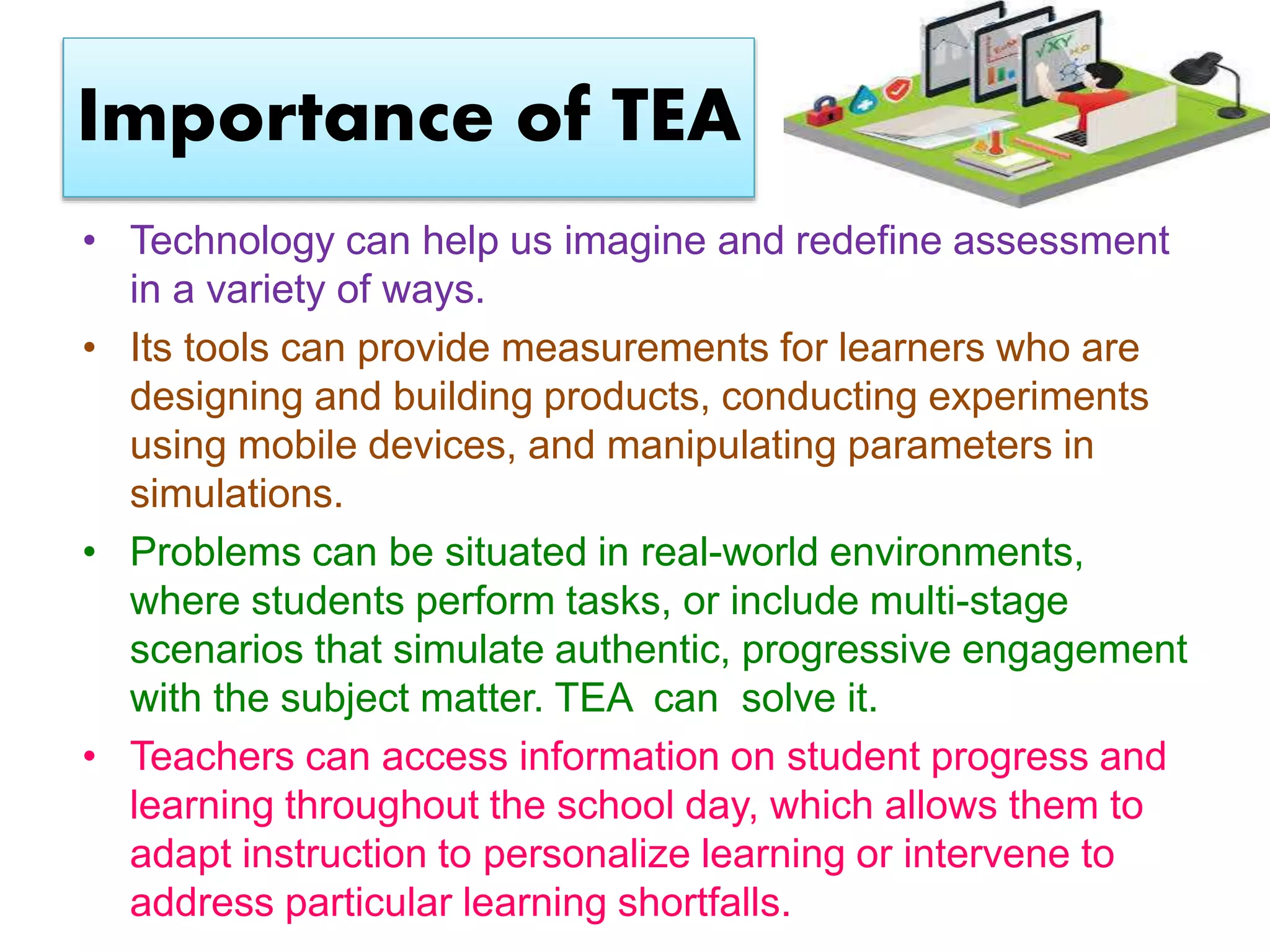
• Its tools can provide measurements for learners who are
designing and building products, conducting experiments
using mobile devices, and manipulating parameters in
simulations.
• Problems can be situated in real-world environments,
where students perform tasks, or include multi-stage
scenarios that simulate authentic, progressive engagement
with the subject matter. TEA can solve it.
• Teachers can access information on student progress and
learning throughout the school day, which allows them to
adapt instruction to personalize learning or intervene to
address particular learning shortfalls.
• The unique attributes of technology-based
assessments that enable these activities include
the following.
1. Technology-based assessments allow for a variety
of question types beyond the limited multiple-
choice, true-or-false, or fill-in-the-blank options
that have characterized traditional assessments.
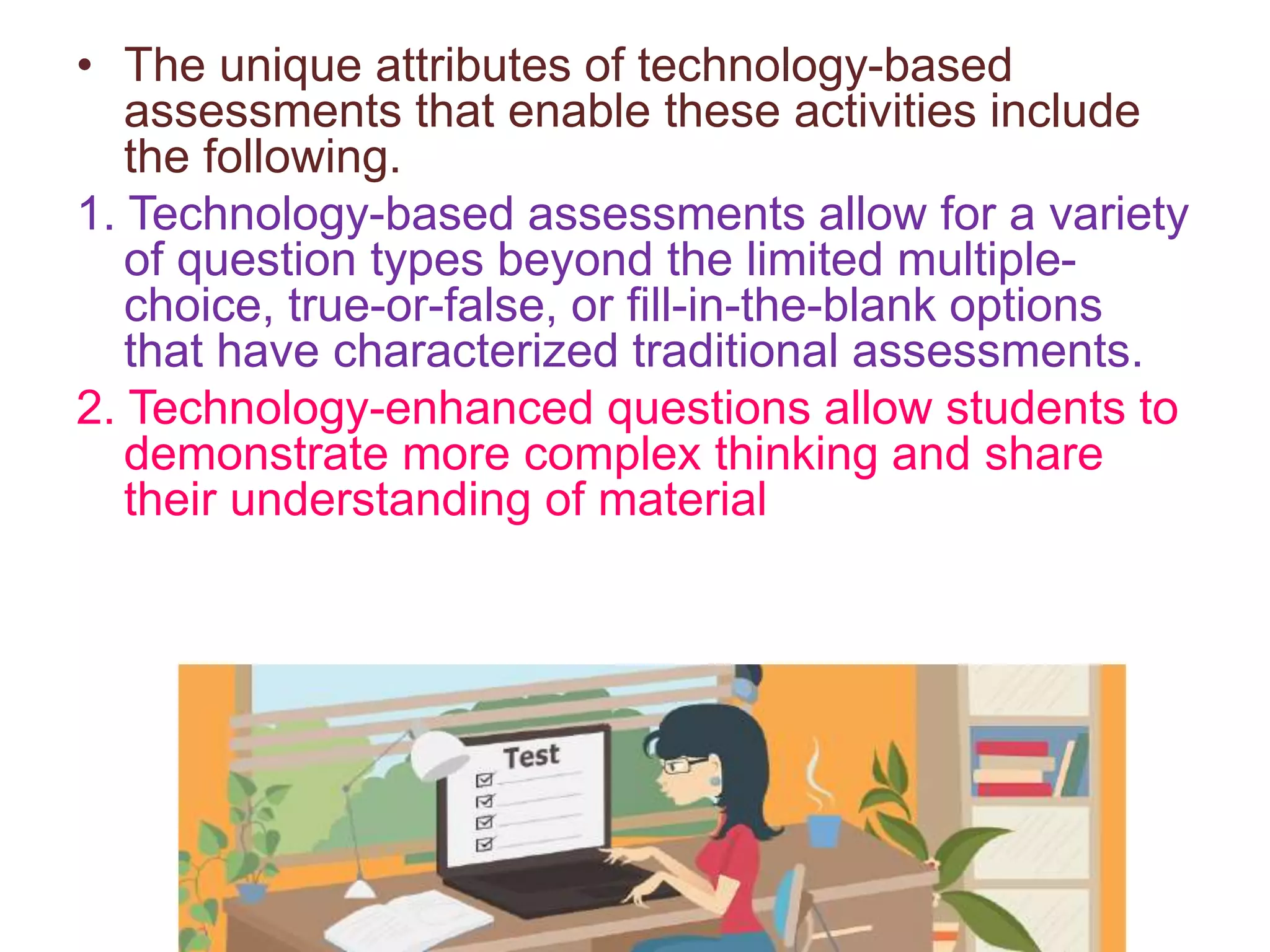
2. Technology-enhanced questions allow students to
demonstrate more complex thinking and share
their understanding of material
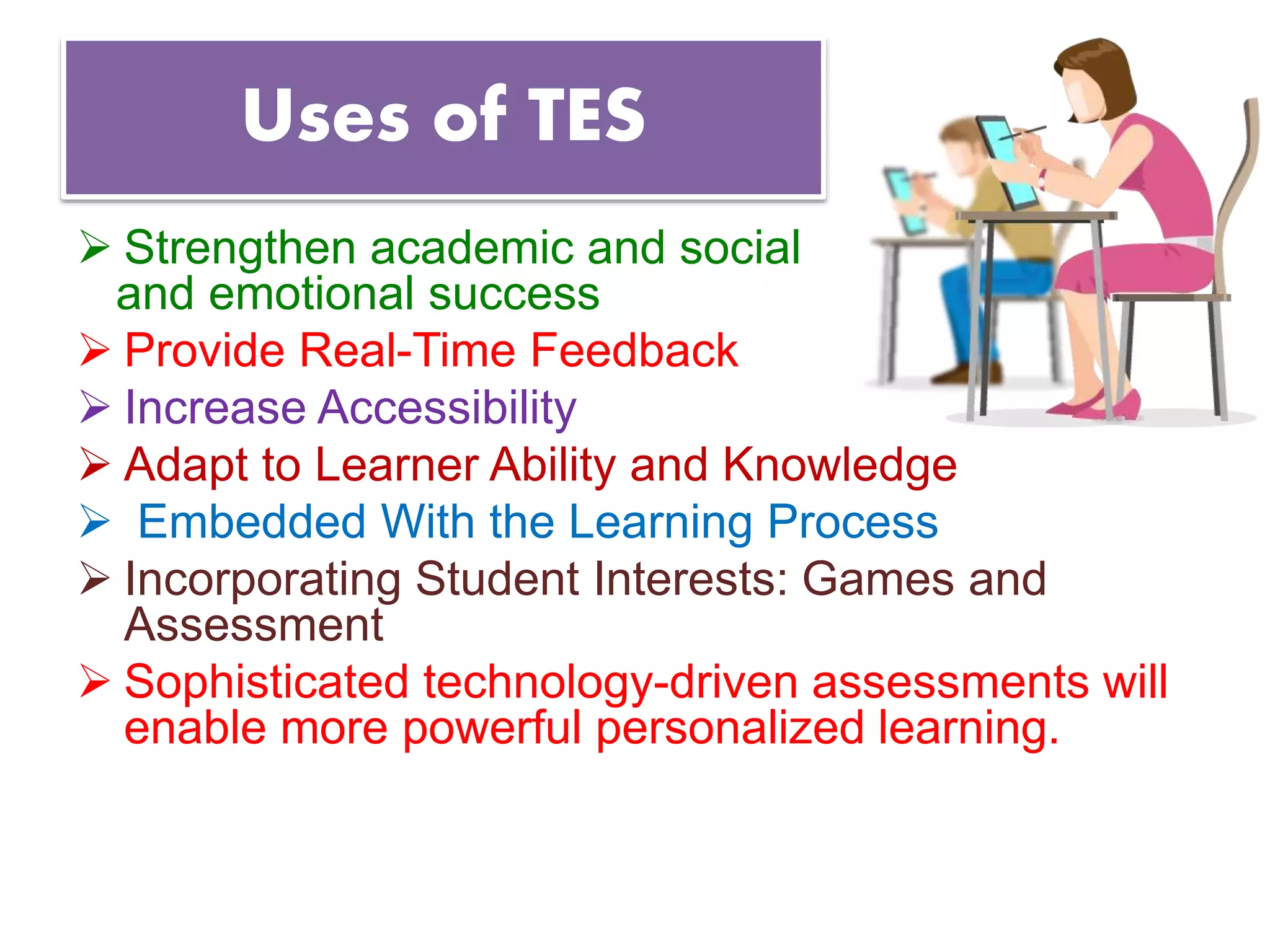
Uses of TES
 Strengthen academic and social
and emotional success
 Provide Real-Time Feedback
 Increase Accessibility
 Adapt to Learner Ability and Knowledge
 Embedded With the Learning Process
 Incorporating Student Interests: Games and
Assessment
 Sophisticated technology-driven assessments will
enable more powerful personalized learning.
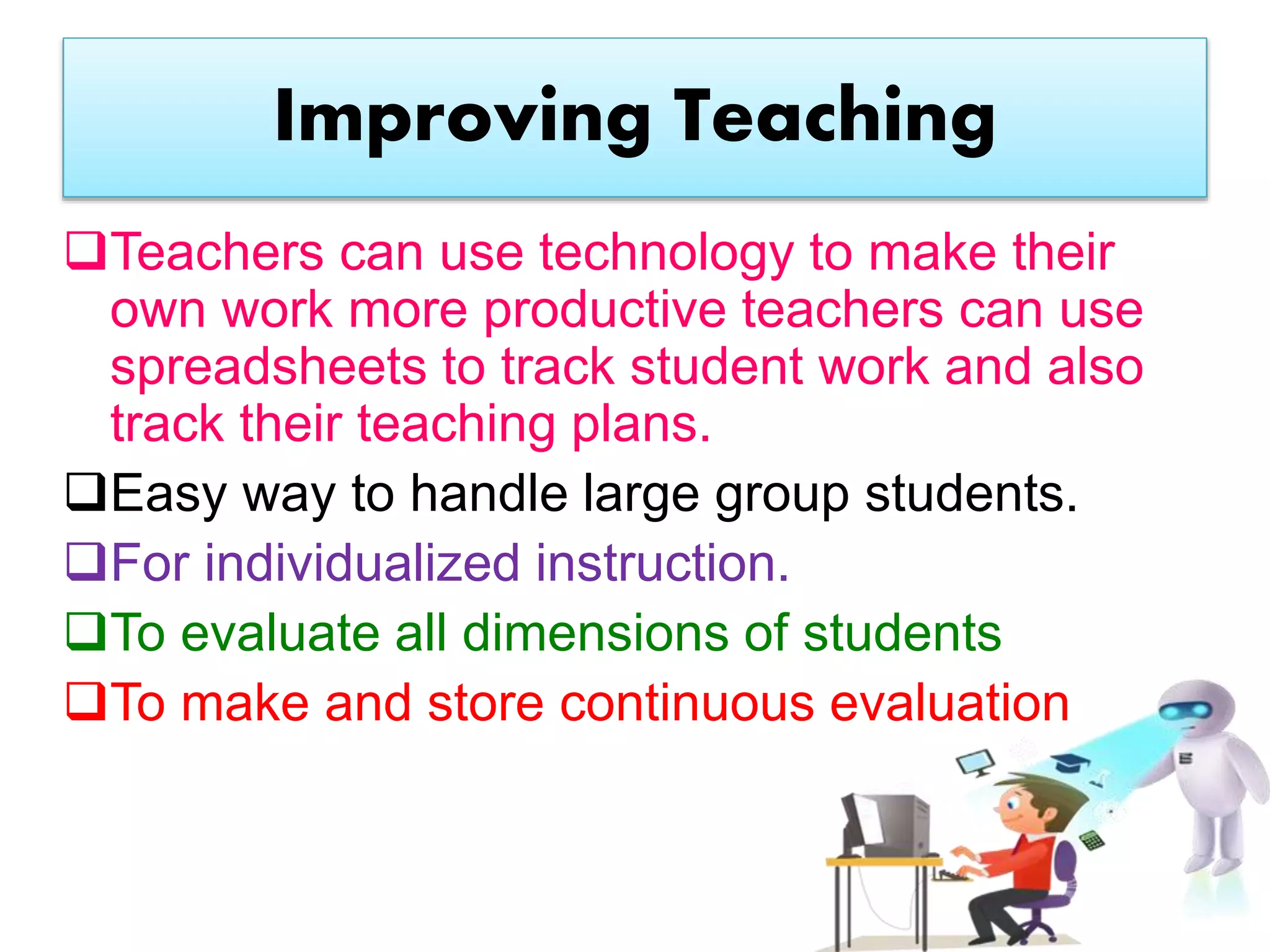
Improving Teaching
Teachers can use technology to make their
own work more productive teachers can use
spreadsheets to track student work and also
track their teaching plans.
Easy way to handle large group students.
For individualized instruction.
To evaluate all dimensions of students
To make and store continuous evaluation
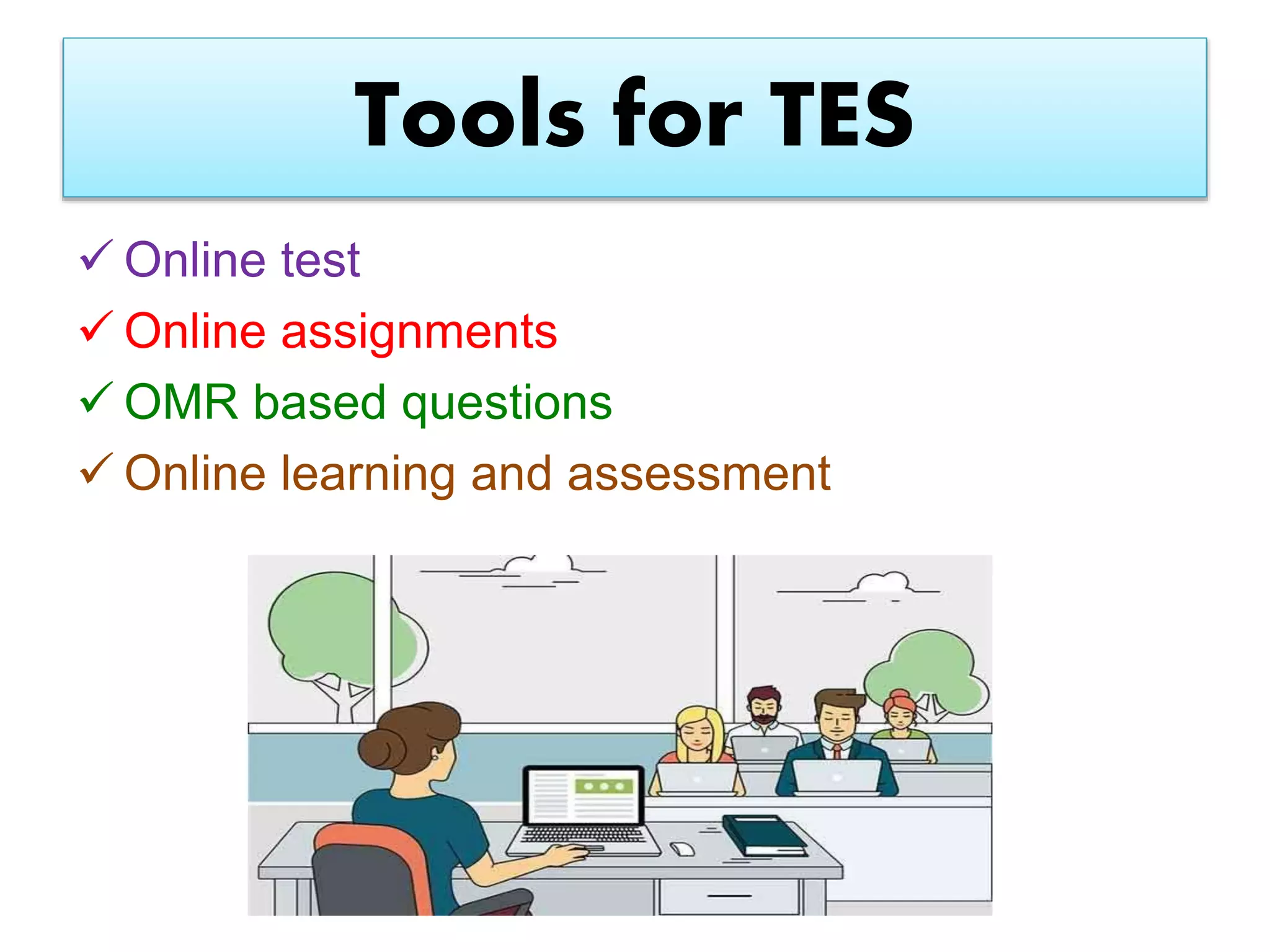
Tools for TES
 Online test
 Online assignments
 OMR based questions
 Online learning and assessment
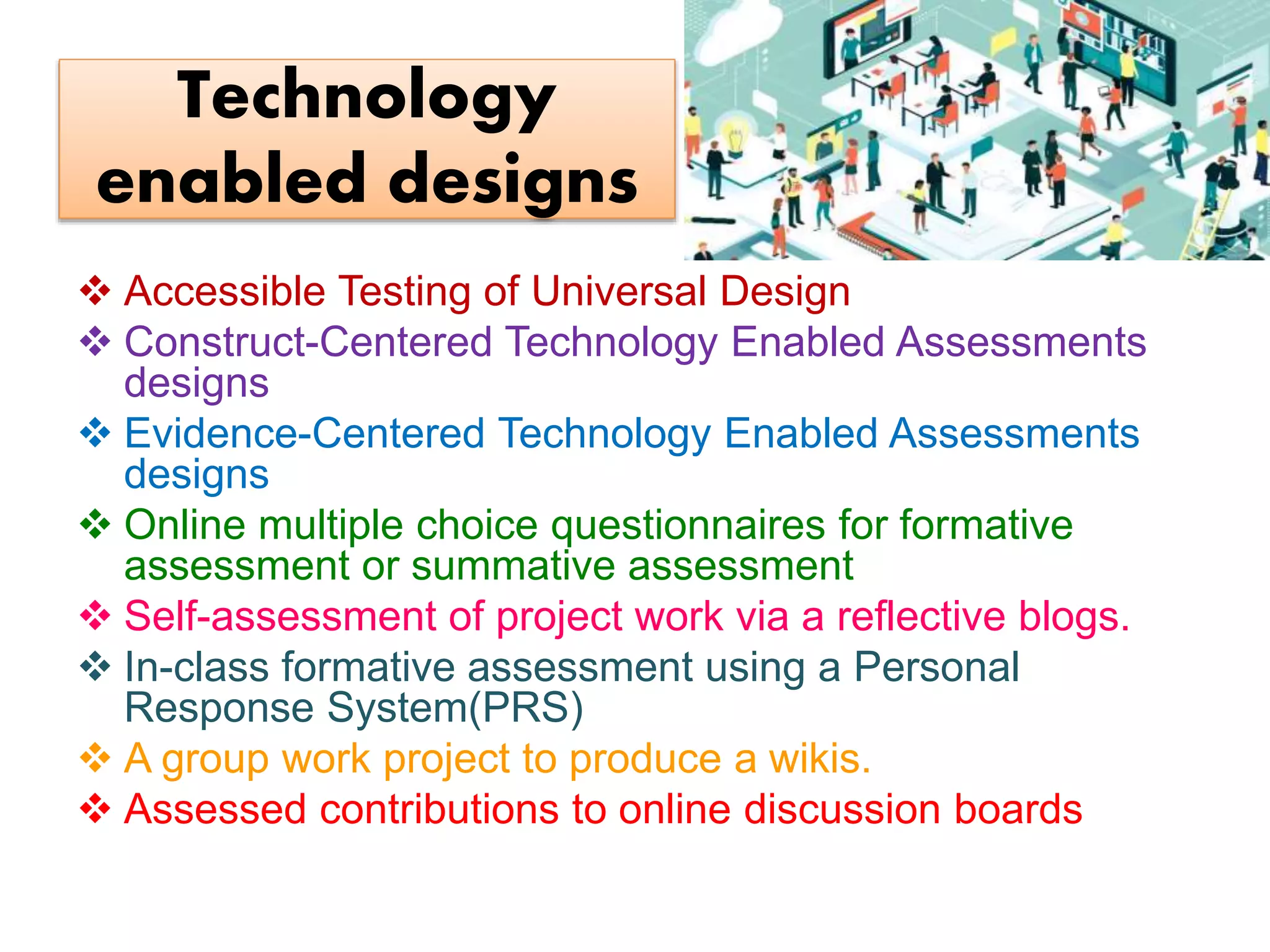
Technology
enabled designs
 Accessible Testing of Universal Design
 Construct-Centered Technology Enabled Assessments
designs
 Evidence-Centered Technology Enabled Assessments
designs
 Online multiple choice questionnaires for formative
assessment or summative assessment
 Self-assessment of project work via a reflective blogs.
 In-class formative assessment using a Personal
Response System(PRS)
 A group work project to produce a wikis.
 Assessed contributions to online discussion boards
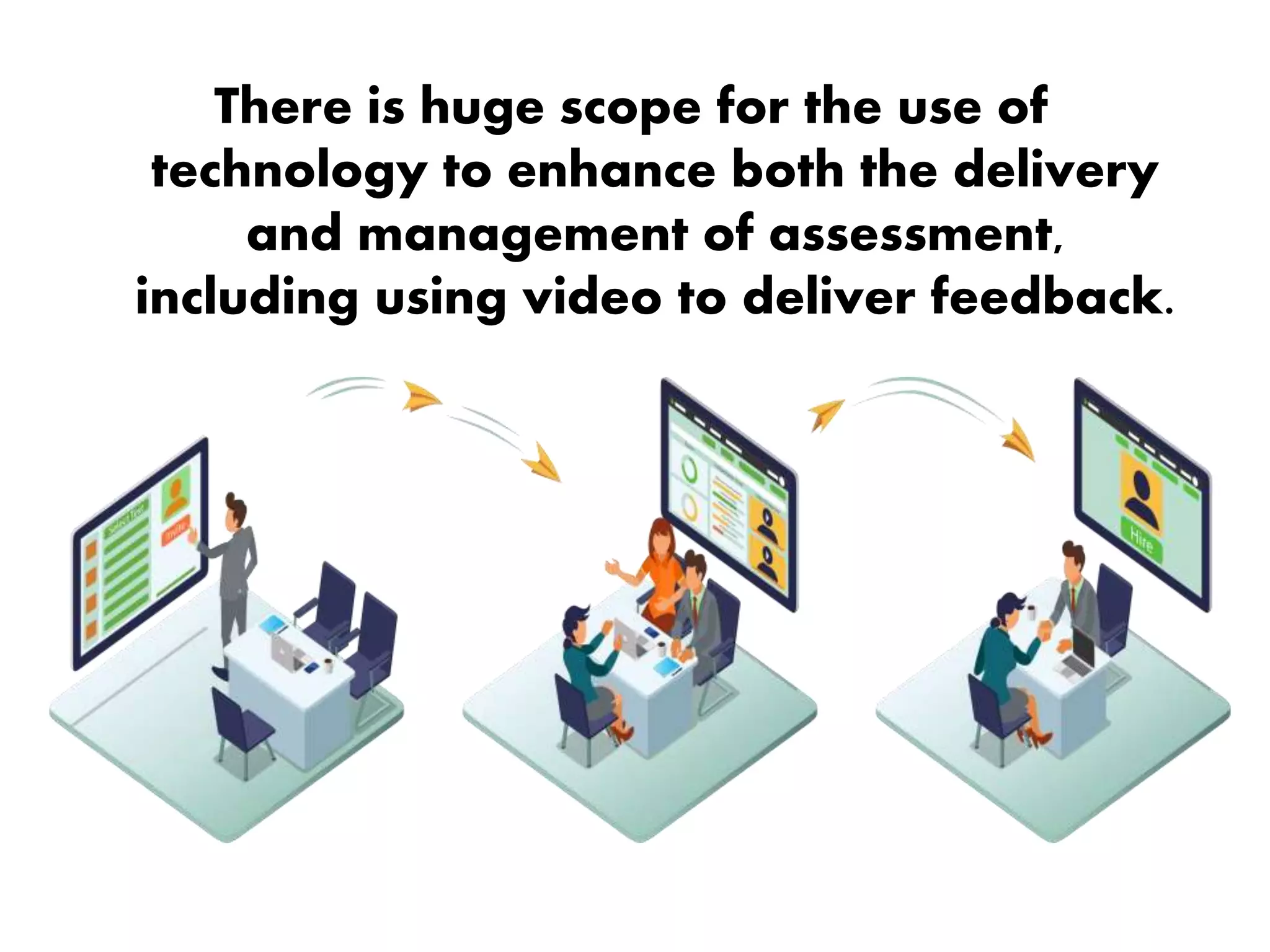
There is huge scope for the use of
technology to enhance both the delivery
and management of assessment,
including using video to deliver feedback.

Technology Enabled Assessment

  • 1.
    Technology-enabled assessment Suresh BabuG Assistant Professor CTE CPAS Paippad, Kottayam
  • 2.
    Technology Enhanced Assessment (TEA) TechnologyEnhanced Assessment (TEA) is a broad term that encompasses the diverse methods by which technology can be used to support the management and delivery of assessment. TEA does not mean simply replacing existing assessments with digital versions, but rather making use of technology to tackle some of the operational and pedagogic issues of assessment.
  • 3.
    Importance of TEA •Technology can help us imagine and redefine assessment in a variety of ways. • Its tools can provide measurements for learners who are designing and building products, conducting experiments using mobile devices, and manipulating parameters in simulations. • Problems can be situated in real-world environments, where students perform tasks, or include multi-stage scenarios that simulate authentic, progressive engagement with the subject matter. TEA can solve it. • Teachers can access information on student progress and learning throughout the school day, which allows them to adapt instruction to personalize learning or intervene to address particular learning shortfalls.
  • 4.
    • The uniqueattributes of technology-based assessments that enable these activities include the following. 1. Technology-based assessments allow for a variety of question types beyond the limited multiple- choice, true-or-false, or fill-in-the-blank options that have characterized traditional assessments. 2. Technology-enhanced questions allow students to demonstrate more complex thinking and share their understanding of material
  • 5.
    Uses of TES Strengthen academic and social and emotional success  Provide Real-Time Feedback  Increase Accessibility  Adapt to Learner Ability and Knowledge  Embedded With the Learning Process  Incorporating Student Interests: Games and Assessment  Sophisticated technology-driven assessments will enable more powerful personalized learning.
  • 6.
    Improving Teaching Teachers canuse technology to make their own work more productive teachers can use spreadsheets to track student work and also track their teaching plans. Easy way to handle large group students. For individualized instruction. To evaluate all dimensions of students To make and store continuous evaluation
  • 7.
    Tools for TES Online test  Online assignments  OMR based questions  Online learning and assessment
  • 8.
    Technology enabled designs  AccessibleTesting of Universal Design  Construct-Centered Technology Enabled Assessments designs  Evidence-Centered Technology Enabled Assessments designs  Online multiple choice questionnaires for formative assessment or summative assessment  Self-assessment of project work via a reflective blogs.  In-class formative assessment using a Personal Response System(PRS)  A group work project to produce a wikis.  Assessed contributions to online discussion boards
  • 9.
    There is hugescope for the use of technology to enhance both the delivery and management of assessment, including using video to deliver feedback.