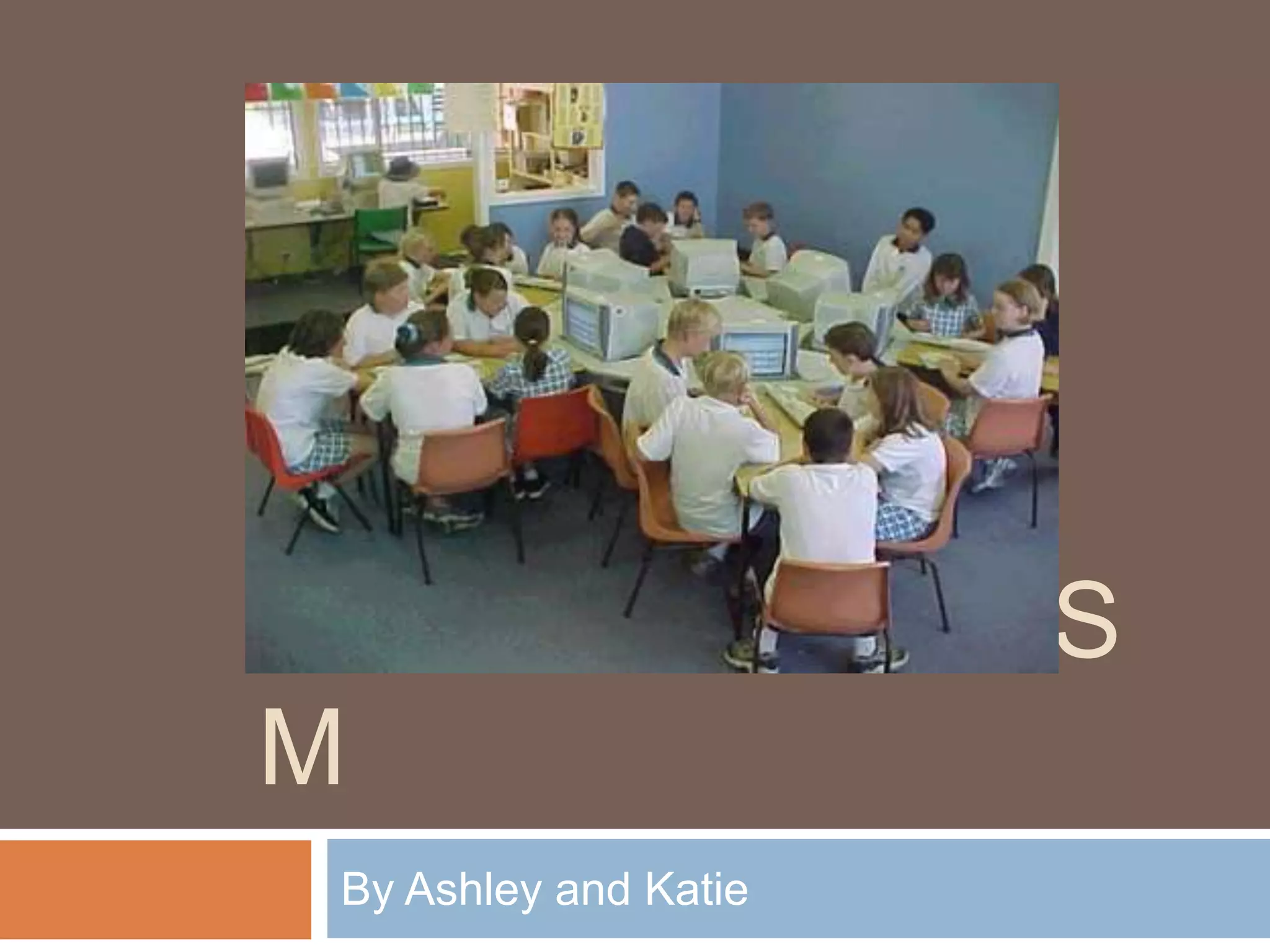
CONSTRUCTIVIS
M
 By Ashley and Katie
Key People Associated With
          Constructivism
 Jean Piaget – Cognitive stages/schemas
 Jerome Bruner – Constructive learners
  are participatory learners
 Lev Vygotsky – Developed social

  cognition; ZPD
 John Dewey – Advocate for child-centered
  instruction; progressive education
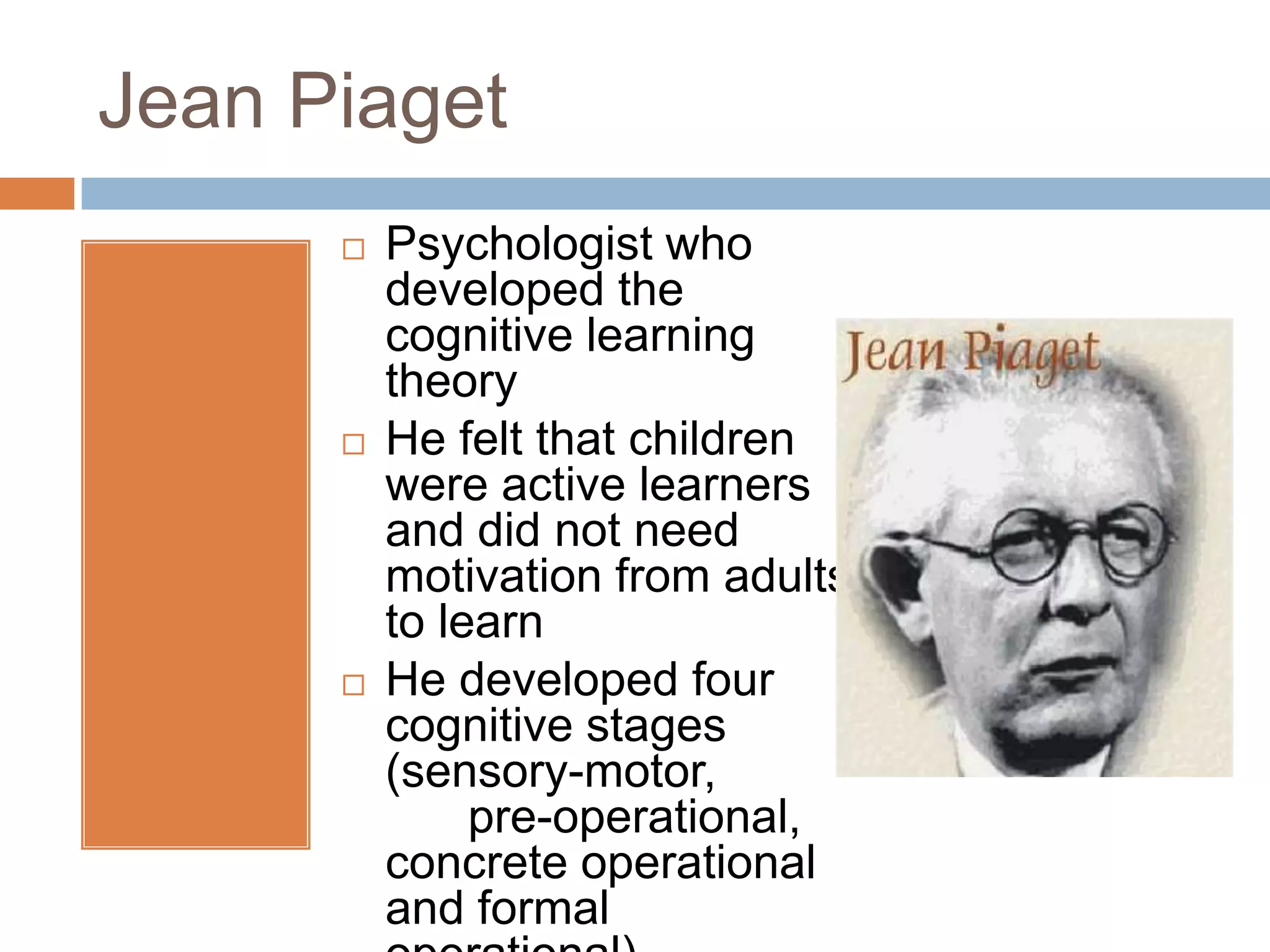
Jean Piaget
         Psychologist who
          developed the
          cognitive learning
          theory
         He felt that children
          were active learners
          and did not need
          motivation from adults
          to learn
         He developed four
          cognitive stages
          (sensory-motor,
               pre-operational,
          concrete operational
          and formal
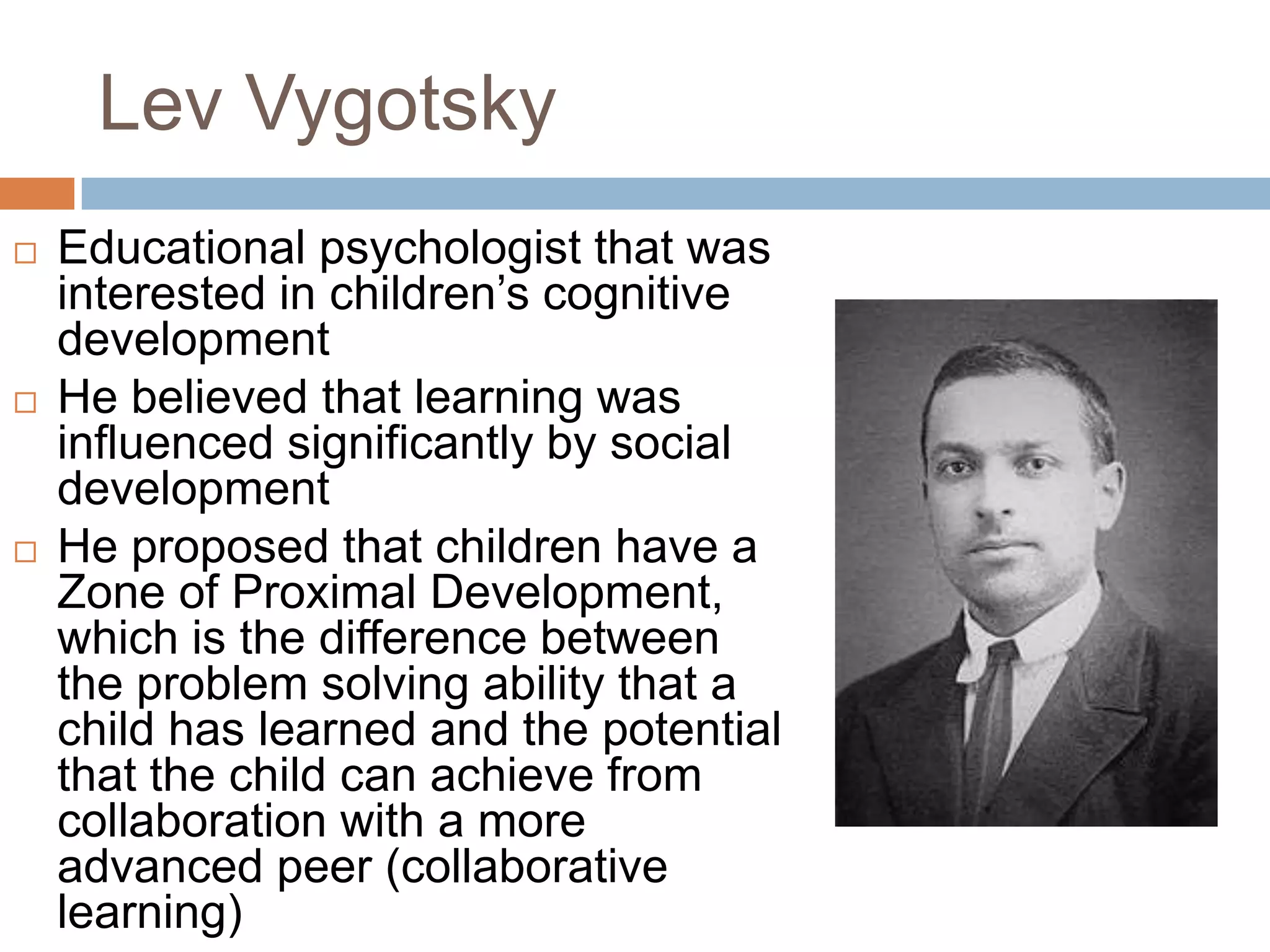
Lev Vygotsky
   Educational psychologist that was
    interested in children’s cognitive
    development
   He believed that learning was
    influenced significantly by social
    development
   He proposed that children have a
    Zone of Proximal Development,
    which is the difference between
    the problem solving ability that a
    child has learned and the potential
    that the child can achieve from
    collaboration with a more
    advanced peer (collaborative
    learning)
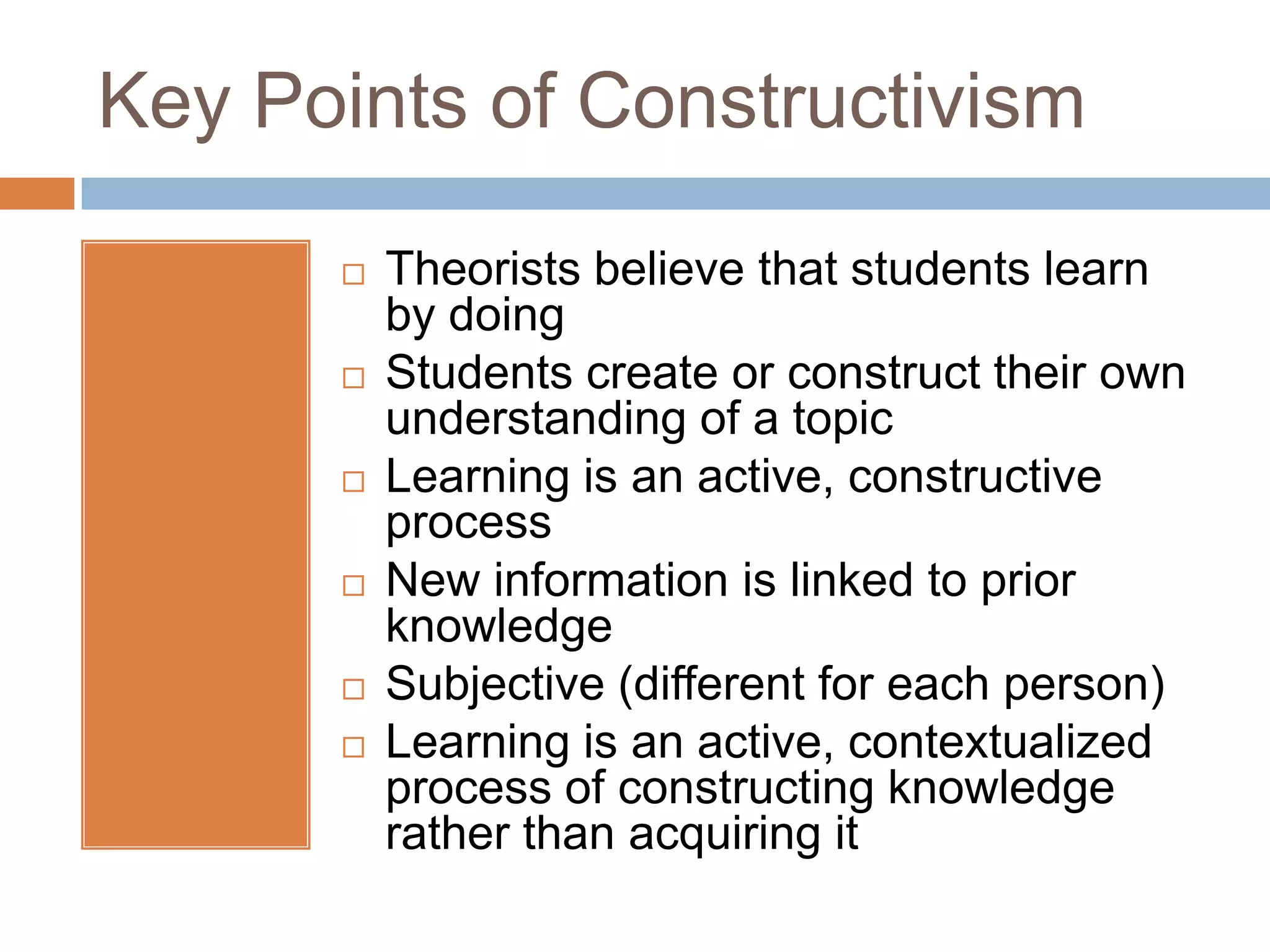
Key Points of Constructivism

         Theorists believe that students learn
          by doing
         Students create or construct their own
          understanding of a topic
         Learning is an active, constructive
          process
         New information is linked to prior
          knowledge
         Subjective (different for each person)
         Learning is an active, contextualized
          process of constructing knowledge
          rather than acquiring it
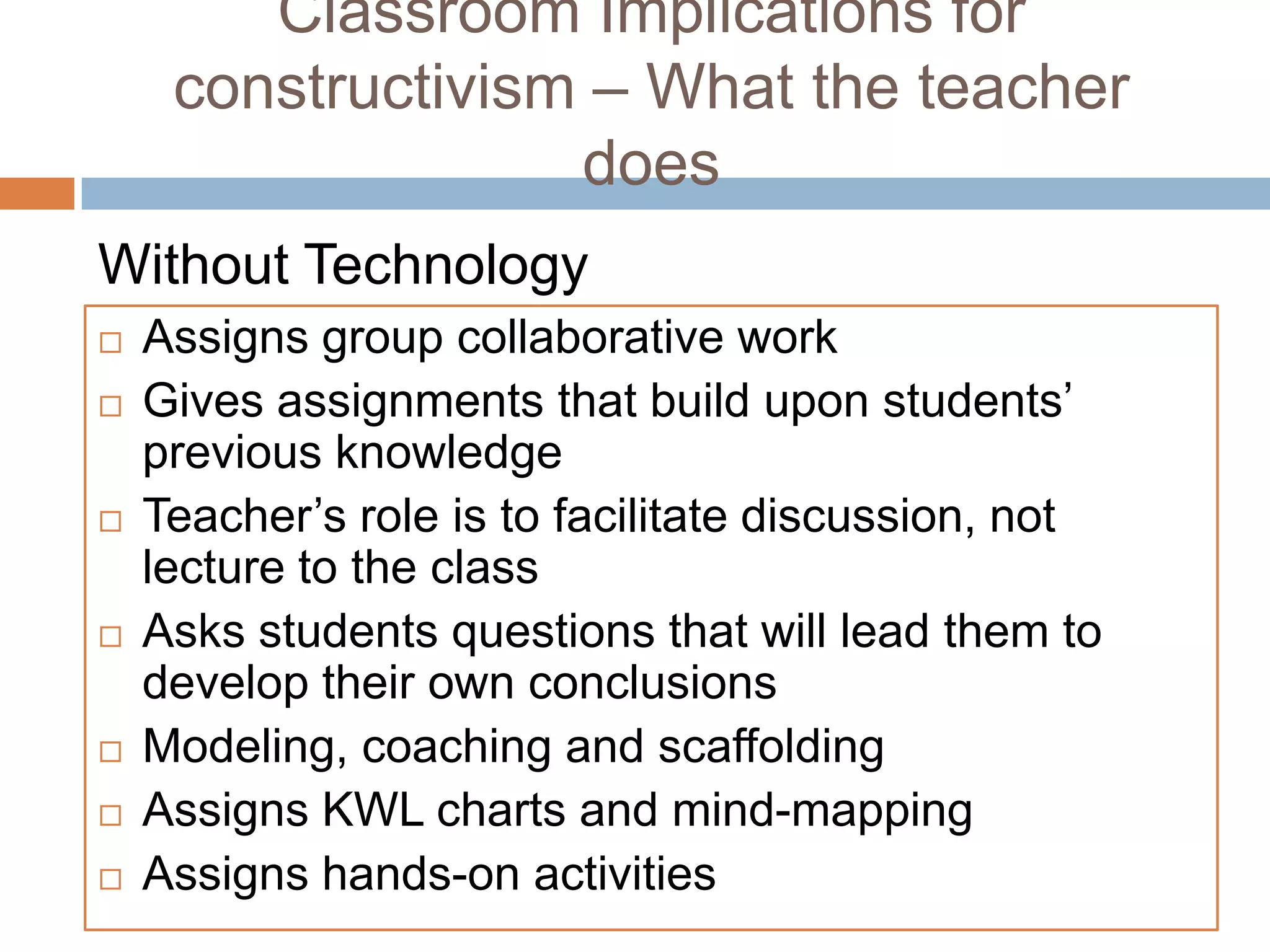
Classroom Implications for
     constructivism – What the teacher
                   does
Without Technology
   Assigns group collaborative work
   Gives assignments that build upon students’
    previous knowledge
   Teacher’s role is to facilitate discussion, not
    lecture to the class
   Asks students questions that will lead them to
    develop their own conclusions
   Modeling, coaching and scaffolding
   Assigns KWL charts and mind-mapping
   Assigns hands-on activities
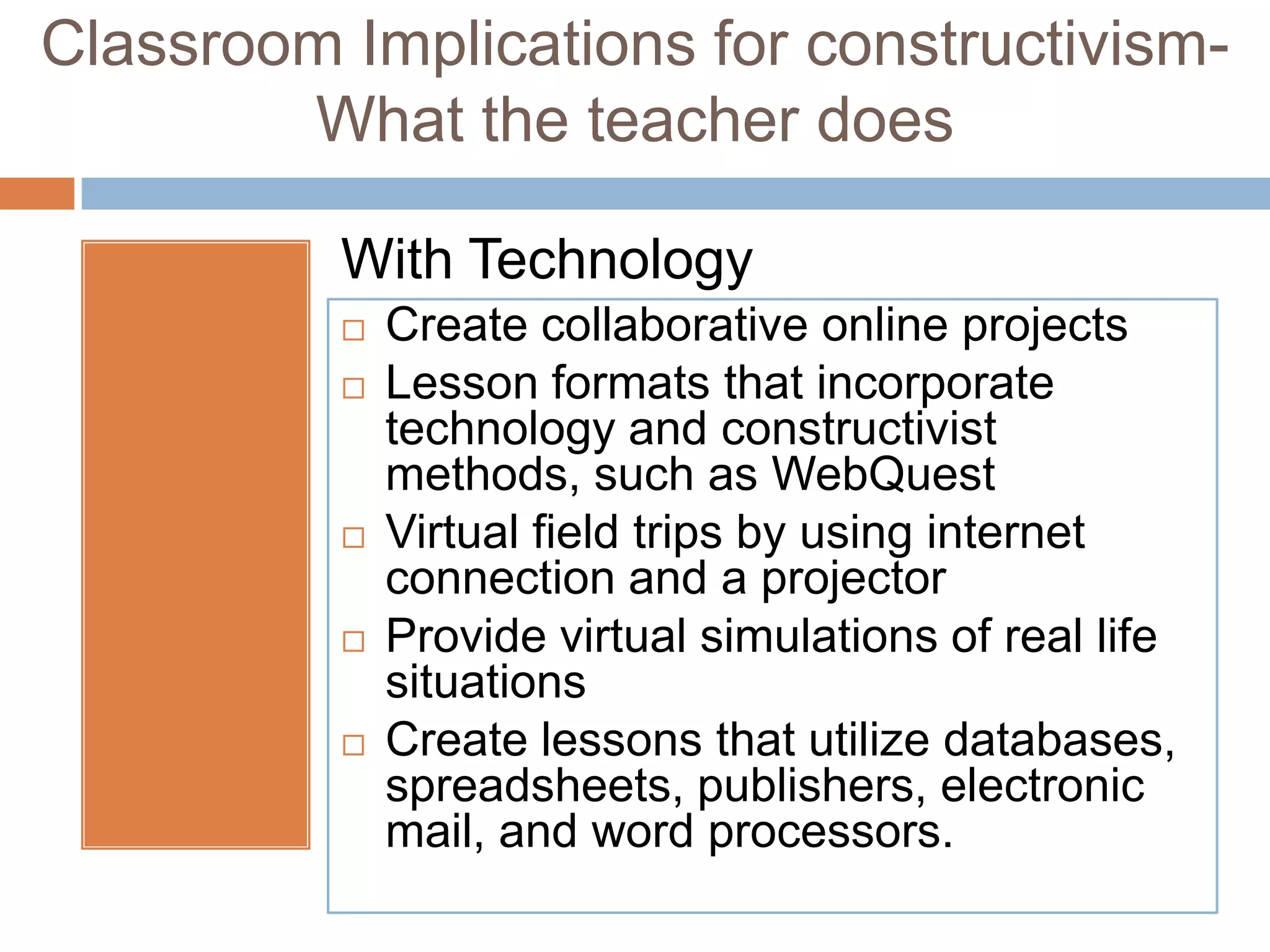
Classroom Implications for constructivism-
        What the teacher does

          With Technology
             Create collaborative online projects
             Lesson formats that incorporate
              technology and constructivist
              methods, such as WebQuest
             Virtual field trips by using internet
              connection and a projector
             Provide virtual simulations of real life
              situations
             Create lessons that utilize databases,
              spreadsheets, publishers, electronic
              mail, and word processors.
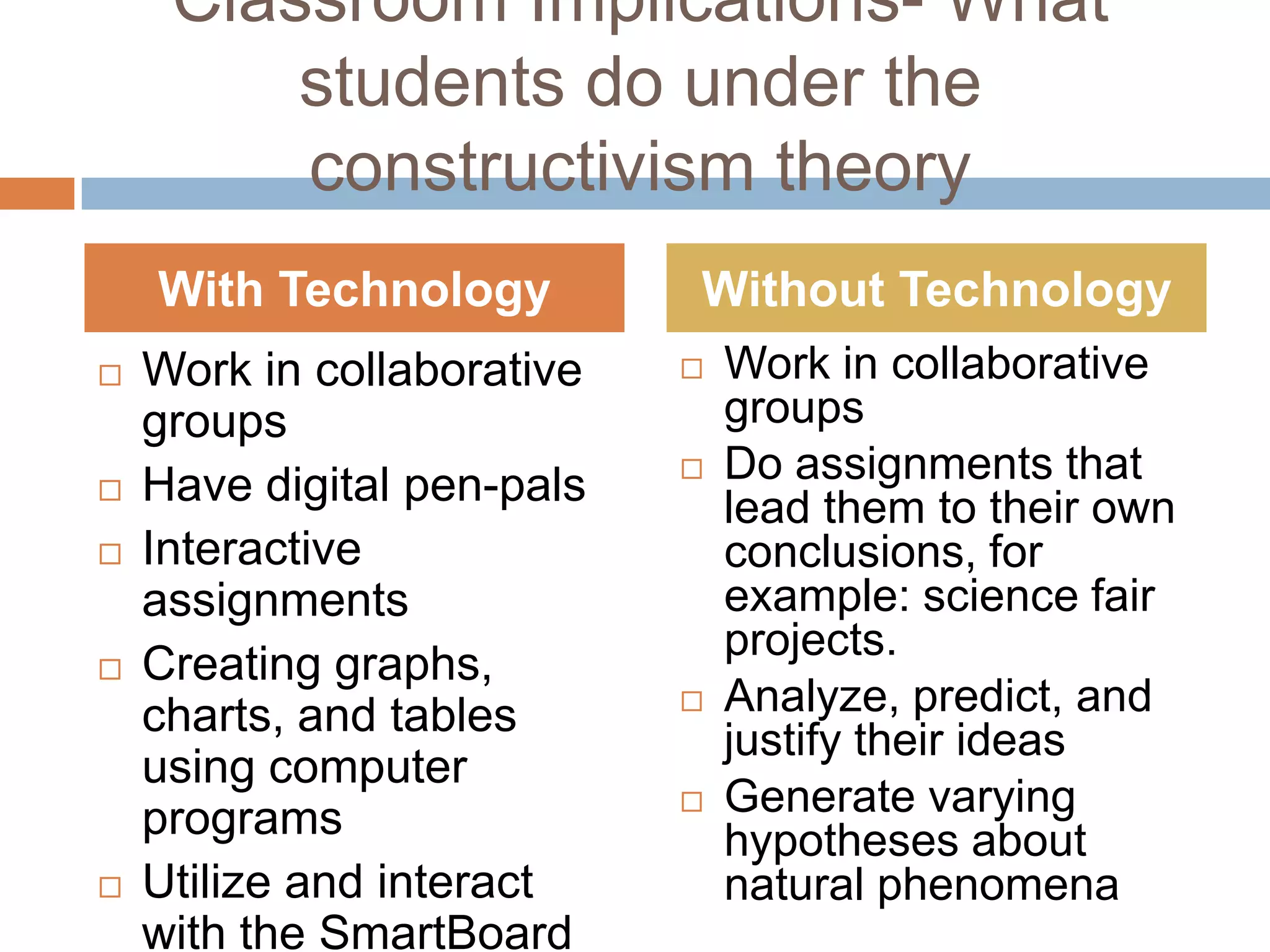
Classroom Implications- What
         students do under the
         constructivism theory
    With Technology         Without Technology
   Work in collaborative      Work in collaborative
    groups                      groups
   Have digital pen-pals      Do assignments that
                                lead them to their own
   Interactive                 conclusions, for
    assignments                 example: science fair
                                projects.
   Creating graphs,
    charts, and tables         Analyze, predict, and
                                justify their ideas
    using computer
    programs                   Generate varying
                                hypotheses about
   Utilize and interact        natural phenomena
    with the SmartBoard
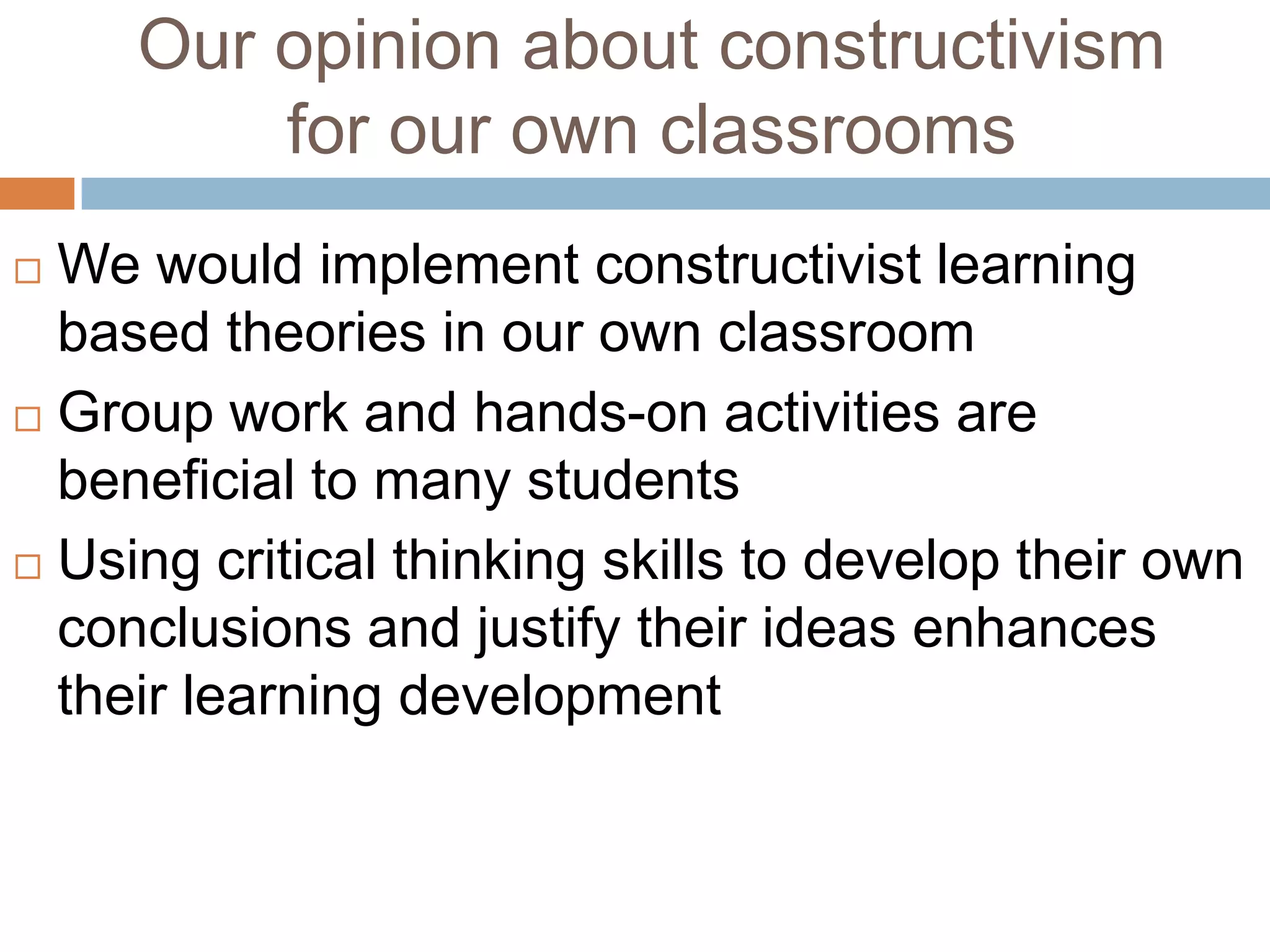
Our opinion about constructivism
         for our own classrooms
 We would implement constructivist learning
  based theories in our own classroom
 Group work and hands-on activities are

  beneficial to many students
 Using critical thinking skills to develop their own
  conclusions and justify their ideas enhances
  their learning development
References
   Shelly, G.B. & Gunter, G.A. & Gunter, R.E. (2012). Teachers
    Discovering Computers; Integrating Technology In a
    Connected World. Massachusetts: Cengage Learning.
   (2007.) Index of Learning Theories and Models. Retrieved
    from: www.learning-theories.com.
   [Untitled photograph of children working in groups] Retrieved
    April 11, 2013:
    http://becs126.edublogs.org/files/2009/04/classroomphoto.jp
    g
   [Untitled photograph of Lev Vygotsky] Retrieved April 11,
    2013: http://www.goodtherapy.org/famous-psychologists/lev-
    vygotsky.html
   [Untitled photograph of Jean Piaget] Retrieved April 11, 2013:
    http://nursingcrib.com/wp-content/uploads/jean-
    piaget1.png?9d7bd4

Tech project

  • 1.
  • 2.
    Key People AssociatedWith Constructivism  Jean Piaget – Cognitive stages/schemas  Jerome Bruner – Constructive learners are participatory learners  Lev Vygotsky – Developed social cognition; ZPD  John Dewey – Advocate for child-centered instruction; progressive education
  • 3.
    Jean Piaget  Psychologist who developed the cognitive learning theory  He felt that children were active learners and did not need motivation from adults to learn  He developed four cognitive stages (sensory-motor, pre-operational, concrete operational and formal
  • 4.
    Lev Vygotsky  Educational psychologist that was interested in children’s cognitive development  He believed that learning was influenced significantly by social development  He proposed that children have a Zone of Proximal Development, which is the difference between the problem solving ability that a child has learned and the potential that the child can achieve from collaboration with a more advanced peer (collaborative learning)
  • 5.
    Key Points ofConstructivism  Theorists believe that students learn by doing  Students create or construct their own understanding of a topic  Learning is an active, constructive process  New information is linked to prior knowledge  Subjective (different for each person)  Learning is an active, contextualized process of constructing knowledge rather than acquiring it
  • 6.
    Classroom Implications for constructivism – What the teacher does Without Technology  Assigns group collaborative work  Gives assignments that build upon students’ previous knowledge  Teacher’s role is to facilitate discussion, not lecture to the class  Asks students questions that will lead them to develop their own conclusions  Modeling, coaching and scaffolding  Assigns KWL charts and mind-mapping  Assigns hands-on activities
  • 7.
    Classroom Implications forconstructivism- What the teacher does With Technology  Create collaborative online projects  Lesson formats that incorporate technology and constructivist methods, such as WebQuest  Virtual field trips by using internet connection and a projector  Provide virtual simulations of real life situations  Create lessons that utilize databases, spreadsheets, publishers, electronic mail, and word processors.
  • 8.
    Classroom Implications- What students do under the constructivism theory With Technology Without Technology  Work in collaborative  Work in collaborative groups groups  Have digital pen-pals  Do assignments that lead them to their own  Interactive conclusions, for assignments example: science fair projects.  Creating graphs, charts, and tables  Analyze, predict, and justify their ideas using computer programs  Generate varying hypotheses about  Utilize and interact natural phenomena with the SmartBoard
  • 9.
    Our opinion aboutconstructivism for our own classrooms  We would implement constructivist learning based theories in our own classroom  Group work and hands-on activities are beneficial to many students  Using critical thinking skills to develop their own conclusions and justify their ideas enhances their learning development
  • 10.
    References  Shelly, G.B. & Gunter, G.A. & Gunter, R.E. (2012). Teachers Discovering Computers; Integrating Technology In a Connected World. Massachusetts: Cengage Learning.  (2007.) Index of Learning Theories and Models. Retrieved from: www.learning-theories.com.  [Untitled photograph of children working in groups] Retrieved April 11, 2013: http://becs126.edublogs.org/files/2009/04/classroomphoto.jp g  [Untitled photograph of Lev Vygotsky] Retrieved April 11, 2013: http://www.goodtherapy.org/famous-psychologists/lev- vygotsky.html  [Untitled photograph of Jean Piaget] Retrieved April 11, 2013: http://nursingcrib.com/wp-content/uploads/jean- piaget1.png?9d7bd4