SCAFFOLDING IN TEACHING LEARNING PRECESS
Scaffolding is a concept
introduced by Jerome Bruner,
Which states that if students are
provided needed support in
learning something new, there is
a better chance of making use of
the knowledge independently in
life situations
Steps in
Scaffolding
.
Normal
Presentation by
the Teacher by
coping with level
of the students
1
Steps in Scaffolding
.
Teacher then
presents the
problem and
thinks aloud as
he is going
about solving it
2
Steps in Scaffolding
.
He shows how
a solution is
arrived at by
combining
actions, images,
and language
3
Steps in Scaffolding
.
He repeats this
process two
more times,
asking
questions of the
students along
the way.
4
Steps in Scaffolding
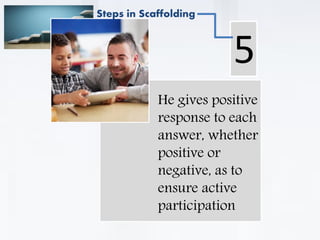
. He gives positive
response to each
answer, whether
positive or
negative, as to
ensure active
participation
5
Steps in Scaffolding
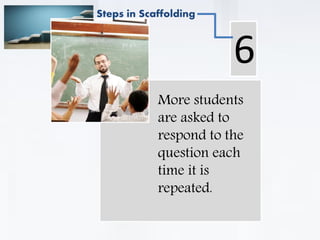
. More students
are asked to
respond to the
question each
time it is
repeated.
6
Steps in Scaffolding
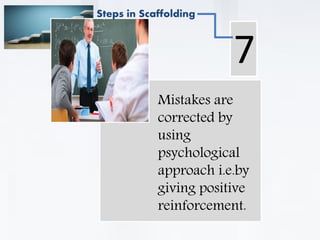
. Mistakes are
corrected by
using
psychological
approach i.e.by
giving positive
reinforcement.
7
Steps in Scaffolding
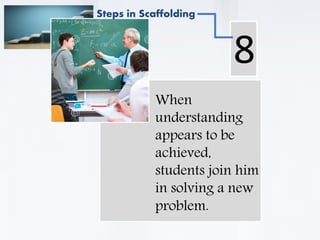
. When
understanding
appears to be
achieved,
students join him
in solving a new
problem.
8
Steps in Scaffolding
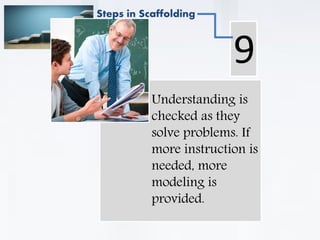
. Understanding is
checked as they
solve problems. If
more instruction is
needed, more
modeling is
provided.
9
Steps in Scaffolding
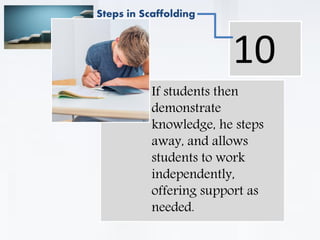
. If students then
demonstrate
knowledge, he steps
away, and allows
students to work
independently,
offering support as
needed.
10
Steps in Scaffolding

Scaffolding: Concept and steps

  • 1.
    SCAFFOLDING IN TEACHINGLEARNING PRECESS
  • 2.
    Scaffolding is aconcept introduced by Jerome Bruner, Which states that if students are provided needed support in learning something new, there is a better chance of making use of the knowledge independently in life situations
  • 3.
  • 4.
    . Normal Presentation by the Teacherby coping with level of the students 1 Steps in Scaffolding
  • 5.
    . Teacher then presents the problemand thinks aloud as he is going about solving it 2 Steps in Scaffolding
  • 6.
    . He shows how asolution is arrived at by combining actions, images, and language 3 Steps in Scaffolding
  • 7.
    . He repeats this processtwo more times, asking questions of the students along the way. 4 Steps in Scaffolding
  • 8.
    . He givespositive response to each answer, whether positive or negative, as to ensure active participation 5 Steps in Scaffolding
  • 9.
    . More students areasked to respond to the question each time it is repeated. 6 Steps in Scaffolding
  • 10.
    . Mistakes are correctedby using psychological approach i.e.by giving positive reinforcement. 7 Steps in Scaffolding
  • 11.
    . When understanding appears tobe achieved, students join him in solving a new problem. 8 Steps in Scaffolding
  • 12.
    . Understanding is checkedas they solve problems. If more instruction is needed, more modeling is provided. 9 Steps in Scaffolding
  • 13.
    . If studentsthen demonstrate knowledge, he steps away, and allows students to work independently, offering support as needed. 10 Steps in Scaffolding