+


    Constructivisim

    Morgan
+
    Key People

       Jean Piaget-defined four
        cognitive stages: sensorimotor,
        preoperational, concrete
        operational, formal operational.
           His theory supports the use
            and integration of technology
            because it supplies to reach a
            diverse population of learners
            with different learning styles.

       Jerome Bruner-proposed that
        learning is an active process in
        which the learner constructs new
        ideas or concepts based on his
        current or past knowledge.
+
    Key People Continued

    Lev Vygotsky-developed social cognition.
           He believed that learning was influenced significantly by social
            development.
           He thought children should work collaboratively.

       John Dewey-believed that learning should engage and expand
        the experiences of the learners.
+
    Key Points

       Constructivism is based on a type of learning in which the
        learner forms, or constructs, much of what he or she
        comprehends.

       The learning that a child does comes from their experiences
        and reflecting on their own experiences.

       Children should be constructed, active, reflective, collaborative,
        inquiry based, and evolving.
+
    Classroom Implications

       Under constructivism, teachers
        have the students do interactive
        work where they can learn from
        their experiences rather than a
        teacher constantly preaching to
        them.

       Teachers should prompt children
        to form their own questions, allow
        different interpretations of
        learning, and encourage group
        work.

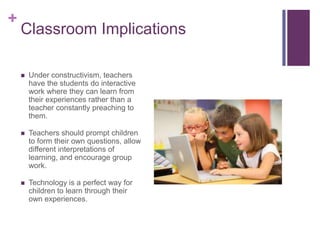
       Technology is a perfect way for
        children to learn through their
        own experiences.

+
    Classroom Implications Continued

       For children, learning through
        the constructivism theory is
        viewed as fun.

       Children prefer doing projects
        and interactive learning rather
        than conventional learning.

       The child would be assigned a
        project to do to learn about a
        topic, but the child would learn
        through the experience of doing
        the topic and would have time
        to reflect on the experience.
+
       I, Personally believe that the constructivism theory is an
        important part of teaching.

       From what I have observed so far in my teaching classes,
        children seem to learn more from having the ability to be hands
        on with learning.

       When children learn through experiences it seems that they
        retain the information better because they actually enjoy the
        process of learning when it is unconventional.

       I will be applying this theory in my classroom with many lesson
        plans.
+
    Works Cited

       Key People Slide- for Picture

       Classroom Implications Slide

       Classroom Implications Continued

       http://www.thirteen.org/edonline/concept2class/constructivism/i
        ndex.html -for additional information

Module 13

  • 1.
    + Constructivisim Morgan
  • 2.
    + Key People  Jean Piaget-defined four cognitive stages: sensorimotor, preoperational, concrete operational, formal operational.  His theory supports the use and integration of technology because it supplies to reach a diverse population of learners with different learning styles.  Jerome Bruner-proposed that learning is an active process in which the learner constructs new ideas or concepts based on his current or past knowledge.
  • 3.
    + Key People Continued Lev Vygotsky-developed social cognition.  He believed that learning was influenced significantly by social development.  He thought children should work collaboratively.  John Dewey-believed that learning should engage and expand the experiences of the learners.
  • 4.
    + Key Points  Constructivism is based on a type of learning in which the learner forms, or constructs, much of what he or she comprehends.  The learning that a child does comes from their experiences and reflecting on their own experiences.  Children should be constructed, active, reflective, collaborative, inquiry based, and evolving.
  • 5.
    + Classroom Implications  Under constructivism, teachers have the students do interactive work where they can learn from their experiences rather than a teacher constantly preaching to them.  Teachers should prompt children to form their own questions, allow different interpretations of learning, and encourage group work.  Technology is a perfect way for children to learn through their own experiences.
  • 6.
    + Classroom Implications Continued  For children, learning through the constructivism theory is viewed as fun.  Children prefer doing projects and interactive learning rather than conventional learning.  The child would be assigned a project to do to learn about a topic, but the child would learn through the experience of doing the topic and would have time to reflect on the experience.
  • 7.
    +  I, Personally believe that the constructivism theory is an important part of teaching.  From what I have observed so far in my teaching classes, children seem to learn more from having the ability to be hands on with learning.  When children learn through experiences it seems that they retain the information better because they actually enjoy the process of learning when it is unconventional.  I will be applying this theory in my classroom with many lesson plans.
  • 8.
    + Works Cited  Key People Slide- for Picture  Classroom Implications Slide  Classroom Implications Continued  http://www.thirteen.org/edonline/concept2class/constructivism/i ndex.html -for additional information