Theme: This is my classroom
Monday 23 th of April
Notes of lesson in 2-A From
Tania Derkach
Students Teaching Practice at school
Aims:
educational: to activate the studied lexical-grammar material, to
develop skills and abilities of reading, writing, speech, to improve
competence of reading, listening and monolingual speech;
developable: develop logical thinking, attention and visual memory,
observation, improve phonetics and articulation of sounds, oral
communication skills, based on visibility;
Educational: to raise interest in expanding their knowledge.
Equipment: poster "School items", themed cards.
Procedure of the lesson:
Beginning of the lesson
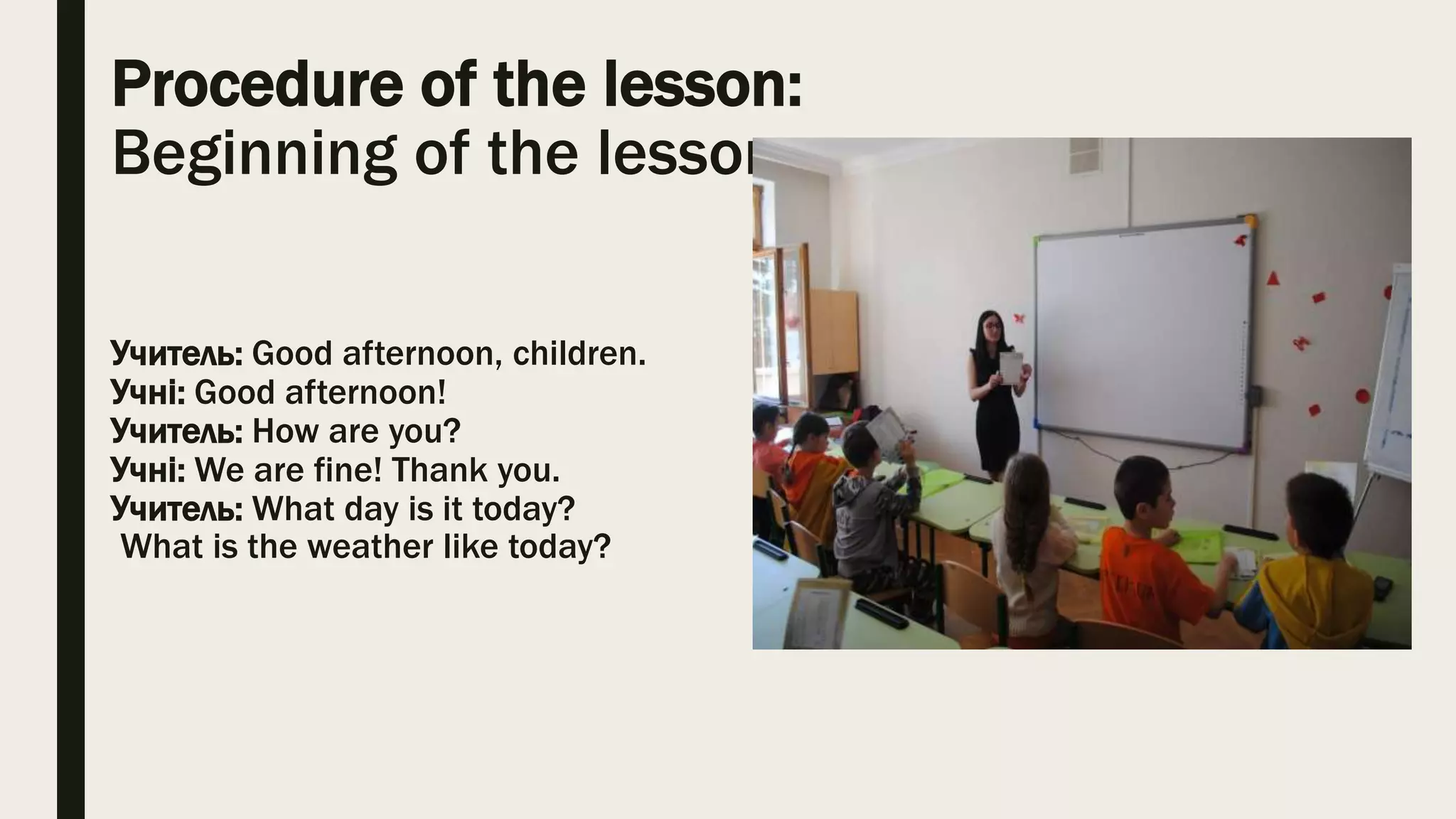
Учитель: Good afternoon, children.
Учні: Good afternoon!
Учитель: How are you?
Учні: We are fine! Thank you.
Учитель: What day is it today?
What is the weather like today?
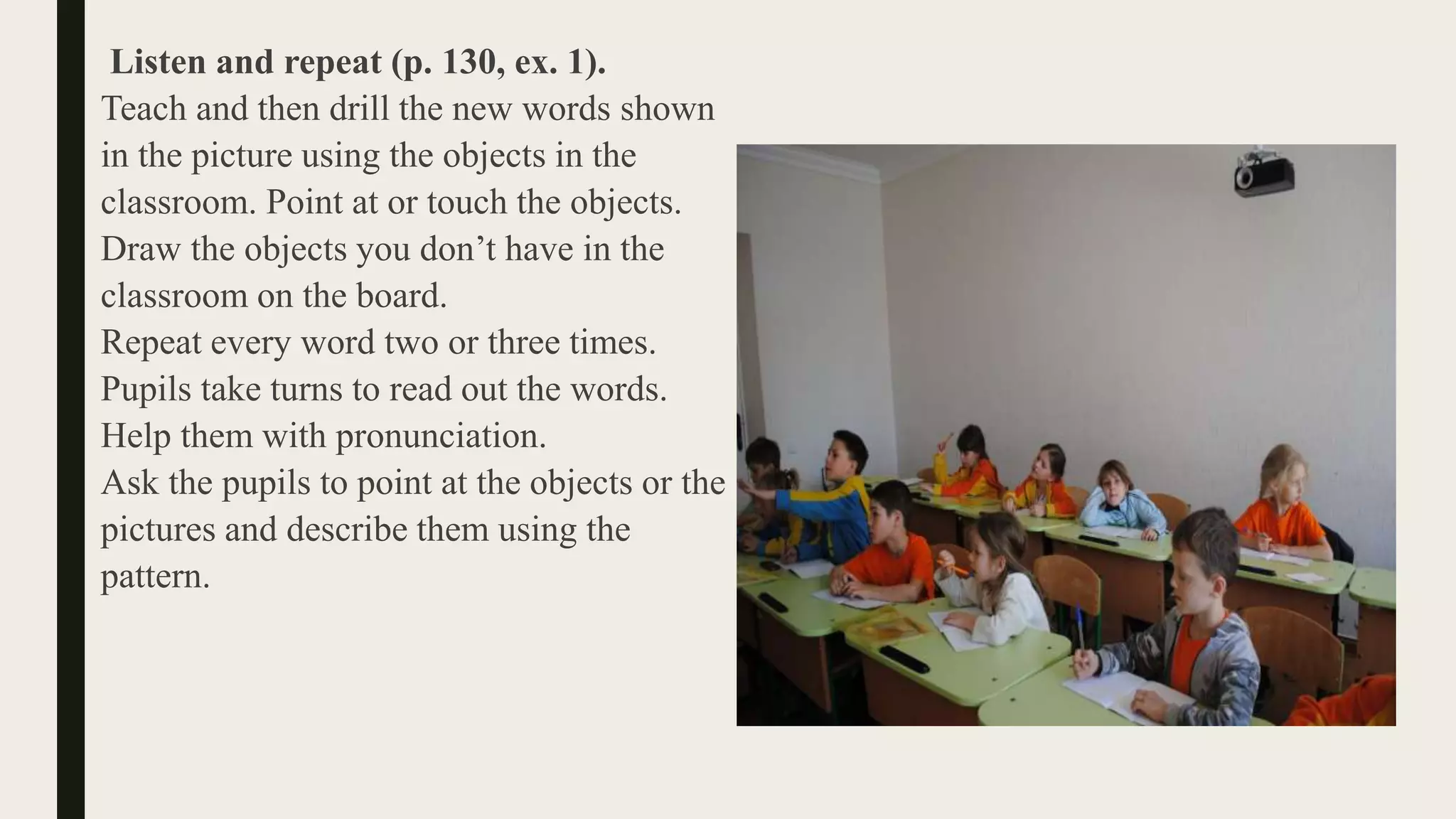
Listen and repeat (p. 130, ex. 1).
Teach and then drill the new words shown
in the picture using the objects in the
classroom. Point at or touch the objects.
Draw the objects you don’t have in the
classroom on the board.
Repeat every word two or three times.
Pupils take turns to read out the words.
Help them with pronunciation.
Ask the pupils to point at the objects or the
pictures and describe them using the
pattern.
Work in pairs. Ask and answer (p. 130,
ex. 2).
Some pupils read the questions, others
answer them using the pictures (p. 130,
ex. 1).
Write a table with questions on the board
to help the pupils to make questions.
Stick the flashcards instead of the school
objects if you like.
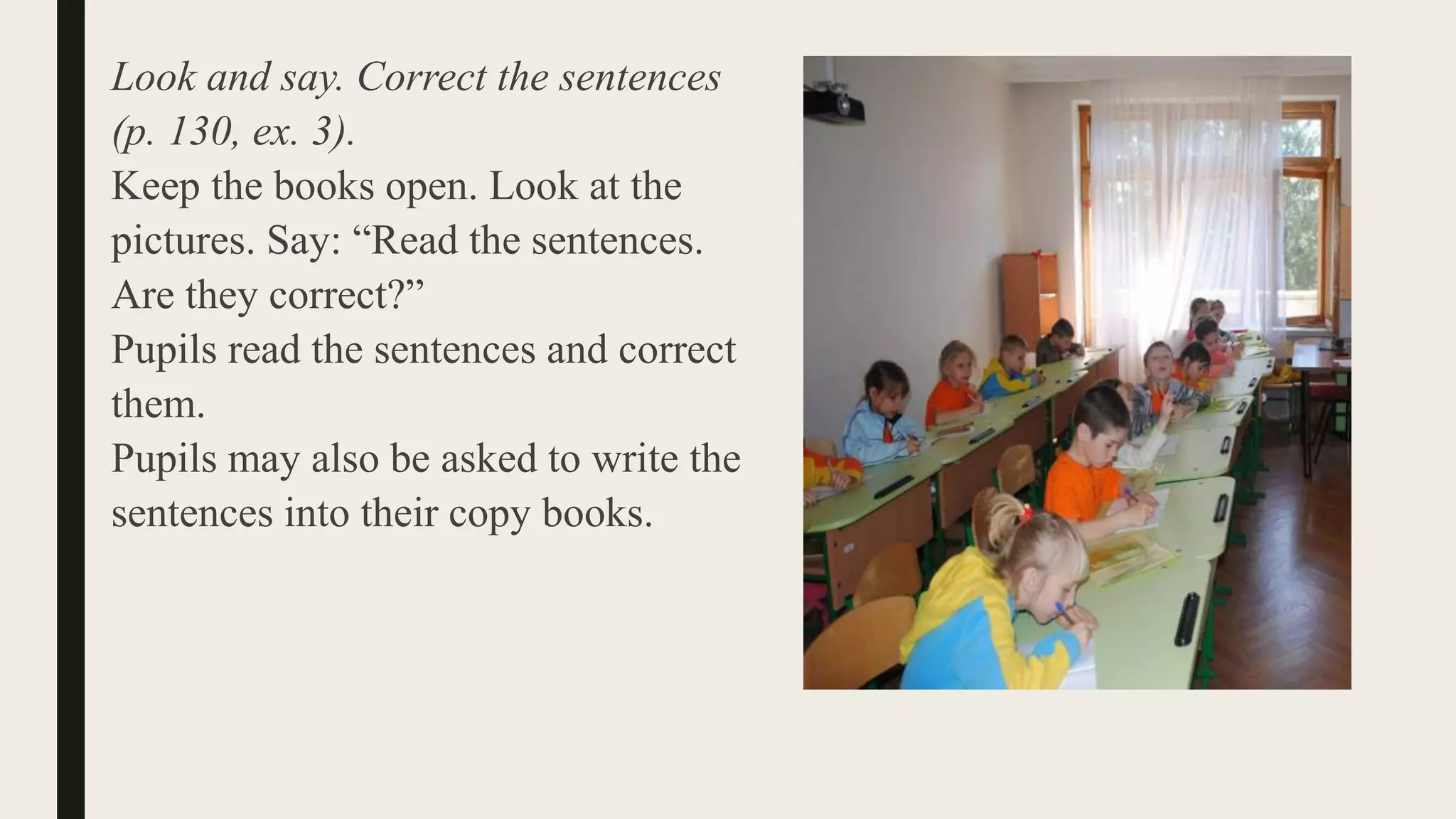
Look and say. Correct the sentences
(p. 130, ex. 3).
Keep the books open. Look at the
pictures. Say: “Read the sentences.
Are they correct?”
Pupils read the sentences and correct
them.
Pupils may also be asked to write the
sentences into their copy books.
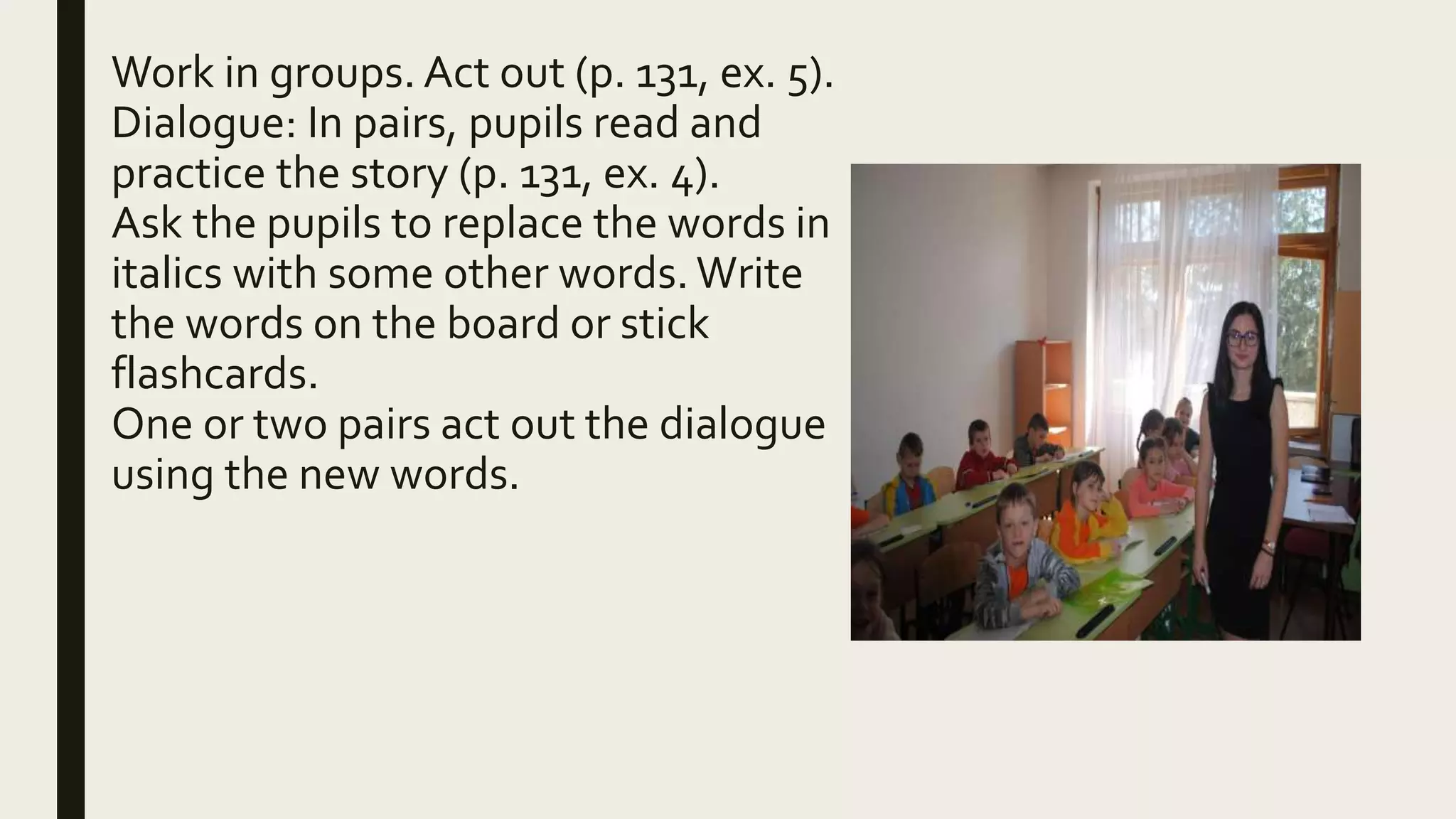
Work in groups. Act out (p. 131, ex. 5).
Dialogue: In pairs, pupils read and
practice the story (p. 131, ex. 4).
Ask the pupils to replace the words in
italics with some other words. Write
the words on the board or stick
flashcards.
One or two pairs act out the dialogue
using the new words.
Good luck

Teaching practice derkach

  • 1.
    Theme: This ismy classroom Monday 23 th of April Notes of lesson in 2-A From Tania Derkach Students Teaching Practice at school
  • 2.
    Aims: educational: to activatethe studied lexical-grammar material, to develop skills and abilities of reading, writing, speech, to improve competence of reading, listening and monolingual speech; developable: develop logical thinking, attention and visual memory, observation, improve phonetics and articulation of sounds, oral communication skills, based on visibility; Educational: to raise interest in expanding their knowledge. Equipment: poster "School items", themed cards.
  • 3.
    Procedure of thelesson: Beginning of the lesson Учитель: Good afternoon, children. Учні: Good afternoon! Учитель: How are you? Учні: We are fine! Thank you. Учитель: What day is it today? What is the weather like today?
  • 4.
    Listen and repeat(p. 130, ex. 1). Teach and then drill the new words shown in the picture using the objects in the classroom. Point at or touch the objects. Draw the objects you don’t have in the classroom on the board. Repeat every word two or three times. Pupils take turns to read out the words. Help them with pronunciation. Ask the pupils to point at the objects or the pictures and describe them using the pattern.
  • 5.
    Work in pairs.Ask and answer (p. 130, ex. 2). Some pupils read the questions, others answer them using the pictures (p. 130, ex. 1). Write a table with questions on the board to help the pupils to make questions. Stick the flashcards instead of the school objects if you like.
  • 6.
    Look and say.Correct the sentences (p. 130, ex. 3). Keep the books open. Look at the pictures. Say: “Read the sentences. Are they correct?” Pupils read the sentences and correct them. Pupils may also be asked to write the sentences into their copy books.
  • 7.
    Work in groups.Act out (p. 131, ex. 5). Dialogue: In pairs, pupils read and practice the story (p. 131, ex. 4). Ask the pupils to replace the words in italics with some other words. Write the words on the board or stick flashcards. One or two pairs act out the dialogue using the new words.
  • 8.