Mousa Hussein
Methods of Teaching
Silent Way

SW: is a method of teaching foreign
language in which the teacher doesn’t
speak much, but uses movements,
pictures, and wooden rods to explain
meaning.
Definition

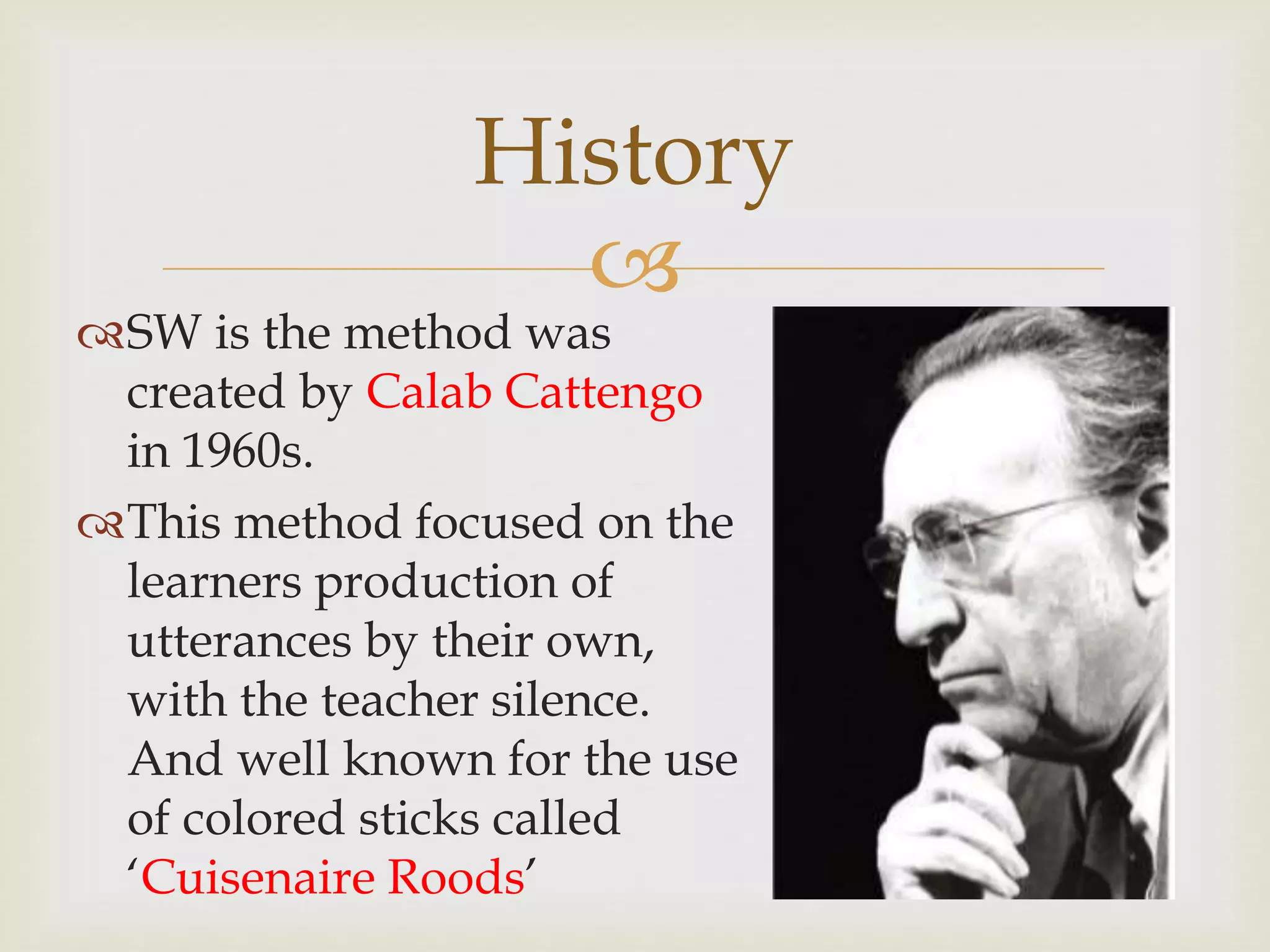
SW is the method was
created by Calab Cattengo
in 1960s.
This method focused on the
learners production of
utterances by their own,
with the teacher silence.
And well known for the use
of colored sticks called
‘Cuisenaire Roods’
History

 Emphasize for students to work as independent
language learning.
 Learning is facilitated by accompanying physical
objects. (colorful charts and roods which are of
varying length they are used to introduce
vocabulary).
Basic Features

 Learning is facilitated by problem solving involving
the material to be learned.
This can be summarized by Benjamin Franklin’s
words:
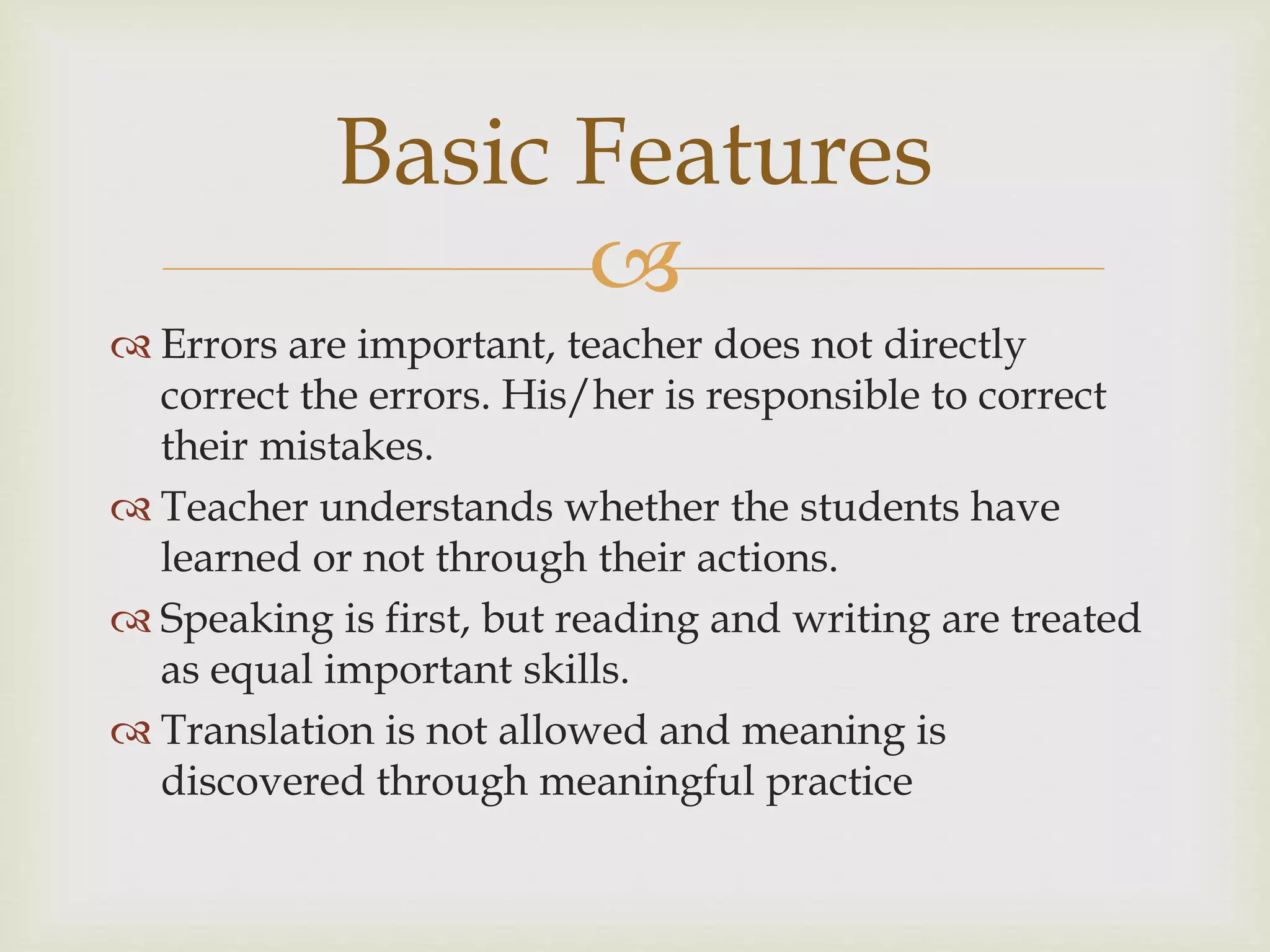
Tell me and I forget
Teach me and I remember
Involve me and I learn
Basic Features

 Errors are important, teacher does not directly
correct the errors. His/her is responsible to correct
their mistakes.
 Teacher understands whether the students have
learned or not through their actions.
 Speaking is first, but reading and writing are treated
as equal important skills.
 Translation is not allowed and meaning is
discovered through meaningful practice
Basic Features

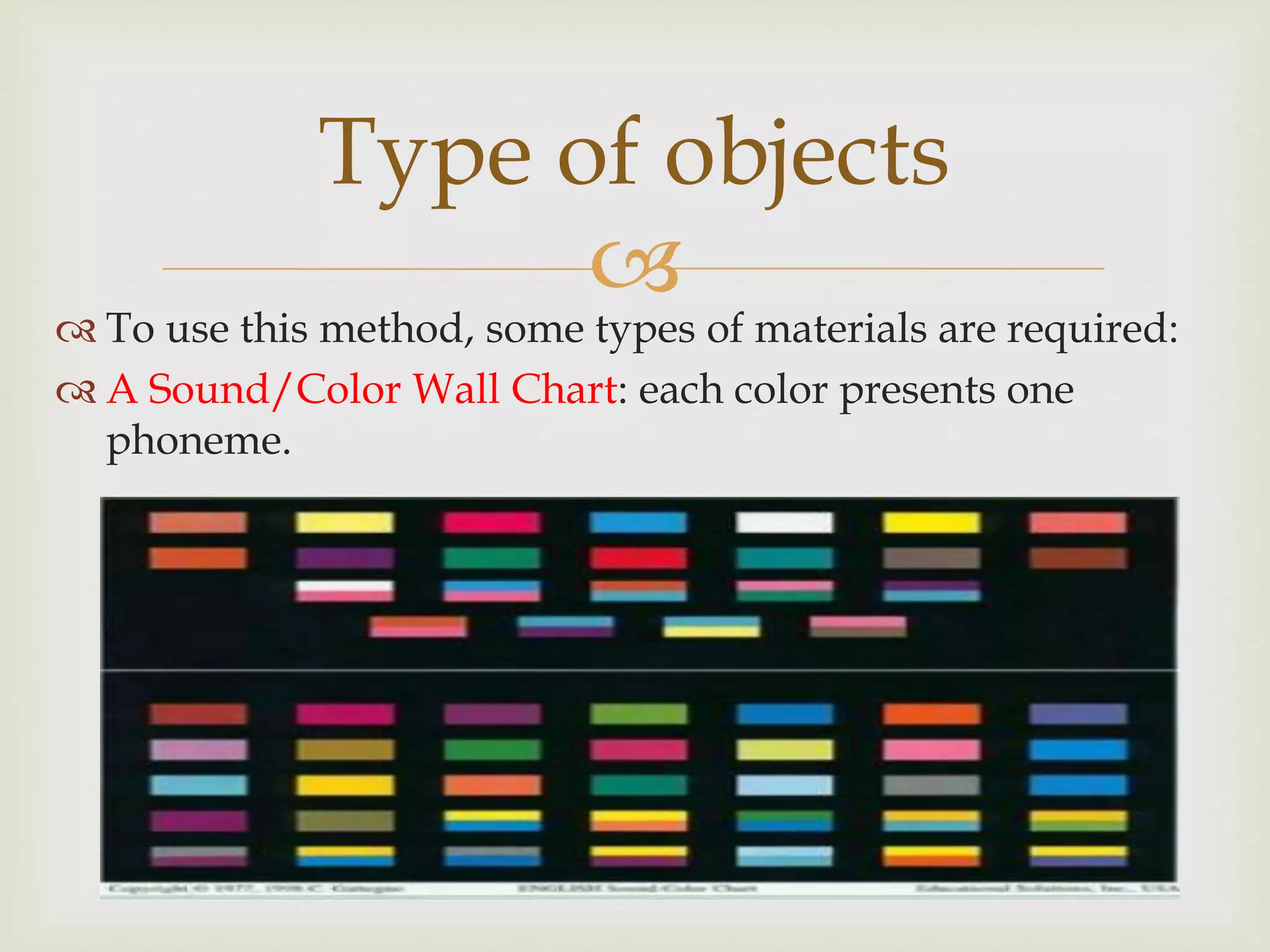
 To use this method, some types of materials are required:
 A Sound/Color Wall Chart: each color presents one
phoneme.
Type of objects

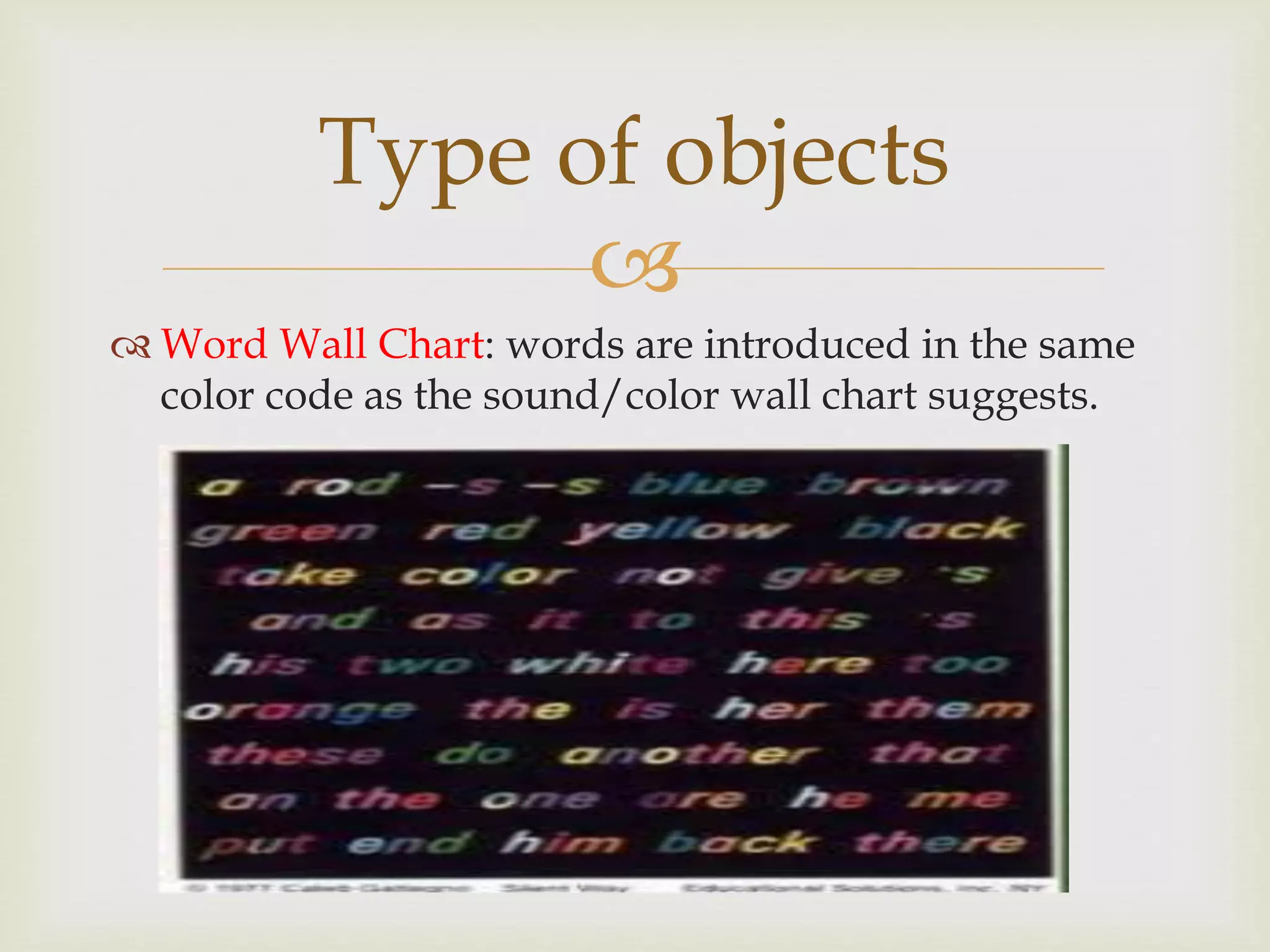
 Word Wall Chart: words are introduced in the same
color code as the sound/color wall chart suggests.
Type of objects

 Spelling/ the Fidel Chart: these chart use the same
color code as the sound/color wall chart, show how
each phoneme is spelled in English.
Type of objects

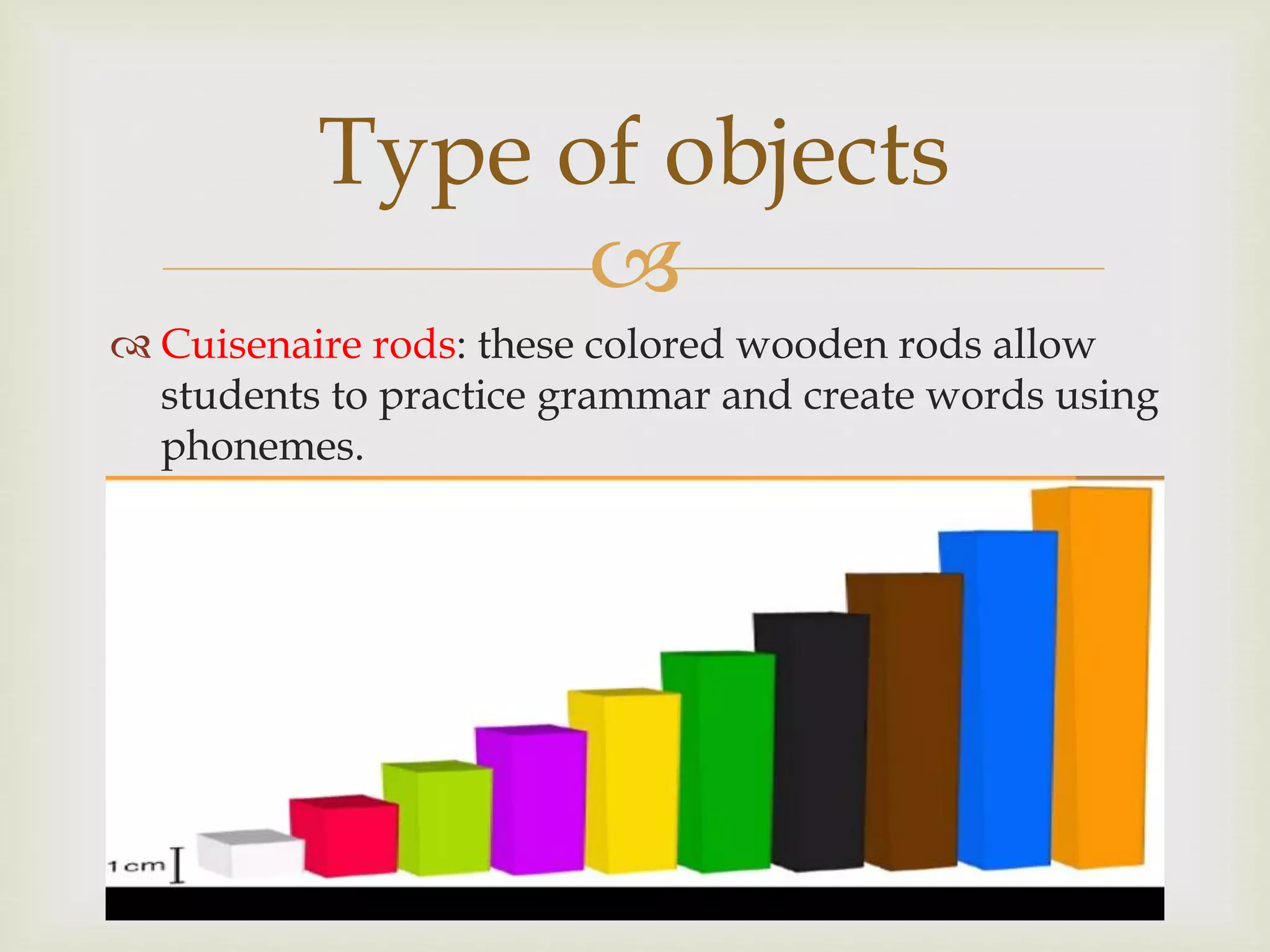
 Cuisenaire rods: these colored wooden rods allow
students to practice grammar and create words using
phonemes.
Type of objects

 A Pointer: teacher uses this to attract students, attention
to the sounds, the stressed syllables, and proper
pronunciation of words in the target language.
Type of objects

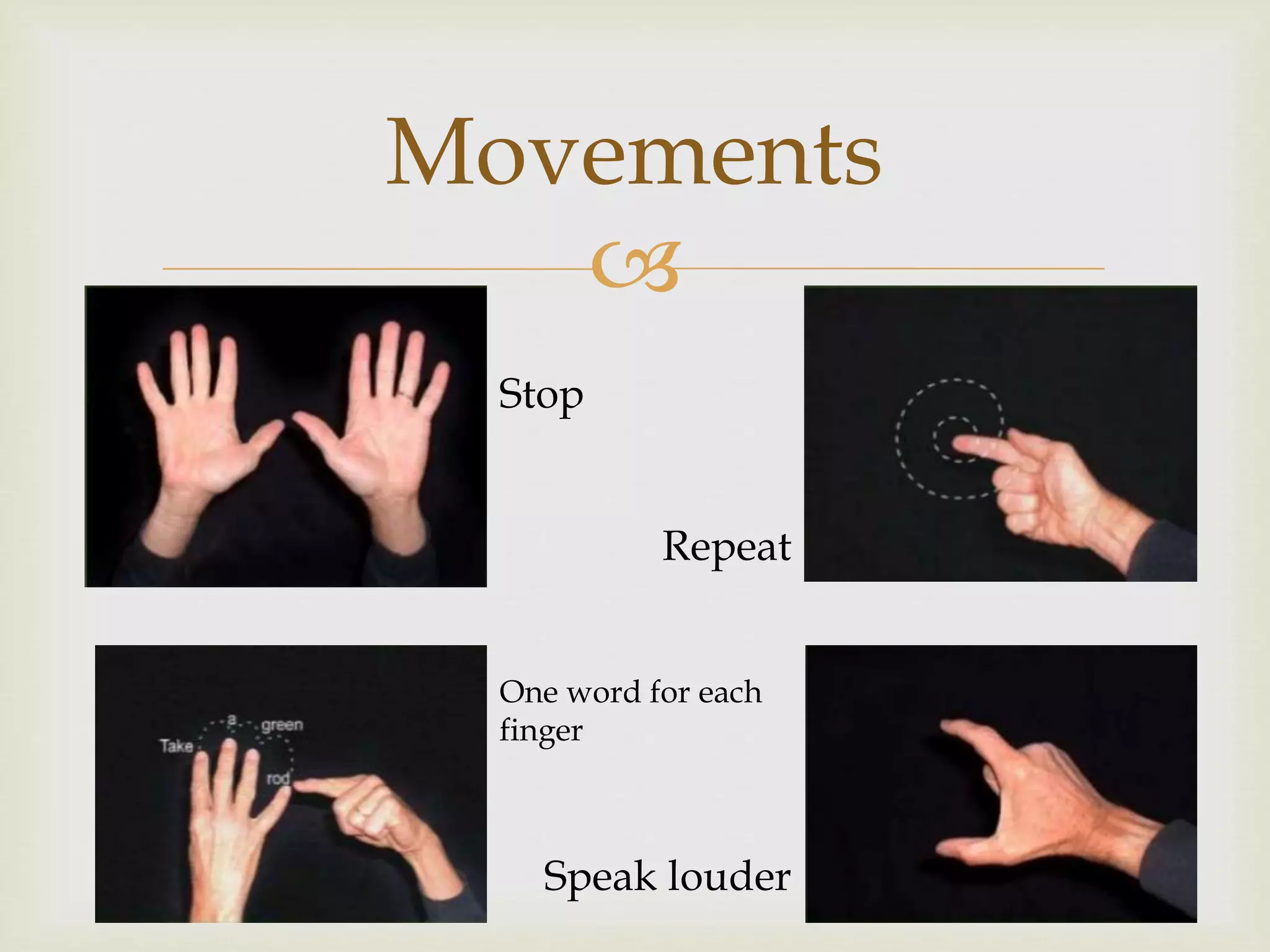
Movements
Stop
Repeat
One word for each
finger
Speak louder

 Teacher is technician or an engineer who facilitates
learning.
 The teacher is silent most of the time.
 The teacher uses gestures, charts, to give the students
the material easily.
Teacher’s role

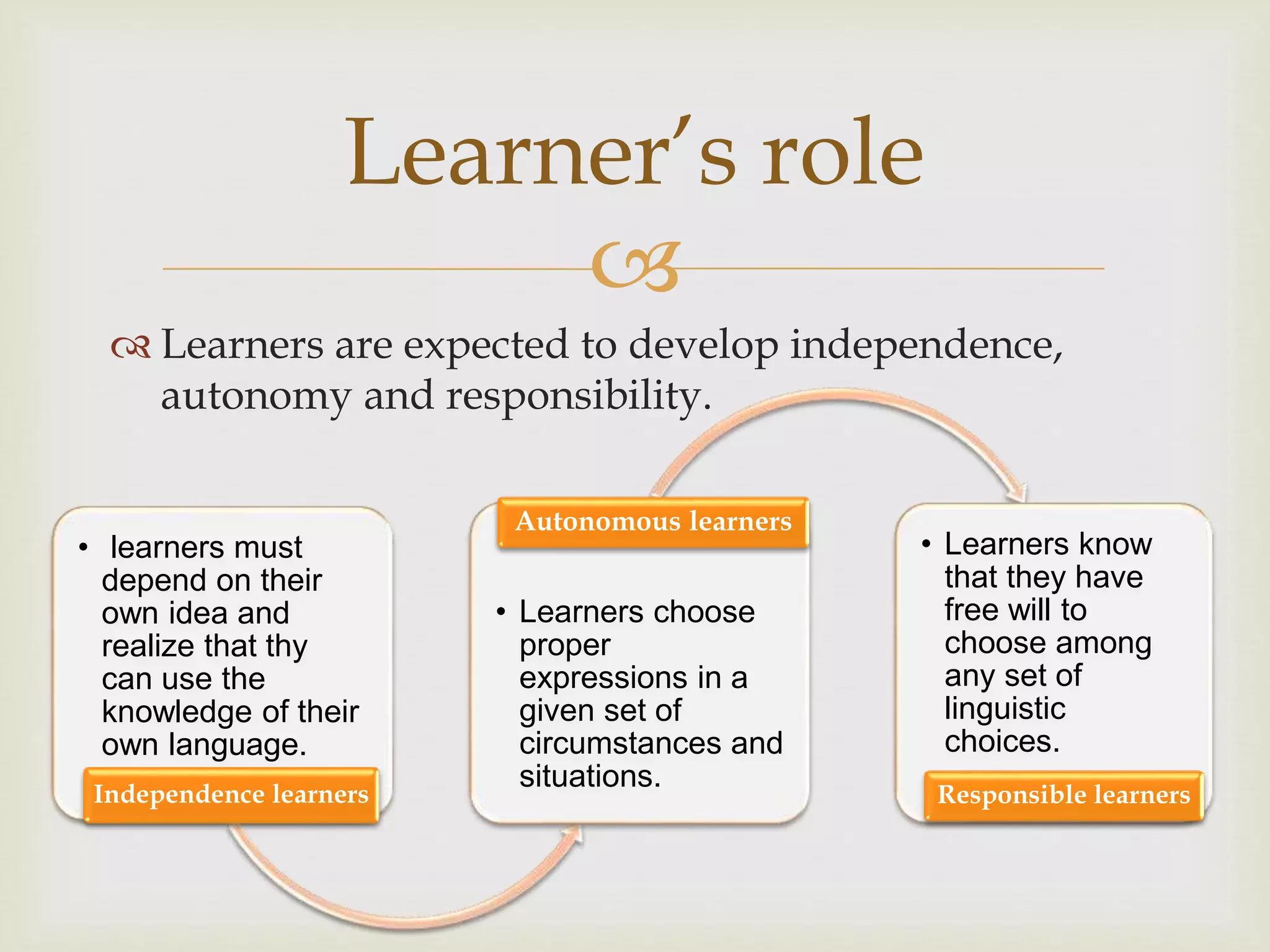
 Learners are expected to develop independence,
autonomy and responsibility.
Learner’s role
• learners must
depend on their
own idea and
realize that thy
can use the
knowledge of their
own language.
Independence learners
• Learners choose
proper
expressions in a
given set of
circumstances and
situations.
Autonomous learners
• Learners know
that they have
free will to
choose among
any set of
linguistic
choices.
Responsible learners

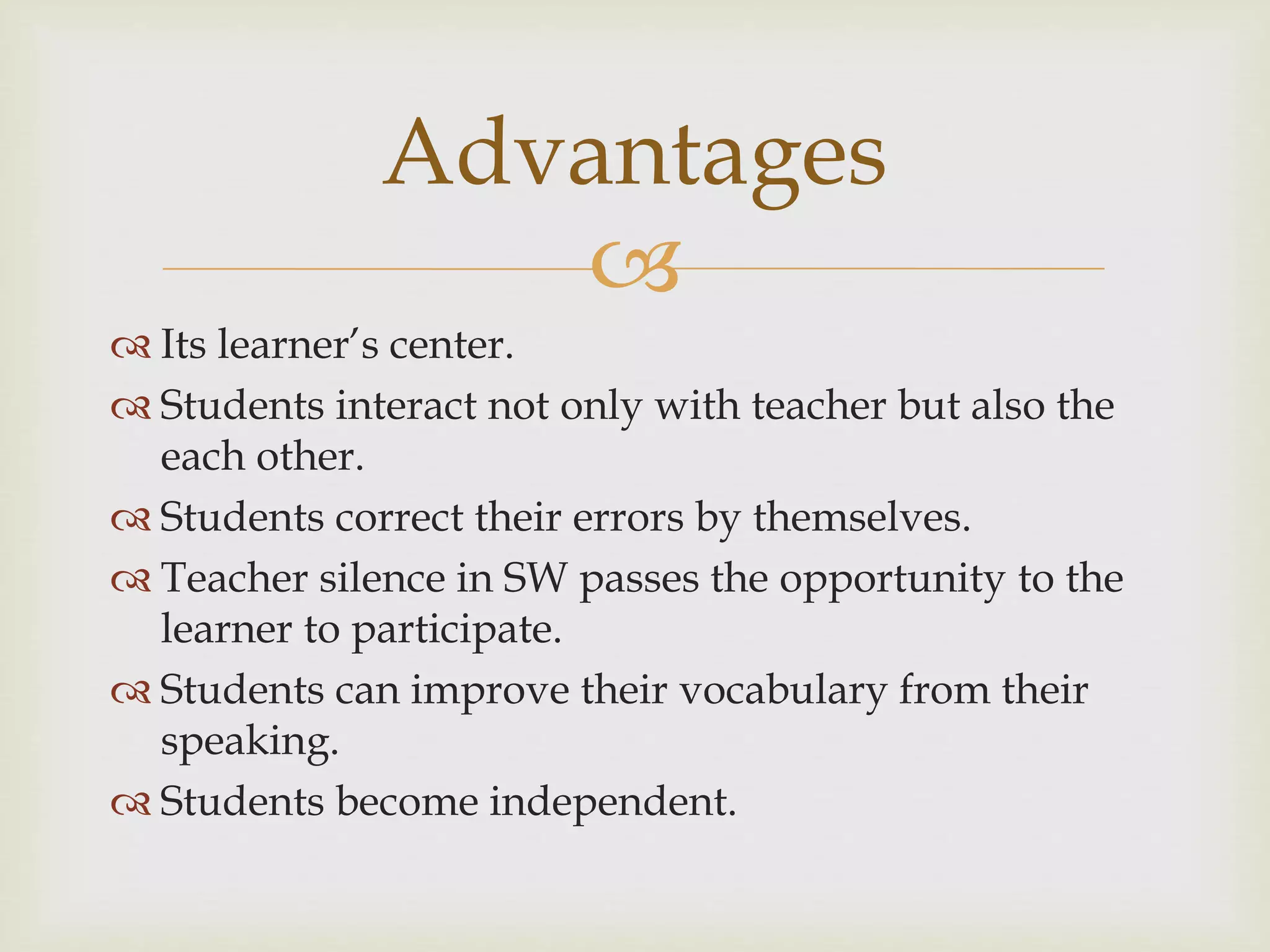
 Its learner’s center.
 Students interact not only with teacher but also the
each other.
 Students correct their errors by themselves.
 Teacher silence in SW passes the opportunity to the
learner to participate.
 Students can improve their vocabulary from their
speaking.
 Students become independent.
Advantages

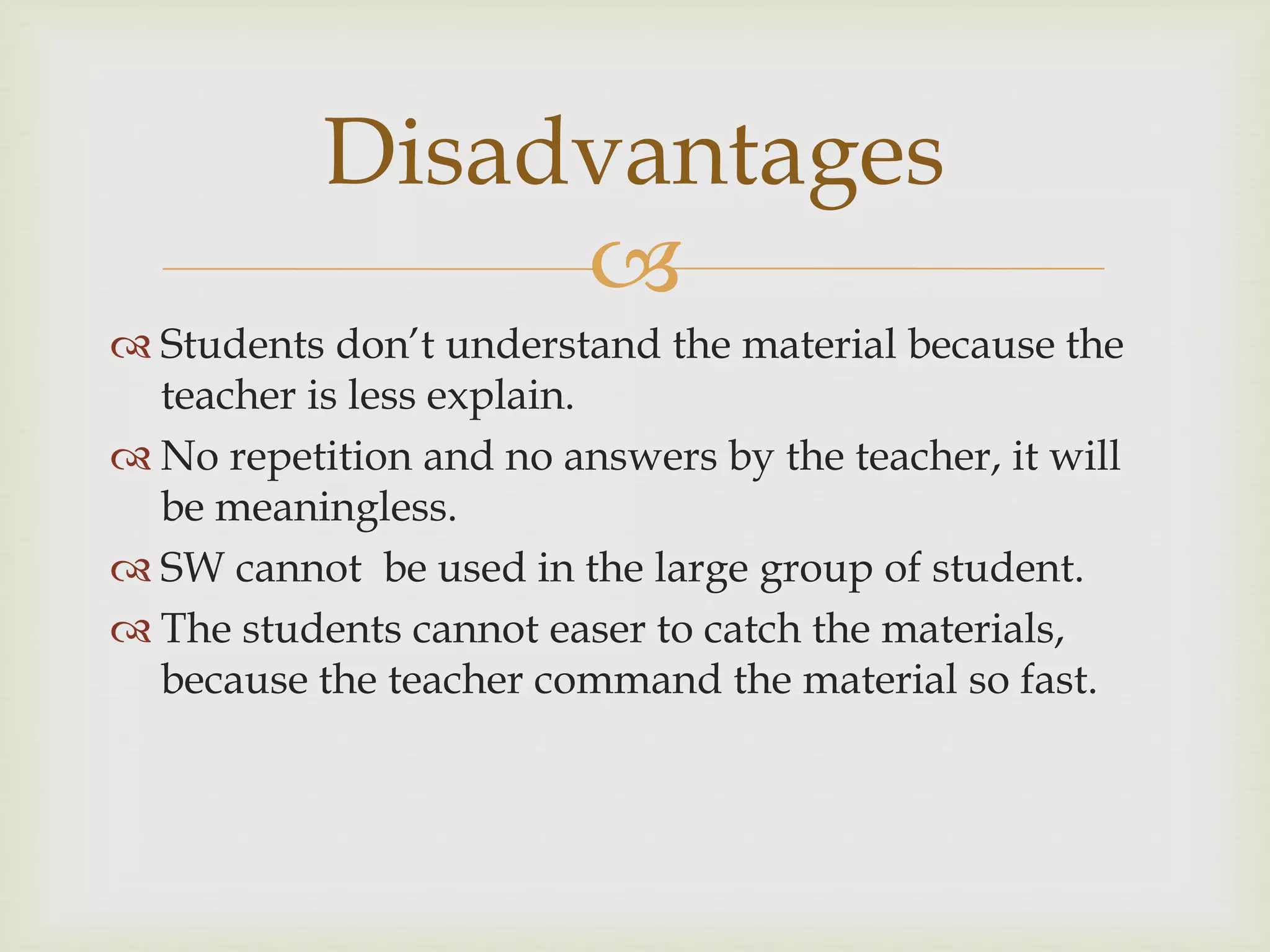
 Students don’t understand the material because the
teacher is less explain.
 No repetition and no answers by the teacher, it will
be meaningless.
 SW cannot be used in the large group of student.
 The students cannot easer to catch the materials,
because the teacher command the material so fast.
Disadvantages

Q/A

Silent way method

  • 1.
    Mousa Hussein Methods ofTeaching Silent Way
  • 2.
     SW: is amethod of teaching foreign language in which the teacher doesn’t speak much, but uses movements, pictures, and wooden rods to explain meaning. Definition
  • 3.
     SW is themethod was created by Calab Cattengo in 1960s. This method focused on the learners production of utterances by their own, with the teacher silence. And well known for the use of colored sticks called ‘Cuisenaire Roods’ History
  • 4.
      Emphasize forstudents to work as independent language learning.  Learning is facilitated by accompanying physical objects. (colorful charts and roods which are of varying length they are used to introduce vocabulary). Basic Features
  • 5.
      Learning isfacilitated by problem solving involving the material to be learned. This can be summarized by Benjamin Franklin’s words: Tell me and I forget Teach me and I remember Involve me and I learn Basic Features
  • 6.
      Errors areimportant, teacher does not directly correct the errors. His/her is responsible to correct their mistakes.  Teacher understands whether the students have learned or not through their actions.  Speaking is first, but reading and writing are treated as equal important skills.  Translation is not allowed and meaning is discovered through meaningful practice Basic Features
  • 7.
      To usethis method, some types of materials are required:  A Sound/Color Wall Chart: each color presents one phoneme. Type of objects
  • 8.
      Word WallChart: words are introduced in the same color code as the sound/color wall chart suggests. Type of objects
  • 9.
      Spelling/ theFidel Chart: these chart use the same color code as the sound/color wall chart, show how each phoneme is spelled in English. Type of objects
  • 10.
      Cuisenaire rods:these colored wooden rods allow students to practice grammar and create words using phonemes. Type of objects
  • 11.
      A Pointer:teacher uses this to attract students, attention to the sounds, the stressed syllables, and proper pronunciation of words in the target language. Type of objects
  • 12.
  • 13.
      Teacher istechnician or an engineer who facilitates learning.  The teacher is silent most of the time.  The teacher uses gestures, charts, to give the students the material easily. Teacher’s role
  • 14.
      Learners areexpected to develop independence, autonomy and responsibility. Learner’s role • learners must depend on their own idea and realize that thy can use the knowledge of their own language. Independence learners • Learners choose proper expressions in a given set of circumstances and situations. Autonomous learners • Learners know that they have free will to choose among any set of linguistic choices. Responsible learners
  • 15.
      Its learner’scenter.  Students interact not only with teacher but also the each other.  Students correct their errors by themselves.  Teacher silence in SW passes the opportunity to the learner to participate.  Students can improve their vocabulary from their speaking.  Students become independent. Advantages
  • 16.
      Students don’tunderstand the material because the teacher is less explain.  No repetition and no answers by the teacher, it will be meaningless.  SW cannot be used in the large group of student.  The students cannot easer to catch the materials, because the teacher command the material so fast. Disadvantages
  • 17.
  • 18.