Presentation by
 Sami Jendoubi
Plan
1 – Definition and the historical background
2 – Features :
           a) The Role Of The Student in The Learning Process
           b) The Use Of a Physical Objects
           c) The Problem Solver Learner

3 – Advantages
4 – Disadvantages
The Definition Of Silent Way
  In the 70’s , many of new motheds were
 developed to highlight the cognitive demain in
 language learning .

  they were based on the Chomskyan
 Critisism of the ‘’ Audiolingual Method ‘’ .

  Among The new methods , there was ‘’
 the Silent Method ‘’ which was invented
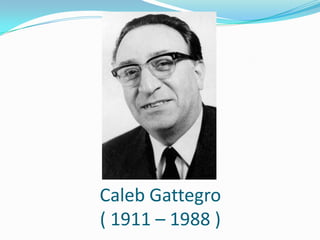
 by ‘’ Caleb Gattegro ‘’
Caleb Gattegro
( 1911 – 1988 )
‘’ Caleb Gattegro … devoted his thinking
to the to the importance of problem solving
approach in education. He contents that the
method is contrustivist and leads the
learners to develop their own conceptual
models of all the aspects of the language .
The best way of achieving this is to help
students to be experimental learners . ‘’

                                 Myenglishpages.com
Features
    The features of The Silent Way are based on discovery ,
      creativity, problem solving , the use of accompaying
      materiels .

1 – The Role Of The Learner In Learning Process :


            The teacher and the student work together to
       reach the course goals ; the learner is not a passive
       addressee of the information but an active
       contributor to the learning process .
2 – The Use Of a Physical Objects To Falicitate the Learning process :

     It’s about using colorful charts and rods ,
   they are used to introduce vocabulary and
   syntax .

 3 – the Learner Is Involved In Solving The problems :

   In the silent way , the learner is an active problem solver .
The teacher’s role is only about giving minimum repetition
and correction , remaining silent most of the time so he give
more space to the learner to stuggle in solving the problems .
Advanteges
     Creativity
                                   Discovery
              Increase in intellegent potency

  More freedom for the students to depend on themselves


                        Longterm memory
Disadvanteges
 Language is seperated from its social context


                       Repitition is time consuming
Refrences :

 + The British Council website

 + MyEnglishPages.com

 + TEYL 2011 – 2012 Booklet

The Silent Way - TEFL

  • 1.
  • 2.
    Plan 1 – Definitionand the historical background 2 – Features : a) The Role Of The Student in The Learning Process b) The Use Of a Physical Objects c) The Problem Solver Learner 3 – Advantages 4 – Disadvantages
  • 3.
    The Definition OfSilent Way  In the 70’s , many of new motheds were developed to highlight the cognitive demain in language learning .  they were based on the Chomskyan Critisism of the ‘’ Audiolingual Method ‘’ .  Among The new methods , there was ‘’ the Silent Method ‘’ which was invented by ‘’ Caleb Gattegro ‘’
  • 4.
  • 5.
    ‘’ Caleb Gattegro… devoted his thinking to the to the importance of problem solving approach in education. He contents that the method is contrustivist and leads the learners to develop their own conceptual models of all the aspects of the language . The best way of achieving this is to help students to be experimental learners . ‘’ Myenglishpages.com
  • 6.
    Features The features of The Silent Way are based on discovery , creativity, problem solving , the use of accompaying materiels . 1 – The Role Of The Learner In Learning Process : The teacher and the student work together to reach the course goals ; the learner is not a passive addressee of the information but an active contributor to the learning process .
  • 7.
    2 – TheUse Of a Physical Objects To Falicitate the Learning process : It’s about using colorful charts and rods , they are used to introduce vocabulary and syntax . 3 – the Learner Is Involved In Solving The problems : In the silent way , the learner is an active problem solver . The teacher’s role is only about giving minimum repetition and correction , remaining silent most of the time so he give more space to the learner to stuggle in solving the problems .
  • 8.
    Advanteges  Creativity  Discovery  Increase in intellegent potency  More freedom for the students to depend on themselves  Longterm memory
  • 9.
    Disadvanteges  Language isseperated from its social context  Repitition is time consuming
  • 10.
    Refrences : +The British Council website + MyEnglishPages.com + TEYL 2011 – 2012 Booklet