Presentation on
Tea Manufacturing and Packaging
Presented by:
Mamunur Rashid
Reg. No. : 2011337069
Topics Covered
• Tea Tasting
• Green Tea (Types & Manufacturing process)
• Instant Tea Processing
• Organic Tea
• Semi-Fermented Tea
• Quality control of Tea
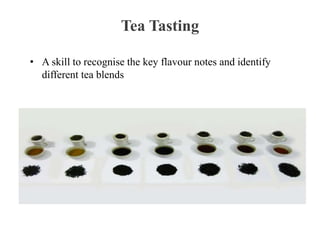
Tea Tasting
• A skill to recognise the key flavour notes and identify
different tea blends
Preparation for Tea Tasting
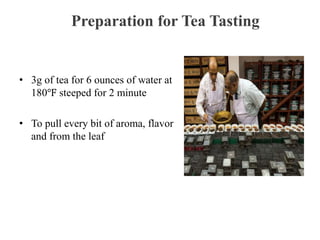
• 3g of tea for 6 ounces of water at
180℉ steeped for 2 minute
• To pull every bit of aroma, flavor
and from the leaf
Tea Tasting
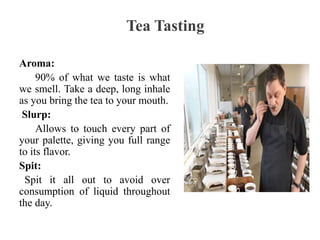
Aroma:
90% of what we taste is what
we smell. Take a deep, long inhale
as you bring the tea to your mouth.
Slurp:
Allows to touch every part of
your palette, giving you full range
to its flavor.
Spit:
Spit it all out to avoid over
consumption of liquid throughout
the day.
Green tea
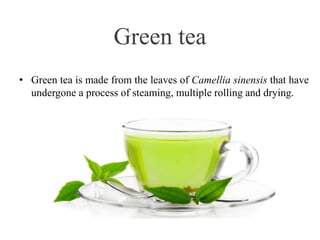
• Green tea is made from the leaves of Camellia sinensis that have
undergone a process of steaming, multiple rolling and drying.
Types of Green Tea
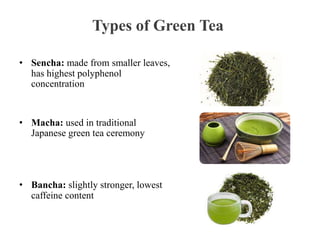
• Sencha: made from smaller leaves,
has highest polyphenol
concentration
• Macha: used in traditional
Japanese green tea ceremony
• Bancha: slightly stronger, lowest
caffeine content
Types of Green Tea
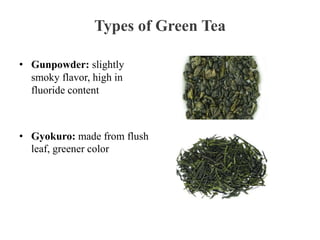
• Gunpowder: slightly
smoky flavor, high in
fluoride content
• Gyokuro: made from flush
leaf, greener color
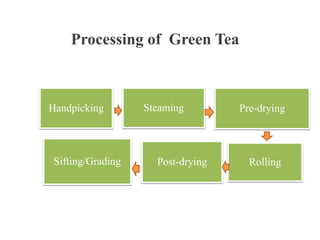
Processing of Green Tea
Handpicking Steaming Pre-drying
Sifting/Grading Post-drying Rolling
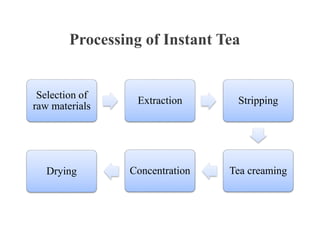
Processing of Instant Tea
Selection of
raw materials
Extraction Stripping
Tea creamingConcentrationDrying
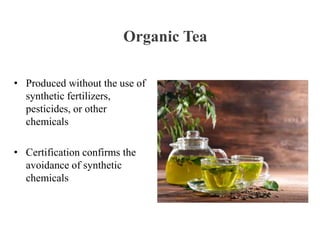
Organic Tea
• Produced without the use of
synthetic fertilizers,
pesticides, or other
chemicals
• Certification confirms the
avoidance of synthetic
chemicals
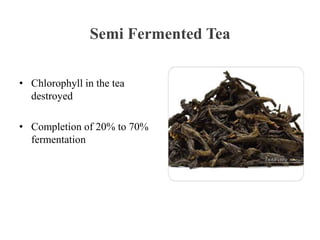
Semi Fermented Tea
• Chlorophyll in the tea
destroyed
• Completion of 20% to 70%
fermentation
Quality Control of Tea
• Cleaning of fresh leaf
• Microbial contamination
• Hygiene in manufacturing process
• Fermentation room
• Drying and packing
• Waste management
• Certification in quality control
References
• https://www.teaclass.com/lesson_0302.html
• http://www.teadiscussion.com/types/green-tea-
types.php
• http://www.madehow.com/Volume-5/Green-
Tea.html
• http://www.sciencedirect.com/science/article/pii/S14
66856412000720
• https://techfactslive.com/no-more-tea-bags/9032/
• http://www.teavivre.com/info/fermentation-of-teas/
• http://www.green-tea-guide.com/oolong-tea.html
Thank You

Tea Testing and Packaging

  • 1.
    Presentation on Tea Manufacturingand Packaging Presented by: Mamunur Rashid Reg. No. : 2011337069
  • 2.
    Topics Covered • TeaTasting • Green Tea (Types & Manufacturing process) • Instant Tea Processing • Organic Tea • Semi-Fermented Tea • Quality control of Tea
  • 3.
    Tea Tasting • Askill to recognise the key flavour notes and identify different tea blends
  • 4.
    Preparation for TeaTasting • 3g of tea for 6 ounces of water at 180℉ steeped for 2 minute • To pull every bit of aroma, flavor and from the leaf
  • 5.
    Tea Tasting Aroma: 90% ofwhat we taste is what we smell. Take a deep, long inhale as you bring the tea to your mouth. Slurp: Allows to touch every part of your palette, giving you full range to its flavor. Spit: Spit it all out to avoid over consumption of liquid throughout the day.
  • 6.
    Green tea • Greentea is made from the leaves of Camellia sinensis that have undergone a process of steaming, multiple rolling and drying.
  • 7.
    Types of GreenTea • Sencha: made from smaller leaves, has highest polyphenol concentration • Macha: used in traditional Japanese green tea ceremony • Bancha: slightly stronger, lowest caffeine content
  • 8.
    Types of GreenTea • Gunpowder: slightly smoky flavor, high in fluoride content • Gyokuro: made from flush leaf, greener color
  • 9.
    Processing of GreenTea Handpicking Steaming Pre-drying Sifting/Grading Post-drying Rolling
  • 10.
    Processing of InstantTea Selection of raw materials Extraction Stripping Tea creamingConcentrationDrying
  • 11.
    Organic Tea • Producedwithout the use of synthetic fertilizers, pesticides, or other chemicals • Certification confirms the avoidance of synthetic chemicals
  • 12.
    Semi Fermented Tea •Chlorophyll in the tea destroyed • Completion of 20% to 70% fermentation
  • 13.
    Quality Control ofTea • Cleaning of fresh leaf • Microbial contamination • Hygiene in manufacturing process • Fermentation room • Drying and packing • Waste management • Certification in quality control
  • 14.
    References • https://www.teaclass.com/lesson_0302.html • http://www.teadiscussion.com/types/green-tea- types.php •http://www.madehow.com/Volume-5/Green- Tea.html • http://www.sciencedirect.com/science/article/pii/S14 66856412000720 • https://techfactslive.com/no-more-tea-bags/9032/ • http://www.teavivre.com/info/fermentation-of-teas/ • http://www.green-tea-guide.com/oolong-tea.html
  • 15.