



Group# 08
Name
 Imtiaz nawaz
 Faiz subhani
 Adeel basheer
 Umer Farooq
 Muhammad Iqbal
Roll num
 26
 43
 46
Procedure of
manufacturing
TEA
History of tea
 Chinese emperor Shen Nung was sat beneath a
Camellia scientist one day in 2737BC when a few
leaves were stirred by the wind. As his servant boiled
drinking water in a pot, the leaves fell in and so
accidentally resulted in the world’s first cup of tea
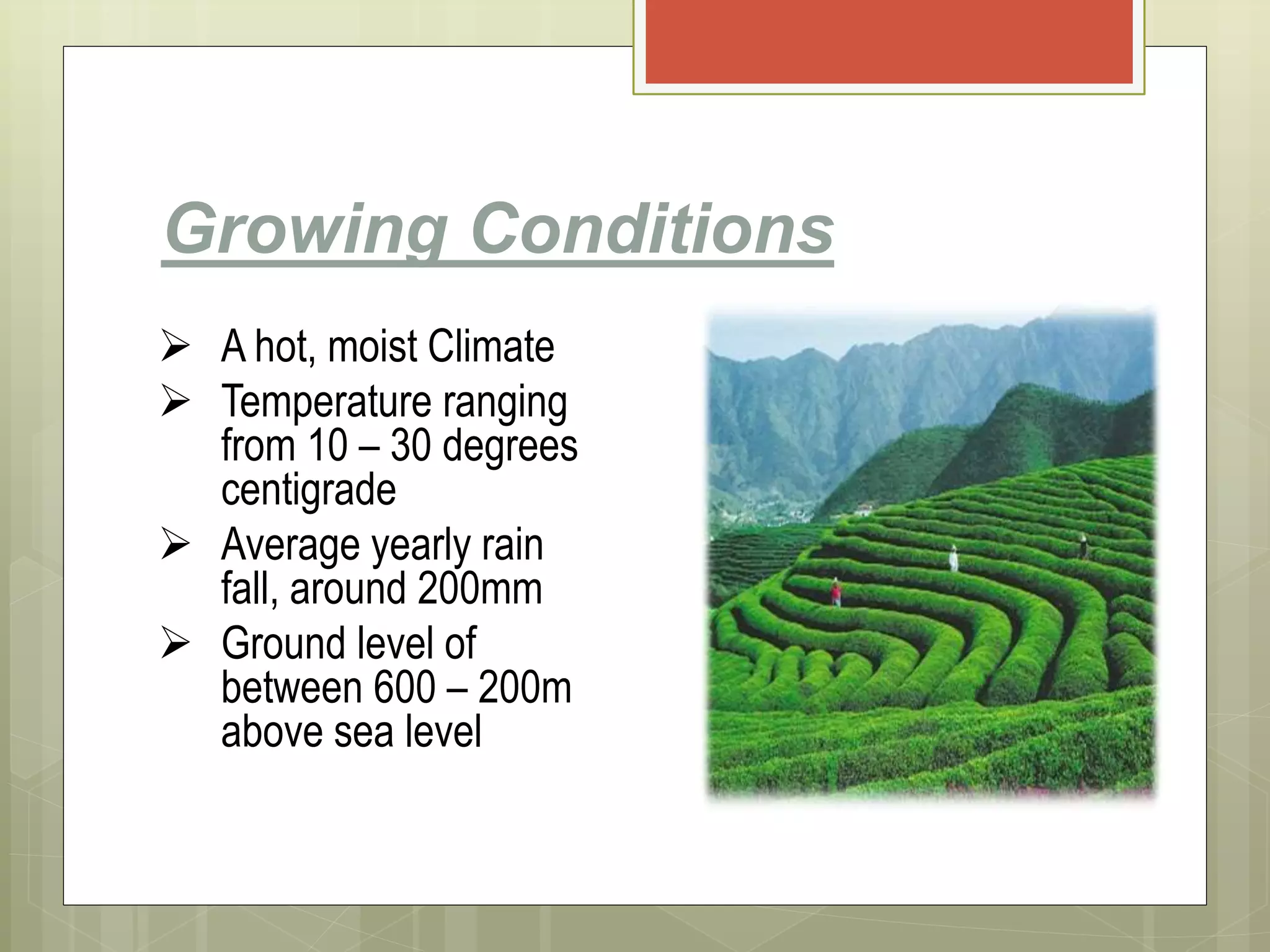
Growing Conditions
 A hot, moist Climate
 Temperature ranging
from 10 – 30 degrees
centigrade
 Average yearly rain
fall, around 200mm
 Ground level of
between 600 – 200m
above sea level
Health & Benefits of Tea
 Help to relax on human
 Assist in natural immune
 Response to infection
 Reduce risk of heart
diseases, cancers,
cholesterol level, higher
blood pressure.
 Reduce eye fatigue.
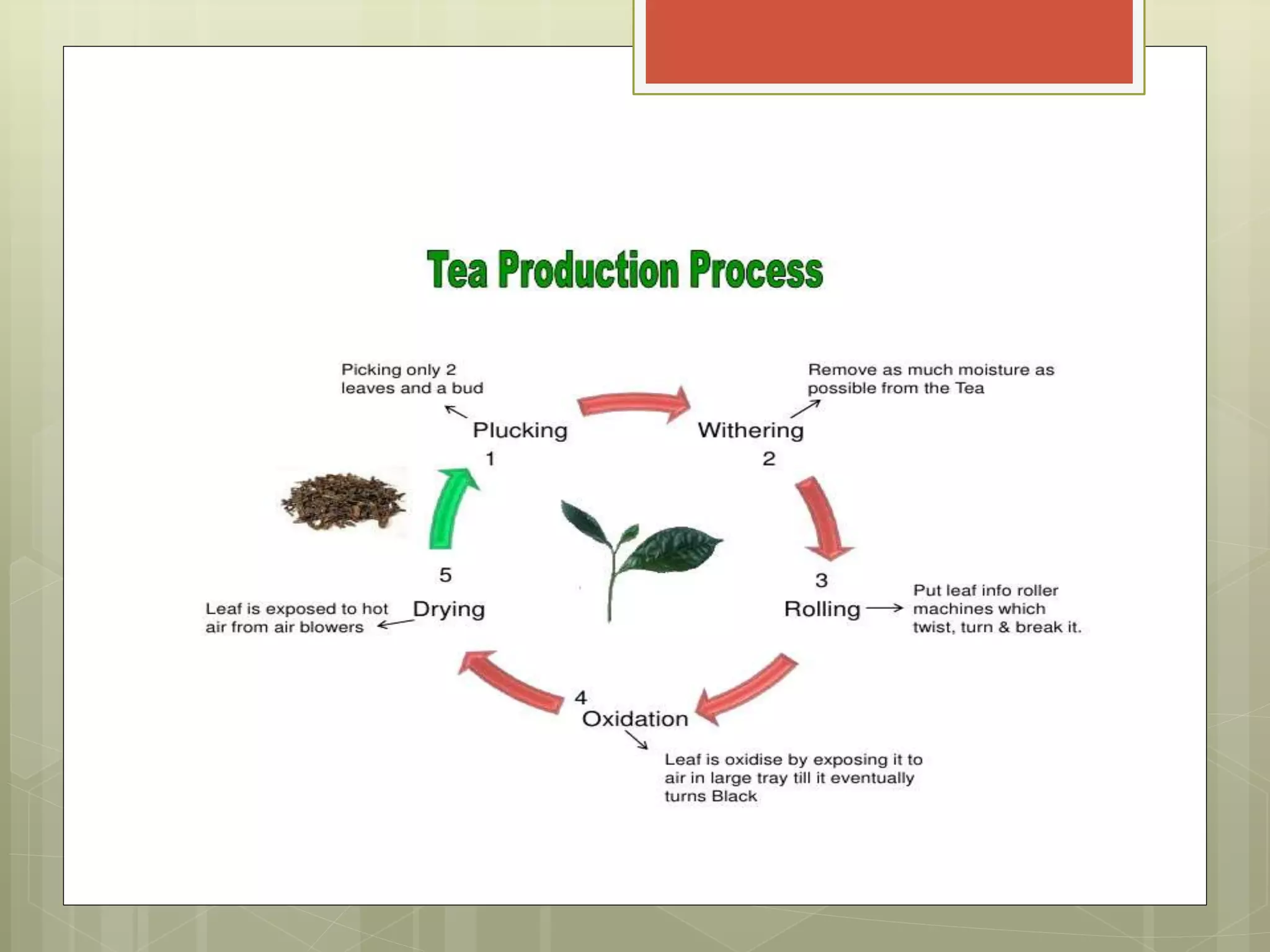
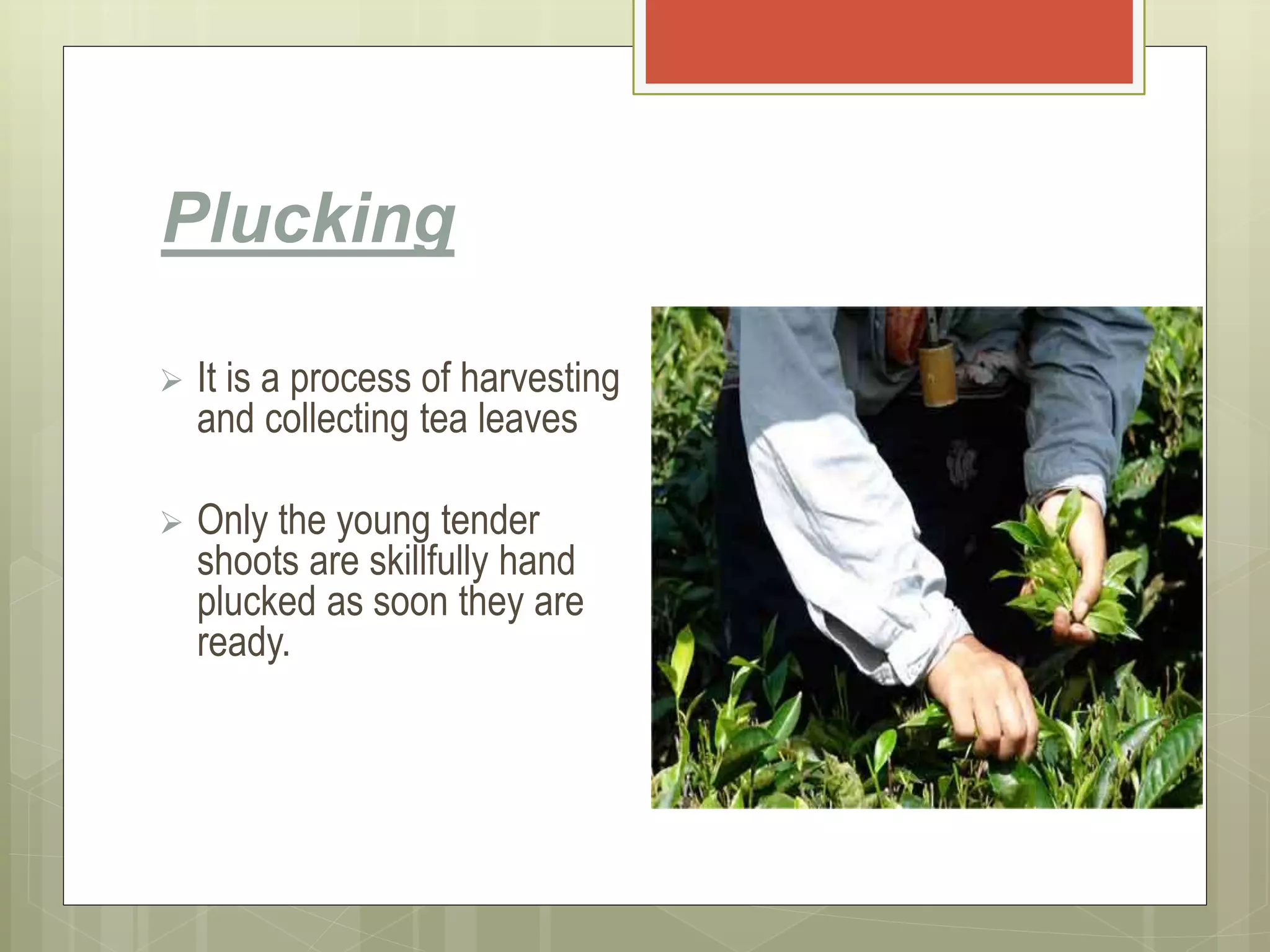
Plucking
 It is a process of harvesting
and collecting tea leaves
 Only the young tender
shoots are skillfully hand
plucked as soon they are
ready.
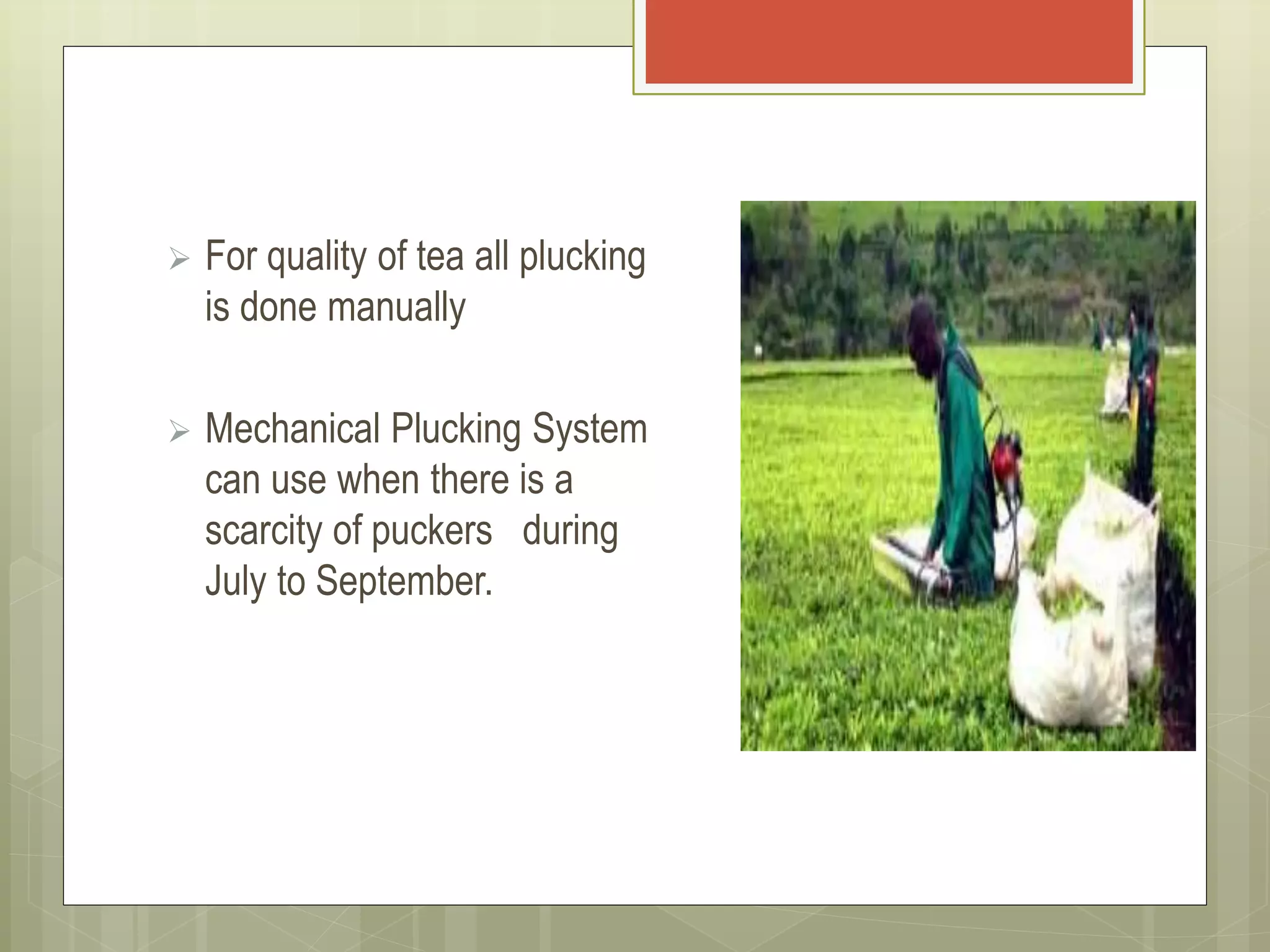
 For quality of tea all plucking
is done manually
 Mechanical Plucking System
can use when there is a
scarcity of puckers during
July to September.
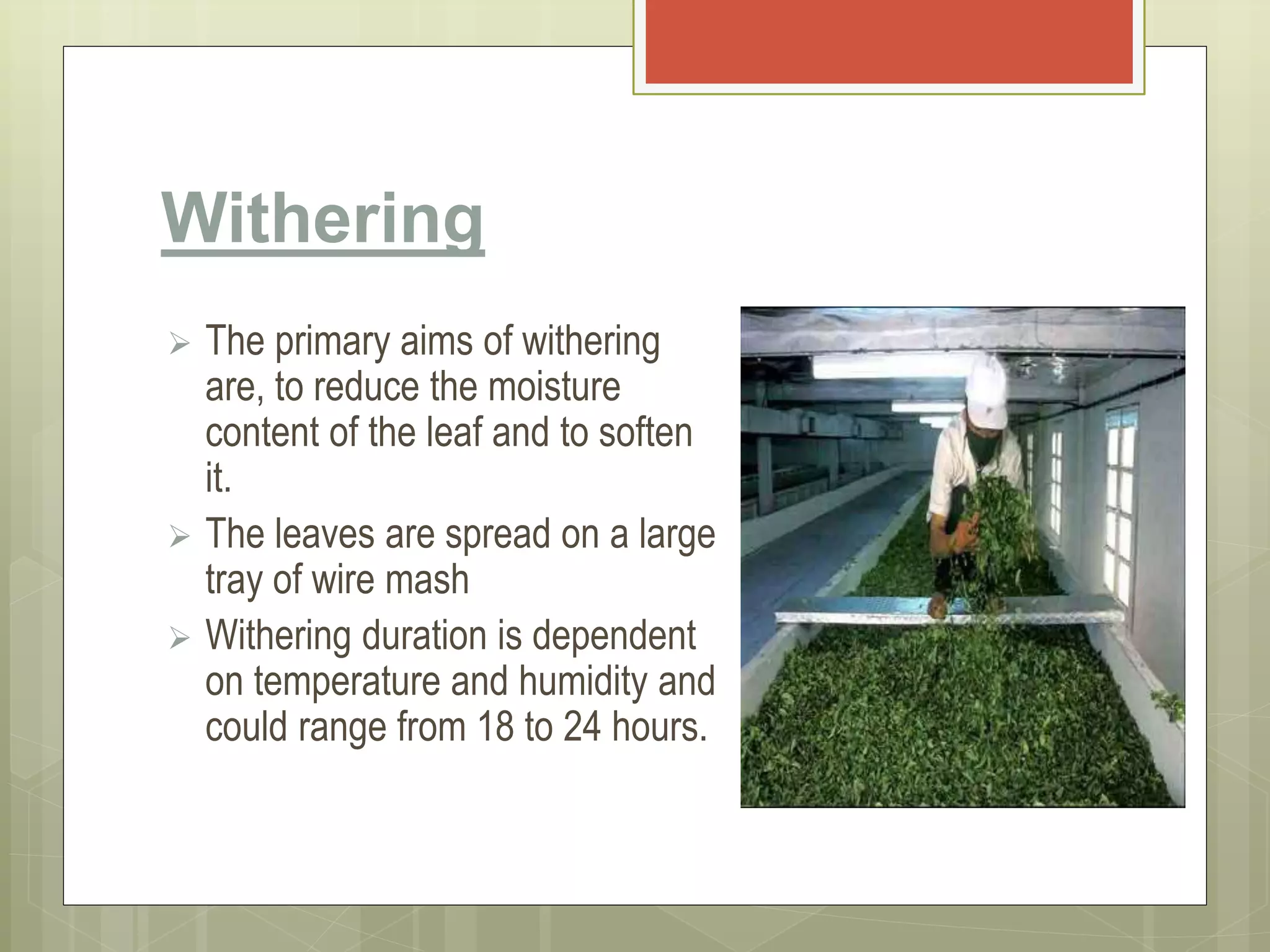
Withering
 The primary aims of withering
are, to reduce the moisture
content of the leaf and to soften
it.
 The leaves are spread on a large
tray of wire mash
 Withering duration is dependent
on temperature and humidity and
could range from 18 to 24 hours.
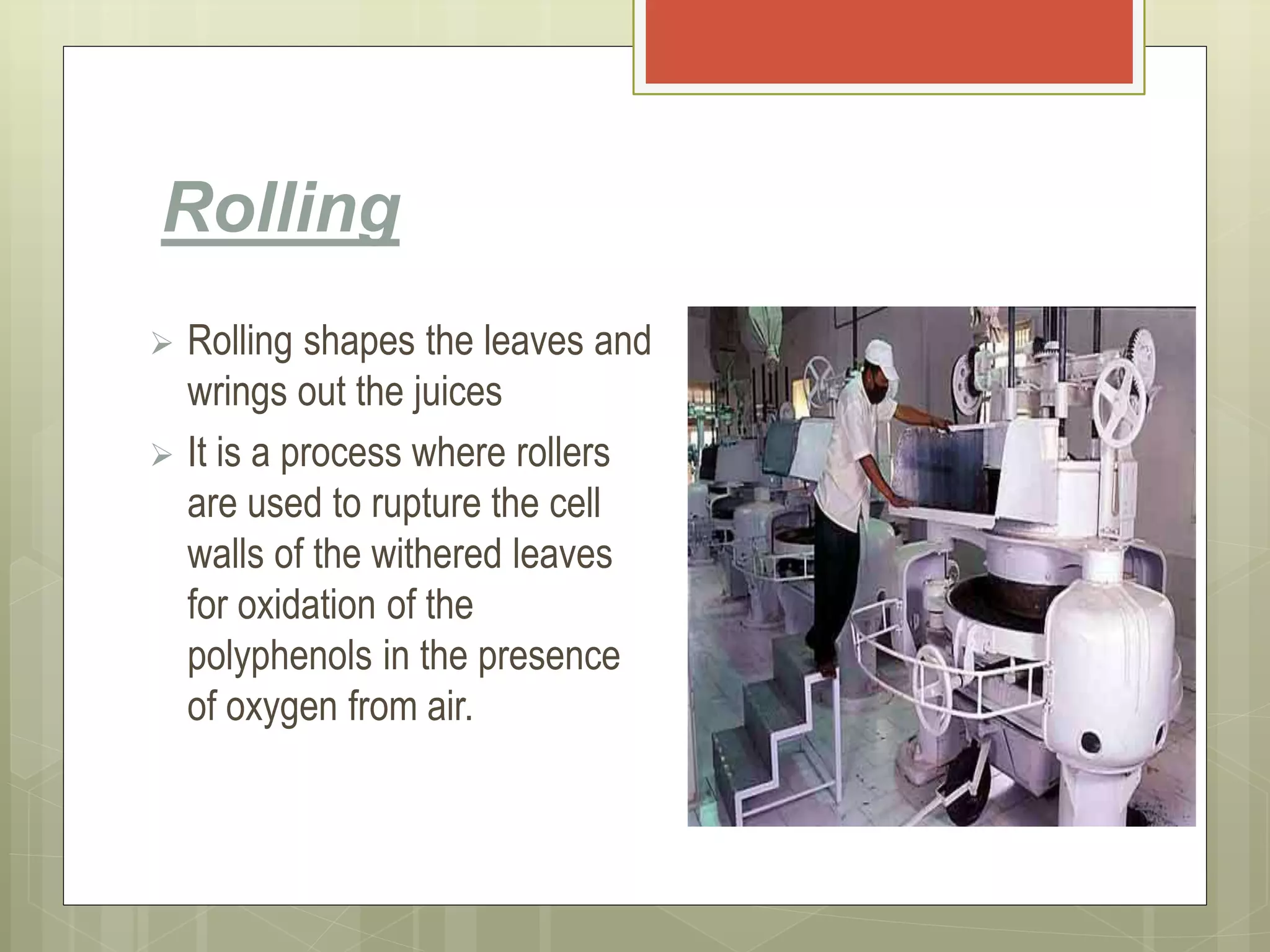
Rolling
 Rolling shapes the leaves and
wrings out the juices
 It is a process where rollers
are used to rupture the cell
walls of the withered leaves
for oxidation of the
polyphenols in the presence
of oxygen from air.
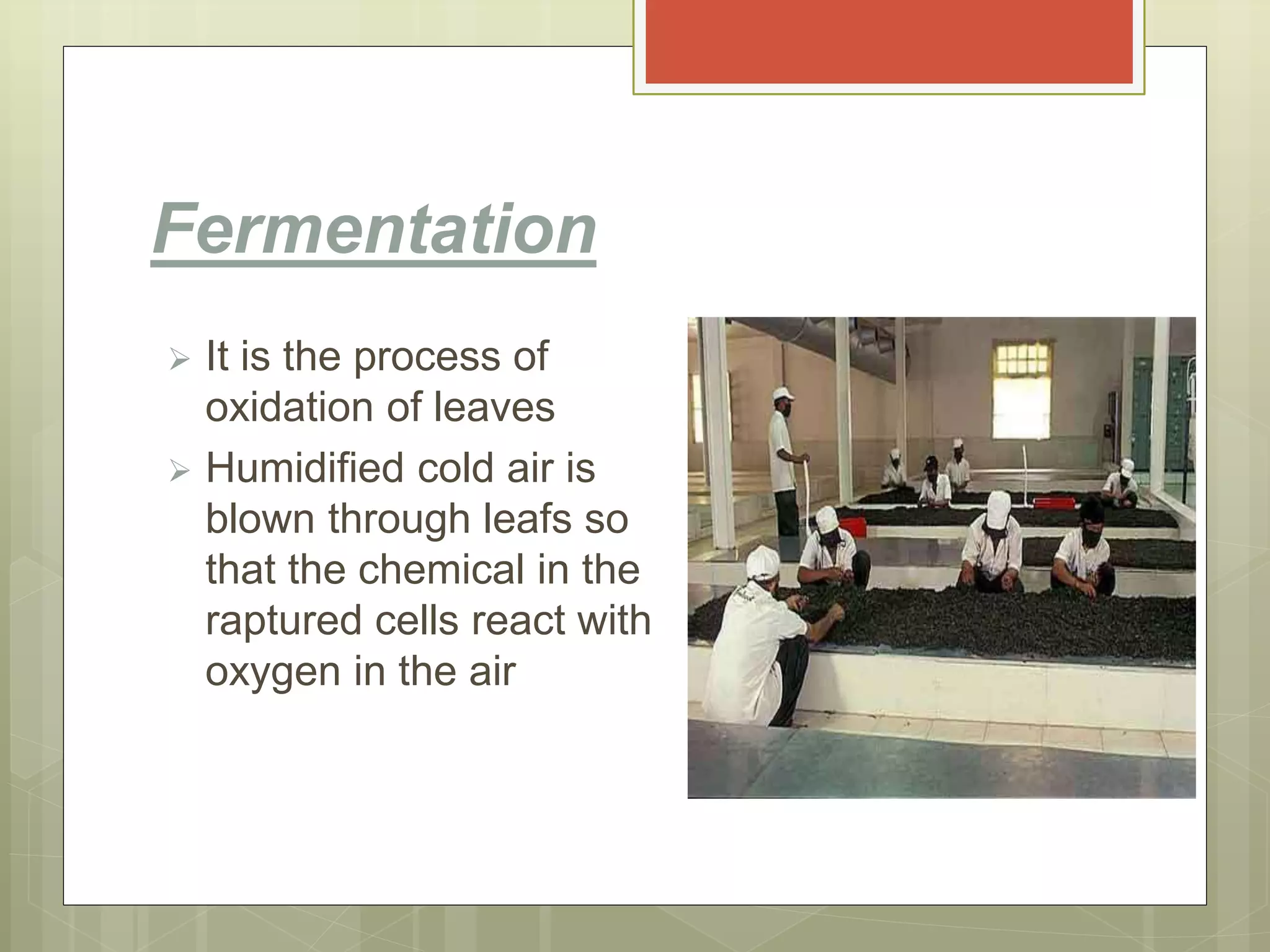
Fermentation
 It is the process of
oxidation of leaves
 Humidified cold air is
blown through leafs so
that the chemical in the
raptured cells react with
oxygen in the air
 Leaf tea color changes from green to tan in
this process.
 Oxidation time depends upon quality of leafs
and type of tea.
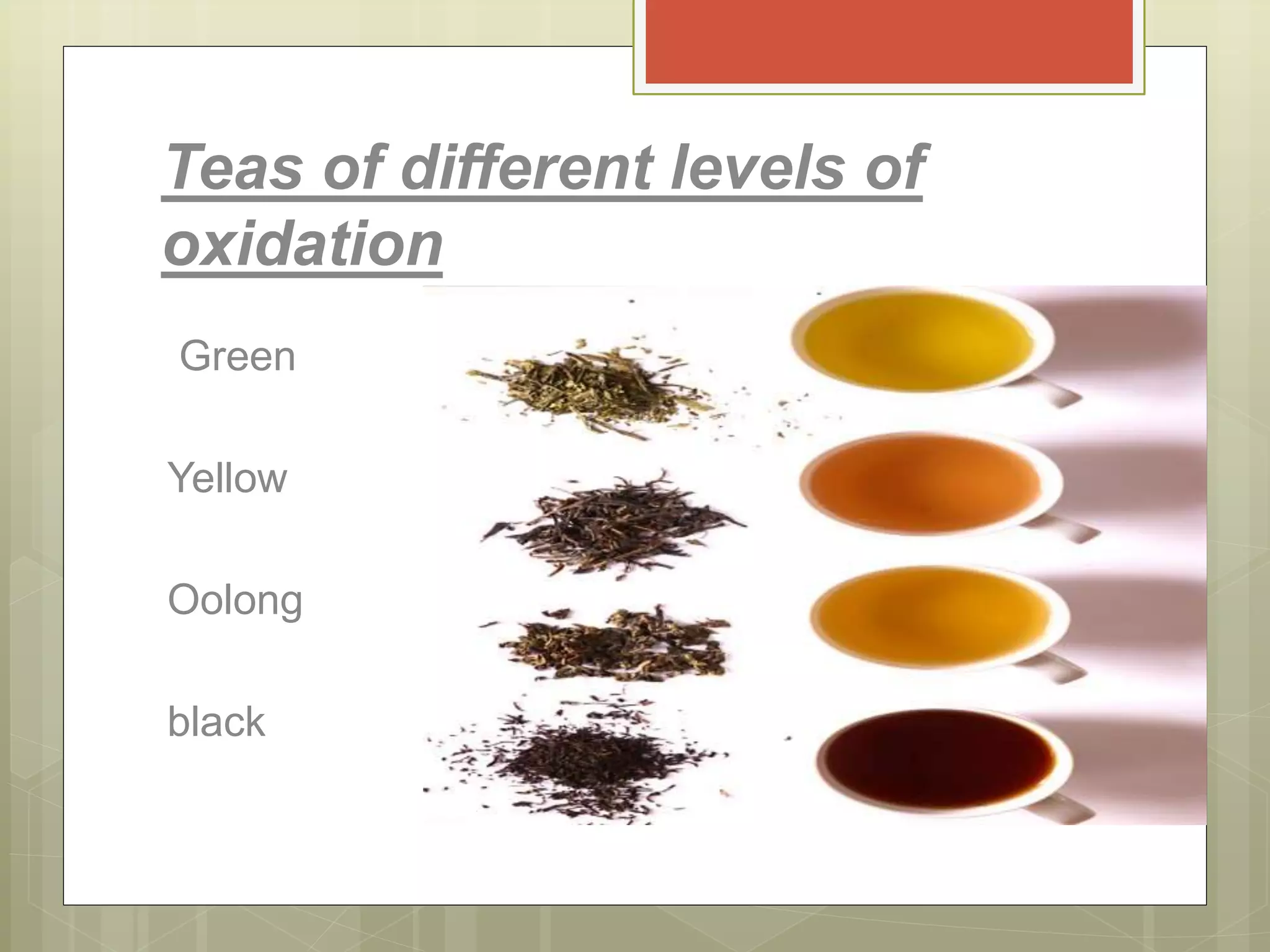
Teas of different levels of
oxidation
Green
Yellow
Oolong
black
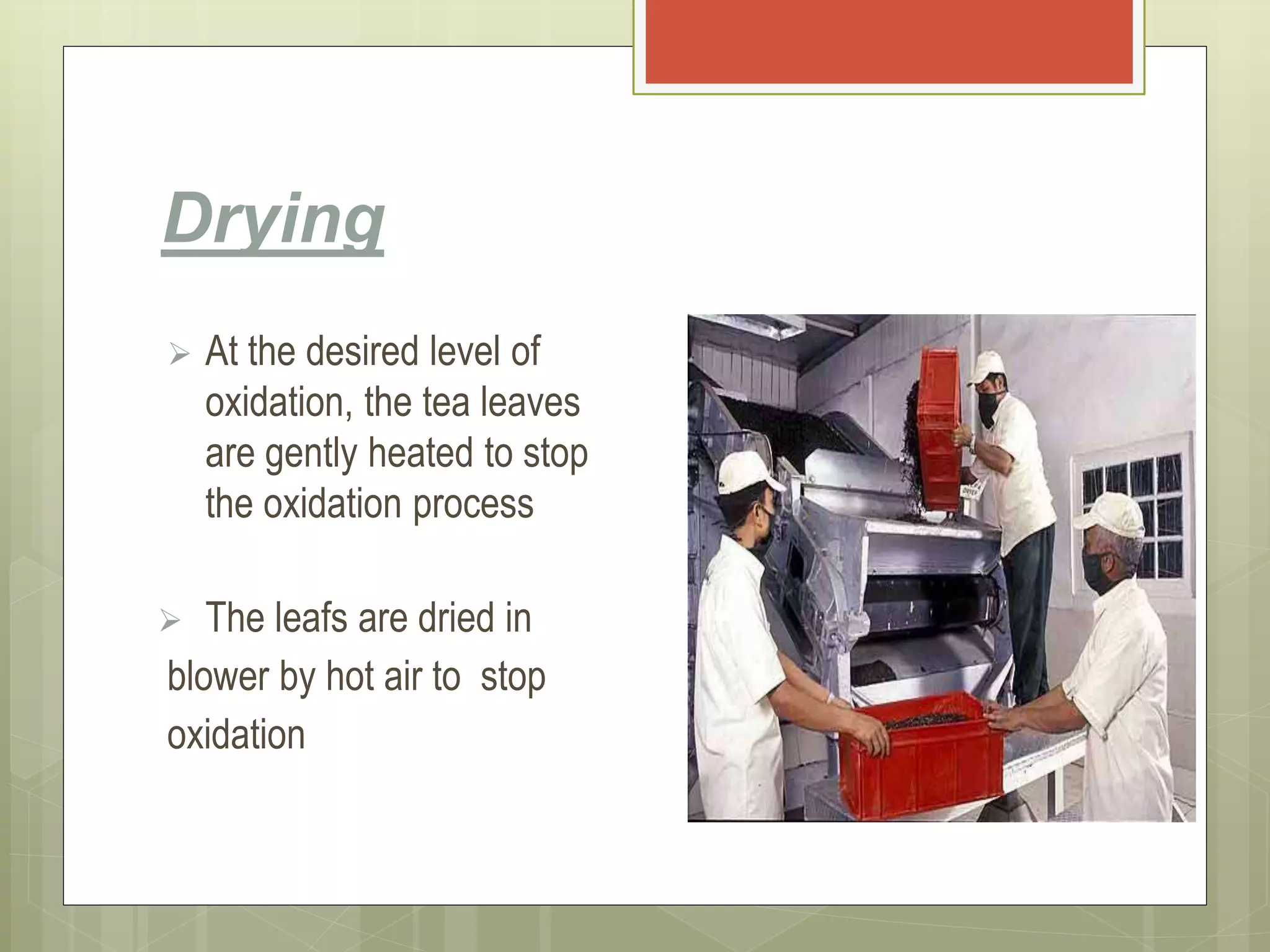
Drying
 At the desired level of
oxidation, the tea leaves
are gently heated to stop
the oxidation process
 The leafs are dried in
blower by hot air to stop
oxidation
Grading
 Tea leaf grading is the process of evaluating products
based on the quality and condition of the tea leaves
themselves
 The highest grades are referred to as "orange pekoe
 and the lowest as "fanning's" or "dust"
 Tea is graded in three categories
1. Broken
1. Fanning
2. dust
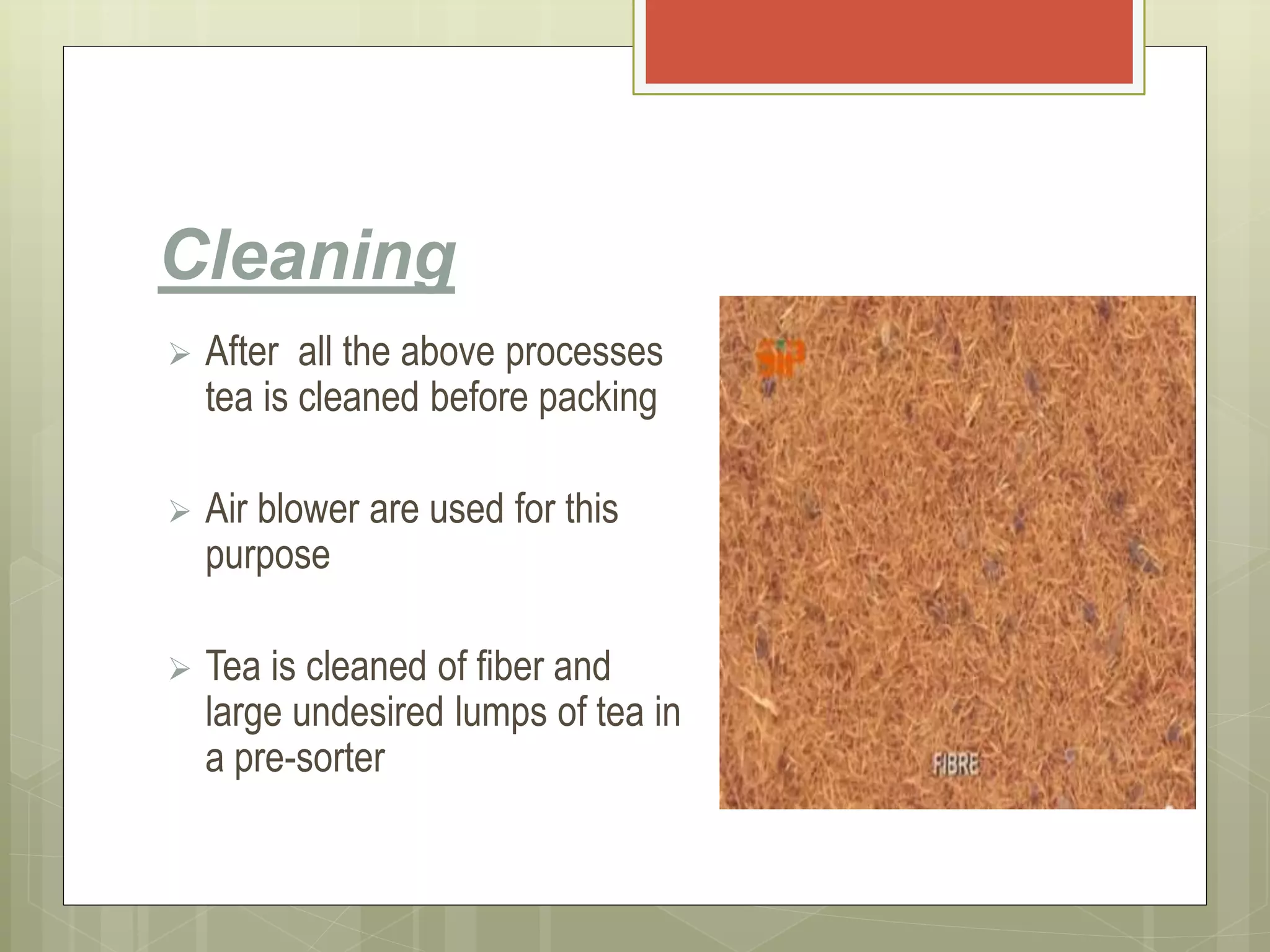
Cleaning
 After all the above processes
tea is cleaned before packing
 Air blower are used for this
purpose
 Tea is cleaned of fiber and
large undesired lumps of tea in
a pre-sorter
Packing
 For selling purposes packing of tea is essential in
different packages
 We provide tea in tea bags for offices and institutions
 We provide tea in packets and card’s boxes in different
sizes for households
Any question
New microsoft power point presentation (2)

New microsoft power point presentation (2)

  • 2.
    Group# 08 Name  Imtiaznawaz  Faiz subhani  Adeel basheer  Umer Farooq  Muhammad Iqbal Roll num  26  43  46
  • 3.
  • 4.
    History of tea Chinese emperor Shen Nung was sat beneath a Camellia scientist one day in 2737BC when a few leaves were stirred by the wind. As his servant boiled drinking water in a pot, the leaves fell in and so accidentally resulted in the world’s first cup of tea
  • 5.
    Growing Conditions  Ahot, moist Climate  Temperature ranging from 10 – 30 degrees centigrade  Average yearly rain fall, around 200mm  Ground level of between 600 – 200m above sea level
  • 6.
    Health & Benefitsof Tea  Help to relax on human  Assist in natural immune  Response to infection  Reduce risk of heart diseases, cancers, cholesterol level, higher blood pressure.  Reduce eye fatigue.
  • 8.
    Plucking  It isa process of harvesting and collecting tea leaves  Only the young tender shoots are skillfully hand plucked as soon they are ready.
  • 9.
     For qualityof tea all plucking is done manually  Mechanical Plucking System can use when there is a scarcity of puckers during July to September.
  • 10.
    Withering  The primaryaims of withering are, to reduce the moisture content of the leaf and to soften it.  The leaves are spread on a large tray of wire mash  Withering duration is dependent on temperature and humidity and could range from 18 to 24 hours.
  • 11.
    Rolling  Rolling shapesthe leaves and wrings out the juices  It is a process where rollers are used to rupture the cell walls of the withered leaves for oxidation of the polyphenols in the presence of oxygen from air.
  • 12.
    Fermentation  It isthe process of oxidation of leaves  Humidified cold air is blown through leafs so that the chemical in the raptured cells react with oxygen in the air
  • 13.
     Leaf teacolor changes from green to tan in this process.  Oxidation time depends upon quality of leafs and type of tea.
  • 14.
    Teas of differentlevels of oxidation Green Yellow Oolong black
  • 15.
    Drying  At thedesired level of oxidation, the tea leaves are gently heated to stop the oxidation process  The leafs are dried in blower by hot air to stop oxidation
  • 16.
    Grading  Tea leafgrading is the process of evaluating products based on the quality and condition of the tea leaves themselves  The highest grades are referred to as "orange pekoe  and the lowest as "fanning's" or "dust"
  • 17.
     Tea isgraded in three categories 1. Broken 1. Fanning 2. dust
  • 18.
    Cleaning  After allthe above processes tea is cleaned before packing  Air blower are used for this purpose  Tea is cleaned of fiber and large undesired lumps of tea in a pre-sorter
  • 19.
    Packing  For sellingpurposes packing of tea is essential in different packages  We provide tea in tea bags for offices and institutions  We provide tea in packets and card’s boxes in different sizes for households
  • 20.