Section 26.1 – Taxonomy By Lauren Banjo!
Taxonomy Classifying living and extinct organisms and viruses Hierarchy Easier for scientists to study if they're in groups Each group is called a taxon
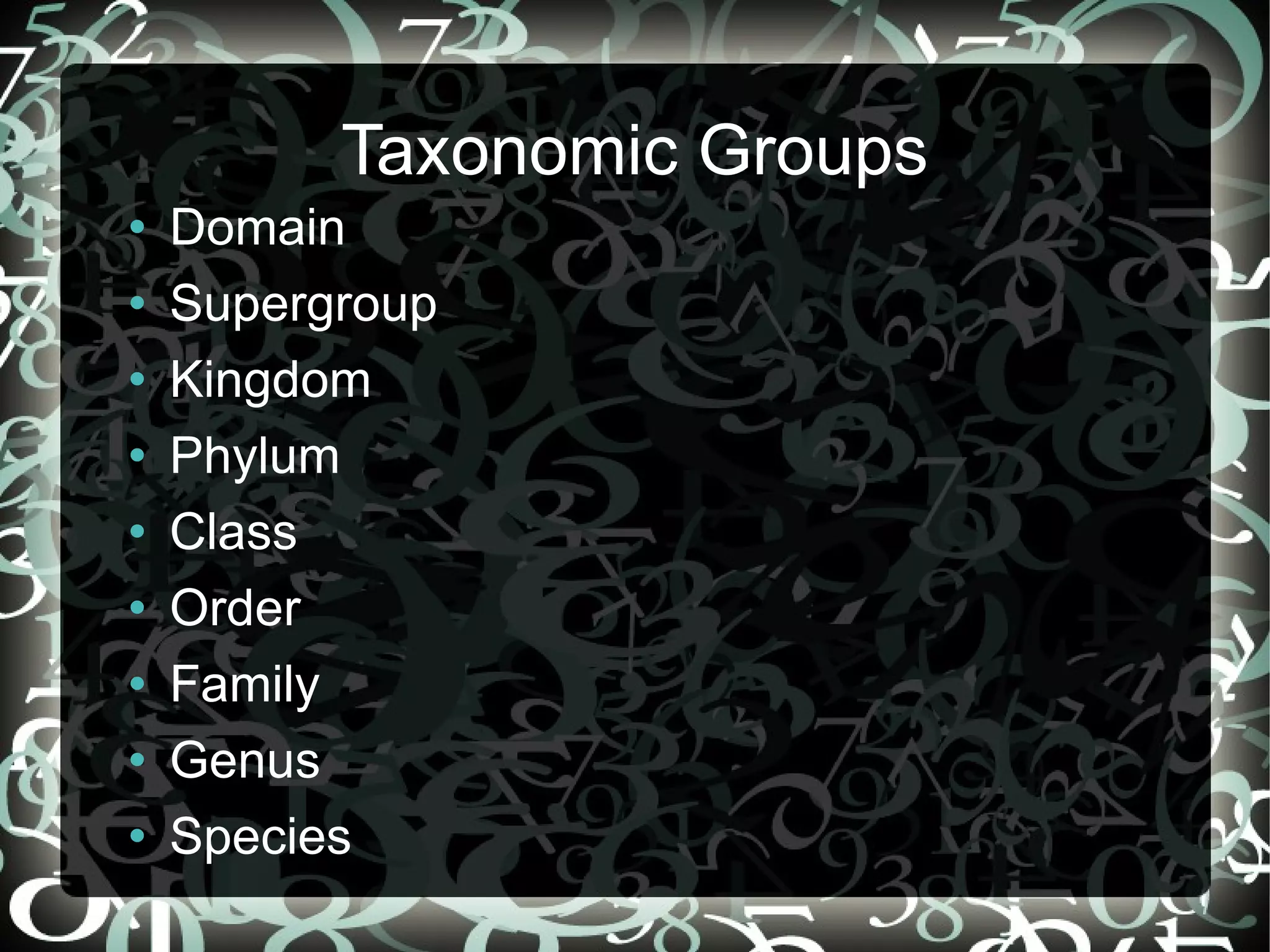
Taxonomic Groups Domain Supergroup Kingdom Phylum Class Order Family Genus Species
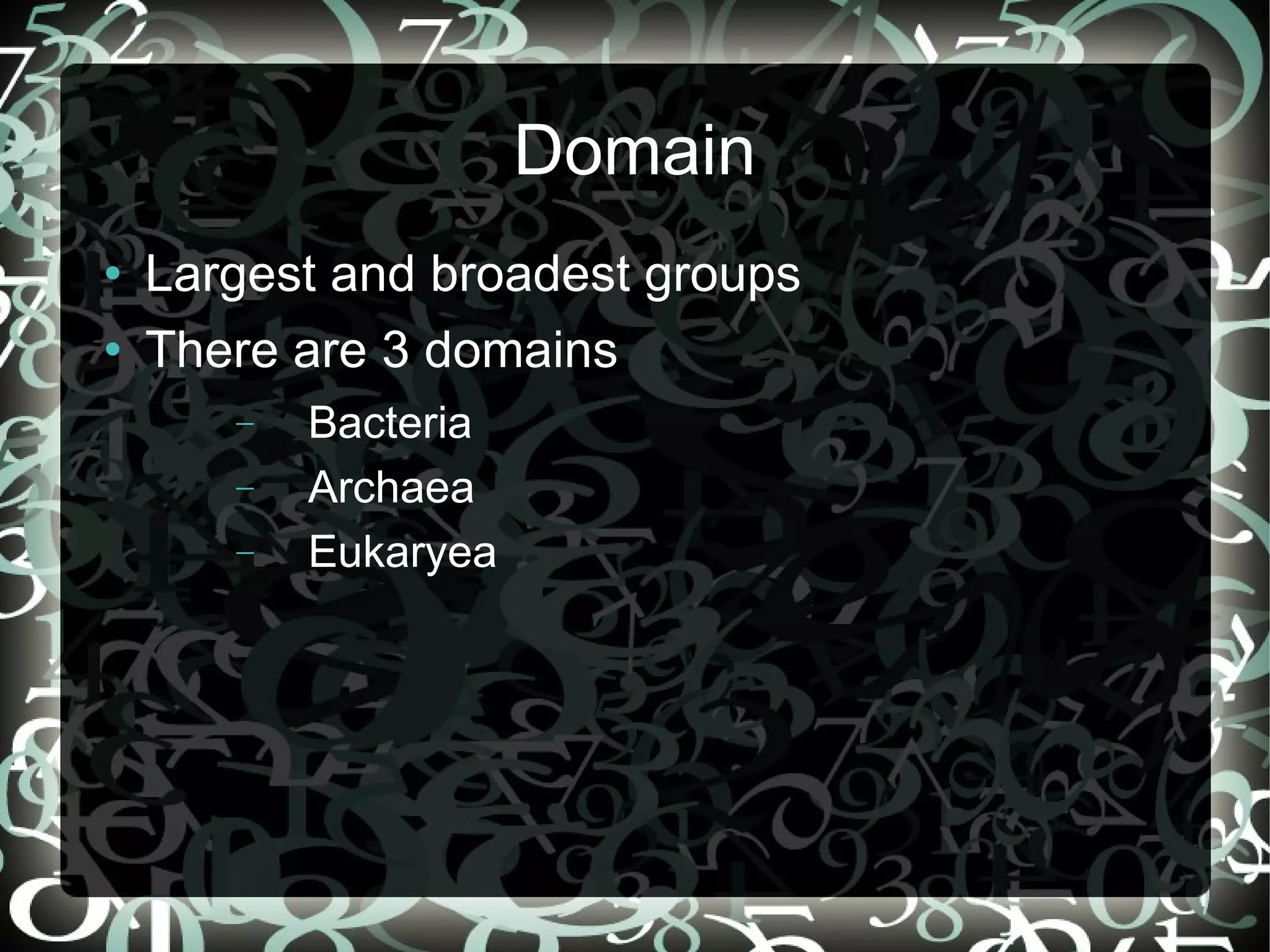
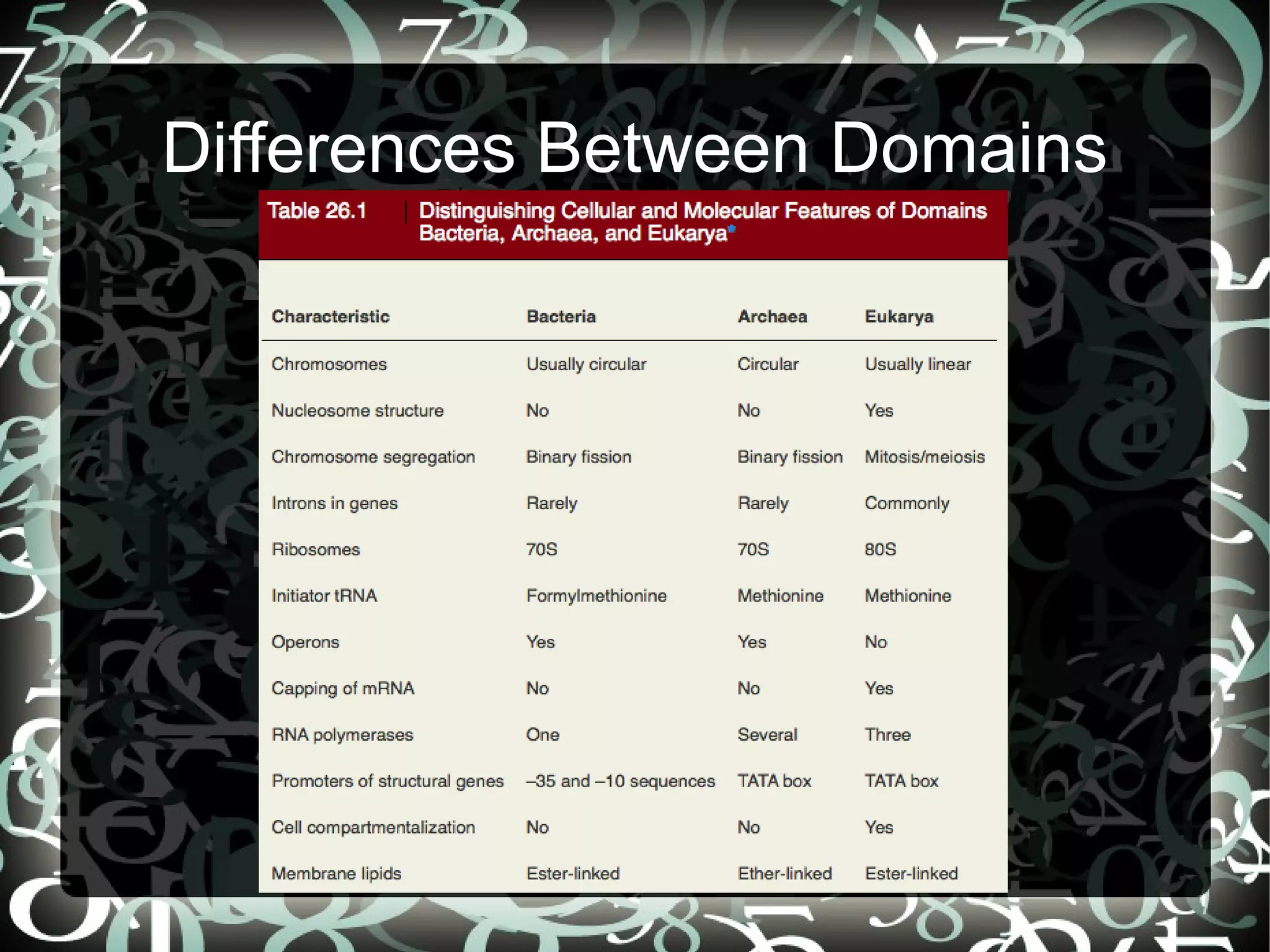
Domain Largest and broadest groups There are 3 domains Bacteria Archaea Eukaryea
Differences Between Domains
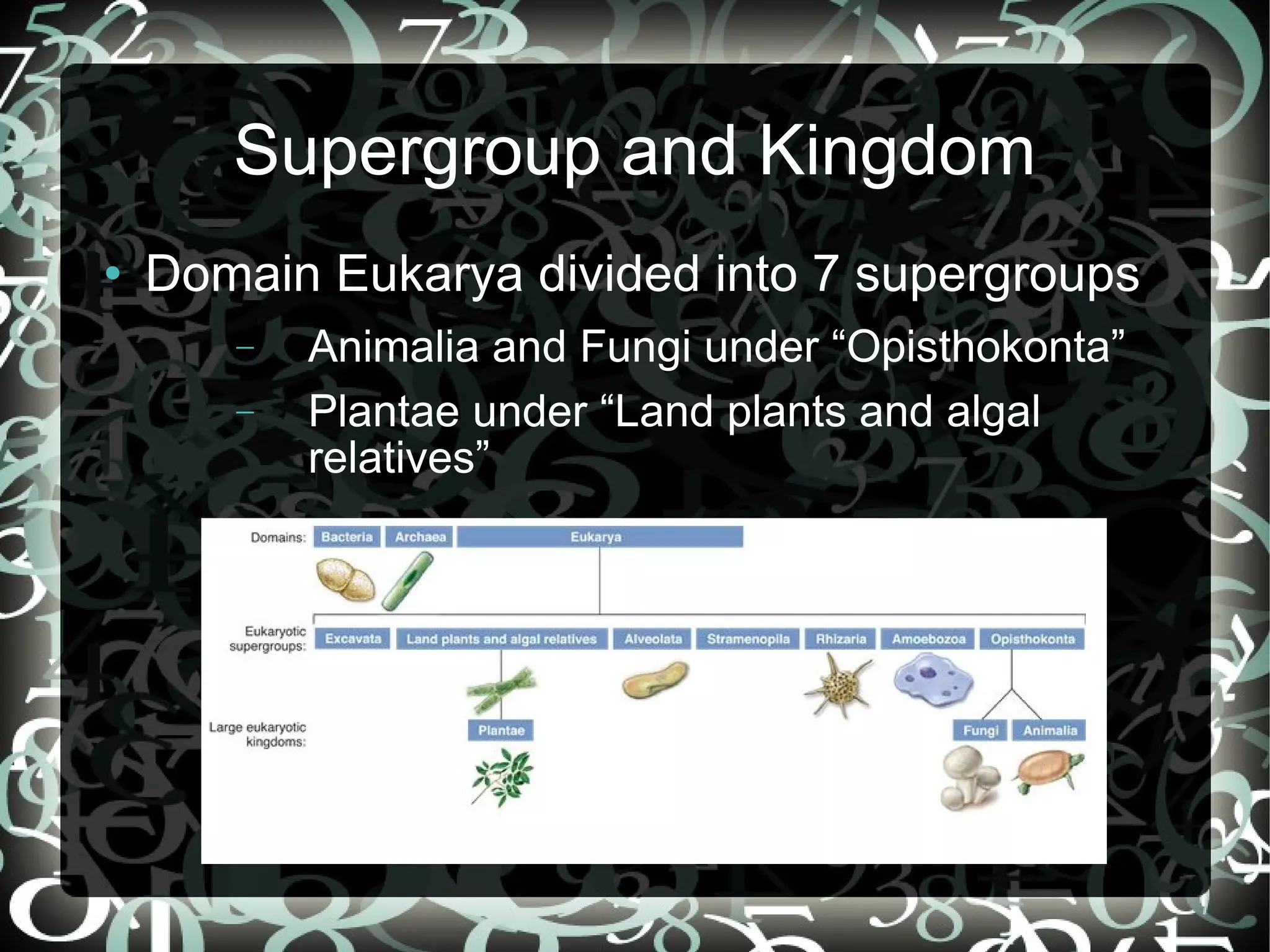
Supergroup and Kingdom Domain Eukarya divided into 7 supergroups Animalia and Fungi under “Opisthokonta” Plantae under “Land plants and algal relatives”
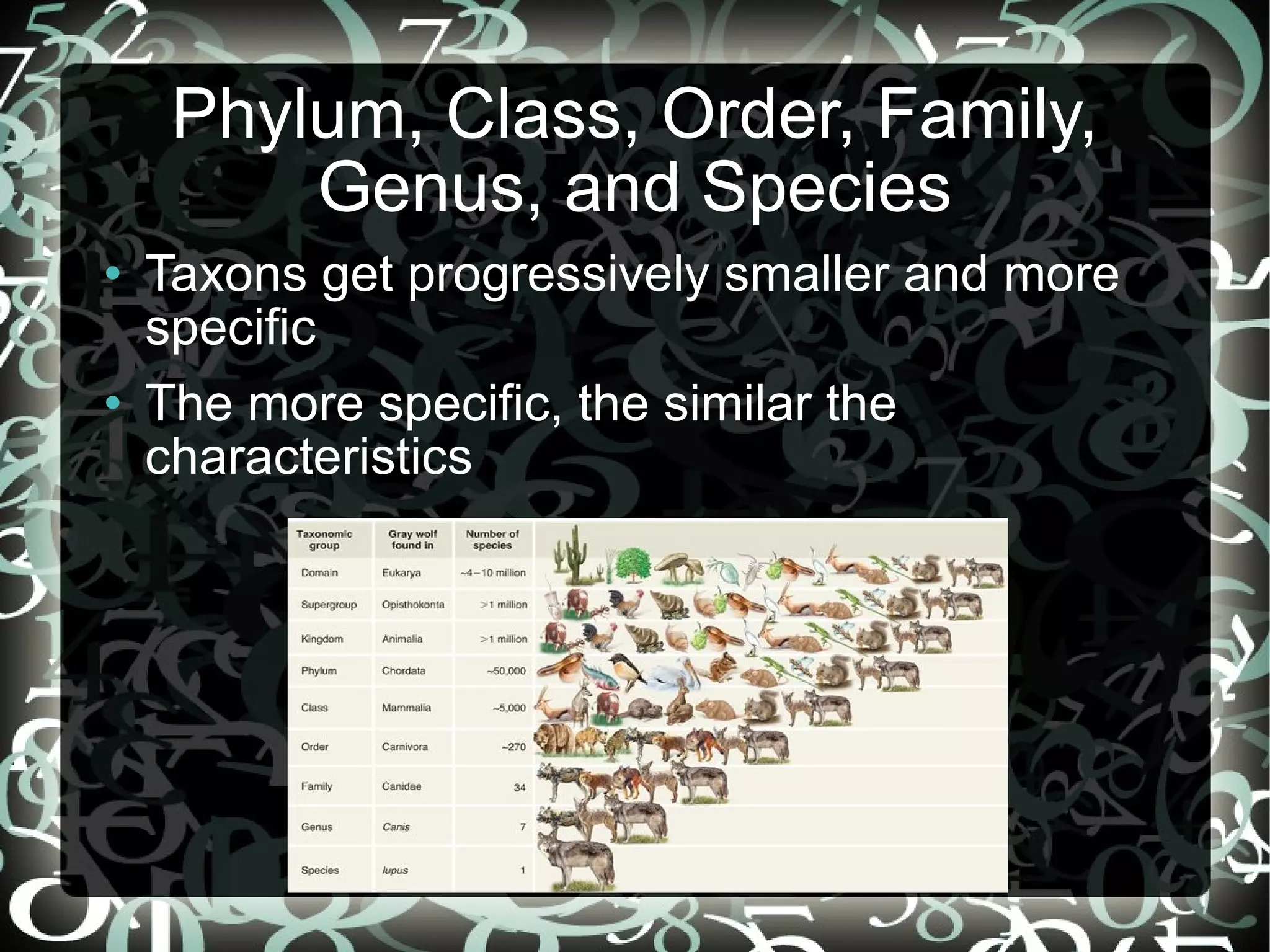
Phylum, Class, Order, Family, Genus, and Species Taxons get progressively smaller and more specific The more specific, the similar the characteristics
Binomial Nomenclature Standard method for naming species First name is the Genus, second is a specific epithet Genus name is capitalized, epithet is not Both are italicized In the same passage, the second time it's mentioned, the Genus can be abbreviated Examples:  Homo sapien  (first mention)  H. sapien  (other mentions)
Can anyone name a species? Yes! There are rules to follow Rules are put in place by: International Commission on Zoological Nomenclature (ICZN) for animal species International Code of Botanical Nomenclature (ICBN) for plant species International Committee on Systematics of Prokaryotes (ICSP) for prokaryotes

Taxonomy

  • 1.
    Section 26.1 –Taxonomy By Lauren Banjo!
  • 2.
    Taxonomy Classifying livingand extinct organisms and viruses Hierarchy Easier for scientists to study if they're in groups Each group is called a taxon
  • 3.
    Taxonomic Groups DomainSupergroup Kingdom Phylum Class Order Family Genus Species
  • 4.
    Domain Largest andbroadest groups There are 3 domains Bacteria Archaea Eukaryea
  • 5.
  • 6.
    Supergroup and KingdomDomain Eukarya divided into 7 supergroups Animalia and Fungi under “Opisthokonta” Plantae under “Land plants and algal relatives”
  • 7.
    Phylum, Class, Order,Family, Genus, and Species Taxons get progressively smaller and more specific The more specific, the similar the characteristics
  • 8.
    Binomial Nomenclature Standardmethod for naming species First name is the Genus, second is a specific epithet Genus name is capitalized, epithet is not Both are italicized In the same passage, the second time it's mentioned, the Genus can be abbreviated Examples: Homo sapien (first mention) H. sapien (other mentions)
  • 9.
    Can anyone namea species? Yes! There are rules to follow Rules are put in place by: International Commission on Zoological Nomenclature (ICZN) for animal species International Code of Botanical Nomenclature (ICBN) for plant species International Committee on Systematics of Prokaryotes (ICSP) for prokaryotes