Basic Taxonomy Concepts
and Principles
Presented by Group 3
Taxonomy
• Taxonomy is a scientific field that focuses on naming and classifying organisms.
• Taxonomic research provides essential information for grouping organisms based
on biology.
• The main objective of taxonomy is to describe and arrange these groups
according to evolutionary relationships and the inherent order of biological
diversity.
• Taxonomy is crucial for deriving phylogeny hypothesis.
• Biological science and its application rely on taxonomy for effective
communication.
• Reliable taxonomic information is increasingly important for understanding
biodiversity.
Phylogeny
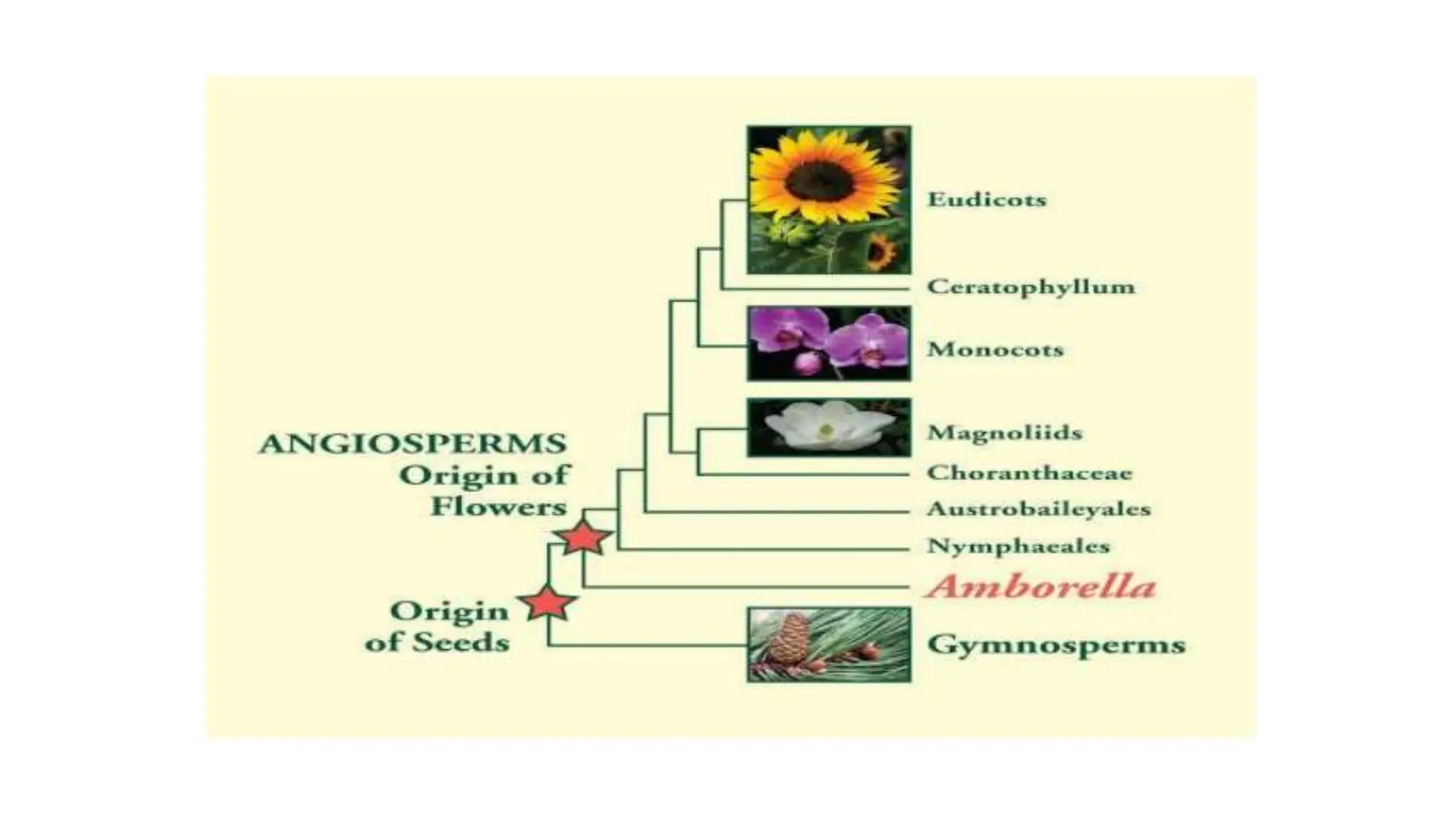
• Taxonomy is based on phylogeny, which is a representation of
relationships and how organisms evolved from a common ancestor.
• Phylogeny shows the tree of life as a product of evolution and the
degrees of relationship by descent from a common ancestor.
• Phylogeny provides the framework for understanding the
evolutionary history of species and their relationships to one another.
• Phylogenic trees traditionally based on morphology.
• Plants classified by leaf shape, floral parts, and conducting tissues.
• Animals classified by cells, symmetry, and habitat.
• Comparative morphology studies the shapes and sizes of organismal
structures and their origins, including homologies and analogies.
• The fossil record is used to estimate clade ages and a lineage
representing the most recent common ancestor is added to the
phylogenetic tree.
• Chromosomal and molecular characters are extensively used for
taxonomic classification.
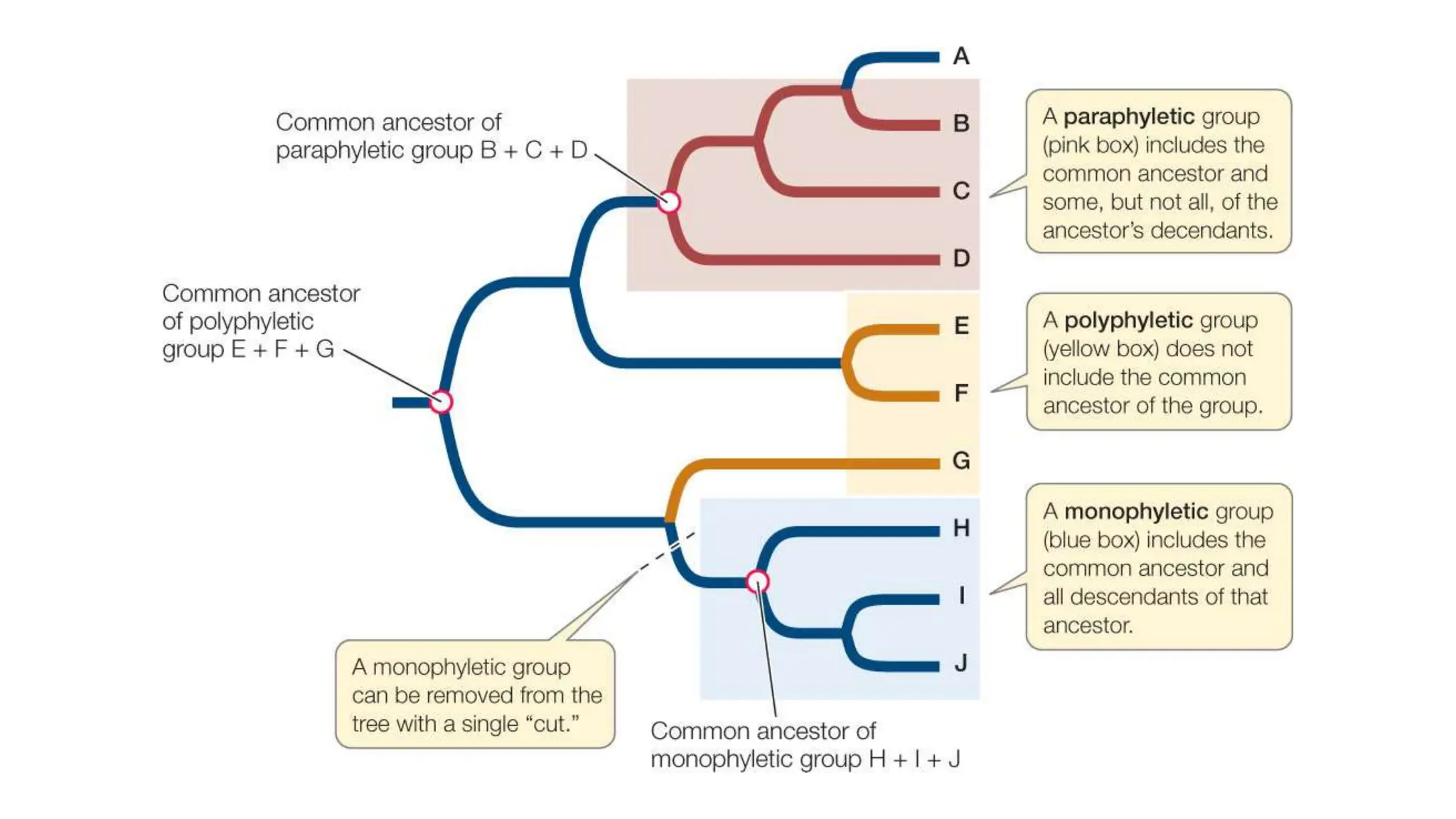
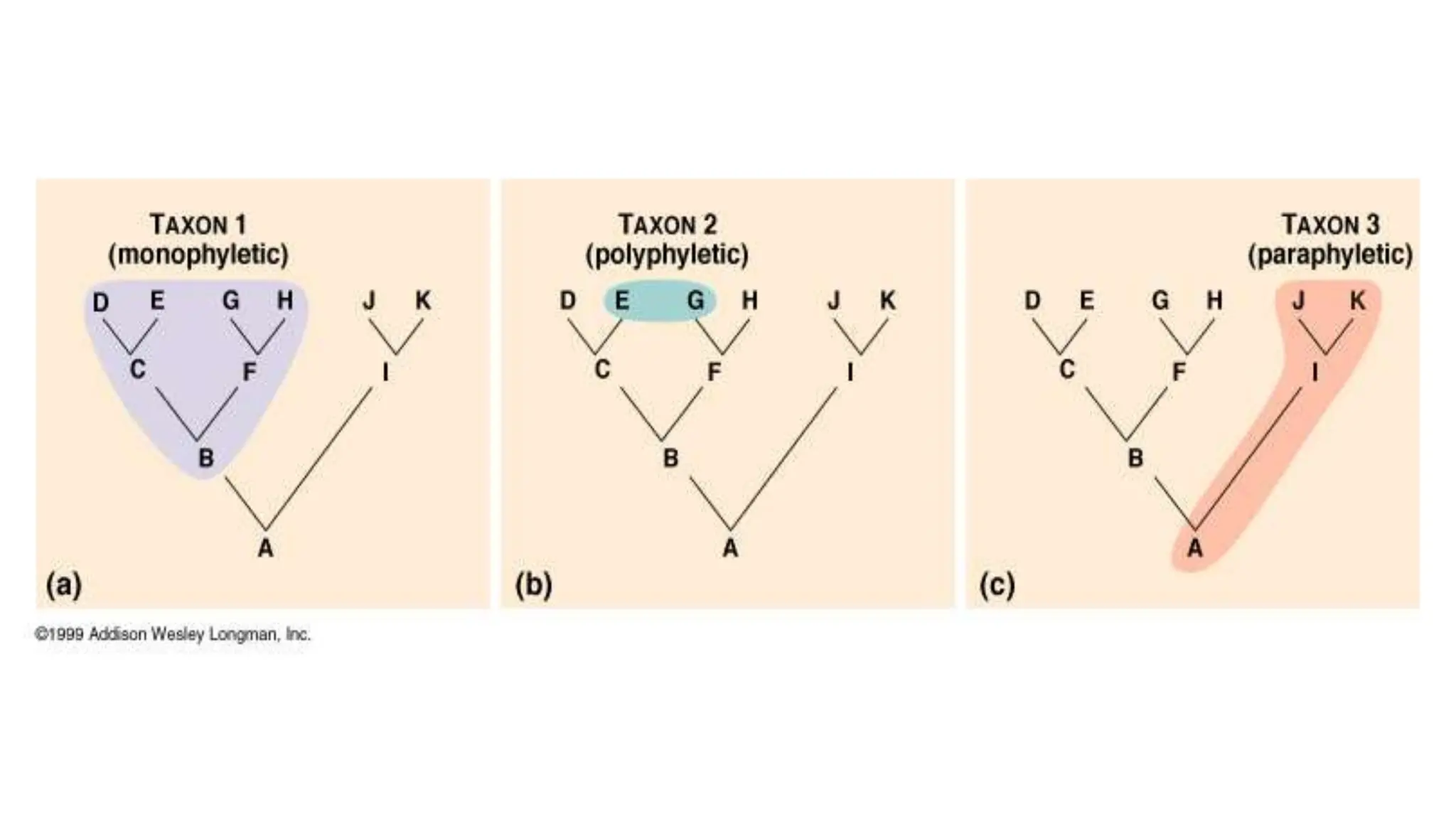
• The relationship between a taxonomic group and phylogenetic tree
can be monophyletic, paraphyletic, or polyphyletic.
• These methods help scientists understand the evolutionary
relationships between species.
The Seven Obligatory Hierarchical Categories:
• Domain- the highest taxonomic rank
• Kingdom (Division in Plants)- composed of several phyla (division)
• Phylum (Division in Plants)- composed of several classes
• Class- composed of several orders
• Order- composed of several families
• Family- composed of several genus
• Genus- composed of several species
• Species- composed of several varietie
Classification of Modern Humans
• Domain – Eukaryota
• Kingdom – Animalia
• Phylum – Chordata
• Class – Mammalia
• Order – Primates
• Family – Hominidae
• Genus – Homo
• Species – Homo sapiens
• Domain
• A domain is the highest rank of organisms. The
three-domain system of taxonomy was designed by
Carl Woese in the year 1990. Taxonomic ranks
should always be capitalized, except for
species as it assists people to distinguish
between bacteria (the organisms and the
domain).
• The three domains of life are Bacteria,
Archaea, and Eukarya.
• Kingdom
• The Kingdom happens to be the highest classification
after domain into which living organisms are grouped.
At present, there are five known kingdoms (as per
NCERT). All the living species are grouped into
specific kingdoms based on factors like the types
of cells they are composed of, mode of their nutrition
and the total number of cells they hold.
• The different kingdoms recognized today are Animalia,
Plantae, Fungi, Protista, and Monera.
• Phylum
• The phylum or phyla is grouped next level after
kingdom in the biological classification. The
purpose of this level is to find some physical
similarities among various organisms within a
kingdom. There are 35 phyla in the kingdom
Animalia.
• Class
• The organisms of a phylum are further divided
into various classes. The classes were the most
common rank proposed by Linnaeus. There are
about 108 different classes in the kingdom
Animalia that were introduced after the 19th
century, proposed by Linnaeus which are still
followed today.
• Order
• The organisms of a particular class are further
distributed into orders. It is much more
accurate than the classes. There are about 18-
25 orders of mammalians which are based on the
classification of organisms. The sources
differ. The art of taxonomy is mostly used to
determine which order an organism belongs to.
• Family
• After the classification of organisms into
orders, they are further grouped into families.
It is the 8th major taxonomic rank in
biological classification which can be
subdivided into subfamilies. There are totally
12 families in the order Carnivora and 620
families in the class Plants.
• Genus
• The Genus or genera. It is even more specific
compared to family and other groups. Genus is
the first part of an organism’s scientific name
using binomial nomenclature followed by the
second part is the species name.
• The scientific name of an organism is always
italicized, followed by the genus name which
should be capitalized. Both Genus and species
are the only taxonomic ranks that are
italicized.
• Species
• Species is the last and major taxonomic rank
which is subdivided into subspecies in certain
cases only. There are more than 8.7 million
different species of organisms on planet Earth.
As each genus name is unique, the same species
names can be used for different organisms. The
species name should be always italicized, but
never capitalized. The species of an organism
would determine the second part of its binomial
nomenclature.

Basic Taxonomy Concepts and Principles.pptx

  • 1.
    Basic Taxonomy Concepts andPrinciples Presented by Group 3
  • 2.
    Taxonomy • Taxonomy isa scientific field that focuses on naming and classifying organisms. • Taxonomic research provides essential information for grouping organisms based on biology. • The main objective of taxonomy is to describe and arrange these groups according to evolutionary relationships and the inherent order of biological diversity. • Taxonomy is crucial for deriving phylogeny hypothesis. • Biological science and its application rely on taxonomy for effective communication. • Reliable taxonomic information is increasingly important for understanding biodiversity.
  • 3.
    Phylogeny • Taxonomy isbased on phylogeny, which is a representation of relationships and how organisms evolved from a common ancestor. • Phylogeny shows the tree of life as a product of evolution and the degrees of relationship by descent from a common ancestor. • Phylogeny provides the framework for understanding the evolutionary history of species and their relationships to one another. • Phylogenic trees traditionally based on morphology. • Plants classified by leaf shape, floral parts, and conducting tissues. • Animals classified by cells, symmetry, and habitat.
  • 6.
    • Comparative morphologystudies the shapes and sizes of organismal structures and their origins, including homologies and analogies. • The fossil record is used to estimate clade ages and a lineage representing the most recent common ancestor is added to the phylogenetic tree. • Chromosomal and molecular characters are extensively used for taxonomic classification. • The relationship between a taxonomic group and phylogenetic tree can be monophyletic, paraphyletic, or polyphyletic. • These methods help scientists understand the evolutionary relationships between species.
  • 9.
    The Seven ObligatoryHierarchical Categories: • Domain- the highest taxonomic rank • Kingdom (Division in Plants)- composed of several phyla (division) • Phylum (Division in Plants)- composed of several classes • Class- composed of several orders • Order- composed of several families • Family- composed of several genus • Genus- composed of several species • Species- composed of several varietie
  • 10.
    Classification of ModernHumans • Domain – Eukaryota • Kingdom – Animalia • Phylum – Chordata • Class – Mammalia • Order – Primates • Family – Hominidae • Genus – Homo • Species – Homo sapiens
  • 11.
    • Domain • Adomain is the highest rank of organisms. The three-domain system of taxonomy was designed by Carl Woese in the year 1990. Taxonomic ranks should always be capitalized, except for species as it assists people to distinguish between bacteria (the organisms and the domain). • The three domains of life are Bacteria, Archaea, and Eukarya.
  • 12.
    • Kingdom • TheKingdom happens to be the highest classification after domain into which living organisms are grouped. At present, there are five known kingdoms (as per NCERT). All the living species are grouped into specific kingdoms based on factors like the types of cells they are composed of, mode of their nutrition and the total number of cells they hold. • The different kingdoms recognized today are Animalia, Plantae, Fungi, Protista, and Monera.
  • 13.
    • Phylum • Thephylum or phyla is grouped next level after kingdom in the biological classification. The purpose of this level is to find some physical similarities among various organisms within a kingdom. There are 35 phyla in the kingdom Animalia.
  • 14.
    • Class • Theorganisms of a phylum are further divided into various classes. The classes were the most common rank proposed by Linnaeus. There are about 108 different classes in the kingdom Animalia that were introduced after the 19th century, proposed by Linnaeus which are still followed today.
  • 15.
    • Order • Theorganisms of a particular class are further distributed into orders. It is much more accurate than the classes. There are about 18- 25 orders of mammalians which are based on the classification of organisms. The sources differ. The art of taxonomy is mostly used to determine which order an organism belongs to.
  • 16.
    • Family • Afterthe classification of organisms into orders, they are further grouped into families. It is the 8th major taxonomic rank in biological classification which can be subdivided into subfamilies. There are totally 12 families in the order Carnivora and 620 families in the class Plants.
  • 17.
    • Genus • TheGenus or genera. It is even more specific compared to family and other groups. Genus is the first part of an organism’s scientific name using binomial nomenclature followed by the second part is the species name. • The scientific name of an organism is always italicized, followed by the genus name which should be capitalized. Both Genus and species are the only taxonomic ranks that are italicized.
  • 18.
    • Species • Speciesis the last and major taxonomic rank which is subdivided into subspecies in certain cases only. There are more than 8.7 million different species of organisms on planet Earth. As each genus name is unique, the same species names can be used for different organisms. The species name should be always italicized, but never capitalized. The species of an organism would determine the second part of its binomial nomenclature.