UNIVERSIDAD PEDAGÓGICA EXPERIMENTAL LIBERTADOR
       INSTITUTO PEDAGÓGICO DE CARACAS
      DEPARTAMENTO DE IDIOMAS MODERNOS
              PROGRAMA DE INGLÉS
            CÁTEDRA DE LINGUISTICA
              DIDÁCTICA DEL INGLÉS


                                                 Professor:
                                                 Nahir Aparicio

                                                 Participant:
                                                 Pérez, Veruska
         Caracas, November 2011
Key assumptions summarized by Frezz (1998)

   The focus is on process rather than product.


   Basic elements are purposeful activities and tasks that emphasize
   communication and meaning.


   Learners learn language by interacting communicatively and
   purposefully while engaged in the activities and tasks.


   Activities and tasks can be either: those that learners might need
   to achieve in real life, and those that have a pedagogical purpose
   specific to the classroom.

   Activities and tasks of a tasks-based syllabus are sequenced
   according to difficulty.


The difficulty of a tasks depends on a range of factors including the previous
experience of the learner.
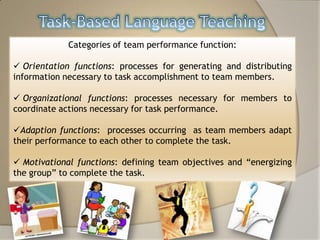
Categories of team performance function:

 Orientation functions: processes for generating and distributing
information necessary to task accomplishment to team members.

 Organizational functions: processes necessary for members to
coordinate actions necessary for task performance.

Adaption functions: processes occurring as team members adapt
their performance to each other to complete the task.

 Motivational functions: defining team objectives and “energizing
the group” to complete the task.
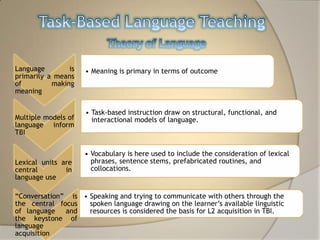
Language        is   • Meaning is primary in terms of outcome
primarily a means
of         making
meaning


                     • Task-based instruction draw on structural, functional, and
Multiple models of     interactional models of language.
language inform
TBI


                     • Vocabulary is here used to include the consideration of lexical
Lexical units are      phrases, sentence stems, prefabricated routines, and
central        in      collocations.
language use

“Conversation” is • Speaking and trying to communicate with others through the
the central focus   spoken language drawing on the learner’s available linguistic
of language   and   resources is considered the basis for L2 acquisition in TBI.
the keystone of
language
acquisition
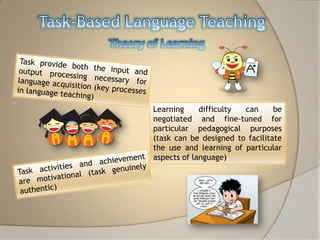
Learning     difficulty can      be
negotiated and fine-tuned for
particular pedagogical purposes
(task can be designed to facilitate
the use and learning of particular
aspects of language)
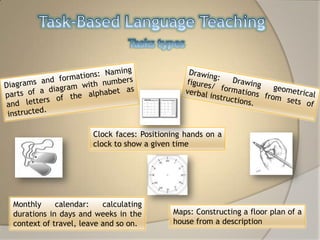
Clock faces: Positioning hands on a
                      clock to show a given time


Monthly     calendar:    calculating
durations in days and weeks in the         Maps: Constructing a floor plan of a
context of travel, leave and so on.        house from a description
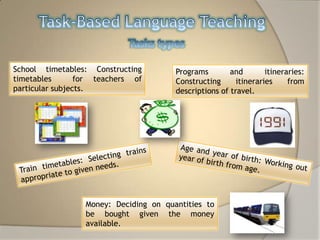
School timetables: Constructing         Programs        and        itineraries:
timetables       for teachers of        Constructing      itineraries     from
particular subjects.                    descriptions of travel.


                  Money: Deciding on quantities to
                  be bought given the money
                  available.
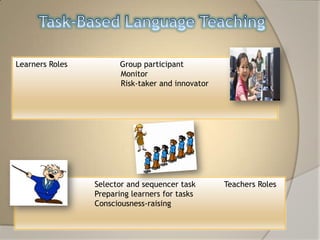
Learners Roles          Group participant
                        Monitor
                        Risk-taker and innovator


                 Selector and sequencer task       Teachers Roles
                 Preparing learners for tasks
                 Consciousness-raising
Task based ppt

Task based ppt

  • 1.
    UNIVERSIDAD PEDAGÓGICA EXPERIMENTALLIBERTADOR INSTITUTO PEDAGÓGICO DE CARACAS DEPARTAMENTO DE IDIOMAS MODERNOS PROGRAMA DE INGLÉS CÁTEDRA DE LINGUISTICA DIDÁCTICA DEL INGLÉS Professor: Nahir Aparicio Participant: Pérez, Veruska Caracas, November 2011
  • 3.
    Key assumptions summarizedby Frezz (1998) The focus is on process rather than product. Basic elements are purposeful activities and tasks that emphasize communication and meaning. Learners learn language by interacting communicatively and purposefully while engaged in the activities and tasks. Activities and tasks can be either: those that learners might need to achieve in real life, and those that have a pedagogical purpose specific to the classroom. Activities and tasks of a tasks-based syllabus are sequenced according to difficulty. The difficulty of a tasks depends on a range of factors including the previous experience of the learner.
  • 4.
    Categories of teamperformance function:  Orientation functions: processes for generating and distributing information necessary to task accomplishment to team members.  Organizational functions: processes necessary for members to coordinate actions necessary for task performance. Adaption functions: processes occurring as team members adapt their performance to each other to complete the task.  Motivational functions: defining team objectives and “energizing the group” to complete the task.
  • 5.
    Language is • Meaning is primary in terms of outcome primarily a means of making meaning • Task-based instruction draw on structural, functional, and Multiple models of interactional models of language. language inform TBI • Vocabulary is here used to include the consideration of lexical Lexical units are phrases, sentence stems, prefabricated routines, and central in collocations. language use “Conversation” is • Speaking and trying to communicate with others through the the central focus spoken language drawing on the learner’s available linguistic of language and resources is considered the basis for L2 acquisition in TBI. the keystone of language acquisition
  • 6.
    Learning difficulty can be negotiated and fine-tuned for particular pedagogical purposes (task can be designed to facilitate the use and learning of particular aspects of language)
  • 7.
    Clock faces: Positioninghands on a clock to show a given time Monthly calendar: calculating durations in days and weeks in the Maps: Constructing a floor plan of a context of travel, leave and so on. house from a description
  • 8.
    School timetables: Constructing Programs and itineraries: timetables for teachers of Constructing itineraries from particular subjects. descriptions of travel. Money: Deciding on quantities to be bought given the money available.
  • 9.
    Learners Roles Group participant Monitor Risk-taker and innovator Selector and sequencer task Teachers Roles Preparing learners for tasks Consciousness-raising