UNIVERSIDAD PEDAGÓGICA EXPERIMENTAL LIBERTADOR
        INSTITUTO PEDAGÓGICO DE CARACAS
      DEPARTAMENTO DE IDIOMAS MODERNOS
               PROGRAMA DE INGLÉS
             CÁTEDRA DE LINGUISTICA
              DIDÁCTICA DEL INGLÉS


                                       Professor:
                                       Nahir Aparicio

                                       Participant:
                                       Pérez, Veruska
          Caracas, November 2011
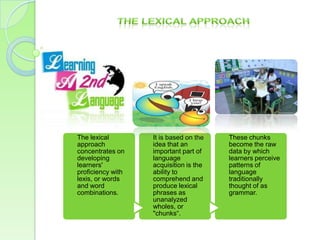
The lexical        It is based on the   These chunks
approach           idea that an         become the raw
concentrates on    important part of    data by which
developing         language             learners perceive
learners'          acquisition is the   patterns of
proficiency with   ability to           language
lexis, or words    comprehend and       traditionally
and word           produce lexical      thought of as
combinations.      phrases as           grammar.
                   unanalyzed
                   wholes, or
                   "chunks“.
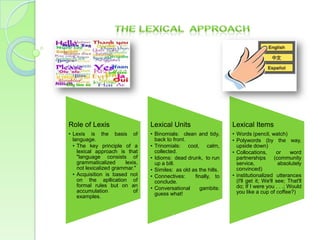
Role of Lexis                    Lexical Units                     Lexical Items
• Lexis is the basis of          • Binomials: clean and tidy,      • Words (pencil, watch)
  language.                        back to front.                  • Polywords (by the way,
  • The key principle of a       • Trinomials: cool, calm,           upside down)
    lexical approach is that       collected.                      • Collocations,       or    word
    "language consists of        • Idioms: dead drunk, to run        partnerships       (community
    grammaticalized     lexis,     up a bill.                        service,             absolutely
    not lexicalized grammar."    • Similes: as old as the hills.     convinced)
  • Acquisition is based not     • Connectives:     finally, to    • institutionalized utterances
    on the apllication of          conclude.                         (I'll get it; We'll see; That'll
    formal rules but on an                                           do; If I were you . . .; Would
                                 • Conversational     gambits:
    accumulation            of                                       you like a cup of coffee?)
                                   guess what!
    examples.
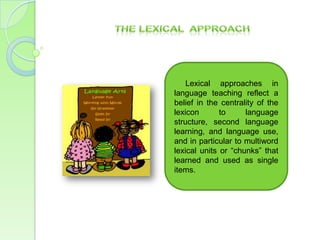
Lexical approaches in
language teaching reflect a
belief in the centrality of the
lexicon       to     language
structure, second language
learning, and language use,
and in particular to multiword
lexical units or “chunks” that
learned and used as single
items.

Lexical ppt

Lexical ppt

  • 1.
    UNIVERSIDAD PEDAGÓGICA EXPERIMENTALLIBERTADOR INSTITUTO PEDAGÓGICO DE CARACAS DEPARTAMENTO DE IDIOMAS MODERNOS PROGRAMA DE INGLÉS CÁTEDRA DE LINGUISTICA DIDÁCTICA DEL INGLÉS Professor: Nahir Aparicio Participant: Pérez, Veruska Caracas, November 2011
  • 2.
    The lexical It is based on the These chunks approach idea that an become the raw concentrates on important part of data by which developing language learners perceive learners' acquisition is the patterns of proficiency with ability to language lexis, or words comprehend and traditionally and word produce lexical thought of as combinations. phrases as grammar. unanalyzed wholes, or "chunks“.
  • 3.
    Role of Lexis Lexical Units Lexical Items • Lexis is the basis of • Binomials: clean and tidy, • Words (pencil, watch) language. back to front. • Polywords (by the way, • The key principle of a • Trinomials: cool, calm, upside down) lexical approach is that collected. • Collocations, or word "language consists of • Idioms: dead drunk, to run partnerships (community grammaticalized lexis, up a bill. service, absolutely not lexicalized grammar." • Similes: as old as the hills. convinced) • Acquisition is based not • Connectives: finally, to • institutionalized utterances on the apllication of conclude. (I'll get it; We'll see; That'll formal rules but on an do; If I were you . . .; Would • Conversational gambits: accumulation of you like a cup of coffee?) guess what! examples.
  • 4.
    Lexical approaches in languageteaching reflect a belief in the centrality of the lexicon to language structure, second language learning, and language use, and in particular to multiword lexical units or “chunks” that learned and used as single items.