UNIVERSIDAD PEDAGÓGICA EXPERIMENTAL LIBERTADOR
       INSTITUTO PEDAGÓGICO DE CARACAS
      DEPARTAMENTO DE IDIOMAS MODERNOS
              PROGRAMA DE INGLÉS
            CÁTEDRA DE LINGUISTICA
              DIDÁCTICA DEL INGLÉS


                                                 Professor:
                                                 Nahir Aparicio

                                                 Participant:
                                                 Pérez, Veruska
         Caracas, November 2011
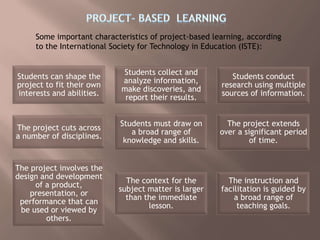
Some important characteristics of project-based learning, according
     to the International Society for Technology in Education (ISTE):


                            Students collect and
Students can shape the                                    Students conduct
                            analyze information,
project to fit their own                               research using multiple
                            make discoveries, and
interests and abilities.                               sources of information.
                             report their results.


                            Students must draw on        The project extends
The project cuts across
                               a broad range of        over a significant period
a number of disciplines.
                             knowledge and skills.              of time.


The project involves the
design and development
                             The context for the         The instruction and
     of a product,
                           subject matter is larger    facilitation is guided by
    presentation, or
                             than the immediate            a broad range of
 performance that can
                                   lesson.                  teaching goals.
 be used or viewed by
        others.
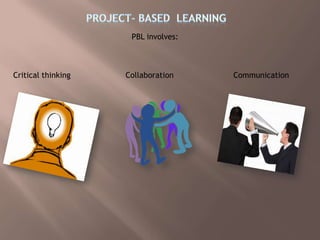
PBL involves:


Critical thinking   Collaboration    Communication
Features that facilitate use of project-based instruction in K-12 classrooms:

1. A "driving question" that is anchored in a real-world problem and ideally
   uses multiple content areas.

2. Opportunities for students to make active investigations that enable them
to learn concepts, apply information, and represent their knowledge in a
variety of ways.

3. Collaboration among students, teachers, and others in the community so
that knowledge can be shared and distributed between the members of the
"learning community“.

4. The use of cognitive tools in learning environments that support students in
the representation of their ideas: cognitive tools such as computer-based
laboratories, hypermedia, graphing applications, and telecommunications
(Blumenfeld et al., 1991).
Why and how use PBL?
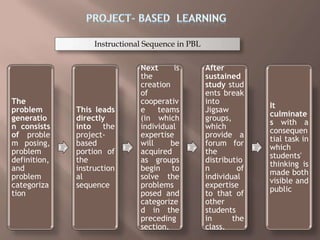
Instructional Sequence in PBL

                               Next      is        After
                               the                 sustained
                               creation            study stud
                               of                  ents break
The                            cooperativ          into
                                                                 It
problem       This leads       e    teams          Jigsaw
                                                                 culminate
generatio     directly         (in which           groups,
                                                                 s with a
n consists    into the         individual          which
                                                                 consequen
of proble     project-         expertise           provide a
                                                                 tial task in
m posing,     based            will     be         forum for
                                                                 which
problem       portion of       acquired            the
                                                                 students'
definition,   the              as groups           distributio
                                                                 thinking is
and           instruction      begin to            n        of
                                                                 made both
problem       al               solve the           individual
                                                                 visible and
categoriza    sequence         problems            expertise
                                                                 public
tion                           posed and           to that of
                               categorize          other
                               d in the            students
                               preceding           in      the
                               section.            class.
Project  based ppt

Project based ppt

  • 1.
    UNIVERSIDAD PEDAGÓGICA EXPERIMENTALLIBERTADOR INSTITUTO PEDAGÓGICO DE CARACAS DEPARTAMENTO DE IDIOMAS MODERNOS PROGRAMA DE INGLÉS CÁTEDRA DE LINGUISTICA DIDÁCTICA DEL INGLÉS Professor: Nahir Aparicio Participant: Pérez, Veruska Caracas, November 2011
  • 3.
    Some important characteristicsof project-based learning, according to the International Society for Technology in Education (ISTE): Students collect and Students can shape the Students conduct analyze information, project to fit their own research using multiple make discoveries, and interests and abilities. sources of information. report their results. Students must draw on The project extends The project cuts across a broad range of over a significant period a number of disciplines. knowledge and skills. of time. The project involves the design and development The context for the The instruction and of a product, subject matter is larger facilitation is guided by presentation, or than the immediate a broad range of performance that can lesson. teaching goals. be used or viewed by others.
  • 4.
    PBL involves: Critical thinking Collaboration Communication
  • 5.
    Features that facilitateuse of project-based instruction in K-12 classrooms: 1. A "driving question" that is anchored in a real-world problem and ideally uses multiple content areas. 2. Opportunities for students to make active investigations that enable them to learn concepts, apply information, and represent their knowledge in a variety of ways. 3. Collaboration among students, teachers, and others in the community so that knowledge can be shared and distributed between the members of the "learning community“. 4. The use of cognitive tools in learning environments that support students in the representation of their ideas: cognitive tools such as computer-based laboratories, hypermedia, graphing applications, and telecommunications (Blumenfeld et al., 1991).
  • 6.
    Why and howuse PBL?
  • 7.
    Instructional Sequence inPBL Next is After the sustained creation study stud of ents break The cooperativ into It problem This leads e teams Jigsaw culminate generatio directly (in which groups, s with a n consists into the individual which consequen of proble project- expertise provide a tial task in m posing, based will be forum for which problem portion of acquired the students' definition, the as groups distributio thinking is and instruction begin to n of made both problem al solve the individual visible and categoriza sequence problems expertise public tion posed and to that of categorize other d in the students preceding in the section. class.