How do we teach grammar?
The understanding of grammar,
and the challenges teachers meet.
Grammar
- a fashion victim
• Popular in the 1920s and 30s, 60s and 70s
• Lately making a modest comeback
• Rules or no rules?
• Be taught or discovered by student?
• Seperate teaching or integrated?
What is grammar?
• Definitions include:
Rules, form, part of language, organise, how we
combine, principles...
Agreement:
The term does not only refer to form, but also to
meaning.
Should grammar be taught?
• Krashen: students learn grammar as part of the
acquisition process, formal instruction does not
play an important role
• He has been questioned by many grammarians!
• Studies show that very few teachers think that
grammar teaching is unnecessary
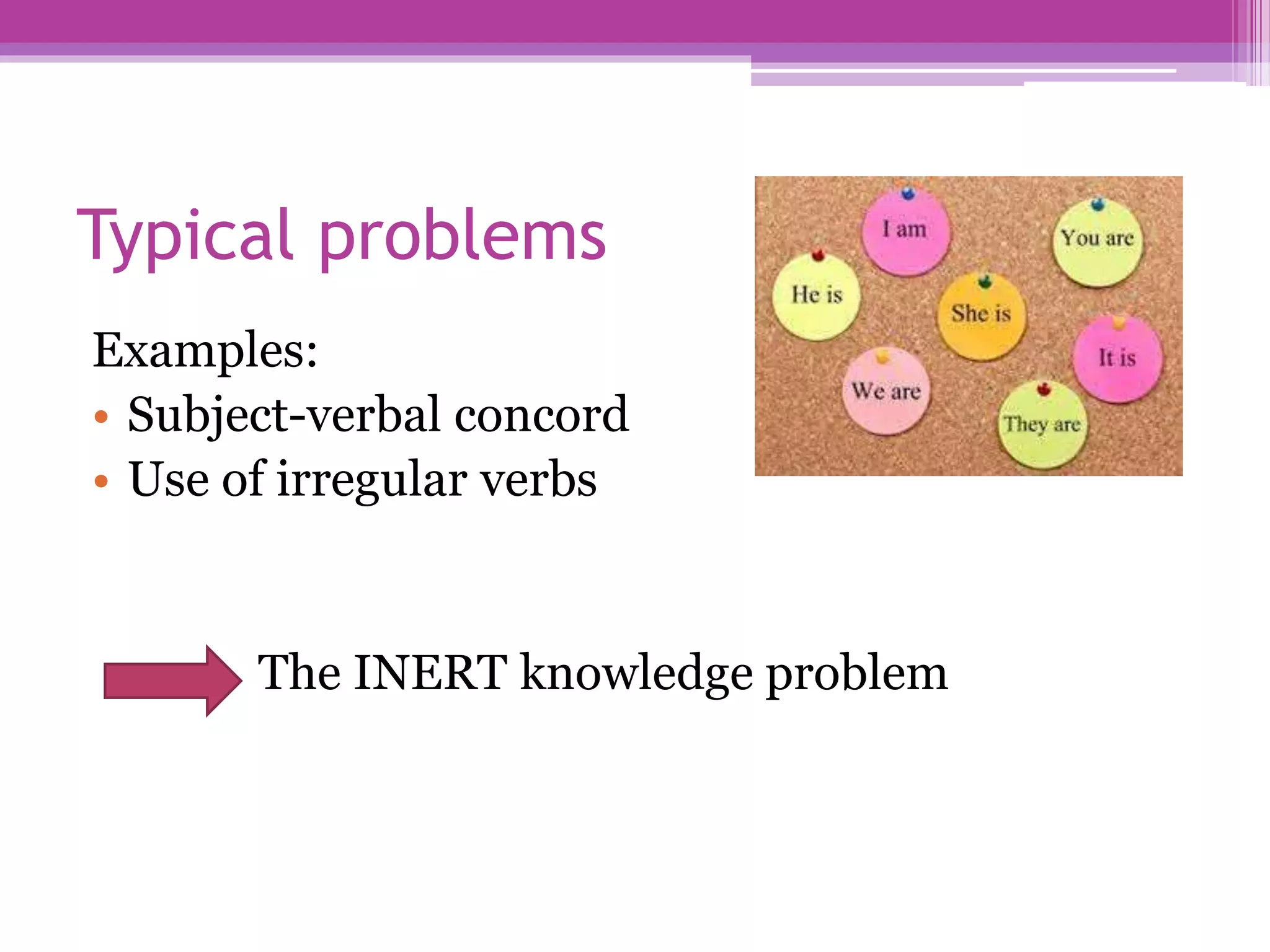
Typical problems
Examples:
• Subject-verbal concord
• Use of irregular verbs
The INERT knowledge problem
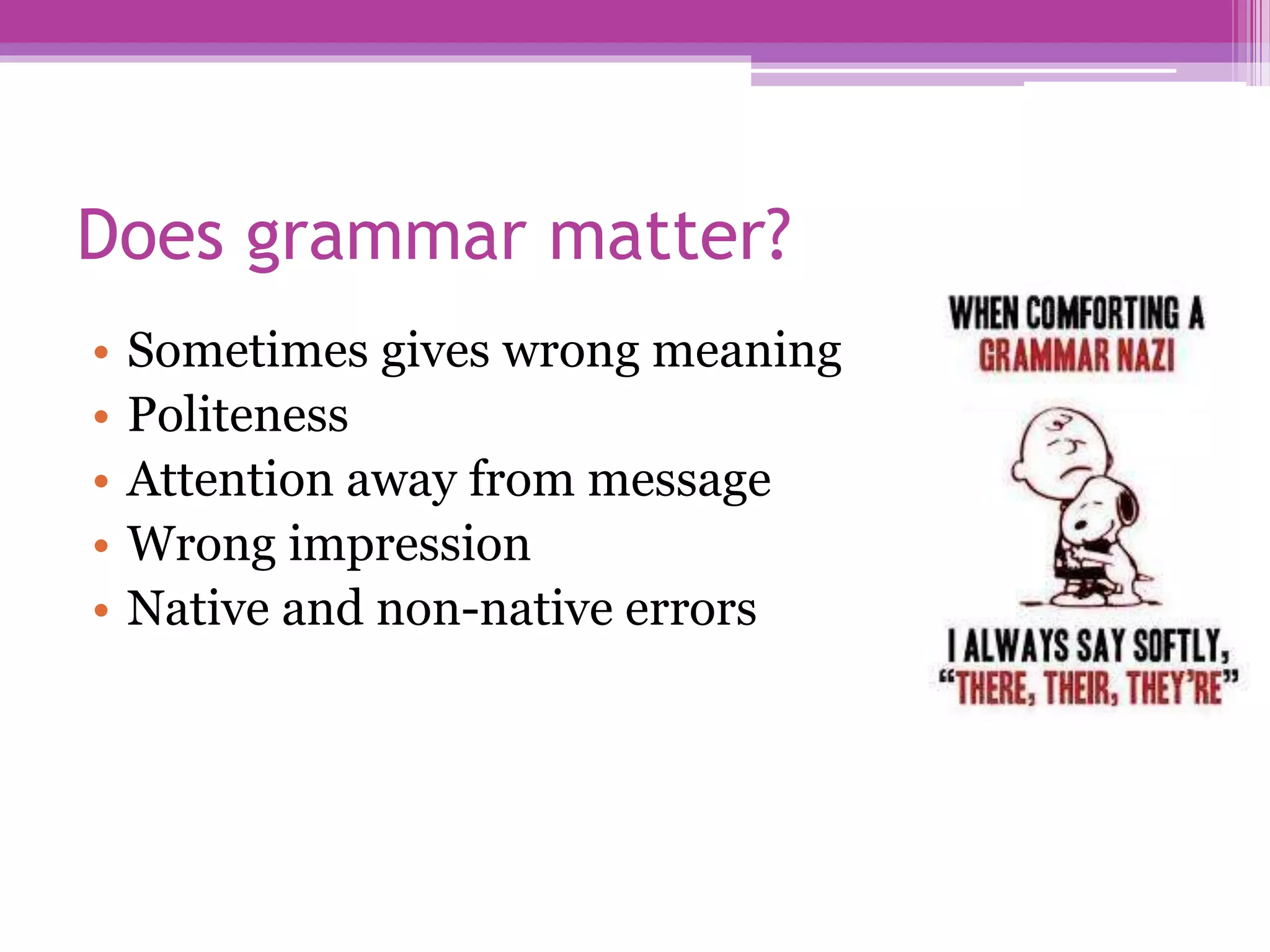
Does grammar matter?
• Sometimes gives wrong meaning
• Politeness
• Attention away from message
• Wrong impression
• Native and non-native errors
Three-stage model by Rob Batstone
• Stage 1: Noticing grammar patterns
• Stage 2: Controlled practice of the structure
• Stage 3: Proceduralisation, express themselves
in a more natural way, spontaneous use of
grammatical forms.
Grammar- a separate part?
• Ingredients when teaching:
Listening, reading, speaking, writing
AND exploring the system of language.
• Meaning as well as form
• Lack of confidence teach grammar as
separate part
More effective to target grammar topics that
spring directly from needs pupils have in
connection with texts they read or write.
A communicative approach
• Instead of the teacher covering grammar, the
students should discover grammar (Thompson, 1996)
• Use of authentic material as the basis for
exploring grammar
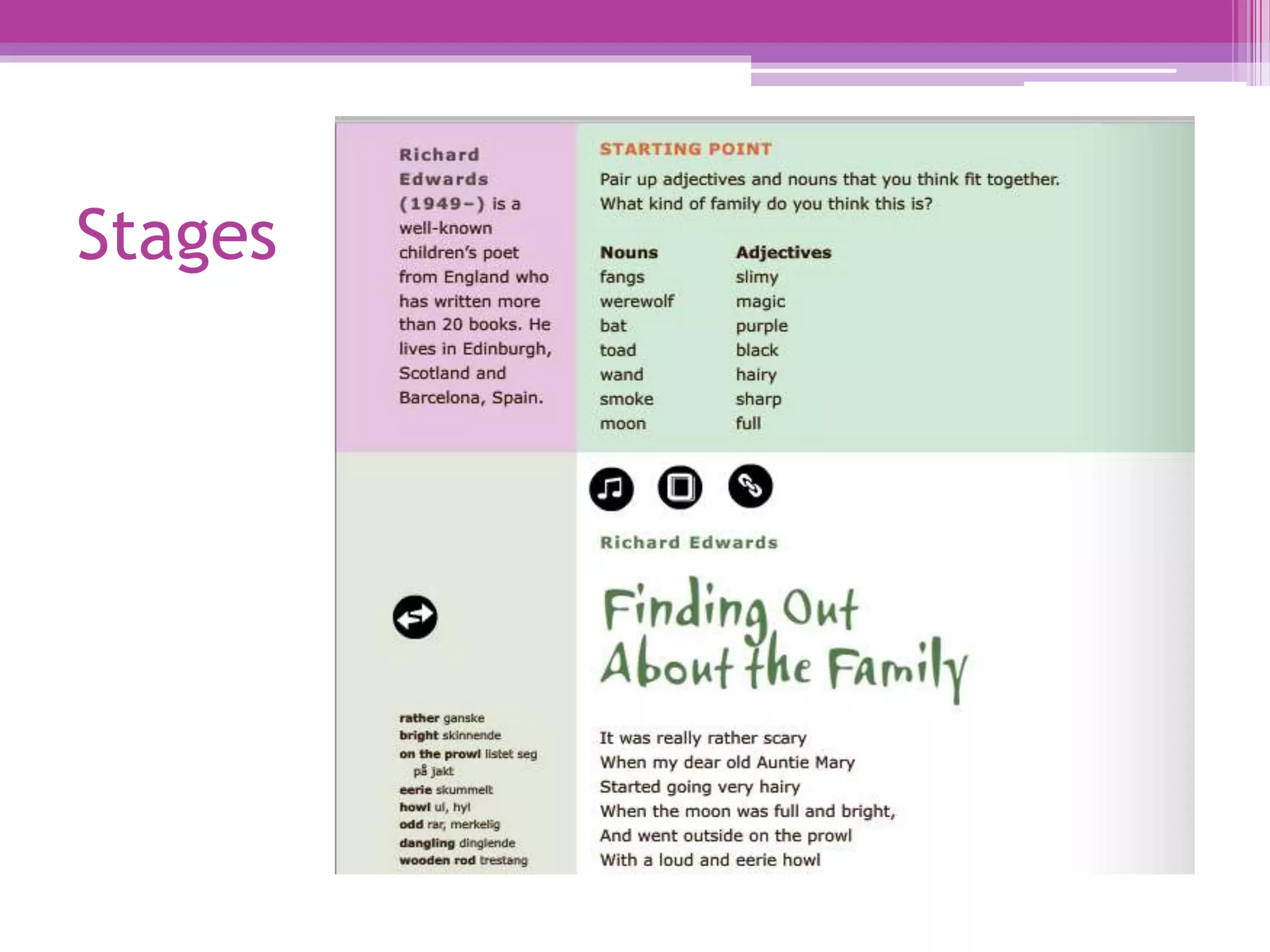
• Search the text for specific grammar
For example as pre-read
Stages
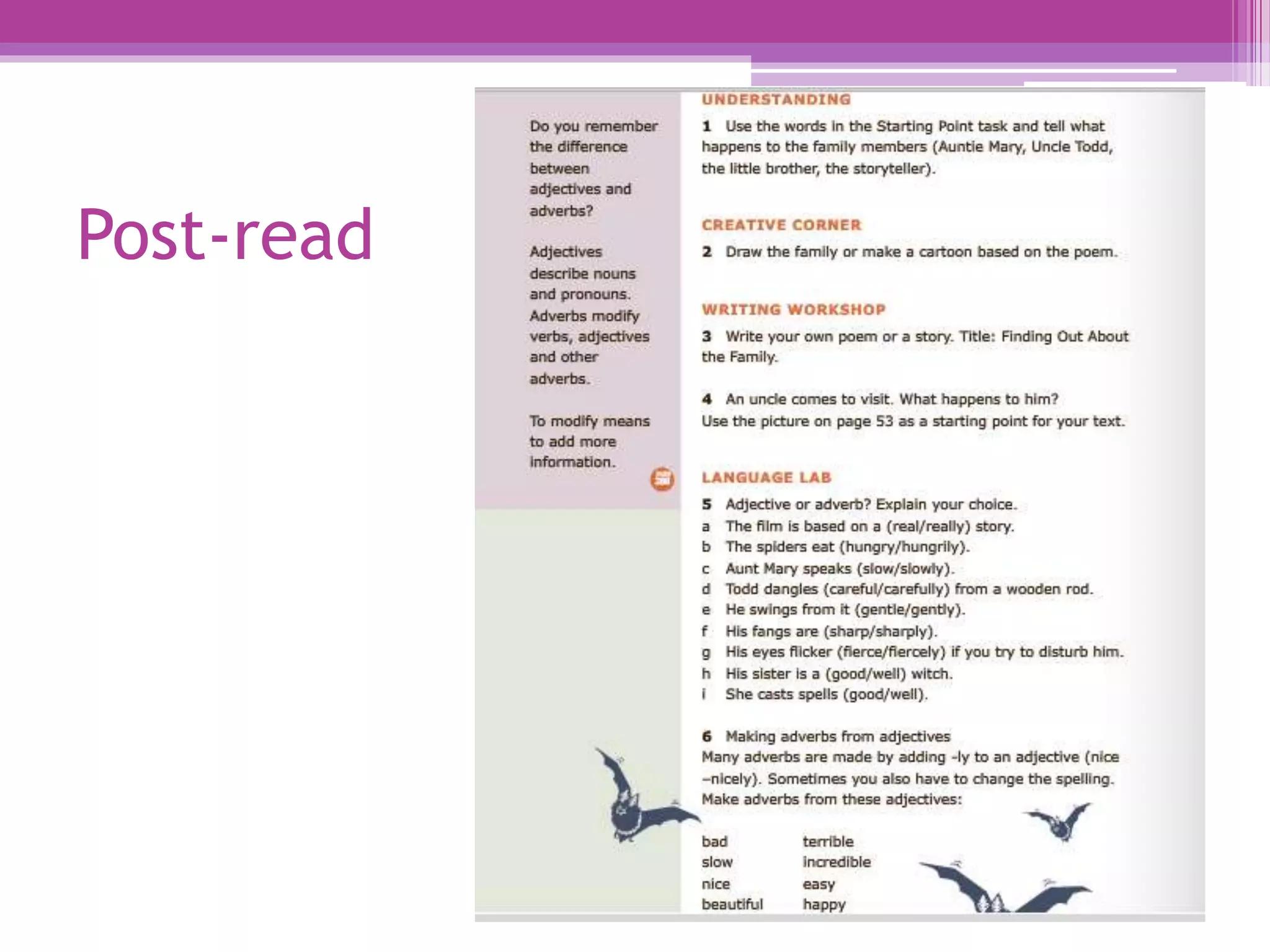
Post-read
Some other ideas
• Languaging= talking about mistakes they have
made and the feedback they have received
Language awareness
• Improving texts that are purposely produced
with flaws
• Dictogloss (listen, notes, recreate). Attend to
form as well as meaning
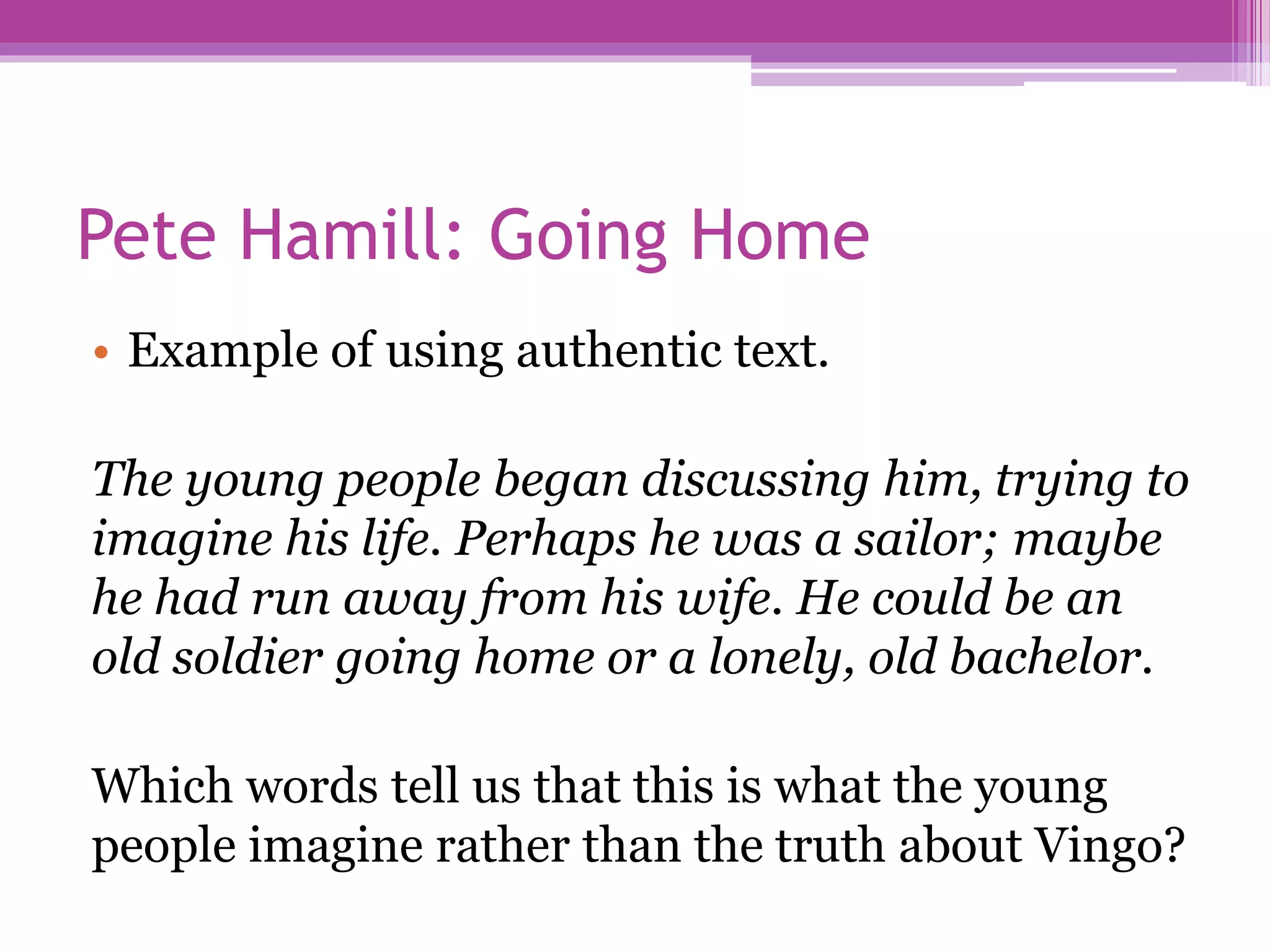
Pete Hamill: Going Home
• Example of using authentic text.
The young people began discussing him, trying to
imagine his life. Perhaps he was a sailor; maybe
he had run away from his wife. He could be an
old soldier going home or a lonely, old bachelor.
Which words tell us that this is what the young
people imagine rather than the truth about Vingo?
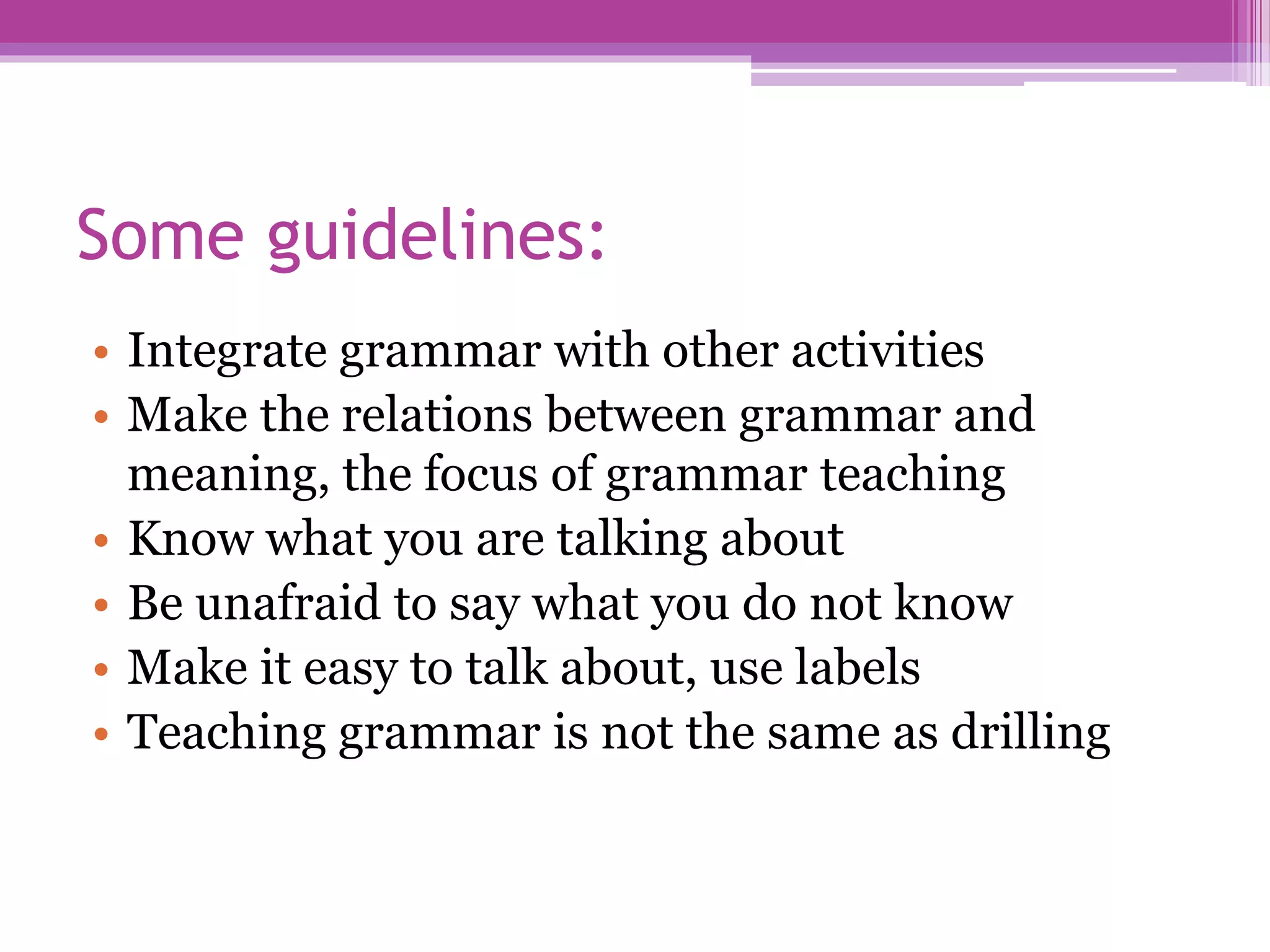
Some guidelines:
• Integrate grammar with other activities
• Make the relations between grammar and
meaning, the focus of grammar teaching
• Know what you are talking about
• Be unafraid to say what you do not know
• Make it easy to talk about, use labels
• Teaching grammar is not the same as drilling
References
• Barra, C. G. (2013), The grammar dilemma, English
Teaching professional, Issue 88
• Flognfeldt, M. E., Lund, R.E. (2016) Grammar in
the Classroom, English for teachers and Learners,
Cappelen, Oslo
• Harmer, J. (1998) Teaching grammar, English
Teaching professional, Issue 6
• Hasselgård, H. (2001) Grammar in communicative
English teaching, Språk og språkundervisning.
Discuss
• What challenges do we meet as teachers?
• How do we teach grammar in Askim Lower
Secondary school?

How do we teach grammar

  • 1.
    How do weteach grammar? The understanding of grammar, and the challenges teachers meet.
  • 2.
    Grammar - a fashionvictim • Popular in the 1920s and 30s, 60s and 70s • Lately making a modest comeback • Rules or no rules? • Be taught or discovered by student? • Seperate teaching or integrated?
  • 3.
    What is grammar? •Definitions include: Rules, form, part of language, organise, how we combine, principles... Agreement: The term does not only refer to form, but also to meaning.
  • 4.
    Should grammar betaught? • Krashen: students learn grammar as part of the acquisition process, formal instruction does not play an important role • He has been questioned by many grammarians! • Studies show that very few teachers think that grammar teaching is unnecessary
  • 5.
    Typical problems Examples: • Subject-verbalconcord • Use of irregular verbs The INERT knowledge problem
  • 6.
    Does grammar matter? •Sometimes gives wrong meaning • Politeness • Attention away from message • Wrong impression • Native and non-native errors
  • 7.
    Three-stage model byRob Batstone • Stage 1: Noticing grammar patterns • Stage 2: Controlled practice of the structure • Stage 3: Proceduralisation, express themselves in a more natural way, spontaneous use of grammatical forms.
  • 8.
    Grammar- a separatepart? • Ingredients when teaching: Listening, reading, speaking, writing AND exploring the system of language. • Meaning as well as form • Lack of confidence teach grammar as separate part More effective to target grammar topics that spring directly from needs pupils have in connection with texts they read or write.
  • 9.
    A communicative approach •Instead of the teacher covering grammar, the students should discover grammar (Thompson, 1996) • Use of authentic material as the basis for exploring grammar • Search the text for specific grammar For example as pre-read
  • 10.
  • 11.
  • 12.
    Some other ideas •Languaging= talking about mistakes they have made and the feedback they have received Language awareness • Improving texts that are purposely produced with flaws • Dictogloss (listen, notes, recreate). Attend to form as well as meaning
  • 13.
    Pete Hamill: GoingHome • Example of using authentic text. The young people began discussing him, trying to imagine his life. Perhaps he was a sailor; maybe he had run away from his wife. He could be an old soldier going home or a lonely, old bachelor. Which words tell us that this is what the young people imagine rather than the truth about Vingo?
  • 14.
    Some guidelines: • Integrategrammar with other activities • Make the relations between grammar and meaning, the focus of grammar teaching • Know what you are talking about • Be unafraid to say what you do not know • Make it easy to talk about, use labels • Teaching grammar is not the same as drilling
  • 15.
    References • Barra, C.G. (2013), The grammar dilemma, English Teaching professional, Issue 88 • Flognfeldt, M. E., Lund, R.E. (2016) Grammar in the Classroom, English for teachers and Learners, Cappelen, Oslo • Harmer, J. (1998) Teaching grammar, English Teaching professional, Issue 6 • Hasselgård, H. (2001) Grammar in communicative English teaching, Språk og språkundervisning.
  • 16.
    Discuss • What challengesdo we meet as teachers? • How do we teach grammar in Askim Lower Secondary school?